WHO IS MICKEY IBARRA: MEET THE FORMER PRESIDENT & DIRECTOR OF INTERGOVERNMENTAL AFFAIRS AT THE WHITE HOUSE

THE HISPANIC BLOG IS THE LATEST HISPANIC NEWS BY JESSICA MARIE GUTIERREZ
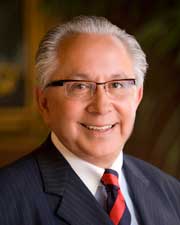
Mickey Ibarra served as assistant to former President Bill Clinton and was the director of the Office of Intergovernmental Affairs. He was born in Salt Lake City to a Mexican father and American mother, but grew up in foster care. Before beginning his career in politics, he taught at-risk high school students in Spanish Fork. In March, he donated his collection of photographs, correspondence and other memorabilia documenting his career at the White House to the University of Utah Marriott Library. He also recently gave a speech at the Hinckley Institute of Politics on his journey from schoolteacher to public servant, the importance of being involved politics, and the issue of immigration.

How does a high school teacher end up working at the White House?

My road to the White House was paved by the National Education Association, the teachers union I had the privilege of working for for 16 years of my professional career. But actually it started sooner than that: The person who sparked my interest in government, public service, campaigning, elections and our great democracy and the need for engagement was my high school government teacher, Mr. Steinberg.

I had the privilege of attending high school in Sacramento, the capital of California, so government and politics were certainly available to students who wanted to engage. Mr. Steinberg would provide extra credit for attending a city-council meeting, a school-board meeting. It was Mr. Steinberg who gave me extra credit for attending my first presidential campaign rally and major speech; it was delivered by Hubert Humphrey in 1968 at the Sacramento Memorial Auditorium. And as I heard him speak, I can tell you it sent tingles from my toes to the top of my head. And it was that interest established in high school that propelled me to decide that I was going to figure out a way to engage in public service. And it also provided the seed for wanting to first do that as a teacher. So I was a political-science major at BYU with no intention ever of attending law school. I wanted to be a teacher. And I had an opportunity to do that for five years starting as a teacher at a public alternative high school.

photo source: Brigham Young High School
Class of 1969

That teaching experience led to my political experience with the Utah Education Association. I was a first-year teacher and attended my first national convention of the NEA as a delegate with the UEA. When I walked in that auditorium in Minneapolis and saw 15,000 of my colleagues in convention, many of them of color, it got my attention. This is the organization that I want to be a part of.

photo source: Brigham Young High School
Class of 1969 

I went from a volunteer to a staff member becoming their political manager, which put me responsible for leading the charge of the NEA to endorse Bill Clinton in 1992 for president. then served in the staff of the Clinton/Gore re-election campaign in 1996, posted up at the headquarters in Washington, D.C., and with our re-election, again the first Democrat to be re-elected president since Franklin Roosevelt, I was invited then to serve at the White House as the assistant for Intergovernmental Affairs.

“I prepared myself for that opportunity. Did I ever believe that an opportunity to serve the president would come my way? No. And is anybody ever fully prepared to be at the White House? I don’t think so. But I was prepared to be asked, and I got that chance, and here we went.” 

Why does the United States need immigration reform?
The issue of immigration is personal to me. It is more than a debate around public policy; it is personal, given my history. My father came to this country as a bracero in 1945, and his first labor camp was in Spanish Fork. My father was undocumented for 30-plus years, even though he served in the U.S. Army, had his own business. You don’t need to be documented to make a contribution. And everyone should be documented. But what we’ve got is a system that’s absolutely broken. It actually encourages people to come here without documents, because they’re not going to wait in line for five years to get a visa to come work here if their families are in need of help now. Who would do that? So, yes, that’s an issue that remains a priority for me, and I’m very troubled and concerned about what I see happening—states, including Utah, taking off on their own to decide what immigration law is going to look like. The most extreme case in Alabama, where they’ve turned teachers into immigration agents who can turn children in and their families in if they suspect that they may be undocumented. They have given license to racists in this country who now are emboldened to do the unthinkable. A nation trying to turn back the clock to the Jim Crow days of the ’60s and ’50s and earlier that I thought we had addressed. That’s very unfortunate and not up to the standards that America ought to be all about.

What misconceptions do people have about immigration reform and immigrants?

(1) They’re taking away our jobs.” That’s just nonsense. They’re not taking away anybody’s jobs. Ninety percent of them are doing jobs that none of us would do. Talk to the farmers about how important these workers are to them helping them harvest their crops—to make a profit, to stay in business. So that’s one of the misconceptions. The United States needs that labor; they need that workforce. And without it, they’d be in very difficult circumstances.
(2) They’re just here to freeload; they’re taking down benefits from us”—again, silly. I would say, as a class, there are no harder-working people in the world than the Latino community in this country. They’re not here to freeload, they’re not here to get something for nothing; they’re here to make a living. And are there exceptions to that? Of course there are. But I feel confident in saying that the vast majority of those residents in this country, who are without documentation, would love to figure out how to become documented. And the vast majority of them are also being taxed, and paying their taxes. If we’d come to our senses and document these folks, we’d even realize more taxes from them, and that would be a good thing.
What concerns me is we have so many people giving license and cover to racists. I’m not suggesting everybody who opposes immigration reform is racist.

USHLI Announces Mickey Ibarra Medallion for Excellence in Government Relations

(3) We have a right to protect our border. That’s a responsibility that we have. And that’s what argues for comprehensive immigration reform so we can secure our borders. We’re not going to secure our borders simply by building a taller fence. That’s not going to work. It’s got to be a combination of things, and my hope is that I’ll live long enough to see our country embrace a comprehensive approach in order to deal with this issue. It was Ronald Reagan who was the last president to try and deal with this in a responsible manner, which included providing more than 3 million undocumented residents with amnesty. So if Ronald Reagan can get it done, I’ve got to believe that we ought to keep hope alive for that, too.

What would successful immigration reform look like?


In its broadest context, one, we’ve got to provide for security, to be sure. Two, we’ve got to figure out a sensible visa program that allows for demand to match the supply. Something that’s reasonable. Asking somebody to wait in line for five years so they can come here and work as a dishwasher is nuts. So we’ve got to figure that out, that whole ebb and flow of the workforce—that’s a big piece of it. [Also] how do we deal with at least 11 million undocumented residents now? Do we really think we’re going to ship that 11 million back to the country they came from? I don’t think so; it’s just ridiculous. We’re not going to do that, it’s not possible to do that, and it’s stupid to do that. Should there be a penalty [for being undocumented]? Absolutely. Should there be requirement for them to learn English? That’s fine. Should they be responsible for paying their taxes and all that sort of thing? Absolutely. Should they have to show proof of employment for five, six years, whatever it is, yes. But those criteria can be set, and where they’re met, there ought to be a path to being made legal residents of this country.

It may not be possible to adopt comprehensive immigration reform; I do think it’s possible for us to make incremental progress. For me, step one is addressing the Dream Act: the idea of providing a pathway, an opportunity, for youngsters who were brought to this country by their parents and no responsibility whatsoever for being here without legal status, and have done the right thing and graduated from high school, ought to be provided the opportunity to continue their education here. And if they graduate and stay out of trouble, be provided a pathway for citizenship—that ought to be an easy one. So I’m all for taking a look at taking a bite of the apple rather than trying to swallow the whole thing. It seems to be the Dream Act is where we ought to start.

With Congressman Luis Gutierrez

Why is it important to be involved in politics?

When people disengage from their civic responsibilities, when they check out, others check in. And unfortunately that seems to be too often the extremes of both ends of the political spectrum. And that’s not good. What we need to do is have every citizen of this country embrace the responsibility that they have to engage. This is a democracy. Democracy requires participation. It’s very important to ensure that we engage, that we register, that we vote, that we support candidates who reflect our views and that we hold them accountable for doing the right thing for us, rather than simply reflecting the views of, in many cases, an extreme minority. Some suggest that we get the government that we deserve; I think we deserve better. And to get better, we’re going to have to do more engagement.

What’s your favorite part of being involved in politics?

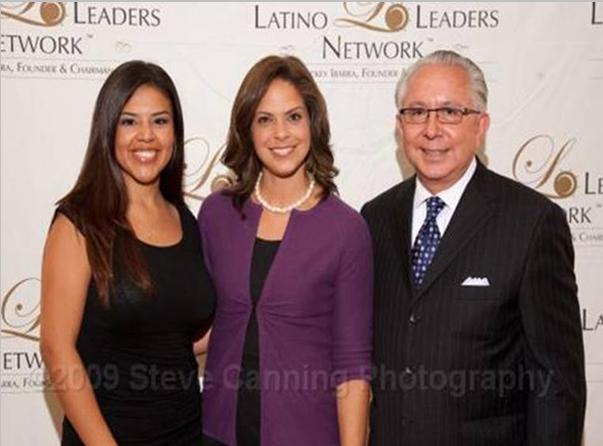
photo source: Mickey Ibarra, founder and chairman of the Latino Leaders Network (LLN) presented Julie Stav with the Eagle Leadership Award at the 30th LLN Luncheon. Photo by Steve Canning.

Helping people; putting people first. That was the theme in 1992 of Bill Clinton: putting people first again. And that’s really what makes politics and public service one of the most noble endeavors of all. When it’s understood that your core responsibility is helping people accomplish all they can with their God-given talents, helping them overcome the obstacles to success, helping someone has a great reward that I enjoyed at the White House. I was in a position, and I realized that—that very few people get an opportunity to do—to help someone.   
Read More: CITY WEEKLY

SUBSCRIBE to The Hispanic Blog to stay on top of the latest latino news, politics and entertainment!

Don’t be shy SUBSCRIBE – COMMENT – LIKE ME -CIRCLE ME AND FOLLOW ME

If you have any questions, concerns or simply would like to get a quote on my Marketing, Public Relations, Social Media and/or Events services, please feel free to contact me at thehispanicblog@gmail.com.

God Bless and make it a fabulous day!

powered by Influential Access – “Transforming the Ordinary to EXTRAordinary!” – CEO – Jessica Marie Gutierrez – Creator of The Hispanic Blog #thehispanicblog

DOES KRAFT FOODS ENGAGE WITH HISPANICS: THEIR COMIDA KRAFT FACEBOOK IS UP TO 90,000 FANS

THE HISPANIC BLOG IS THE LATEST HISPANIC NEWS BY JESSICA MARIE GUTIERREZ

LEAVE US A COMMENT AND LET US KNOW IF YOU LOVE KRAFT 🙂

Comida Kraft, an 11-year-old online initiative aimed at Latina moms, has become increasingly centered on social marketing in recent years. Facebook‘s Timeline for brands has only added to that focus, said Tania Cameron, associate director of CRM for Kraft Foods. She said Timeline’s historical nature creates an opportunity for her team to better tackle the sub-cultural issues of marketing to U.S. Latinos from numerous countries of origin.


On Comida Kraft’s Timeline, for instance, her team highlights when the U.S. officially recognized Cinco de Mayo as a holiday. In 2006, President George W. Bush proclaimed an observance of the day, which commemorates Mexico’s 19th century military victory over France. Another Comida Kraft post heralds how immigrants brought shaved ice treats to the U.S. in 1926 from Puerto Rico and Peru.

With Timeline, Cameron explained, “We took the approach to be interesting and give our viewers a little bit of education. It’s a way to celebrate who are here in the United States.”

Facebook Audience Gets 4X Lift In One Year

Comida Kraft’s Facebook page quickly gathered 3,000 fans/likes after launching two years ago, but has since grown to 90,000, jumping more than 4X in the last year, according to the Northfield, IL-based brand. Consistent with the larger initiative, the page is aimed at Latina moms.

When asked how Kraft Comida’s audience compares to other Spanish-language Facebook brand pages, Andy Hasselwander, VP of projects and research at Hispanic-focused agency Latinum Network, said, “It’s pretty big.” Comida Kraft’s social media team typically authors one Facebook post a day, including coupons, recipes, timely food-oriented questions, and other conversational messages.

Hispanics are very engaged [on Facebook],” Cameron said. “Social channels provide them a chance to create their own content.”But according to new research from Latinum, out of 200 brands, roughly 17 percent address Spanish speakers on Facebook. Eighty-three percent of the Facebook pages are English-only, Hasselwander said, while 14 percent included a Spanish language option. And approximately 3 percent were dually English and Spanish, he said. Bethesda, MD-based Latinum plans to release its full findings in the coming days.

Hasselwander said marketing to Hispanics by language can be tricky. “When you are talking about acculturated Millennials, for instance, they are going to speak both Spanish and English,” he said.

Comida Kraft Mobile Grows “Exponentially”

With the help of digital agency 360i, Cameron’s team has created a hub-and-spoke online marketing model for the brand. Facebook, mobile, Latina mommy blogs, and email feed into ComidaKraft.com, she explained. All told, Cameron said, the Spanish-language initiative has an online audience of 1 million consumers.

Mobile, the marketing director added, “has grown exponentially. Hispanics are getting into mobile very rapidly. And we have grown with that.”

360i Report: Target Hispanics By Subset

Meanwhile, 360i is about to release a report that, among many key points, addresses Comida Kraft’s challenge in terms of marketing to U.S. Latino subsets. Latinos have varying levels of acculturation, psychographics, and English proficiency, the report says. 360i says it’s important to determine what subset marketers want to target before tailoring a campaign.

comidakraft.com

Another key takeaway: Too many brands are not optimizing their Spanish-language web pages for SEO. 360i recommends marketers optimize not only for keywords in Spanish, but also commonly misspelled in English by Spanish speakers.

Read More: CLICK Z

SUBSCRIBE to The Hispanic Blog to stay on top of the latest latino news, politics and entertainment!

Don’t be shy SUBSCRIBE – COMMENT – LIKE ME -CIRCLE ME AND FOLLOW ME

If you have any questions, concerns or simply would like to get a quote on my Marketing, Public Relations, Social Media and/or Events services, please feel free to contact me at thehispanicblog@gmail.com.

God Bless and make it a fabulous day!

powered by Influential Access – “Transforming the Ordinary to EXTRAordinary!” – CEO – Jessica Marie Gutierrez – Creator of The Hispanic Blog #thehispanicblog

WHO IS THE LATINO VP AT TAMPICO BEVERAGES: MEET PEDRO DE JESUS THE DOMINICANO IN CHICAGO MAKING A DIFFERENCE

THE HISPANIC BLOG IS THE LATEST HISPANIC NEWS BY JESSICA MARIE GUTIERREZ

Pedro DeJesús Jr. isn’t afraid to knock on doors—or to get knocked down. In his early years, he would cold-call executives for everything from jobs to advice. His intrepidness has led him to the top of one of the world’s leading juice companies, Tampico Beverages, Inc. As senior vice president, general counsel, and corporate secretary, DeJesús Jr. brings order to Tampico’s global brand and pushes it into new territories.

The son of Dominican immigrants, DeJesús Jr. graduated from high school in his hometown of Chicago at 16. He got an associate degree in radiologic technology, working to help his mother with bills after his father’s passing. He quickly realized that life as an X-ray tech wouldn’t get him far financially. So he looked to where the money flowed: the Chicago Mercantile Exchange.

“I walked into the Merc’s administrative office and said, ‘Give me a list of every company in this building,’” DeJesús Jr. recalls. “Then I walked over to a telephone booth, and went down the list, starting with A.” By “G,” he had landed a job as a runner.

For two years, DeJesús Jr. worked days at the “Merc” and nights at the hospital, until he landed a strong opportunity that warranted hanging up his lab coat. But four years later, with little long-term job security, he decided to become an attorney. By 29, he had earned a political science degree from Roosevelt University and entered Northwestern University School of Law. During his first summer, he heard that a Northwestern alum, Ruben Castillo, had just been appointed the first Latino federal judge in Illinois. Though the two had never met, DeJesús Jr. rang his chambers, and within a few weeks, Castillo granted him a meeting. When DeJesús Jr. told Castillo he hoped to work in public-interest law, Castillo advised him to consider joining a big firm first.

“If you don’t do it,” DeJesús Jr. recalls Castillo saying, “people assume that it’s because you couldn’t do it. If you still want to work in public interest, a firm can help subsidize those interests for you.”

The Big Law Firm Track

Although DeJesús Jr. took the big-law-firm track, the pecking order frustrated him. Big decisions, and often the big picture, weren’t privy to him as a junior associate. In 2000, he made a risky leap to a tech firm. Soon after, the dot-com bubble burst, sending DeJesús Jr. back to law-firm life, but with a clear advantage.

“Just to see how business operates, it was a world of learning compressed in a very short time period,” he says. “It’s very difficult at a big law firm to learn that.” In 2010, De Jesus was appointed to the Industry Trade Advisory Committee on Consumer Goods, whose members advise the US Commerce Department on trade agreements impacting the consumer-goods industry.

In 2004, DeJesús Jr. became vice president and corporate counsel for Information Resources, Inc., a consumer data company. DeJesús Jr.’s experience at IRI prepped him for his current post with Tampico Beverages, which sells its brand in more than 50 world markets.

Since 2007, DeJesús Jr. has helped CEO Scott Miller steer Tampico’s culture away from complacency. “When the senior management team came into this business, there was a lack of discipline in legal and business matters,” he says. “Instilling that level of discipline in the organization was one of our big challenges.” Over time, DeJesús Jr. has revamped the legal department, building a new team with “a stronger sense of accountability.” He issued a new employee handbook, business ethics and conduct policy, crisis-management plan, and a first-ever contract-approval procedure. He also redrafted Tampico’s bottling-and-licensing agreement and centralized the company’s trademark database, enabling him to manage the trademark portfolio globally.

(In 2008, Tampico was acquired by Houchens Industries, Inc., the largest employee-owned company in the United States and, according to Forbes, among the largest privately held companies in North America.)

Next up for Tampico is expansion into other Latino food-and-beverage categories. DeJesús Jr. and Miller spent much of 2011 mapping out a growth strategy and evaluating potential acquisitions in “synergistic” industries. As usual, DeJesús Jr. is ready to pounce on a winning opportunity. “More often than not, in both business and life, those who take advantage of change and embrace it—rather than run from it or ignore it—almost always beat out those who do not,” he says.

What’s more, DeJesús Jr. believes it’s his duty to create positive change. He serves as a trustee of Roosevelt University, works for government transparency and accountability with the Better Government Association, and serves on the board of Chicago-based Mujeres Latinas en Acción, which offers culturally sensitive services to Hispanic women.

DeJesús Jr. hopes more Latinos follow the path of doing good—and doing well. “We tell people to go to school and get an education, but we also have to instill the importance of being strong corporate leaders and building wealth,” he says, matter-of-factly. “Because it puts you in the room with people that are making decisions affecting positions of power.”

READ MORE: HISPANIC EXECUTIVE

SUBSCRIBE to The Hispanic Blog to stay on top of the latest latino news, politics and entertainment!

Don’t be shy SUBSCRIBE – COMMENT – LIKE ME -CIRCLE ME AND FOLLOW ME

If you have any questions, concerns or simply would like to get a quote on my Marketing, Public Relations, Social Media and/or Events services, please feel free to contact me at thehispanicblog@gmail.com.

God Bless and make it a fabulous day!

powered by Influential Access – “Transforming the Ordinary to EXTRAordinary!” – CEO – Jessica Marie Gutierrez – Creator of The Hispanic Blog #thehispanicblog

DID SESAME STREET REACH OUT TO A LATINO PROFESSOR ON ADVICE ABOUT HOW TO REACH OUT TO HISPANICS?

THE HISPANIC BLOG IS THE LATEST HISPANIC NEWS BY JESSICA MARIE GUTIERREZ

Jamie Naidoo, an assistant professor in UA's School of Library and Information Studies, got a call from 'Sesame Street' in early February to assist the show in reaching out to the growing Latino population in the United States.

A University of Alabama professor recently received the rare honor of being asked for advice by none other than the curators of “Sesame Street.”

Jamie Naidoo, an assistant professor in UA’s School of Library and Information Studies, got a call from the legendary children’s TV show in early February to assist the show in reaching out to the growing Latino population in the United States.

Naidoo’s research interests focus on the representation of minority populations in print and non-print media for children and young adults.

He directs the National Latino Children’s Literature Conference, which he co-developed in 2007, and also runs “Imagínense Libros!”, a review blog of Latino children’s and young adult literature.

Rocio Galarza, the show’s senior director of content planning and design for outreach, emailed Naidoo after reading some of his research and his blog.

Naidoo said he didn’t believe the initial email was real.

Jamie Campbell Naidoo (Alabama), 2009-2010 SIG Co-Chair.

“I mean, why would ‘the’ ‘Sesame Street’ be contacting me?” Naidoo said in an email interview. “Once reality set in, I could barely contain my excitement. … I grew up watching ‘Sesame Street’ as a kid and never imagined that one day I would actually go there.“Although I didn’t get to meet Bert, Cookie Monster or Grover, I did get to meet some of the creative masterminds behind them.”

Naidoo was one of four consultants “Sesame Street” contacted in order to discuss how to incorporate authentic, accurate portrayals of Latin cultures into the show’s many properties including its television programs, websites, books and toys.

SUBSCRIBE to The Hispanic Blog to stay on top of the latest latino news, politics and entertainment!

Don’t be shy SUBSCRIBE – COMMENT – LIKE ME -CIRCLE ME AND FOLLOW ME

If you have any questions, concerns or simply would like to get a quote on my Marketing, Public Relations, Social Media and/or Events services, please feel free to contact me at thehispanicblog@gmail.com.

God Bless and may you have a fabulous day!

powered by Influential Access – “Transforming the Ordinary to EXTRAordinary!” – CEO – Jessica Marie Gutierrez – Creator of The Hispanic Blog #thehispanicblog

IS LUCHA LIBRE USING IMMIGRATION TO ATTRACT US FANS?

THE HISPANIC BLOG IS THE LATEST HISPANIC NEWS BY JESSICA MARIE GUTIERREZ

Defiantly waving an Arizona state flag, the self-described American patriot leaps into an octagon-shaped ring amid blaring music and loud boos from an overwhelmingly Latino audience, who hold aloft signs in Spanish supporting his masked Mexican opponents.

“My name is RJ Brewer and I’m from Phoenix, Arizona,” the wrestler proclaims in a video of a recent match provided by the promoter. Taunts from inside the arena get louder.

He proceeds to rail against Mexican beer and to demand that people speak English. Then he points to the message painted on the backside of his red trunks: “SB1070” — a reference to Arizona’s controversial immigration law. The crowd, some wearing masks of their favorite Mexican wrestlers, shrieks ever louder. He then brags that his “mother,” Arizona Gov. Jan Brewer, is helping “save” America by pushing policies that limit immigration (he’s not really her son).

When his masked opponent in a red cape appears, the crowd erupts into cheers.

This undated image provided by Lucha Libre USA shows the anti-immigrant styled "RJ Brewer" entering a wrestling ring to the boos of the primarily Latino crowd. As more promotions of Lucha Libre, aka, Mexican-style wrestling, expands into U.S. and targets growing Mexican immigrant and Mexican American markets, they are beginning to adopt more political tones and tap into strong sentiments just as U.S. wrestling promoters did in the 1980s and 1990s on the subject of race and the Cold War. Photo: AP / AP

Lucha libre — or “free wrestling” in Spanish — is a brand of Mexican wrestling that dates to the 1930s. The sport came north to the United States, along with Mexican immigrants, and over the years spawned clubs in some larger U.S. cities with large Latino communities.

One lucha libre promotion is leading the charge away from the slapstick and simple storylines with a tour in U.S. cities with sizable Latino populations, including events in Reno, Nev., and San Jose, Calif., this week. It’s using the recent events in Arizona as a backdrop while pitting popular masked Mexican wrestlers against American “bad guys.”

“It’s something that we’ve been building in our TV shows and we’ve gotten a lot of positive reaction to it,” said Steve Ship, CEO of Lucha Libre USA, which this week is launching a “Masked Warriors” tour that will also stop in Phoenix, Los Angeles and Houston. “So we are bringing it right to our audience.”

SB1070, signed by Gov. Brewer in 2010, requires all immigrants in Arizona to obtain or carry immigration registration papers and requires police, while enforcing other laws, to question people’s immigration status if there is a reasonable suspicion they’re in the country illegally. The law is being challenged by the federal government and has sparked protests and boycotts against Arizona by Latino advocates around the country.

On shows that have aired on Spanish-language stations and MTV2, RJ Brewer — whose real name is John Stagikas and works as a real estate agent in Massachusetts — advocates for deportations and calls on Americans to support laws that target illegal immigrants.

“This is different than any other program I’ve been involved with because usually I have to work really hard to get the audience to hate me,” Stagikas said in an interview with The Associated Press. “With this, I just walk in with the Arizona flag and the audience boos before I even say a word.”

Read more: http://www.seattlepi.com/news/article/Lucha-libre-using-immigration-to-attract-US-fans-3446194.php#ixzz1r3bDYMee

SUBSCRIBE to The Hispanic Blog to stay on top of the latest latino news, politics and entertainment!

Don’t be shy SUBSCRIBE – COMMENT – LIKE ME -CIRCLE ME AND FOLLOW ME

If you have any questions, concerns or simply would like to get a quote on my Marketing, Public Relations, Social Media and/or Events services, please feel free to contact me at thehispanicblog@gmail.com.

God Bless and may you have a fabulous day!

powered by Influential Access – “Transforming the Ordinary to EXTRAordinary!” – CEO – Jessica Marie Gutierrez – Creator of The Hispanic Blog #thehispanicblog