SHOULD LATINOS BE REPUBLICAN?

THE HISPANIC BLOG IS THE LATEST HISPANIC NEWS BY JESSICA MARIE GUTIERREZ

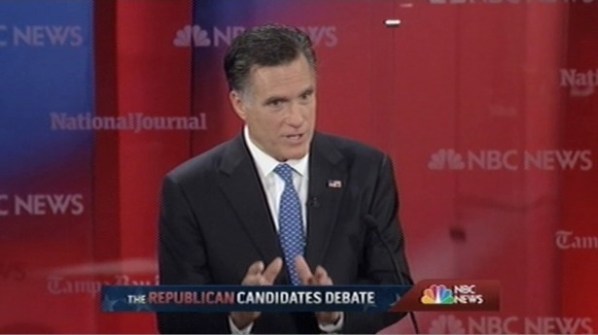
Mitt Romney‘s presidential chances are caught between the agenda of the conservative Tea Party wing and the demands of the Latino electorate which is increasingly alienated by The Republican Party’s stance on immigration, writes the ABC’s Michael Brissenden. Among the bowls full of unguarded truth spoken by Mitt Romney at that now infamous $50,000-a-plate dinner in Florida is a glaring recognition of a significant threat to the long-term survival of the Republican Party. Don’t worry about all the bon mots that will be reheated from that night and put into play for this election cycle, Mitt Romney might be caviar-coated toast but even he recognizes that his party has a structural problem which if not addressed soon could keep them out of the White House forever.
Since that video was aired much of the media discussion has focused on Mitt Romney’s declaration that it wasn’t his job to worry about the 47 per cent of voters who don’t pay tax and who believe they are victims with an overblown sense of entitlement to government support. But not much has been said about that other percentage of voter that neither he nor his republican Republican stable mates appear to be worrying about at this stage – Latinos. This is despite the fact that Mitt Romney himself acknowledges the growing increasing political significance of the US’s fastest-growing demographic.

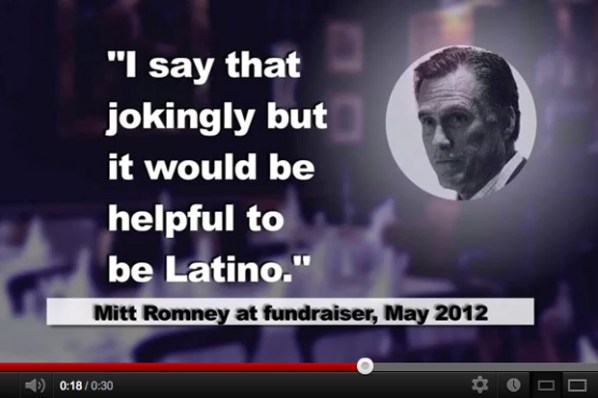
As the waiters (who may or may not have been Latino but were likely in the 47 per cent bracket referred to) looked on, Mitt told the gathering of wealthy donors that his father was born in Mexico but that unfortunately he had been born of American parents who just happened to be living in Mexico. If, however, he had been born of Mexican parents then he said, “I’d have a better shot of winning this … I say that jokingly, but it’d be helpful if they’d been Latino.”

And he knows it would be helpful because the Latino vote is becoming so important. Many Republicans admit it’s the reason why some of the swing states like Nevada and Colorado are no longer looking as much like swing states: because Latinos there, and all across the country, are overwhelmingly voting for the Democrats.

Even Florida has shifted – a state that because of the older generation of Cuban immigrants had been solidly posting broad Latino support for the Republican Party. Now the younger generation of Cubans are voting for the Democrats and the new influx of Latinos from elsewhere in Latin America are voting that way too.

What next? Texas? It was Ronald Reagan who famously said “Latinos are Republican. They just don’t know it yet.” way back the 1980s. He also granted a partial amnesty for illegal immigrants during his term, a position that at the moment is a world away from the sort of immigration policy that is championed by a party increasingly influenced by Tea Party wing.

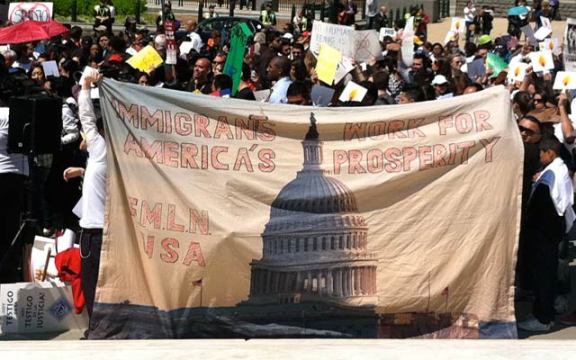
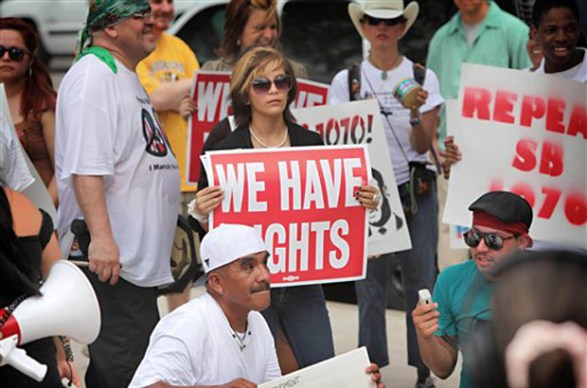
To win the nomination Romney has had to bend ever further to their agenda. He denounced the Dream Act (a bill Bill that would give conditional permanent residency to those brought to this country by their parents when they were children). He supported Arizona’s controversial tough law (SB 1070) that allows police to check a person’s immigration status at will. He also declared that ‘self deportation’ was the best way of dealing with undocumented immigrants.Romney says what the country US needs is a permanent fix to problems posed by and faced by the estimated 12 million illegal immigrants now in the country but he has so far been vague on what that permanent fix might be.

IN THIS VIDEO ARE CLIPS OF BOTH PRESIDENT OBAMA AND MITT ROMNEY BEING INTERVIEWED ON IMMIGRATION

As the Reagan quote suggests Latinos should be natural Republicans. Most are conservative, Catholic and entrepreneurial, they are here in the US because they believe in the transformational potential of the American dream, but almost every one of them has a relative, or knows someone who has a relative, who is in the country illegally. Immigration policy is a big deal in the Latino community and most sensible republicans Republicans know it. Many Republicans say privately that this is the last time they’ll be able to go to an election with their current immigration platform. They accept that they it is time to stop using terms such as “illegal aliens” and instead start talking about “opportunity”. Supporting the Dream Act is the first step.
Read More: ABC News

SUBSCRIBE to The Hispanic Blog to stay on top of the latest Latino news, politics and entertainment!

Don’t be shy SUBSCRIBE – COMMENT – LIKE ME -CIRCLE ME AND FOLLOW ME

If you have any questions, concerns or simply would like to get a quote on my Marketing, Public Relations, Social Media and/or Events services, please feel free to contact me.

God Bless and make it a fabulous day!

powered by Influential Access – “Transforming the Ordinary to EXTRAordinary!” – CEO – Jessica Marie Gutierrez – Creator of The Hispanic Blog #thehispanicblog
IS PRESIDENT OBAMA DESIGNATING LATINO ICON’S CESAR CHAVEZ’ HOME A NATIONAL MONUMENT?

THE HISPANIC BLOG IS THE LATEST HISPANIC NEWS BY JESSICA MARIE GUTIERREZ

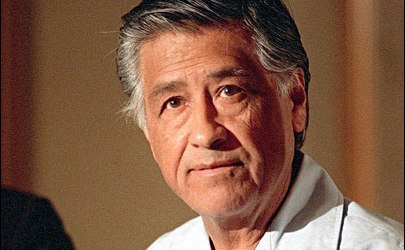
President Barack Obama is designating the California home of labor leader Cesar Chavez as a national monument, a move likely to shore up support from Hispanic and progressive voters just five weeks before the election.

Labor and civil rights leader Cesar Chavez is buried at La Paz in Keene, Calif., where President Obama will announce a national monument next week. (Mel Melcon / Los Angeles Times / October 1, 2012)

The White House said Monday that Obama will establish the Cesar E. Chavez National Monument in Keene, Calif., during a campaign swing through California next week. The property is known as La Paz, short for Nuestra Senora Reina de la Paz, or Our Lady Queen of Peace. The site served as national headquarters of the United Farm Workers union, as well as Chavez’s home, from the early 1970s until his death in 1993. Chavez is buried there and his gravesite will be part of the monument.

uestra Seňora Reina de La Paz (commonly known as La Paz) is a property encompassing 187 acres in the Tehachapi Mountains of eastern Kern County, California, and is associated with Cesar Chavez (1927-1993), one of the most important historic Latino leaders in the United States.

Obama said in a statement that Chavez “gave a voice to poor and disenfranchised workers everywhere,” adding that La Paz was at the center of significant civil rights events. By designating his home as a national monument, “Chavez’ legacy will be preserved and shared to inspire generations to come,” Obama said.

Obama said in a statement that Chavez “gave a voice to poor and disenfranchised workers everywhere.” (Photo: AP)

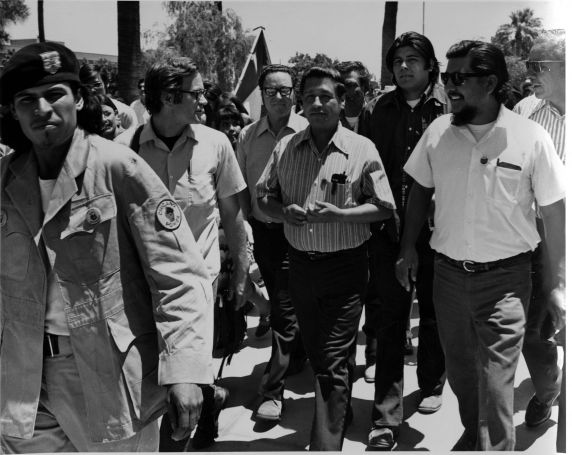
As head of the UFW, Chavez staged a massive grape boycott that raised awareness of the plight of predominantly Latino farm workers. His efforts were credited with inspiring millions of other Latinos in their fight for more educational opportunities, better housing and more political power.

Cesar Chavez Phoenix Rallies 05/1972 Photographer: El Malcriado

Creation of a national monument at La Paz follows designation of the site in the San Joaquin Valley near Bakersfield as a national historic site. Interior Secretary Ken Salazar announced the site’s designation on the National Register of Historic Places last year. This year marks the 50th anniversary of Chavez’s founding of the National Farm Workers Association, which later became the UFW. The Chavez monument will be the fourth national monument designated by Obama using the Antiquities Act.

Read More: Seattle Times

SUBSCRIBE to The Hispanic Blog to stay on top of the latest Latino news, politics and entertainment!

Don’t be shy SUBSCRIBE – COMMENT – LIKE ME -CIRCLE ME AND FOLLOW ME

If you have any questions, concerns or simply would like to get a quote on my Marketing, Public Relations, Social Media and/or Events services, please feel free to contact me.

God Bless and make it a fabulous day!

powered by Influential Access – “Transforming the Ordinary to EXTRAordinary!” – CEO – Jessica Marie Gutierrez – Creator of The Hispanic Blog #thehispanicblog

STATE FARM® JLO AND THE ENRIQUE IGLESIAS SWEEPSTAKES

THE HISPANIC BLOG IS THE LATEST HISPANIC NEWS BY JESSICA MARIE GUTIERREZ

State Farm is working with Enrique Iglesias and Jennifer Lopez to bring you the “State Farm® JLO & Enrique Sweepstakes.” The sweepstakes is an extension of the Enrique Iglesias & Jennifer Lopez Tour that began on July 14, 2012 and hits nearly 20 cities. State Farm will bring one lucky winner to a better state by offering them a trip to Miami to attend a VIP concert and give them the opportunity to meet Jennifer Lopez and Enrique Iglesias.  Known for their spectacular and engaging stage shows, both Enrique and Jennifer plan to give fans the ultimate summer concert experience. You can follow all the action on Twitter at #EnriqueJLOTour.

My best friends had the opportunity to attend the concert in Washington DC and theynot only loved it but had the most amazing experience! I am jealous that they were able to attend such an incredible event with two LATINO ICONS!!! If you happen to attend, check out the State Farm booths at each concert on the tour, they are setup with different activities going on.  At one of the booths you can enter to win the VIP TRIP TO MIAMI, so make sure to swing by and enter if you’re at the show. Who wouldn’t love to meet JLO and Enrique????

If you can’t make it to one of the shows don’t worry, check out the State Farm Latino Facebook Page and you can enter there as well.  The sweepstakes began July 20th and ends August 20th  so make sure to enter soon so you don’t miss this great opportunity!

SUBSCRIBE to The Hispanic Blog to stay on top of the latest latino news, politics and entertainment!

Don’t be shy SUBSCRIBE – COMMENT – LIKE ME -CIRCLE ME AND FOLLOW ME

If you have any questions, concerns or simply would like to get a quote on my Marketing, Public Relations, Social Media and/or Events services, please feel free to contact me.

God Bless and make it a fabulous day!

powered by Influential Access – “Transforming the Ordinary to EXTRAordinary!” – CEO – Jessica Marie Gutierrez – Creator of The Hispanic Blog #thehispanicblog

MEXICO’S PRESIDENTIAL ELECTION 2012: WHO WILL WIN, WHAT WILL CHANGE & WILL THERE BE DIRTY POLITICS ON ELECTION DAY?

THE HISPANIC BLOG IS THE LATEST HISPANIC NEWS BY JESSICA MARIE GUTIERREZ

Meet the Candidates: Enrique Peña Nieto, the Mexican presidential candidate for the Institutional Revolutionary Party (PRI), Josefina Vazquez Mota, presidential candidate for the ruling National Action Party (PAN), Andres Manuel Lopez Obrador, presidential candidate for the Party of the Democratic Revolution (PRD)

What will the change in “leadership” do for Mexico?

Will there be dirty politics in Mexico’s Presidential Election?

An employee of the Electoral Federal Institute (IFE) classifies and sorts votes casted by Mexicans living outside Mexico, on June 29, in Mexico city. Mexico will hold presidential elections July 1. Ronaldo Schemidt/AFP/GettyImages
Sunday’s presidential election represents a difficult test for Mexico’s wobbly democracy: Can it hold a fraud-free national vote in the midst of a raging drug war? The country’s top election official conceded recently that violence in parts of the country prevented election officials from completing some preparations. But the official, Leonardo Valdes, insisted that safeguards are firmly in place to prevent the kind of brazen electoral fraud once notorious in Mexico. And, he said, most of the strong-arming, threats and payoffs by drug traffickers remain limited to local politics and less influential in the national race.
June 10, 2012 A student from the anti-PRI youth opposition movement “Yo soy132” (“I am 132”) holds up a placard before the presidential candidates’ televised debate in Guadalajara. Tomas Bravo/Reuters
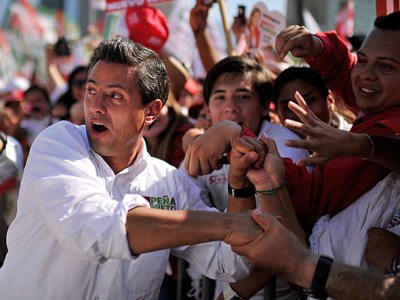
“Mexican presidential elections today are armored against fraud,” Valdes said. More than 1 million trained poll workers will be deployed in 143,151 voting stations, nearly all of which will also have monitors from at least three political parties. The specter of fraud looms especially large this year because the party that perfected the buying of votes and rigging of elections, the Institutional Revolutionary Party (PRI), is favored to return to the presidency with its telegenic candidate Enrique Peña Nieto. The PRI held on to power for seven decades through repression, coercion and co-opting opponents, until it was ousted in 2000. It is staging a hard-fought comeback.
“It will be the biggest march of your life” a comrade of La Izquierda Socialista (Marxist wing of Morena) said Wednesday, 27th of June, when leftist Andres Manuel Lopez Obrador (AMLO), like other candidates in the coming Mexican presidential elections, was to hold his final election rally or ‘cierre de campaña’ (campaign closing) as it is called here.
One of the largest demonstrations in the history of Mexico
AMLO directly mentioned the “I am 132” movement and the role it has played in energizing the population to defeat the bourgeois candidates. Also, when mentioning the organizations that back him he put an emphasis on MORENA (“Movement for National Regeneration), which is not an ‘official’ party yet but acts as a mass movement of more than 3 million members, many of whom youth and students, who are organized in brigades and committees all across the country. Tellingly, the mention of MORENA also got the loudest applause, possibly to the chagrin of some of the PRD bureaucrats present.
Despite tighter oversight and strengthened laws to ensure clean elections, analysts say Mexico remains vulnerable to many of the dirty tricks that flourished during PRI rule. Voter credentials make it easier to confirm a person’s identity, for example, but candidates and parties have turned to handing out discount cards to win influence with voters. Taking a page from the PRI’s old playbook, all three parties now bus voters to the polls on election day, giving them meals or other perks along the way. Another reported ploy is for voters to take a picture of their marked ballot with a cellphone and later show it to party operatives in return for cash.
“We continue to have elections that have serious problems in terms of legality, equality of access,” said John M. Ackerman, a law professor in Mexico City who has written about the country’s election laws.

While the PRI has opposed reform, Peña Nieto has run a campaign openly calling for structural changes in energy, tax, social security, education, labor etc, which is promising according to Fuente. “For others, though, a resounding victory by the PRI conjures up images of a return to one party-rule in Mexico, with the centralism and cronyism that characterized much of the PRI’s 70 year hold on power until 2000.” photo source: Danny Aguilar/Getty Images

Even before the first ballot was cast, leftist candidate Andres Manuel Lopez Obrador, Peña Nieto’s closest rival, warned of a fraud that would rob him “once again,” as he puts it, of the presidency.
To see how bad political posturing can get, rewind to 2006, when Lopez Obrador lost to Felipe Calderon by less than 1% of the vote. Lopez Obrador refused to recognize Calderon’s victory, unleashing a wave of paralyzing street protests. The following year, Congress passed electoral reforms that regulate air time by parties, prohibit attack ads and shorten to 90 days the amount of time presidential candidates may campaign. A big concern among Lopez Obrador supporters is the PRI’s strong grass-roots presence across most of Mexico’s 31 states and long history of vote-tampering during its rule. Leftists worry that the same well-oiled machinery could be used to inflate the vote on Peña Nieto’s behalf. But the odds for post-election controversy could hinge on the vote tally. A large margin would weaken potential charges of fraud, one reason why the Peña Nieto campaign hopes polls suggesting a blowout prove accurate.

photo source: The grandmother of police officer Jose Ramirez grieves over his body after he was killed by unidentified gunmen while on patrol in Las Joyas neighborhood of Acapulco, Mexico, in July 2010. Ramirez’s grandmother did not give her name, citing security reasons. Three other officers in the vehicle were also killed in the attack. AP/Bernardino Hernandez

Despite a drug war that has claimed more than 50,000 lives in almost six years, and traffickers’ penetration of many levels of Mexican life, most experts agree that the fertile field for narco-influence in politics remains at the local level. Traffickers are keen to control local police forces and city halls so that they can produce, sell and transport their drugs unimpeded. In elections in the state of Michoacan late last year, for example, cartels published ads in newspapers and made phone calls to regional officials with instructions on how to vote. In 2010, the ultra-violent city of Ciudad Juarez elected a mayor alleged to have had ties to a cartel, while in the state of Sinaloa, historic heartland of Mexican drug-trafficking, the compadre of one of the country’s top drug lords only narrowly lost the race for governor.

Starting in the mid-1990’s, different drug gangs increasingly became more violent, fighting to be on top, and gain more control and territory. After Gallardo was arrested, his lieutenant, Joaquin Guzman, started a war with other drug-lords that has since claimed over 50,000 lives.(Kellner) Little was done about the violence, and for a while, there were not even stories in the papers about these horrific and gruesome murders.

“We have had to recognize, especially locally, the presence and actions of criminal groups in the realm of elections,” Interior Minister Alejandro Poire said last week. “We are acting to prevent it … to guarantee that citizens be able to go out and vote in peace…. We cannot call this an election of fear.” The election has forced Mexicans to ponder the progress of democracy in their nation. Most celebrated the defeat of the authoritarian PRI in 2000 and welcomed a new party, Calderon’s National Action Party (PAN). But 12 years later, many feel, rightly or wrongly, that the experiment failed. Fundamental reforms of the educational system or of the monopolies that dominate and strangle the economy were not undertaken. Instead, Mexicans are saddled with a bloody war, a gnawing sense of terror and insecurity, and, now, the return of the very party they ousted.

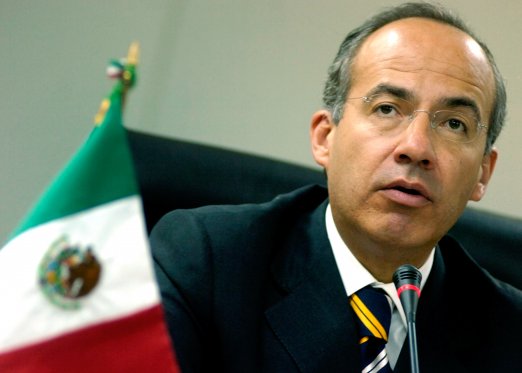
President Felipe Calderon (PAN)

“Millions of Mexican people thought that, almost magically, alternation [one party handing off to another] would bring about profound changes in Mexico,” said Alfonso Zarate, a political analyst in Mexico City. But a PRI victory, he said, “would mean the censure and disapproval of the PAN governments. It means disillusionment.” At the same time, the flow of power to the state governors since the centralized PRI regime was ousted has created powerful fiefdoms where governors can rule without the checks and balances of a healthy democracy. “On the state level, we have gone backward,” Zarate said.

May 13, 2012 Josefina Vazquez Mota, presidential candidate for the ruling National Action Party (PAN), waves Mexico’s flag during a rally in Veracruz. Oscar Martinez/Reuters

As even more mature democracies have shown, an open multi-party system does not necessarily produce stellar candidates. Numerous Mexicans have expressed near-existential dismay over the choices they have in this election; they chafe at the prospect of the PRI’s return, can’t stomach more of the current, discredited government, and see Lopez Obrador as an unreformed erratic. “This is a democratic process,” Mexican historian Enrique Krauze said. But “the democratic voter — the voter who in Mexico believes deeply in democracy — has a difficult choice to make.”

Read More: LA Times

SUBSCRIBE to The Hispanic Blog to stay on top of the latest latino news, politics and entertainment!

Don’t be shy SUBSCRIBE – COMMENT – LIKE ME -CIRCLE ME AND FOLLOW ME

If you have any questions, concerns or simply would like to get a quote on my Marketing, Public Relations, Social Media and/or Events services, please feel free to contact me.

God Bless and make it a fabulous day!

powered by Influential Access – “Transforming the Ordinary to EXTRAordinary!” – CEO – Jessica Marie Gutierrez – Creator of The Hispanic Blog #thehispanicblog
SUPREME COURT SHARED ITS DECISION ON SB1070: “THEY ARE ASKING FOR OUR PAPERS, SO LET’S SHOW THEM OUR VOTER REGISTRATION CARDS!”

THE HISPANIC BLOG IS THE LATEST HISPANIC NEWS BY JESSICA MARIE GUTIERREZ

Photo: Creative Commons/Talk Radio News Service

The Supreme Court struck down much of Arizona’s anti-illegal immigration S.B. 1070 law saying states have little authority to set immigration rules against the wishes of the president or Congress. But the states’ remaining authority is enough to deter prospective illegal immigrants, say reform advocates.

SOURCE: AP Photo / Matt York

The judges did allow state law enforcement officials some ability to quiz people about their legal status during traffic stops or arrests. The court had earlier OK’d state rules requiring employers to check the residency of prospective hires.
“States now have broad latitude to carry out a policy of attrition through enforcement,” said Dan Stein, president of the Federation for American Immigration Reform. “It is now up to [state governments] to choose whether to protect the interests of illegal aliens or the interests of citizens,” he said.

“Today’s ruling from the United States Supreme Court in the Arizona immigration case contains a major victory for law enforcement in South Carolina,” said that state’s attorney general, Alan Wilson. “The most important element of South Carolina’s [immigration] law, the ability of law enforcement to verify a suspected illegal alien’s status upon an ‘authorized lawful detention,’ was found to be Constitutional on its face,” he said in a June 25 statement.

The court’s decision said the Constitution gives Congress the power to set immigration laws. Existing federal immigration laws supersede Arizona’s laws, said the court, whose decision bars laws requiring non-citizen residents to carry documents showing they are legal residents and curbs laws that allow the arrest of illegal immigrants.

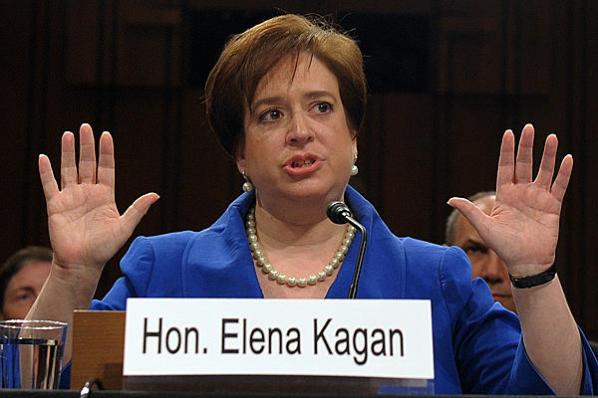
Kagan recused herself because she had been Obama’s Solicitor General when the federal government led the lawsuit against the state of Arizona.

Supreme Court Justice Elena Kagan recused herself from the decision, leaving 8 judges to settle the case. The decision was made by a five-to-three vote, with Justices Antonin Scalia, Clarence Thomas and Samuel Alito dissenting. “Because Congress has occupied the field, even complementary state regulation is impermissible,” said Justice Anthony Kennedy, who wrote the June 25 decision. Kennedy was nominated by President Ronald Reagan. But Scalia slammed his colleagues’ failure to guard states’ ability to govern themselves.

“I believe that each state has the duty — and the right — to secure our borders and preserve the rule of law,” Romney said. Republican presidential candidate seemed to ally himself with Scalia and state legislators. “Arizona is entitled to have ‘its own immigration policy’ — including a more rigorous enforcement policy — so long as that does not conflict with federal law… [and] it is beyond question that a State may make violation of federal law a violation of state law as well,” Scalia wrote in a biting dissent.
“Today’s opinion… deprives States of what most would consider the defining characteristic of sovereignty: the power to exclude from the sovereign’s territory people who have no right to be there,” he wrote. “Neither the Constitution itself nor even any law passed by Congress supports this result.”

                                                                             photo source: Jonathan Gibby/Getty Images

Progressives-allied groups, such as La Raza, had argued that Arizona’s law is unconstitutional because the federal government should have the sole authority to enforce immigration rules. They also argued that police enforcement would tend to focus on subgroups, such as Latinos or Asians. The court approved the residency checks of suspected illegal immigrants who are arrested or stopped for suspected non-immigration violations, but said the checks would be subject to continued review and approval by federal judges.

2009 Getty Images

“If the law only requires state officers to conduct a status check during the course of an authorized, lawful detention or after a detainee has been released, the provision would likely survive,” said the court. “This opinion does not foreclose other preemption and constitutional challenges to the law as interpreted and applied after it goes into effect,” said the court.

SUBSCRIBE to The Hispanic Blog to stay on top of the latest latino news, politics and entertainment!

Don’t be shy SUBSCRIBE – COMMENT – LIKE ME -CIRCLE ME AND FOLLOW ME

If you have any questions, concerns or simply would like to get a quote on my Marketing, Public Relations, Social Media and/or Events services, please feel free to contact me.

God Bless and make it a fabulous day!

powered by Influential Access – “Transforming the Ordinary to EXTRAordinary!” – CEO – Jessica Marie Gutierrez – Creator of The Hispanic Blog #thehispanicblog