Jessica Marie Gutierrez's avatarTHE HISPANIC BLOG

THE HISPANIC BLOG IS THE LATEST HISPANIC NEWS BY JESSICA MARIE GUTIERREZ

The numbers from the U.S. Census dazzle.  One out of six residents of America is Hispanic. Over the past decade this group grew 43%.  By 2014, its purchasing power will reach more than $1.5 trillion.  Mmmmm, if you think about it they will eventually constitute the 10th largest economy in the world.  This should be a gold mine for marketers.  But, it isn’t, at least not yet.  Investors have to be cautious about companies gushing about the potential.  That might all it turns out to be – potential.

Who’s Tapping Into the Surging Hispanic Market?

The reality is that the Hispanic market is a tough nut to crack, at least for outsiders, that is those who aren’t Hispanic.  Too many marketers made that same wrong assumption in pitching the over-50 audience, which is really at least…

View original post 803 more words

https://thehispanicblog.com/2012/04/15/2776/

WHO IS MIKE OQUENDO: MEET THE PUERTO RICAN FROM CHICAGO BEHIND MIKEY O COMEDY PRODUCTIONS

THE HISPANIC BLOG IS THE LATEST HISPANIC NEWS BY JESSICA MARIE GUTIERREZ

“If we want to compete at another level, then we have to behave at that other level.”

Mike Oquendo photo source: Mikey O Comedy Productions

Chicago is an awesome place for standup, it’s an awesome place for comedy. The audiences here are amazing,” said Mike Oquendo, the man behind Mikey O Comedy Productions. The son of Puerto Rican parents and Chicago native, Oquendo has managed to maintain a solid comedic reputation for 10 years, has given back to the community and has made people of all different backgrounds laugh.

For the last five years, Oquendo’s production company has done no less than 80 shows in a year. Last year, they finished off with 114 shows. Catering to a predominantly Latino audience, Oquendo said that when he first began hosting these comedy nights, there was a thirst for it. “When people heard ‘Latino comedy’ they said, ‘What’s that?’ When people come to a show, I ask how many people have been to a comedy show. About half of them raise their hands,” he explained. Oquendo owes his comedic passion to the Freddie Prinze comedy album.

“I remember being fascinated by the fact that this guy was a Puerto Rican comedian and there was an album out in which this guy was telling the Puerto Rican story,” he said. “There was a part of me that learned at that moment that that was ok; that talking about that experience was nothing to be ashamed about.”

From high school he enlisted in the U.S. Army where he was a medic. Oquendo used his experience and worked in hospitals in Chicago. Eventually, he went on to become a dispatcher for the Chicago Fire Department getting jobs where he could, with comedy in the back of his head.

grant Jose “Pepe” Vargas, director of the Chicago Latino Film Festival. (EFE)
FOX NEWS LATINO

It was Pepe Vargas, executive director of the International Latino Cultural Center, who Oquendo says, gave him his big break and first real job with being a member of the gala production team. After, he went on to work at museums and eventually the Adler Planetarium where he was in charge of special events, still having an incredible passion for comedy.

Mike Oquendo photo source: Mikey O Comedy Productions

“Taking that combination for production experience and my love for comedy gave birth to what I do today,” he explained. “I’ve done every single job in this business: I’ve been the box office guy, I’ve been the coat check, I’ve been the janitor, I’ve been the guy that delivers the sound equipment, I’ve been the host, I’ve been the usher. I wanted to be in it so badly, that I took any job to be in the mix.”


Fourteen years later, Oquendo has left a lasting impression on the community he decided to stick to. Dedicating funds to particular charities and organizations that support the arts, among others, Oquendo says that his team raised just under $90,000 in 2011, 70 percent of that, arts related. Inclusive of production, Oquendo says his biggest job is motivating his comedians to be professional and authentic in their performances. Taking experiences from his youth to create standards and upholding them, Oquendo believes that if he demands more, the performers will deliver at a higher quality.

Read More: Extra News

SUBSCRIBE to The Hispanic Blog to stay on top of the latest latino news, politics and entertainment!

Don’t be shy SUBSCRIBE – COMMENT – LIKE ME -CIRCLE ME AND FOLLOW ME

If you have any questions, concerns or simply would like to get a quote on my Marketing, Public Relations, Social Media and/or Events services, please feel free to contact me.

God Bless and make it a fabulous day!

powered by Influential Access – “Transforming the Ordinary to EXTRAordinary!” – CEO – Jessica Marie Gutierrez – Creator of The Hispanic Blog #thehispanicblog


IS CUBA IMPLEMENTING MIGRATORY REFORM IN A FEW MONTHS?

THE HISPANIC BLOG IS THE LATEST HISPANIC NEWS BY JESSICA MARIE GUTIERREZ

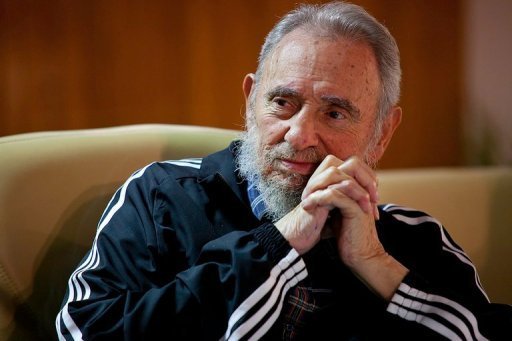
Former Cuban President Fidel Castro accused Barack Obama of looking down on Latin America.

Cuba will implement migratory reform in the next months to eliminate the old restrictions impeding Cubans from traveling abroad

“One of the issues currently under discussion at the highest level of the Cuban State is the issue of migration. We will carry out a radical and deep immigration reform in the coming months, in order to eliminate this type of restriction,” said Alarcon, president of the National Assembly of the People’s Power. Alarcon said the migratory control in the last five decades was one of the resources used by the revolution that began in 1959 to defend itself from “the long terrorist campaign,” for which some Cuban immigrants were responsible. “Now things have changed a lot,” Alarcon said, adding that “nearly half a million Cubans living abroad visit us each year. The vast majority of Cuban emigrants have normal relations with their country of origin.” “Currently it is an economic emigration, whose fundamental interest is to keep peaceful links with its country of origin, they have family and friends on the island, and they wish above all stability,” he said. “This new reality leads us to a ‘substantial’ reform of our migratory policy. Some rules must be changed and others eliminated,” Alarcon saidAlarcon also recalled that the migration issue has been always a “weapon used by the U.S. government to destabilize the revolution.” Cubans are the only foreign immigrants who may automatically gain residence after a year in U.S. territory according to the Cuban Adjustment Act, established in 1966 to encourage illegal Cuban immigration by crossing the Florida Strait in unsteady boats, he said.

The first announcement on a migratory reform in Cuba was made in August 2011 by President Raul Castro at the parliament and was ratified in December

HAVANA – People walk through the streets December 3, 2006 in Havana, Cuba. The island nation continues to wait for a glimpse of President Fidel Castro, who has ruled Cuba since 1959, he temporarily transferred his powers as president to his younger brother Raul Castro, the defense minister, due to his ailing health on July 31. Since that time he has been seen by the public only in videos and photographs released by the government. (Photo by Joe Raedle/Getty Images)

Castro’s government has removed several restrictions observed in the country for half a century, but Cubans still can travel into and out of the country freely. To travel abroad, a Cuban citizen must suffer a winding net of limitations and expensive permits that cost nearly 1,000 dollars. If successful, the travel permission is granted for 30 days and may be extended ten times. People must return within the time limit, otherwise they will lose the right to reside on the island.

Read More: Business Ghana

SUBSCRIBE to The Hispanic Blog to stay on top of the latest latino news, politics and entertainment!

Don’t be shy SUBSCRIBE – COMMENT – LIKE ME -CIRCLE ME AND FOLLOW ME

If you have any questions, concerns or simply would like to get a quote on my Marketing, Public Relations, Social Media and/or Events services, please feel free to contact me.

God Bless and make it a fabulous day!

powered by Influential Access – “Transforming the Ordinary to EXTRAordinary!” – CEO – Jessica Marie Gutierrez – Creator of The Hispanic Blog #thehispanicblog


PRESIDENT OBAMA JOINS THE MEETING OF NORTH AND SOUTH AMERICAN LEADERS AT THE SUMMIT OF THE AMERICAS

THE HISPANIC BLOG IS THE LATEST HISPANIC NEWS BY JESSICA MARIE GUTIERREZ

President Barack Obama leaves today for a trip to a summit in Latin America that may have as much resonance in domestic politics as in hemispheric economics. Discussions at the meeting of North and South American leaders in the resort city of Cartagena, Colombia, will cover trade, economic growth and the battle against drug trafficking. Yet the White House is mindful that about 16 percent of U.S. residents trace their roots to the region, and that group may play an outsized role in the November presidential election.

photo source AP

“The president desperately needs high voter turnout among Hispanic Americans,” said Douglas Brinkley, a presidential historian at Rice University in Houston. “It doesn’t hurt for him to be in Colombia, and being seen with Latino leaders of the hemisphere is not a bad photo-op in an election year.”

Obama’s campaign is gearing up for a close election fight against Republican Mitt Romney, putting a premium on gaining an edge with any voting group. Obama is actively courting Hispanics — who gave him 67 percent of their votes in 2008 — with a Spanish-language website and by recruiting Spanish-speaking volunteers and using Spanish-language voter registration forms and phone banks.

President Barack Obama addresses the Congressional Hispanic Caucus Institute’s 34th Annual Awards Gala in Washington, Wednesday, Sept. 14, 2011. (AP Photo/Cliff Owen)

“Key swing states that have large Hispanic populations will be extremely attentive” to the trip, said Susan MacManus, professor of political science at the University of South Florida in Tampa. “Many feel that Latin and South America has been ignored.”

Swing State

One of those states is Florida, with 29 of the 270 electoral votes needed to win the presidency and where Hispanics make up 22.5 percent of the population. Before Obama meets with the other 32 leaders at the Summit of the Americas he’s scheduled to stop at the Port of Tampa.The theme for that visit, as at the summit, will be expanding U.S. exports and gaining greater access to Latin markets for small businesses. About 40 percent of all exports from Tampa go to Latin America, and the port means 100,000 jobs and generates almost $8 billion in annual economic impact, according to its website.

President Obama waves as he arrives to speak at the Port of Tampa in Tampa, Fla., Friday April 13, 2012. (AP Photo/Chris O’Meara) CHRIS O’MEARA — AP

Total U.S. exports in the Americas amount to $700 billion a year out of $1.5 trillion worldwide, according to Commerce Department figures. Among the summit participants, Canada is the biggest U.S. trading partner, Mexico is the third largest and Brazil ranks ninth.

Hemispheric Trade

U.S. President Barack Obama speaks during a visit to the Port of Tampa on April 13, 2012 in Tampa, Florida. The President, on his way to the Summit of the Americas in Colombia, used the visit to emphasis small business trade with countries in Latin America.
(April 12, 2012 – Photo by Joe Raedle/Getty Images North America)

“The U.S. economy benefits substantially from our trade in the Americas, and over 40 percent of our exports currently go to the Americas,” Ben Rhodes, Obama’s deputy national security adviser for strategic communications, told reporters in an April 11 briefing. “Those exports are growing faster than our trade with the rest of the world.”

US President Barack Obama with Brazil’s President Dilma Rousseff Photo: Reuters

Latin America managed to largely escape the financial crisis of 2008-2009. Brazil (BZGDYOY%) is the world’s sixth largest economy, and the ranks of the middle class have swelled. The World Bank classifies most countries in the region as middle- income or higher. As countries in the region have grown more prosperous, they are less reliant on the U.S., the world’s biggest economy. That growth also comes as the Obama administration has made a deliberate pivot to focus more on Asia.

Diminished Role

Obama is “quite comfortable with the diminished role of the United States in the hemisphere” and that it’s “the natural order of things,” said Andrew Selee, director of the Mexico Institute at the Wilson Center. “The U.S. is going to continue to be engaged but no longer has the domineering authority it once did.”

President Obama arrives in Cartagena, Colombia, on April 13 for the Summit of the Americas

The summit host, Colombian President Juan Manuel Santos, has an agenda focusing on boosting advances in technology, finalizing the free-trade deal between the U.S. and Colombia, lessening income inequality and improving responses to natural disasters, such as earthquakes.

Obama remains popular in Central and South America, though promises to rebuild cooperation at the last summit, in 2009 in Trinidad, may have fallen short, according to the Inter-American Dialogue, a Washington-based policy group that focuses on the Western Hemisphere.

“The U.S. must regain its credibility in the region by dealing seriously with an unfinished agenda of problems — including immigration, drugs and Cuba — that stands in the way of a real partnership,” according to a policy report issued yesterday.

Illicit Drugs

Bigger issues that aren’t on the official agenda are legalization or decriminalization of illicit drugs and whether Cuba should be allowed at the next summit. Selee said that while he doesn’t expect “dramatic outcomes” from the summit, one area where “sparks” might fly would be the debate raging in Latin America over drugs. The presidents of Colombia and Mexico have called for a discussion about easing penalties for drug use. Obama’s aides say the U.S. will resist such proposals.

Mexico’s President Felipe Calderon (R) speaks to journalists as Colombia’s President Alvaro Uribe listens during a news conference at the presidential residence Los Pinos, in Mexico City November 10, 2008. REUTERS/Henry Romero (MEXICO)

“The president doesn’t support decriminalization,” Dan Restrepo, Obama’s senior director for Western Hemisphere Affairs, told reporters.

There is friction between the U.S. and some summit leaders over restrictive U.S. policies toward Cuba. Ecuador’s President Rafael Correa is boycotting the summit because of Cuba’s absence. The region’s sole dictatorship is the only nation excluded from the gathering of heads of state from the Western Hemisphere.

Brazilian President

Brazilian President Dilma Rousseff told Obama during a White House meeting April 9 that this should be the last such regional meeting without Cuba in attendance. In an e-mail interview with a group of Latin American newspapers, Obama said his administration has done more than any in decades to improve U.S. relations with Cuba and blamed the communist regime for the nation’s exclusion from the summit.

SOURCE: AP/ Pablo Martinez Monsivais
President Barack Obama meets with Brazilian President Dilma Rousseff at the United Nations in September 2011.

“We’re looking for a new era in the relationship between our two countries,” Obama said, according to a transcript of the interview published in Spanish by Bogota’s El Tiempo newspaper. “History shows that the longing for liberty and human dignity can’t be ignored forever. No authoritarian regime lasts forever. The day will arrive when the Cuban people will be free to determine their own destiny.”

While Obama moved to ease travel restrictions earlier in his presidency, the U.S. wants Cuba to release political prisoners, increase political freedoms and adopt democratic principles.

File: Barack Obama attends Cuban Independence Day celebrations in Miami in May during his run for president.
Read more: FOX NEWS

“Cuba authorities continue to deny the Cuban people their universal rights and the president will continue to stand up for those rights,” Restrepo said.

The policy is in keeping with those of past U.S. presidents from both parties, said MacManus, the Florida professor. As with other issues at the summit, Obama’s position on Cuba has political implications.

“If Obama can keep some of the Cubans who voted for him last time, appease them with that kind of stance, then that could be the difference” in winning Florida, MacManus said.

Read More: Bloomberg 

SUBSCRIBE to The Hispanic Blog to stay on top of the latest latino news, politics and entertainment!

Don’t be shy SUBSCRIBE – COMMENT – LIKE ME -CIRCLE ME AND FOLLOW ME

If you have any questions, concerns or simply would like to get a quote on my Marketing, Public Relations, Social Media and/or Events services, please feel free to contact me.

God Bless and make it a fabulous day!

powered by Influential Access – “Transforming the Ordinary to EXTRAordinary!” – CEO – Jessica Marie Gutierrez – Creator of The Hispanic Blog #thehispanicblog


DOES HISPANIC EDUCATION HAVE A STRONG IMPACT ON ECONOMIC DEVELOPMENT?

THE HISPANIC BLOG IS THE LATEST HISPANIC NEWS BY JESSICA MARIE GUTIERREZ

photo source: Fox News Latino

The level of Hispanic education, skills and capabilities will have a strong impact on the economic development and competitiveness of the U.S. The level of education among the Hispanic community is not only a social issue but is also a vital economic concern.

There are currently 50 million Hispanics living in the United States, a figure that represents 16 percent of the country’s total population. Hispanic children between five and 17 years of age often face educational challenges, usually scoring lower than the average student in annual reading and mathematics standardized tests. In this context, there are three main aspects to consider in the debate on educational public policy for Hispanics: the increase in their school enrollment rates in the last decade, their low level of educational attainment and the educational gap between whites and Hispanics in the U.S.

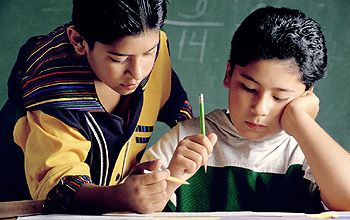
Credit: © 2007 JupiterImages Corporation

Compared to other ethnic groups in the country, Hispanics lend a higher degree of importance to education, according to a 2009 Pew Research Center study. This fact, in addition to the effect of public policies and the increased influx of immigrants in the country, contributes to the growing enrollment rates among the Hispanic community. According to the White House Initiative on Educational Excellence for Hispanic Americans, the average enrollment of K-12 Hispanic students is higher than the average for the general population.

However, reports have shown that the schools that Hispanics are enrolled in are typically lower quality school systems. In addition, the dropout rate in high school is 17.6 percent among Hispanics, as compared to 5.2 percent among the white population and 8.1 percent among the entire U.S. population, according to the National Center for Education Statistics.

Quality continues to be an elusive goal. Although there is a reduction in the gap between the white population and Hispanics in the National Assessment of Educational Progress (NAEP) mathematics average scores from 1973 to 2008, this change is not sufficient evidence to show a decrease in the overall educational gap of Hispanics. Regarding SAT scores, Hispanics are scoring lower in mathematics and critical reading than the average U.S. student.

Elements that are prompting the problems associated with the characteristics described above include:

(i) Factors that influence educational achievement.

According to the U.S. Department of Education, there are four factors that affect student achievement: Having a mother who has less than a high school education, being a member of a family on welfare or receiving food stamps, living in a single-parent family, and having parents whose primary language is one other than English. By the end of the 20th century, “about seven out of 10 entering kindergarten from Hispanic or Black families have one or more of these risk factors, compared to about three out of 10 of those from white families.

(ii) Low quality of the schools that they attend.

Hispanics are more likely to attend minority-heavy public schools that are often low performing.

(iii) Constraints to parents when it comes to the possibility of choosing their children’s schools.

The White House Initiative for Hispanics highlights how the challenge of the low educational achievement that Hispanics suffer from represents a problem not only for the community, but also for the entire country, given the importance of this minority within American society. Addressing the challenges that Hispanics face in the U.S. has become quite serious and their growing importance in number and participation in social, economic and political life gives greater credence to their growing demands to live in a more fair and prosperous society.

Read more: Fox News Latino

SUBSCRIBE to The Hispanic Blog to stay on top of the latest latino news, politics and entertainment!

Don’t be shy SUBSCRIBE – COMMENT – LIKE ME -CIRCLE ME AND FOLLOW ME

If you have any questions, concerns or simply would like to get a quote on my Marketing, Public Relations, Social Media and/or Events services, please feel free to contact me.

God Bless and make it a fabulous day!

powered by Influential Access – “Transforming the Ordinary to EXTRAordinary!” – CEO – Jessica Marie Gutierrez – Creator of The Hispanic Blog #thehispanicblog