IT’S OFFICIAL MITT ROMNEY GETS THE GOP NOMINATION

THE HISPANIC BLOG IS THE LATEST HISPANIC NEWS BY JESSICA MARIE GUTIERREZ
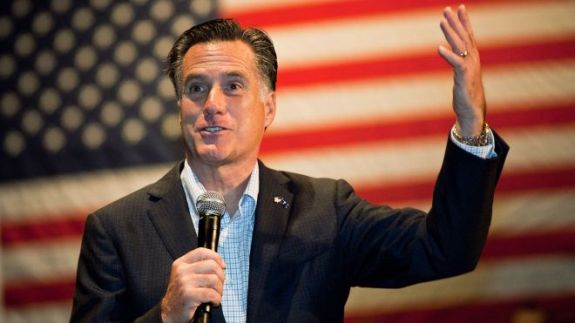
photo source: Getty Images

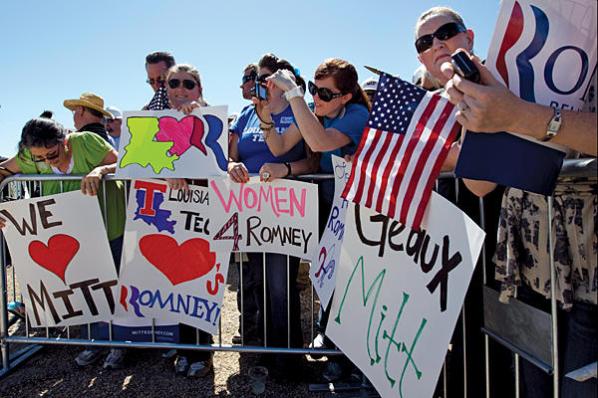
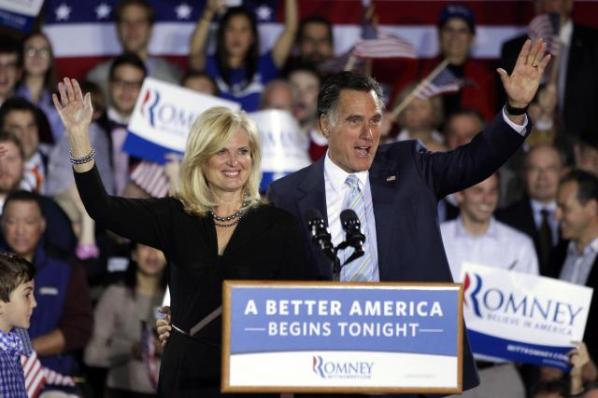
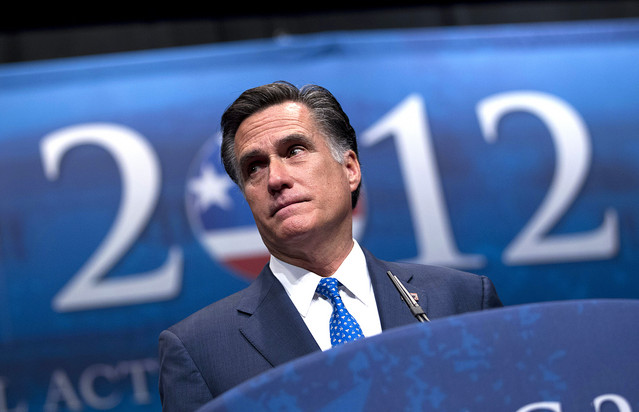
This is it. Today, Willard Mitt Romney goes where no semi-Mexican Mormon has  gone before. Romney is officially  the Republican nominee for president. Forget presumptive. Forget putative. Forget probable. When Texas  doled out its 155 delegates, that pushed Romney over the 1,144 he needs to  clinch the title, and transform himself from front-runner to official  nominee.

(L.- r.) Jae C. Hong/AP, Carolyn Kaster/AP

The battle between Romney and President  Obama began weeks ago, after it was clear there were no real contenders left to  challenge the former Massachusetts governor. Mitt Romney’s victory in the Texas primary on Tuesday gives him enough delegates to capture the Republican presidential nomination, but he remains some distance from recovering from the damage caused by months of tussling with rivals in his own party.

As Texans cast their ballots, Romney was campaigning in two swing states — Nevada and Colorado — that attest to the consequences of the nomination battle. Both states are home to large populations of Latinos. But Romney’s conservative positioning on immigration during the primaries has helped to spike his unpopularity among Latinos. He attacked rival Rick Perry, for instance, for granting in-state tuition to illegal immigrants.
Romney can afford to lose the Latino vote, but not by the lopsided proportions seen in recent polls. A national survey released last week by NBC, the Wall Street Journal and Telemundo found Obama leading Romney among Latino voters 61% to 27%. Romney has been working to address the issue. Speaking to a Latino audience last week in Washington, he called the failure of schools that educate minority students “the civil rights issue of our time.” Polls have long found education to be a top priority for Latino voters.

Romney’s rightward tilt during the primaries also created problems for him with women. A poll released last week by ABC and the Washington Post showed 51% of female voters support Obama and 44% back Romney. Obama’s reelection campaign has sought to depress Romney’s standing among women by highlighting conservative stands that the former Massachusetts governor took during the primaries, such as his pledge to end public funding of Planned Parenthood and his support for a measure that would let any employer deny birth control coverage to employees based on moral objections.

Steven Senne/AP

After weeks of sparring between Romney and Obama, it’s easy to forget how much pressure Romney faced from his party’s conservative wing during the primaries.

For weeks at a time, Perry, Herman Cain, Newt Gingrich and Rick Santorum each ran ahead of Romney in national polls of Republicans, thanks largely to conservative resistance to Romney, who was perceived as more moderate.
Ultimately, only Santorum, who had a stronger claim than Romney on ideological purity, posed a serious threat, winning 11 contests in states spread across the nation’s heartland. Santorum dropped out of the race last month after losing the Wisconsin primary.
 In the end, it took Romney nearly five months to clinch the nomination with his win in Texas. He needed 58 of the 152 Texas delegates at stake Tuesday to reach the 1,144 needed to clinch the nomination, according to the Associated Press. With no opponents actively campaigning, Romney easily hit the mark.

Photographer: Evan Vucci/AP

“I am honored that Americans across the country have given their support to my candidacy and I am humbled to have won enough delegates to become the Republican Party’s 2012 presidential nominee,” Romney said in a statement Tuesday evening. “Our party has come together with the goal of putting the failures of the last three-and-a-half years behind us.”
Over the next several weeks, Romney will pick up more delegates in the six remaining primaries, including California’s on June 5.

Read More: Chicago Tribune

SUBSCRIBE to The Hispanic Blog to stay on top of the latest latino news, politics and entertainment!

Don’t be shy SUBSCRIBE – COMMENT – LIKE ME -CIRCLE ME AND FOLLOW ME

If you have any questions, concerns or simply would like to get a quote on my Marketing, Public Relations, Social Media and/or Events services, please feel free to contact me.

God Bless and make it a fabulous day!

powered by Influential Access – “Transforming the Ordinary to EXTRAordinary!” – CEO – Jessica Marie Gutierrez – Creator of The Hispanic Blog #thehispanicblog

WHICH EIGHT STATES WILL SHAPE THE 2012 ELECTION

THE HISPANIC BLOG IS THE LATEST HISPANIC NEWS BY JESSICA MARIE GUTIERREZ

CLICK HERE TO VIEW THE PBS SPECIAL

JUDY WOODRUFF: Christina, what does it look like, 50/50?
CHRISTINA BELLANTONI: Yeah, absolutely.
You’ve got — first of all, you’re going to see dozens and dozens of polls over the next five months. And some of them are going to be a little bit more important than others. But one of the things that you’re seeing nationally is that, since it’s been clear that Mitt Romney is the presumptive Republican nominee here, he’s starting to inch up a little bit on the president in national perspective.

But in the battleground states, where the president’s team has really invested a lot of money in their ground game, their campaign infrastructure, hiring a lot of people and registering voters, you’re seeing it a little bit stronger for the president in some of them and then Romney having a little bit of ground to make up in both.
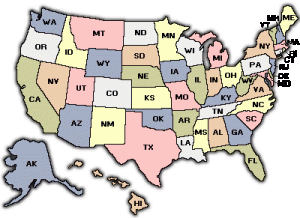
JUDY WOODRUFF: So, speaking of those battlegrounds states, if you look at a map of the United States — and we just happen to have our Vote 2012 Map Center right here to show everybody — you see those states in blue that are considered either solidly or leaning Democratic. In red, we’re showing the states that are solidly or leaning Republican, and then yellow, eight states that are tossups.
So, Stu, let’s talk about those. And let’s start on the East Coast and work our way west with Florida, which keeps everybody guessing, at least at this stage of the campaign. What does Florida look like?

photo source: Flickr

STUART ROTHENBERG: Right, certainly as it did in 2000.
Well, there’s a recent NBC News/Marist poll that has the president up by four points, 48 to 44. That’s among registered voters. If you look historically at Florida, Judy it performs more Republican than the country as a whole. That is a few points more Republican. So, although President Obama won it last time, he didn’t win it by anything close to the over seven points he won nationally.
I think you have to look at Florida in a number of ways. Hispanics are an important constituency, senior citizens, of course. But really Florida is three states in one. North Florida performs the way the South does. It’s conservative. South Florida, particularly the Gold Coast, the Miami-Broward portion of the state, is more like New Jersey. So Florida is going to be determined probably by swing voters in the I-4 Corridor, that central part of the belt stretching from Orlando all the way over to Tampa-St. Pete.
JUDY WOODRUFF: Which we hear about in every election.
So, let’s move up a little bit north there to Virginia.
CHRISTINA BELLANTONI: Right. Virginia is the battleground of all battlegrounds. Of course, it did not vote Democratic — it voted Democratic in 2008, but it hadn’t since 1964. This was a big win for Barack Obama in 2008.
And they did that in part by targeting a lot of the expanding suburbs in the Washington area in Northern Virginia and also looking at this military region, Hampton Roads, and also targeting younger voters and the changing demographics of Virginia.
So, this is something — you’re going to see this, both campaigns put a lot of energy and resources there. It’s very easy for the president to cross over into Virginia and campaign here. You saw him hold one of his first reelection rallies in Richmond.
And you’re going to see a lot more there. And Mitt Romney has made very clear he’s going to contest here. When you look at where these campaigns are advertising, Virginia is almost always on the list for the campaigns and the super PACs that are backing them.
JUDY WOODRUFF: So long, as you say, a state the Republicans could almost take for granted, but not anymore.
So, Stu, let’s turn to the Midwest, and quickly look at three states there, starting with Ohio.
STUART ROTHENBERG: So there’s a recent NBC News/Marist poll that shows the president up by five points, though only in the mid-40s, against Mitt Romney. Ohio went for Bush in 2000 and 2004.
It then went for President Obama, not the way it did it nationally. Nationally, the president won by seven. In Ohio, it was about 4.5 points. I think one of the interesting things about Ohio is the economic recovery. The automobile industry and the overall sense that the economy is coming back, will that help the president enough to help him carry a state that, all things being equal — and they are never equal, Judy — but all things being equal, the Republicans have a slight advantage in.
JUDY WOODRUFF: Okay, and near and still in the Midwest, Christina,  Iowa.
CHRISTINA BELLANTONI: Iowa, this is a really interesting state because it has swung for both parties over the presidential years.
And, obviously, it’s very near and dear to President Obama’s heart because it is where he was able to sort of start his path to the Democratic nomination in 2008 by winning the caucuses. He put a lot of investment in getting the young college voters in that state to get engaged for him. He has campaigned there many times.
He has sent the vice president there many times. But it’s also an interesting state because the economy is a little bit better in Iowa than it is in other parts of the country. And you’re also seeing a pretty strong Republican effort in some of the down-ballot races. So, you have got some competitive congressional races. You’re seeing a lot of advertising at that level.
So, this is not a state that the Obama campaign can take for granted this year.
JUDY WOODRUFF: And, Stu, quickly to Wisconsin, which is a state that all — that also has a very closely watched governor recall.
STUART ROTHENBERG: Right. Right.
And the state is very polarized. The recall shows the race close, as Gov. Scott Walker facing a recall against Tom Barrett. Fascinating state, Judy. In 2000 and 2004, this state went Democratic by each time less than one-half of 1 percent. And yet in 2008, it blew open. The president won it by almost 14 percentage points.
The question is, now, is it going to come back? Some of these Upper Midwest states like good government candidates who talk about bringing the country together. I think the thing to watch here is white working-class voters and to what extent are they dissatisfied with the economy.
JUDY WOODRUFF: All right, we’re going to touch just very briefly now on these last few states we want to talk about.
Christina, in New   Hampshire, it’s only four electoral votes, but in a close race, that could matter.
CHRISTINA BELLANTONI: Especially when you have got Mitt Romney, who was the governor of Massachusetts. He owns property in New Hampshire. He has spent a lot of time there. He’s beloved by a lot of these residents and it really has got this independent streak. It backed President Obama in 2008, but they do like to make a little bit of a switch here.
JUDY WOODRUFF: And, Stu, moving out west, Colorado?
STUART ROTHENBERG: I would say the two keys here are Hispanics and suburban voters. This is the West, but it’s not the West like Wyoming or Arizona or Montana.
There are a whole bunch of suburban voters here around the Denver area that probably will decide this election and again the Hispanic turnout.
JUDY WOODRUFF: And, Christina, the last of these swing states we’re looking at is Nevada.
CHRISTINA BELLANTONI: Yes. And the Hispanic turnout is very, very important in this race.
And you have also got the president was able to activate a very strong Democratic base in that state in 2008. He helped Senator — Senate Majority Leader Harry Reid win reelection in 2010 with that. And that’s what he’s trying to do now. And we have noticed these campaigns are not advertising there, in part because the president is standing strong.
JUDY WOODRUFF: So let’s finally look at the map again and talk just quickly about what the president and what Gov. Romney have to do to get to that 270, which is what they need. Several paths, Stu, for the president, but maybe only a few for Gov. Romney.
STUART ROTHENBERG: That’s true. Romney must win Ohio and Florida.
And then I think the key is going to come down to Wisconsin, Virginia, Colorado. I think Virginia is going to be a crucial state, Judy. And I don’t say that just because we’re located in Virginia at the moment. You know, when you do the math, if the Republicans win the states that they have in the past, if Romney wins them, it’s going to come down to a handful of states.
The president has a lot more opportunities. If he can pick off Ohio, for example, he makes it impossible for Mitt Romney to win.
JUDY WOODRUFF: Quick last word.
CHRISTINA BELLANTONI: And you can take a look on our Map Center. Basically, if the president is able to win all of these states, he wins reelection fairly easily. But if Mitt Romney is able to pick off just a few — he’s going to need a lot more than that. He’s basically going to run the table with some of these states to be able to make this happen.
JUDY WOODRUFF: And when our — I should just say that our viewers can go online to our Web site, look at this map. You can play with it. You can see what it means when different states go Romney or Obama. You can see the different paths and make it turn out any way you want. Is that right?
STUART ROTHENBERG: Yes, sure.
JUDY WOODRUFF: Unlike in November, when it really counts.
STUART ROTHENBERG: Right.
(LAUGHTER)
JUDY WOODRUFF: Christina Bellantoni, Stu Rothenberg, thank you both.
STUART ROTHENBERG: Thanks, Judy.

SUBSCRIBE to The Hispanic Blog to stay on top of the latest latino news, politics and entertainment!

Don’t be shy SUBSCRIBE – COMMENT – LIKE ME -CIRCLE ME AND FOLLOW ME

If you have any questions, concerns or simply would like to get a quote on my Marketing, Public Relations, Social Media and/or Events services, please feel free to contact me at thehispanicblog@me.com.

God Bless and make it a fabulous day!

powered by Influential Access – “Transforming the Ordinary to EXTRAordinary!” – CEO – Jessica Marie Gutierrez – Creator of The Hispanic Blog #thehispanicblog

TOP 9 LINGERING QUESTIONS ON THE POLITICAL IMPACT OF GAY MARRIAGE

THE HISPANIC BLOG IS THE LATEST HISPANIC NEWS BY JESSICA MARIE GUTIERREZ

WILL GAY MARRIAGE HAVE AN IMPACT ON THE LATINO VOTE?

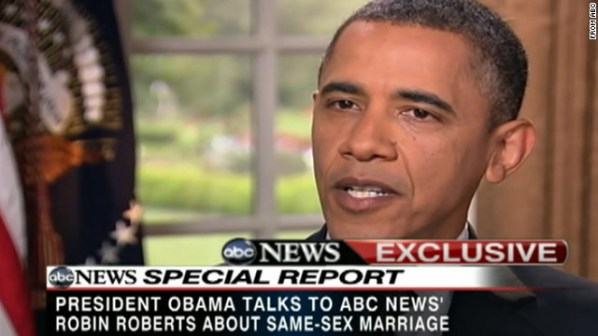
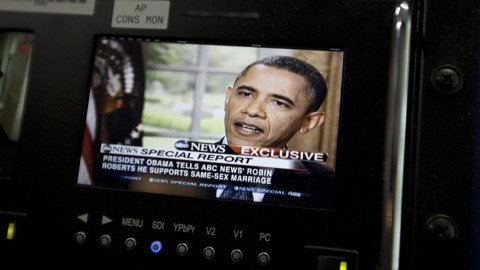
President Obama made history at the White House yesterday when he told my GMA co-anchor Robin Roberts that he supports same-sex marriage. But how will the politics play out come November?  That’s the question we’re tackling today on the Bottom Line.

Hard to read — and certain not to supplant the economy as the campaign’s top issue.  No question that’s right.  To borrow a phrase from Donald Rumsfeld, Obama’s shift raises more “known unknowns” than firm conclusions.  So I have more questions about the politics of same-sex marriage right now than answers.
Here are my top nine:

#1 — Will this fire up Christian Conservatives who have had some real qualms about Mitt Romney and skepticism about his Mormon faith?  Enough to put them enthusiastically in Romney’s camp in solid numbers?
#2 — Did this cost President Obama North Carolina? We saw the results of the referendum on Tuesday with 79 percent of the electorate supporting a ban on same-sex marriage. Additionally twenty percent of voters in the Democratic primary voted against Obama, which could show that he’s got some trouble in a state he won four years ago.

#3 — Will this motivate under 30 voters enough to get their turnout back to 2008 levels? We know they haven’t been “fired up” yet, but it’s also true that young voters are driving support for gay marriage.  According to our ABC News/ Washington Post poll 61 percent of voters under the age of 40 support same-sex marriage compared to only 40% of voters over the age of 65 who support it.  Will Obama’s shift make them believe again that he’s the candidate of “hope and change?”
#4 — On the flip side, how much will older voters be turned off?  Are they more likely to focus on Obama’s stance on gay marriage, or Romney’s plans for Medicare?  That’s the key question for this group — and how they turn could make the difference in the mega battleground of Ohio.  Same goes for Iowa — and Obama’s marriage shift could put Wisconsin in play for Romney too.

#5 — A majority of African American voters are against gay marriage, but will Obama’s support for this issue reduce turnout in the black community in November? ( I doubt it)
#6 — And what about Hispanics? President Obama was counting on their vote in the Southwest, specifically in Colorado, New Mexico and Nevada. But many Hispanics are Catholic and culturally conservative. Could this issue somehow tamp down turnout for the president in those key states?

#7 —Six of Obama’s top bundlers come from the gay community. Will this increase their pull in the campaign? And will it open up more contributions, especially in the Obama aligned Super PACS which have been lagging in fundraising compared to the Republican aligned Super PACS?
# 8 —Voters tend to punish whichever candidate seems to be putting the issue of same-sex marriage front and center in a political campaign.  By November will it still be front and center?  If so, will voters blame Obama for his switch — or buy his argument that Romney made it a national issue by supporting a Constitutional amendment to ban same-sex marriages everywhere?

# 9 — The President told Robin that he wants to leave the question of same sex marriage to the states for now. But will he face pressure to have the Justice Department join litigation seeking to strike down state bans?  That could be the next front in this war.

Those are my nine questions. Let me know yours.  I’d love to hear some of your answers too.

Read More: Yahoo News

SUBSCRIBE to The Hispanic Blog to stay on top of the latest latino news, politics and entertainment!

Don’t be shy SUBSCRIBE – COMMENT – LIKE ME -CIRCLE ME AND FOLLOW ME

God Bless and make it a fabulous day!

powered by Influential Access – “Transforming the Ordinary to EXTRAordinary!” – CEO – Jessica Marie Gutierrez – Creator of The Hispanic Blog #thehispanicblog


HOW IMMIGRATION HAS AFFECTED THE UNITED STATES/MEXICO RELATIONSHIP: MSNBC TALKS TO THE AMBASSADOR OF MEXICO, ARTURO SARUKHAN CASAMITJANA

THE HISPANIC BLOG IS THE LATEST HISPANIC NEWS BY JESSICA MARIE GUTIERREZ

CLICK HERE TO SEE THE MSNBC INTERVIEW WITH ARTURO SARUKHAN CASAMITJANA AMBASSADOR OF MEXICO

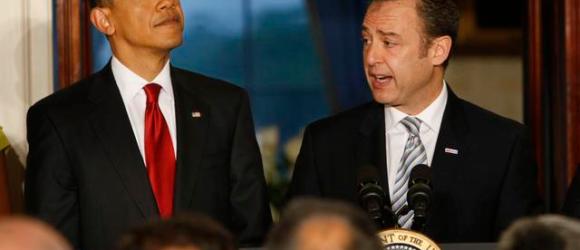
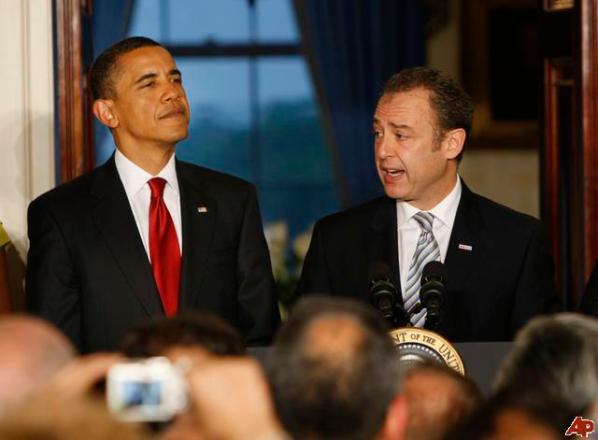
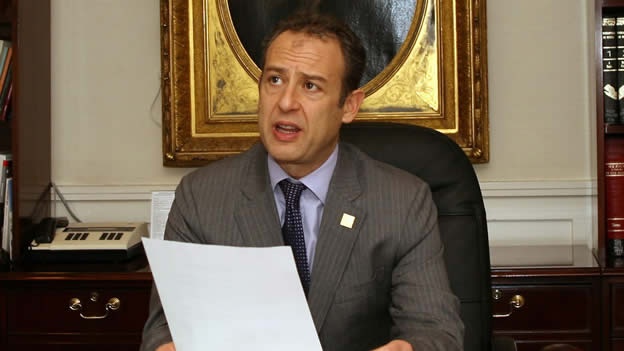
Arturo Sarukhan, Mexican Ambassador to the U.S., makes remarks with President Barack Obama during a Cinco de Mayo celebration in the Grand Foyer of the White House in Washington, Monday, May 4, 2009. (AP Photo/Gerald Herbert)

Ambassador Arturo Sarukhan talks about the affiliation between the U.S. and Mexico as Cinco De Mayo approaches.

SOURCE: AP/Danny Johnston

>>> at home and among our neighbors in mexico . president obama addressed the holiday and the bonds between our two countries on thursday.
>> the united states and mexico have lived intersecting and overlapping histories. our two countries share the ties of history and familia and commerce and culture and values and today, we are more united than ever. in friendship and in common purpose.
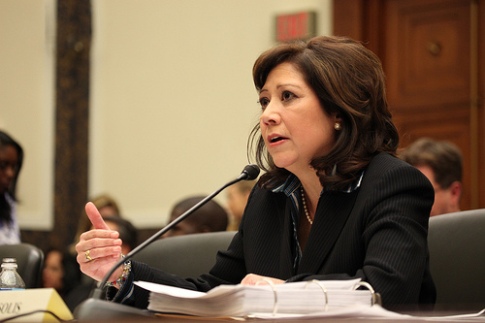
>> ambassador arturo sarukhan serves as mexico ambassador to the united states . thank you very much. happy cinco de mayo a day in advance. one of the things you said in your speech yesterday about cinco de mayo was that immigration reform is the unfinished business between our two countries. and you talked about the fact that there are 11 million people living in the shadows. i talked earlier to hilda solis, the labor secretary about this but the argument you get from democrats, from the white house is that oh, it’s the republicans on the hill. the argument you get from the republicans is that the white house won’t negotiate. what is your perspective looking at us?

photo source by FlickrU.S. Secretary of LaborHilda Solis testifies at a hearing about Strengthening the Economy and Improving the Lives of American Workers on February 3, 2010.

>> well, look, this is probably the most important single issue in the u.s.- mexico bilateral relationship. nothing will have a more profound impact on the future prosperity, well-being and security of north america of mexico and the united states than getting immigration right. but it is a very toxic and very polar rising issue more so in an election. and more so when so many americans are hurting and out of a job. these issues are very tough to handle and there are people on both sides of the aisle that i think are fully committed to getting this done. the challenge is timing. and the equation, how you put this together so combined all the different groups that have a specific interest in getting immigration done, but that need to come together and agree to big single holistic deal.

photo source: AP

>> immigration, illegal immigration is down. is that because of border security or is that because more jobs are available and the economy has improved so much in mexico ?
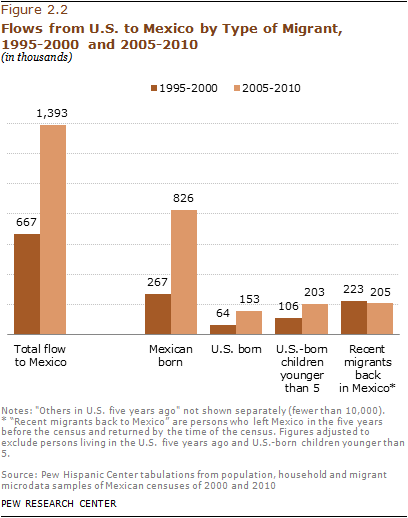
>> this is probably the most important story that is happening today on the u.s.- mexico border which americans are not focusing on. there’s a dramatic drop from undocumented immigration from 2006 to 2011 , we’ve seen a 60% drop in documented immigration. there has just been a report issued by the pew hispanic institute that states what a lot of us had already been seeing that net migration from mexico is zero if not negative. that means that more people are going back than people actually coming across the border. it’s a mix of reasons. certainly a softer u.s. economy especially in the construction sector which has traditionally been a magnet for undocumented labor has to do with it. greater operational control of the border. something a lot of people don’t want to focus on but which is a reality. the pernicious and very troubling musclealing in of organized crime into human trafficking on the border and the impact that has on the well-being and security of migrants. i think the most important reason is that over 15 years, as a result of sustained sound macro economic policies in mexico , one of the largest free trade agreement networks that any country has on the face of the earth by generating export-related job creation and by what is probably by world bank bench marks the most successful extreme poverty aleviation program on the face of the earth. these things combined with a profound shift in the demographics of mexico is expanding the middle classes , is creating better jobs. and is locking in or anchoring people who may be a year ago, two years ago would have decided to cross the border. they’re staying home.

About twice as many Mexicans returned home in the five years previous to the 2010 census than had done so in the five years before the 2000 census. Read Story: Pew Research Center

>> we’re anticipating of course, in june premium court decision on immigration. and the indications from the oral arguments and it’s always difficult to guess, are that the court may uphold some of the more extreme measures . how will that be viewed south of the border ?

>> look, this is an issue that as you can well imagine has garnered a lot of attention in mexico . i think that mexico in the past and we continue to say it, i think that we fully agree to the fact that any country has the right to establish whatever immigration policy it deems fit, but we do believe also that that’s a responsibility of the federal government . and we think that some of these laws, arizona, and a lot of people have forgotten alabama, may be one of the worst pieces of legislation out there and are poisoning the well spring of values of bonds that connect these two countries. it is a very big challenge.

El embajador de México en EU, Arturo Sarukhan, dijo que Centroamérica es “víctima” del éxito de la lucha antinarco (EFE Archivo).

>> let me ask you finally about the violence because as a member of the committee to protect journalists i have to tell you, there’s terrible concern for reporters and photographers in veracruz state murdered only this week. what can we do about what’s happening? it seems to be the targeting by these criminals of reporters and photographers.
>> first of all, we have to do anything in our power to defend journalists who are doing their job and a lot of them do become the target of organized crime that is either seeking to silence them or to ensure that the stories don’t come out. we have to find ways to protect these journalists more importantly we have to build mechanisms in which we can investigate and prosecute a swiftly and as quickly as possible because a society where a free press is muzzled because of intimidation or fear senior a society that’s in trouble.
>> arturo, sarakhan, thank you very much for joining us today.

Read More: MSNBC

SUBSCRIBE to The Hispanic Blog to stay on top of the latest latino news, politics and entertainment!

Don’t be shy SUBSCRIBE – COMMENT – LIKE ME -CIRCLE ME AND FOLLOW ME

If you have any questions, concerns or simply would like to get a quote on my Marketing, Public Relations, Social Media and/or Events services, please feel free to contact me.

God Bless and make it a fabulous day!

powered by Influential Access – “Transforming the Ordinary to EXTRAordinary!” – CEO – Jessica Marie Gutierrez – Creator of The Hispanic Blog #thehispanicblog


HOW HAS CONGRESS DEALT WITH IMMIGRATION IN THE PAST 25 YEARS?

THE HISPANIC BLOG IS THE LATEST HISPANIC NEWS BY JESSICA MARIE GUTIERREZ

photo source: AP

1986: The Immigration Reform and Control Act of 1986 both tightens controls on illegal immigration and extends amnesty for many illegal immigrants. It requires that employers attest to employees’ immigration status and make it illegal to hire or recruit illegal immigrants. It also grants amnesty to some seasonal agricultural workers and to illegal immigrants who entered the United States prior to 1982 and have lived in the country continuously.

President Reagan signed the Immigration Reform and Control Act of 1986, which provided amnesty to illegal immigrants who qualified.

1990: The Immigration Act of 1990 created a lottery program that randomly assigned a number of visas, and increased the number of immigrants allowed into the country each year. The law also included exceptions for the English-language portion of the naturalization test.

The green card lottery is held annually to randomly select 50,000 applicants to be awarded with green cards.

1996: Under President Bill Clinton, several pieces of legislation are enacted that crack down on various facets of immigration. Specifically, there is a sharp increase in the categories of criminal activity for which immigrants, including permanent residents, can be deported. The laws also impose mandatory detention for certain types of deportation cases, and as a result deportation rates skyrocket.

Photo: J. Scott Applewhite / AP

Sept. 11, 2001: Terrorists attack New York and Washington, D.C., killing nearly 3,000 people. The events put immigration under a microscope because the attackers were foreigners, and change the way many politicians and Americans view immigration. Former Mexican President Vicente Fox goes so far as to say that if it were not for the attacks, Congress would have passed reform legislation that benefited Mexican emigration to America.

President George W. Bush walks with Mexico President Vicente Fox, left, and Canadian Prime Minister Paul Martin upon their arrival Wednesday, March 23, 2005, at the Bill Daniels Activity Center at Baylor University in Waco, Texas. White House photo by Eric Draper

2003: The Supreme Court upholds mandatory detention regardless of flight risk for any immigrant offender, even permanent residents.

2005: In 2005 and 2006, Congress holds field hearings on immigration and border security across the country. The Senate introduces a significant bipartisan effort to create a path for legalization for many illegal immigrants.

Pullman Daily News photo: Dean Hare

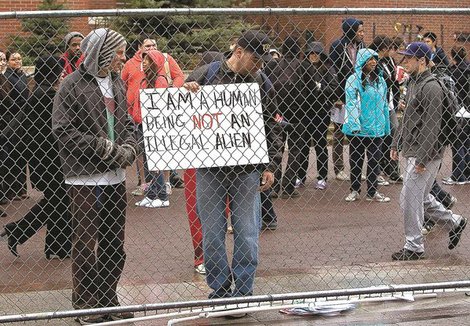
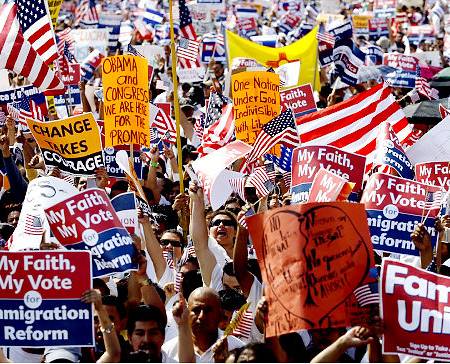
December 2005: The House passes a bill criminalizing illegal immigrants, sparking massive pro-immigrant protests nationwide. The Senate refuses to take it up.

photo source AP

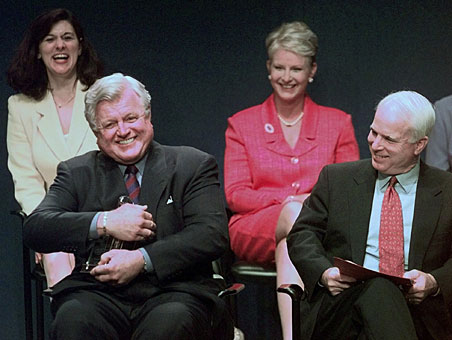
May 2006: Instead of the House bill, the Senate passes a tougher version of a bill crafted by Sens. John McCain, R-Arizona, and Ted Kennedy, D-Mass., which includes a path to legal residency for many illegal immigrants.

October 2006: The fiscal year 2007 budget boosts funding for Immigration and Customs Enforcement by more than 20 percent, about $1 billion more than President George Bush requested, mostly for detention and transport of immigrants.

Thousands of immigrant rights advocates pack the National Mall during an immigration reform rally in Washington, Sunday, March 21, 2010. (AP Photo)

November 2008: President Barack Obama is elected, and Democrats sweep both chambers of Congress, giving hope that a major immigration reform bill will be enacted. Obama had signaled interest in reform that included enhanced border enforcement, crackdowns on people who overstay their visa and employers who hire illegal immigrants and a path to citizenship for some illegal immigrants.

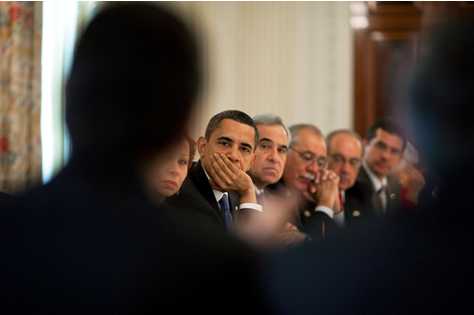
Body language experts interpret that a hand placed over the mouth, as Obama is pictured doing, indicates negative impulses and disapproval. photo source: AP

2009: A comprehensive immigration reform bill introduced in the House fails despite efforts by the Obama administration to get it traction.

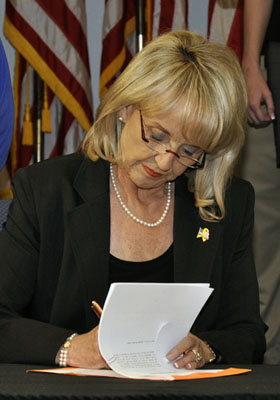
Arizona Gov. Jan Brewer signs SB 1070 in April 2010. (Photo courtesy of the Arizona Office of the Governor)

April 2010: Saying the Congress had failed to enforce U.S. immigration laws, Arizona passes a law to crack down on various facets of illegal immigration. Most controversial is that the law directs police to ask for immigration papers from anyone they stop or arrest who they suspect may be in the country illegally.

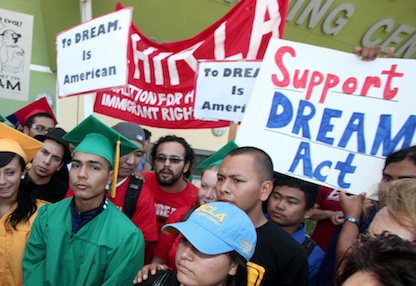
Sep 20, 2010 – Los Angeles, California, USA – Los Angeles Mayor ANTONIO VILLARAIGOSA during a rally that supports the Dream Act which allows temporary legal status for immigrant students.
(Credit Image: © Mark Samala/ZUMApress.com)

December 2010: The so-called Dream Act, which would allow illegal immigrant students a path to citizenship, passes the House in the lame duck session. The Senate GOP filibusters, effectively killing the bill.

Hundreds of immigrant rights activists rallied outside the Supreme Court building Wednesday as did several dozen supporters of Arizona’s law. Photo: Creative Commons/Talk Radio News Service

April 2012: The Supreme Court takes up the Arizona law. While a decision isn’t expected until June, during initial arguments the justices appear to have little issue with provisions requiring police to check the legal status of people they stop for other reasons.

Courtesy of the AP to Read More: Washington Post

SUBSCRIBE to The Hispanic Blog to stay on top of the latest latino news, politics and entertainment!

Don’t be shy SUBSCRIBE – COMMENT – LIKE ME -CIRCLE ME AND FOLLOW ME

If you have any questions, concerns or simply would like to get a quote on my Marketing, Public Relations, Social Media and/or Events services, please feel free to contact me.

God Bless and make it a fabulous day!

powered by Influential Access – “Transforming the Ordinary to EXTRAordinary!” – CEO – Jessica Marie Gutierrez – Creator of The Hispanic Blog #thehispanicblog