WILL OBAMA REFORM IMMIGRATION: A LOOK INTO VICE PRESIDENT BIDEN’S STANCE ON REFORM AND DREAM ACT

THE HISPANIC BLOG IS THE LATEST HISPANIC NEWS BY JESSICA MARIE GUTIERREZ

Vice President Joe Biden wants comprehensive reform and the DREAM Act.
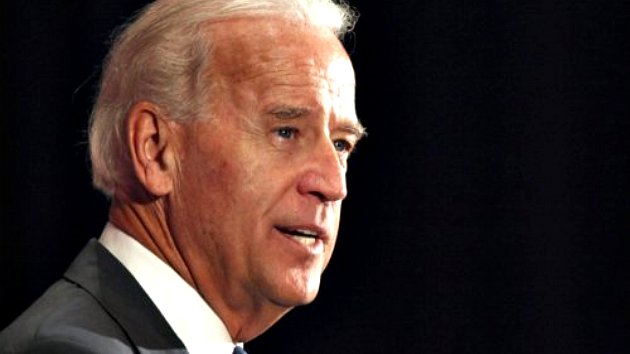
As vice president, Joe Biden often has taken the lead in arguing the Obama administration’s positions on immigration issues.

This is particularly true when it comes to the DREAM Act, comprehensive reform and criticism of states that have written their own immigration laws such as Arizona and Alabama.

In January 2012, Biden spoke to a group of college students in Reno, Nev., and told them that the administration is committed to pushing passage of DREAM Act legislation that will allow the children of undocumented immigrants to pay reduced, in-state tuition rates.

“The president and I are absolutely, positively, foursquare, for the DREAM Act,” Biden said. “It makes no sense not to educate everyone in this country who is here with a college degree.”

Biden’s wife, Jill, the United States’ “second lady,” is a longtime educator who has taught at several colleges, most recently at Northern Virginia Community College. The Bidens have been outspoken in their belief that a college education should be within reach of all U.S. residents.

Photo: Frank Polich/Getty Images

Biden often has made the argument that it makes no sense to deny children of undocumented immigrants an education because of the violations of their parents. He also has made the economic argument that, with an education, these youths could become productive members of U.S. society who pay taxes and contribute to the economy.

Echoing the sentiments of President Obama, Biden believes passing the DREAM Act should be part of comprehensive reform that makes broad changes to U.S. immigration policy.

“Our immigration system is broken,” he has said often. “This is a federal responsibility we have not lived up to.”

While acknowledging that Congress and the federal government have failed at reforming the system, Biden does not believe states have the right to go forward and write their own immigration laws. The vice president has been a vocal critic of the hardline immigration laws passed by Arizona, Alabama, Georgia and a half-dozen other states.

In a May 2010 speech in Phoenix, Ariz., Biden criticized Arizona’s State Bill 1070 as divisive, ill-advised and an unconstitutional over-reach by the state legislature.

He said the law will “only increase fear, suspicion and intolerance.” He warned that it is sure to promote profiling and lead to the arrests of people “just because of the way they look.”

The Obama administration has challenged the Arizona law and Alabama’s in the courts. Among the most controversial provisions of the laws are those giving local police broad powers to stop and arrest people merely on the suspicion they are in the country illegally. The U.S. Supreme Court is expected to rule on Arizona’s law by the summer of 2012.

Biden says the federal government has to do a better job securing the border with Mexico. But he says it’s unrealistic to think that a 2,000-mile border can be totally secured with fencing and technology.

He believes border security also has to be part of comprehensive reform that includes a guest worker program to allow migrants to come into the United States legally, work and then return home.

“There doesn’t need to be a 700-mile fence,” Biden said during a 2007 Democratic presidential debate when he was a candidate for the highest office. “Fourteen million illegals? Now you tell me how many buses, car loads, planes that are going to go out, round up all these people, spend hundreds of millions of billions of dollar.”

Instead of unrealistic mass deportations, Biden says reform should include a path to permanent residency for undocumented immigrants living in the country. The administration supports a plan that would allow these immigrants to remain here legally if they clear background checks, pay back taxes and learn English.

Immigration is part of Biden’s ancestry. His maternal grandparents were born in western Ireland and migrated to the United States in the mid-19th century.

SUBSCRIBE to The Hispanic Blog to stay on top of the latest latino news, politics and entertainment!

Don’t be shy SUBSCRIBE – COMMENT – LIKE ME -CIRCLE ME AND FOLLOW ME

If you have any questions, concerns or simply would like to get a quote on my Marketing, Public Relations, Social Media and/or Events services, please feel free to contact me at thehispanicblog@gmail.com.

God Bless and may you have a fabulous day!

powered by Influential Access – “Transforming the Ordinary to EXTRAordinary!” – CEO – Jessica Marie Gutierrez – Creator of The Hispanic Blog #thehispanicblog

WHAT IS THE “SECURE COMMUNITIES” ACT: DON’T MEND IT…END IT!

THE HISPANIC BLOG IS THE LATEST HISPANIC NEWS BY JESSICA MARIE GUTIERREZ

Photo courtesy of ICE

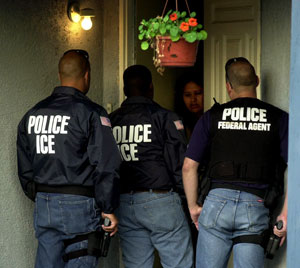
Any day now Immigration and Customs Enforcement (ICE) will announce a second round of “reforms” to the disgraced “Secure Communitiesdeportation program, S-Comm. And once again, it appears that ICE is more interested in spin than substance. The timing of the announcement–immediately before the DHS Office of Inspector General Report–seems primarily designed to take the pressure off of ICE rather than an honest attempt to address the fundamental flaws of the program.

We’ve been here before. In 2010, ICE tried the same tactic by announcing “reforms” to S-COMM’s predecessor, the 287(g) program to try to save the agency from the embarrassment of that year’s Inspector General report that described the program as an unmitigated disaster.

“Secure Communities” turns local police into defacto agents of deportation, forcing them to enforce unjust immigration laws, inviting racial profiling, and undermining community safety. It’s a program that has been leading to the “Arizonification” of the country, and has placed ICE under fire since it’s start in 2008. The only way forward on S-Comm is termination.

Since its inception, “Secure Communities” has gained fame for outright deception, starting with its very name. And now, after the release of thousands of internal emails and the agency’s own deportation data, there is no longer any doubt that ICE lied to local lawmakers, Congress, and the American public.

So-called “Secure Communities”, “S-Comm” or “In-Secure Communities” as it has been dubbed is the most recent attempt of ICE-DHS to control the immigration “problem”. This anti-immigrant program allows Immigration and Customs Enforcement (ICE), the Federal Bureau of Investigation (FBI) and local law enforcement agencies to share all fingerprints processed at local jails. This mandated sharing occurs regardless of the type of crime and even if the charges are dropped. The inaccurately named program, “Secure Communities” was said to have been initiated to target “level one” criminals (kidnappers, drug dealers, murders), but in practice has been successful in targeting jay-walkers, victims of domestic violence, mentally challenged citizens, and those who do not look “American”.

So why is the Administration holding on to a program that has a very public record of deception? One that law enforcement officers, Governors, cities, and Congressional representatives reject as damaging to public safety. And why is it continuing to operate the program in places like Georgia, with its unconstitutional anti-immigrant hate law, HB 87, while finally suspending it–at least partially–in Alabama and restricting it in Maricopa County? Clearly, this violates common sense. It also demonstrates a distorted sense of priorities.

Janet Napolitano announces record high deportations at ICE headquarters in Washington. Photo: Getty Images/Chip Somodevilla

In its blind quest to meet its arbitrary deportation quota of 400,000 people per year, the Obama Administration is driving a wedge between communities and local police, making it more difficult to solve crimes, and turning a blind eye to the fact that people are being placed into deportation through unconstitutional arrests. Civil immigration enforcement above public safety and constitutional protections? Really?

The upcoming announcement will be a significant opportunity for the President to demonstrate leadership on a program that has come to symbolize his broken immigration promises. Will it be business as usual or will the Obama Administration finally abandon their growing legacy of deportation? Will the Obama Administration stop attempting to convince the public that ICE may reform itself, despite every indicator that it’s incapable? Will the Obama Administration embrace the consensus against S-Comm or continue gripping onto the program despite its failure?

The next few days will tell. For the communities that are left to cope with the disasters of the Administration’s draconian immigration enforcement policies, the commitment to break ICE’s hold continues regardless of this month’s announcement. Communities reeling from this growing crisis have already documented the conclusive demand that S-COMM be terminated. Their pledge to restore trust and to break ICE’s hold on their community and the country will only grow stronger.

READ MORE: THE HUFFINGTON POST 

SUBSCRIBE to The Hispanic Blog to stay on top of the latest latino news, politics and entertainment!

Don’t be shy SUBSCRIBE – COMMENT – LIKE ME -CIRCLE ME AND FOLLOW ME

If you have any questions, concerns or simply would like to get a quote on my Marketing, Public Relations, Social Media and/or Events services, please feel free to contact me at thehispanicblog@gmail.com.

God Bless and may you have a fabulous day!

powered by Influential Access – “Transforming the Ordinary to EXTRAordinary!” – CEO – Jessica Marie Gutierrez – Creator of The Hispanic Blog #thehispanicblog

HOW DID TEXAS REDISTRICTING AFFECT ROMNEY’S CAMPAIGN?

THE HISPANIC BLOG IS THE LATEST HISPANIC NEWS BY JESSICA MARIE GUTIERREZ

Texas should be playing a role in Republican politics this year as big as, well, Texas.

The fast-growing state – the most populous by far in the Republican column – has four new seats in the U.S. House of Representatives, a big U.S. Senate race and more than a 10th of the delegates who will choose the party’s presidential nominee.

But a racially tinged dispute over redrawing its congressional districts has delayed the Texas primary by almost three months, complicated the U.S. Senate and House contests and altered the race for the White House.

A San Antonio court pushed Texas’ primary back to May 29 from March 6 after complaints that a new electoral map drawn by Republicans violated the federal Voting Rights Act by diluting the voting power of blacks and Latinos.

Three of Texas’ four new U.S. House seats were created in areas dominated by whites, even though Hispanics and blacks accounted for 90 percent of Texas’ population growth since 2000.

The battle sets white Republicans, who have firmly established political control in Texas within the past decade, against rising and strongly Democratic Hispanic and black populations, whose leaders argue that they are being unfairly denied an equal voice in state politics.

The stakes are high both for 2012, when the White House and control of the U.S. Congress are up for grabs, and longer term, when a rapidly growing Hispanic population is expected eventually to disadvantage Republicans and benefit Democrats.

“Republicans can work that racial solidarity thing for a while, but in the end, they’ve got to do better than 35 percent of the Hispanic vote or their election prospects are not great,” said Cal Jillson, a political science professor at Southern Methodist University in Dallas.

States with a history of minority voting rights violations must obtain pre-clearance from either the U.S. Department of Justice or the federal court in Washington, D.C., before they can use new maps. The new voter map in Florida, another fast-growing southern state, has also been subject to legal wrangling this year.

ALREADY A MINORITY

Non-Hispanic whites already account for a minority of Texas’ residents, with 45 percent of the population. The state is 38 percent Latino and 12 percent black, numbers expected to continue to rise.

President Barack Obama lost Texas by 11-percentage points in 2008. He got only 26 percent of the white vote, but was backed by 63 percent of Hispanics and 98 percent of blacks, fueling talk that it will not be long before Republican red Texas turns purple, if not Democratic blue.

“We sort of feel like we have the wind at our backs,” said Anthony Gutierrez, deputy executive director of the Texas Democratic Party.

Democrats have won Texas in only three of the last 15 presidential elections. The party has not won a statewide election since 1994, and Republicans cemented their control of the state with huge victories in the 2010 midterms.

But even Republicans acknowledge that changing demographics mean the party must appeal to Hispanics to hold onto power beyond the next few years. Latinos in Texas generally vote Democratic by a 2-to-1 margin, which won’t be helped by a redistricting fight seen as a battle to maintain white control.

“It is obviously a high-risk strategy in a state that is increasingly Hispanic,” said Michael Li, a Dallas-based election law lawyer who runs the blog “Texas Redistricting.” Li is not involved in the redistricting fight.

SUPER TUESDAY NOT SUPER FOR ROMNEY

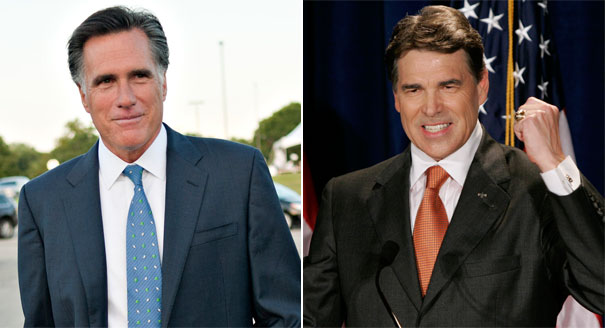
The redistricting mess has already affected the 2012 presidential race, notably the hopes of Mitt Romney, who may have done well in the Texas primary if it had taken place on Super Tuesday – March 6 – as originally scheduled.

Texas would have been the biggest prize up for grabs on Super Tuesday, when 10 other states held primaries and caucuses.

Romney, with far more money and a bigger campaign organization than rivals Rick Santorum and Newt Gingrich, was best placed to compete in so many states at once. Texas alone has 20 media markets, meaning statewide advertising can cost millions.

Winning or putting in a good showing in Texas would have boosted Romney. The state’s 155 delegates, awarded proportionally, are a huge chunk of the 1,144 needed to become the nominee.

A strong performance on Super Tuesday also would have given Romney a badly needed breakthrough in the heart of southern Republican conservatism, weakening Santorum and perhaps cutting short what has become a protracted nomination fight.

Instead, Romney has been a weak front-runner and Santorum, a former Pennsylvania senator best known for strong religious conservatism, has been winning over the party’s right wing.

“It (a March 6 Texas primary) would have changed a lot of things. It would have changed the entire complexion of Super Tuesday,” said Matt Mackowiak, an Austin-based Republican strategist, especially with Santorum and Gingrich both vying for the support of the most conservative Texans.

“I suspect if the field was split and if Santorum and Gingrich hadn’t had $5 million or $3 million to spend, then Romney probably would have won Texas on March 6,” he said.

With Texas now one of the last states to vote, the nominee could be chosen by May 29. Even if it isn’t, Santorum is now considered more likely to take Texas, thanks to improving fund-raising and his solidified position as the conservative alternative to Romney.

“Romney starts with a significant disadvantage in terms of public opinion,” said Jim Henson, director of the Texas Politics Project at the University of Texas at Austin, although he added that Romney’s big campaign war chest means that he could spend heavily in Texas to target clusters of mainstream conservatives in major media markets.

A Wilson Perkins Allen Opinion Research poll last week showed Santorum eight percentage points ahead of Romney among likely Republican primary voters in Texas. Santorum was at 35 percent to 27 percent for Romney.

Gingrich was at 20 percent and Ron Paul, a Texas congressman lagging in most polls, was at 8 percent.

The redistricting mess is affecting races down the ticket as well, with many voters not sure where they are registered and many candidates unsure of where they should run or raise money while the court fight has continued.

“I can look around the state and see the confusion in the eyes of the average voter,” said Chris Elam, communications director for the state Republican party. Some 100 Republicans alone have applied to run for the 36 House seats, he said.

The interim map is expected to stand, but there is a chance it could be changed again by the Washington court.

The May 29 date is after schools close for the summer, leading to worries that turnout will be low, which often leads to unpredictable results.

The race to replace retiring Republican Senator Kay Bailey Hutchison has been most affected by the upheaval. Lieutenant Governor David Dewhurst has been favored to replace Hutchison, because of his statewide name recognition and fundraising prowess.

But the long delay has given opponents, especially Tea Party favorite Ted Cruz, time to raise money and their profiles. Former Dallas Mayor Tom Leppert and Craig James, a one-time television sports analyst, are also in the race.

If no one wins a majority on May 29, state law mandates a runoff vote on July 31, the heart of the hot Texas summer when an even smaller turnout would be expected.

On Monday, the Republican Party of Texas received a letter from the U.S. Department of Justice thatconfirmed federal pre-clearance of the temporary and emergency changes to the RPT rules that were adopted on February 29 at the emergency meeting of the State Republican Executive Committee.

As was reported in previous redistricting updates, during the February redistricting trial, the three-judge federal panel in San Antonio indicated to Chairman Munisteri that the RPT needed to obtain USDOJ pre-clearance on the party’s convention process. The DOJ attorney at the trial testified that his office would expedite the review of the changes and could reduce the approval time from a couple of months to a couple of weeks. The rules changes made by the SREC were submitted to the USDOJ on March 5, 2012 and this week the RPT received a letter verifying that the pre-clearance had indeed been expedited and approved.

Thus, the final legal obstacle has been overcome in the 2012 Republican Party of Texas convention process. The county and district conventions are moving forward on the dates of April 14 or April 21 (will vary by county), and the State Convention will be held on June 7-9 in Fort Worth. For a full list of RPT Rules governing the 2012 Election Cycle, you can visit www.TexasGOP.org and view the updated document.

READ MORE: REUTERS


HAS SENATOR MARCO RUBIO BUMPED UP HIS AUTOBIOGRAPHY TO BE RELEASED BEFORE GOP CONVENTION?

Rubio moves publication of memoir before GOP convention

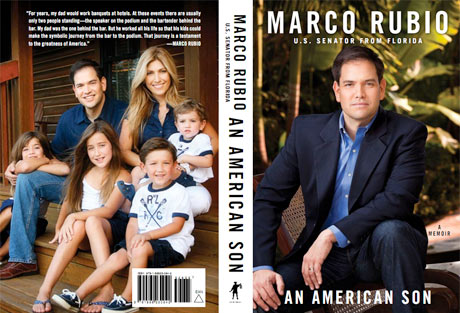
EXCLUSIVE: Marco Rubio, the 41-year-old first-term senator from Florida of Cuban extraction with sterling conservative credentials and matinee star looks, has bumped up the publication of his autobiography from October to June. Politico‘s Mike Allen broke the news this morning. The Sentinel imprint of Penguin Group is moving up the publication of Sen. Marco Rubio’s memoir, “An American Son.” It was originally planned for October but will now go on sale June 19. The jacket is attached, including the flap copy. There will also be a Spanish language edition, “Un Hijo Americano.” Adrian Zackheim, president and publisher of Sentinel: “National interest in Senator Rubio keeps heating up and we want the book out in the world as quickly as possible. It’s important to the Senator and to us that people hear his remarkable story, and that of his family, directly from him.”

See the jacket full size

–Rubio is racing a more critical version, “The Rise of Marco Rubio,” by WashPost’s Manuel Roig-Franzia, edited by Simon & Schuster’s Priscilla Painton, scheduled for release July 3.

–From Rubio’s jacket: “Rubio spent countless hours with his grandfather … ‘Papa’ loved being Cuban, but he also loved America for being a beacon of liberty to oppressed people around the world. As Rubio puts it, ‘My grandfather didn’t know America was exceptional because he read about it in a book. He lived it and saw it with his own eyes. … Conservatism is not about leaving people behind. Conservatism is about allowing people to catch up. … [M]y dad would work banquets at hotels. At these events there are usually only two people standing—the speaker on the podium and the bartender behind the bar. My dad was the one behind the bar. But he worked all his life so that his kids could make the symbolic journey from the bar to the podium.’”

READ MORE: POLITICO

SUBSCRIBE to The Hispanic Blog to stay on top of the latest latino news, politics and entertainment!

Don’t be shy SUBSCRIBE – COMMENT – LIKE ME -CIRCLE ME AND FOLLOW ME

If you have any questions, concerns or simply would like to get a quote on my Marketing, Public Relations, Social Media and/or Events services, please feel free to contact me at thehispanicblog@gmail.com.

God Bless and may you have a fabulous day!

powered by Influential Access – “Transforming the Ordinary to EXTRAordinary!” – CEO – Jessica Marie Gutierrez – Creator of The Hispanic Blog #thehispanicblog

DOES VOTER TURNOUT AMONG HISPANICS DECREASE AFTER STRICT VOTER ID LAWS?

THE HISPANIC BLOG IS THE LATEST HISPANIC NEWS BY JESSICA MARIE GUTIERREZ

Analyzing Minority Turnout After Voter ID

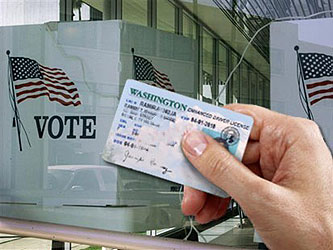
Minnesota currently has a proposed constitutional amendment moving through its legislature to impose strict photo ID restrictions on voters and possibly eliminate Election Day registration. I take great pride in the fact that my home state of Minnesota consistently has the highest turnout in the country, and I’m pained by this legislation that is sure to reduce opportunities for voter participation across the state.

I want to correct a common misperception that came up during show, suggesting that voter turnout among Hispanic voters in Georgia has increased since the passage of its restrictive no-photo, no-vote photo ID law.

Motivation for voter turnout is notoriously difficult to measure. It’s a moving target, not lending itself easily to empirical methods of evaluation. But in this case, any assertion that voter turnout among Hispanics increased in Georgia following enactment of its strict voter ID law is simply not true.

According to the GA Secretary of State,Georgia’s Hispanic turnout (calculated as a percentage of registered voters) was lower in 2010 than in 2006, and it was lower in 2008 than in 2004. See table below:

Registered Hispanic Voters Actual Hispanic Voters Hispanic Turnout %
2004 30,148 18,240 60.5%
2006 43,514 11,601 26.7%
2008 73,375 43,717 59.6%
2010 75,658 19,320 25.5%

The number of Hispanic voters was greater in the 2010 election than in the 2006 election, and in the 2008 election than in the 2004 election, as the total population of registered Hispanic voters increased by 73.9 percent and 144 percent, respectively. However, there was a slight reduction in the percentage of voter turnout for Hispanics between presidential election years 2004 and 2008 and non-presidential election years 2006 and 2010.

While simple turnout numbers from a single state cannot tell us exactly what impact new voter restrictions have on voter turnout, it’s clear that in Georgia, the percentage of minority voter turnout has not increased following enactment of its strict voter ID law.

Strict voter ID laws are absolutely the wrong policy direction for this country. Voter participation rates across all racial, ethnic and socio-economic are dropping each election year. Georgia has seen voter participation rates in the fastest growing ethnic population over the past decade stay flat or decline.  As we consider what is best for America, increased voter participation is essential to restoring faith in our democracy and strict voter ID laws that fail to solve any real problems are wrong for America.

READ MORE: http://www.brennancenter.org/blog/archives/analyzing_minority_turnout_after_voter_id/

SUBSCRIBE to The Hispanic Blog to stay on top of the latest latino news, politics and entertainment!

Don’t be shy SUBSCRIBE – COMMENT – LIKE ME -CIRCLE ME AND FOLLOW ME

If you have any questions, concerns or simply would like to get a quote on my Marketing, Public Relations, Social Media and/or Events services, please feel free to contact me at thehispanicblog@gmail.com.

God Bless and may you have a fabulous day!

powered by Influential Access – “Transforming the Ordinary to EXTRAordinary!” – CEO – Jessica Marie Gutierrez – Creator of The Hispanic Blog #thehispanicblog