IS RESPECT A MAJOR ISSUE FOR LATINOS: ELECTION 2012 COVERAGE ON THE HISPANIC VOTE

THE HISPANIC BLOG IS THE LATEST HISPANIC NEWS BY JESSICA MARIE GUTIERREZ
Maria Teresa Kumar is the founding executive director of Voto Latino, a non-partisan group created in 2004 with the mission to find, register, and turn out young Latino voters in the United States. With Latino Americans poised to make up a considerable slice of the swing-state electorate this year, plenty of operatives on both the right and left are eagerly watching to see which they’ll fall. But Kumar and Voto Latino are after something longer term. With Kumar in Austin to talk at SXSW about social media’s ability to shape a political contest, we talked by phone about online experimentation’s lessons for converting trending topics into action, how President Obama made this election personal, and what it will take to convince Democrats and Republicans to pay attention to Latinos after Election Day. This interview has been condensed and edited.


As perfectly sensible as it might be to focus on voter registration, we seem to have the same conversation every two or four years. There’s work done to engage a group of voters and pull them into the process, and then in the next election cycle it becomes about doing it over again. How much of this work is about the binariness of registration and how much of it is about creating a relationship with a voter that’s sustainable?

(March 9, 2010 - Photo by Michael Buckner/Getty Images North America)

Long-term engagement, right. This is based on the findings from the experimenting we did in 2010 with the Census. What we found is that the difference with this demographic — first of all, we target acculturated American Latinos, meaning that they are English-dominant — is that 80 percent of all Latino voters are English-dominant, but that doesn’t mean that there’s a news source that’s actually targeting them. So that’s why we work very closely with celebrities and with media. We have roughly 87 radio DJs who are part of our coalition in our top 25 markets. We use them as messengers to get folks to not only learn about the election but come back to us.

We’re right now creating a site called Election Center: News You Can Use. Our hope is to make it really robust so that not only, say, Rosario starts tweeting about the environment post-election but that her followers look at it and then come for more information about it on our site. And then they get active. Not only did they just read that Congress is about to vote on fracking but now they can go ahead and sign a petition for or against fracking, depending on how they feel, that will then immediately go to their member of Congress. What happens now is that people woo individuals every four years and then they feel like, ‘You invited me to the party, but you didn’t call me the next day.’

But if you were to ask me what the obstacles are going to be to voting this year, it’s not necessarily going to be being registered to vote. It’s going to be that a lot of voter ID laws have changed from 2008. So with the Election Center we’re going to also give you all the information you need to go to the polls.

When you say that a Latino celebrity is going to be tweeting about fracking, that’s not necessarily what people think of as a Latino-focused issue. And if you read anything about Latino voters it’s about how there are a lot of different people with a lot of different backgrounds with a lot of different interests. How do you take the broad-brush approach of registration and apply it to the rest of the process? 

The media’s reaction is always that Latinos’ number one issue is immigration. And it’s not immigration. It’s the tone in which people talk about immigration. All of the sudden, you can be a third or fourth-generation Mexican American from Colorado and not really realize you’re Mexican until someone pulls you over and asks you for your papers. That’s a catalyst for political awakening. I use that as an example because in the 2010 election [in Nevada], Sharron Angle, who was running against Senator Reid, basically said that her path to victory was to vilify Latinos. A hundred percent of the media she posted was racially tinged. And that mobilized nine out of ten Latinos to vote against her. But they still voted for a Republican candidate for governor. Yes, they paid attention because of [Angle’s] tone, but when it came to other candidates they voted on the issues.

The same thing for [Arizona state senator] Russell Pearce, who was the architect behind SB1070. The Latino community galvanized around him and recalled him. But they didn’t put in a Democrat. They put in the moderate Republican, someone who was talking to their issues.

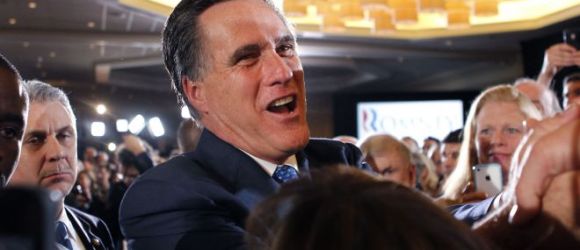
When you talk about what mobilizes Latinos most, sadly, it’s when you’re vilifying the community. But if you talk to them about education and jobs in a way that is not condescending and doesn’t end with hasta luego, then you’re going to do pretty well. You do have to talk to them in an authentic way. That’s what’s missing from presidential politics. That’s what Mitt Romney is going to be challenged with. He, up to a point, was so moderate. If Governor Romney was running today he would do incredibly well with the Latino community because he would talk about small business and taxes. Latina women, particularly, are the fastest purveyors of small businesses in the country.

But instead, the election has been so polarized for the right that Romney finds himself moving to a place that he’s going to have a hard time recovering from, I think. If you’re trying engage with someone and they say, ‘Yeah, but I don’t like you,’ then it’s hard to move past that to a conversation about, ‘Okay, what else are you going to do for me?’

What you’re going to see with the 2012 election is that, you see the polls right now where the Latino community is overwhelmingly supporting President Obama over Mitt Romney. But I’m one of the folks who says that they’re doing that because of the tone. If Mitt Romney tomorrow was to change the tone and actually demonstrate what he was going to do for the Latino community — again, what all Americans want, job creation and the economy — it would be a completely different ball game.

.www.bauer-griffin.com. Photo by Bauer Griffin)

In Time’s recent “Yo Decido” issue, Obama campaign manager Jim Messina celebrated the Obama campaign’s ability to turn out Latino voters in the Western states through “grassroots stuff.” Have you seen evidence of the Obama campaign or any other doing targeted outreach to Latino communities?

Not yet, and I say that because I know that the Obama campaign is going to start going into Arizona come April. But they’re not yet full-fledged. They’re going to be deploying a lot of folks, and what they’re going to be coming down heavily with is peer-to-peer conversations similar to what they’ve done in the past.

This election for Latinos is going to be very much a personal one because Obama, sadly enough, has his own baggage. There have been record deportations. So when he goes into Arizona, he’s talking to a voter who may have voted for him last time but now they’ve had a loved one deported. Colorado was a swing state in 2008 and that was because they were passing very rough immigration laws. They were really racially profiling. Now, in Alabama, you have school children being pulled out of the classroom to be asked they’re American or not. If you’re a parent, that becomes personal. Now they’re attacking your family. So in 2008 we had Colorado. In 2012, we have five states that have similar legislation to Arizona. They’re North Carolina, Texas, Florida, Virginia — not surprisingly, key battleground states.

What’s cool is that at the same time they also have an increased electoral power because of the shift in votes. You definitely have this anti-Latino backlash at the state level but you also have this increased political voice that you didn’t have in 2008. Arizona is an example, but it’s an example that has spread that because electoral power is so much more heavily weighted in Latino districts. There’s actually a chance that that’s the clear path to victory.

As you focus on one identity group, even one that has been under-addressed in the past, do you worry that you’re turning the Latino vote into something for the parties to fight for by simply becoming the lesser of two evils, where the bar becomes just not being as big a jerk as the other guy?

Yeah, that’s what the Democrats are thinking. And that’s where their strategy is going to lose.

If I were advising the Democratic party, I’d say that, yes, Republicans aren’t being nice but the Democrats are being cowardly lions. Right now, there’s an open field for them to really go after the Latino community and solidify them. People forget that the Latino vote has been a swing vote since Reagan. They voted for Reagan and then voted for Clinton, then they back for Bush, and then they went back for Obama. Historically, it’s a pendulum. But because of sheer numbers now, if either the Republican Party or the Democratic Party figure out how to solidify them, they can basically become the Dixie Democrats of the 1940s. That hasn’t happened because both parties are timid. They don’t quite understand them.

But if you look at the trajectory of Latino growth, one out of six Americans are Latino. Over 55 percent of the growth in the Census over the last 10 years was due to Hispanic population growth. And it wasn’t immigration. It was the children of immigration.

They’re still so severely underserved, and they’re one of the hardest groups to target. It’s expensive because most of them have never voted before in their lives. For a campaign, they’re the least likely person to go after. Instead of spending two dollars on a progressive white voter all of a sudden you have to spend 25 or 30. There’s a cost to it. It’s harder work, but once you can get them to vote three times they become a life-long voter.

It has to be a continuous conversation. But no one is really having it.

Respect often gets mentioned as a major factor when it comes to Latino voters. Does a Marco Rubio as a vice presidential candidate change that dynamic for the better or come across as pandering?

At this point, it’s pandering.

What I try to communicate is that Latinos fundamentally care about the issues. I use the case of when candidate Barack Obama was running for Senate he ran against a Latino candidate named Gery Chico. And Gery Chico looked like he was going to have overwhelming support in the Latino community. He had great ties. But what candidate Obama was able to do was so well was to talk to the issues of the Latino community. He beat a Latino candidate overwhelmingly. At the end of the day they want to be able to make their lives better.

Since the foreclosure crisis Latinos’ wealth has decreased by 66 percent. It’s sadly competing with that of African Americans. When it comes to the unemployment rate, ditto. We’re talking about double digits when the majority of the country is enjoying eight percent. So the issues are a harsh reality.

But at the same time they’re incredibly optimistic about America’s future, more than any other group. They still have that immigrant experience where they came from countries or their parents came from countries that were so horrible that they still see the vast amount of opportunity and America’s potential here. If I’m a candidate, how did I package that message of, ‘These are my policies on education so that your child can achieve and overcome the hardships you’re facing today’?

Voters are increasingly sophisticated. You do have a swath of voters in the Latino community who are increasingly registering as independent, except for in the last year or so where they’ve been declaring themselves independent but leaning more Democratic.

But that has to do with tone, not because the Democrats are offering them any policy initiatives. They’re just basically not being mean to them and their families.

READ MORE: THE ATLANTIC

SUBSCRIBE to The Hispanic Blog to stay on top of the latest latino news, politics and entertainment!

Don’t be shy SUBSCRIBE – COMMENT – LIKE ME -CIRCLE ME AND FOLLOW ME

If you have any questions, concerns or simply would like to get a quote on my Marketing, Public Relations, Social Media and/or Events services, please feel free to contact me at thehispanicblog@gmail.com.

God Bless and may you have a fabulous day!

powered by Influential Access – “Transforming the Ordinary to EXTRAordinary!” – CEO – Jessica Marie Gutierrez – Creator of The Hispanic Blog #thehispanicblog

GOV PERRY LURED APPLE TO TEXAS AND CREATES MORE THAN 3,600 JOBS

THE HISPANIC BLOG IS THE LATEST HISPANIC NEWS BY JESSICA MARIE GUTIERREZ

Governor Perry Sweetened the Deal for Apple and for the Texas Economy

Gov. Rick Perry today announced that Apple will expand its presence in Texas with a $304 million investment in a new campus in Austin that will create more than 3,600 new jobs. The new campus will more than double the size of Apple’s workforce in Texas over the next decade, supporting the company’s growing operations in the Americas with expanded customer support, sales and accounting functions for the region. In exchange for Apple’s commitment to create these new jobs in Texas, the state has offered Apple an investment of $21 million over ten years through the Texas Enterprise Fund (TEF).

“Apple is known for its bold innovation and game-changing designs, and the expansion of their Austin facility adds to the growing list of visionary high-tech companies that have found that Texas’ economic climate is a perfect fit for their future, thanks to our low taxes, reasonable and predictable regulations, fair legal system and skilled workforce” Gov. Perry said. “Investments like this further Texas’ potential to become the nation’s next high-tech hub.”

The project is supported by an investment from the TEF, which offers companies incentives to invest in Texas. When completed, it will be one of the largest job creation projects in TEF history, and one of the largest capital investments by a TEF recipient. The agreement is contingent upon the finalization of contracts and a local incentive agreement with the City of Austin and Travis County.

The Legislature created the TEF in 2003 and re-appropriated funding in 2005, 2007, 2009 and 2011 to help ensure the growth of Texas businesses and create more jobs throughout the state. TEF projects must be approved by the governor, lieutenant governor and speaker of the House. The fund has since become one of the state’s most competitive tools to recruit and bolster business. To date, the TEF has invested more than $443.4 million and closed the deal on projects generating more than 62,000 new jobs and more than $15.4 billion in capital investment in the state.

Read More: from the office of Governor Rick Perry

SUBSCRIBE to The Hispanic Blog and stay on top of the latest Latino news, politics and entertainment!

Don’t be shy SUBSCRIBE – COMMENT – LIKE ME -CIRCLE ME AND FOLLOW ME

If you have any questions, concerns or simply would like to get a quote on my Marketing, Public Relations, Social Media and/or Events services, please feel free to contact me at thehispanicblog@gmail.com.

God Bless and may you have a fabulous day!

powered by Influential Access – “Transforming the Ordinary to EXTRAordinary!” – CEO – Jessica Marie Gutierrez – Creator of The Hispanic Blog #thehispanicblog
CAN SANTORUM WIN THE GOP NOMINATION

THE HISPANIC BLOG IS THE LATEST HISPANIC NEWS BY JESSICA MARIE GUTIERREZ

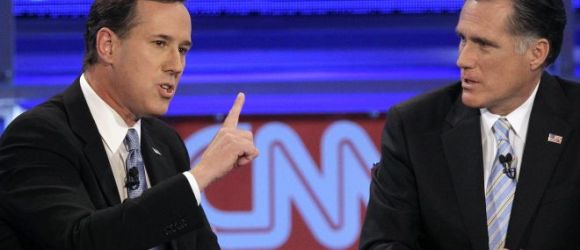
(Foto AP/Jae C. Hong)

Santorum Wins Kansas, Romney Shows Strong in Wyoming

With primaries in the southern states only a week away, former Pennsylvania Sen. Rick Santorum handily won the Kansas caucuses, while GOP frontrunner Mitt Romneyhad a strong showing in Wyoming.

“Things have an amazing way of working out,” Santorum told supporters in Missouri, where he traced his campaign through a series of highs and lows. He called his showing in Kansas a “comfortable win” that would give him the vast majority of the 40 delegates at stake.

A Fox News Latino poll of likely Latino voters, released earlier this week and conducted by Latin Insights, stills showed both candidates struggling far behind U.S. President Barack Obama.

In head-to-head match-ups none of the GOP candidates would garner more than 14 percent of the Latino vote come November, the poll said.

Returns from 89 percent of the state’s precincts showed Santorum with 51 percent support, far outpacing Romney, who had 21 percent. Newt Gingrich had 14 percent and Ron Paul trailed with 13 percent.

Santorum picked up at least 32 of the state’s 40 delegates at stake, cutting slightly into Romney’s overwhelming’s advantage.

Santorum’s triumph, coupled with Romney’s early advantage in Wyoming, came as the candidates pointed toward Tuesday’s primaries in Alabama and Mississippi that loom as unexpectedly important in the race to pick an opponent to President Barack Obama in the fall. Polls show a close race in both states, particularly Alabama, and Romney, Gingrich and Santorum all added to their television advertising overnight for the race’s final days.

Romney, the front-runner by far in the delegate competition, padded his lead overnight when he won all nine delegates on the island of Guam and then again in the Northern Mariana Islands.

Romney had 440 delegates in the AP’s count, more than all his rivals combined. Santorum had 213, while Gingrich had 107 and Paul had 46.

A candidate must win 1,144 to clinch the Republican presidential nomination at the national convention in Tampa next August.

In Wyoming, where some counties caucused earlier in the week, Romney had five of the 12 delegates at stake, Santorum had two, Paul had one, and one was uncommitted. Three more remained to be determined in party meetings on the day’s calendar.

Romney did not campaign in Kansas, leaving the field to Santorum and Paul.

Gingrich cancelled a scheduled trip to the state late in the week to concentrate on the two Southern primaries on Tuesday.

In sparsely populated Wyoming, there were 15 county conventions during the day to pick six convention delegates.

Kansas drew more attention from the White House hopefuls, but not much more, given its position midway between Super Tuesday and potentially pivotal primaries next Tuesday in Mississippi and Alabama.

Paul and Santorum both campaigned in the state on Friday, and Gov. Sam Brownback appeared with each, without making an endorsement.

In Topeka, Paul told an audience of about 500 that Kansas should be a “fertile field” for his libertarian-leaning views but declined to say how many delegates he hoped to gain.

Santorum, who hopes to drive Gingrich from the race in the coming week, lashed out at Obama and Romney simultaneously in remarks in the Kansas capital city.

“We already have one president who doesn’t tell the truth to the American people. We don’t need another,” he said.

The former Pennsylvania senator told reporters he was confident “that we can win Kansas on Saturday and come into Alabama and Mississippi, and this race should come down to two people.”

An aide to Gingrich said earlier in the week that the former House speaker must win both Southern primaries to justify continuing in the campaign.

But Gingrich strongly suggested otherwise on Friday as polls showed a tight three-way contest in Alabama.

“I think there’s a fair chance we’ll win,” he told The Associated Press about the contests in Alabama and Mississippi. “But I just want to set this to rest once and for all. We’re going to Tampa.”

Romney had no campaign appearances Saturday. The former Massachusetts governor won six of 10 Super Tuesday states earlier in the week, and hopes for a Southern breakthrough in Alabama on Tuesday after earlier losing South Carolina and Georgia to Gingrich.

SUBSCRIBE to The Hispanic Blog and stay on top of the latest Latino news, politics and entertainment!

Don’t be shy SUBSCRIBE – COMMENT – LIKE ME -CIRCLE ME AND FOLLOW ME

If you have any questions, concerns or simply would like to get a quote on my Marketing, Public Relations, Social Media and/or Events services, please feel free to contact me at thehispanicblog@gmail.com.

God Bless and may you have a fabulous day!

powered by Influential Access – “Transforming the Ordinary to EXTRAordinary!” – CEO – Jessica Marie Gutierrez – Creator of The Hispanic Blog #thehispanicblog

WHAT ROMNEY SAYS ABOUT SUPREME COURT JUSTICE SOTOMAYOR

THE HISPANIC BLOG IS THE LATEST HISPANIC NEWS BY JESSICA MARIE GUTIERREZ

Mitt Romney has caught the attention of Latinos with campaign ads that highlight the significance of Sonia Sotomayor‘s appointment to the U.S. Supreme Court – but it may not be the kind of attention he wants.

In a pro-Romney radio ad released this week in Ohio, conservative Jay Sekulow says that Rick Santorum‘s 1998 vote to confirm Sonia Sotomayor to the federal circuit court “put her on a path to the Supreme Court.”

When Santorum voted for her confirmation in the late 90s, Sotomayor had been elevated by President Bill Clinton from the federal district court to a seat to the 2nd Circuit U-S Court of Appeals, based in New York.

In 2009, she was still a federal appeals judge when President Barack Obama nominated her to the Supreme Court. And by then Santorum had left the Senate.

In the ad, Romney notes that 29 of Santorum’s colleagues voted against Sotomayor in 1998. The criticism echoes Republican attacks on “activist” or liberal judges.

But, that’s not how it’s being taken by some Latinos. “This unprovoked attack is another example of how Romney and the Republican Party are pushing the Latino vote to Obama,” Angelo Falcon, president of the National Institute for Latino Policy said in his daily online message to pundits and press. “They forget that Judge Sotomayor is an icon for the Latino community. It’s like attacking Martin Luther King or George Washington, for blacks and whites.”

Back in February, Romney used a similar tactic in a Michigan television ad that asked if Santorum is ready to be president. In making it’s case, the ad uses as evidence that he voted for “liberal judge Sonia Sotomayor” and adds that Santorum “opposed creating E-Verify, a conservative reform to curb illegal immigration.”

The Democrats jumped on the issue. “Mitt Romney has shown time and again that he is after the Tea Party vote, not the Latino vote, and with each attack he locks himself more to his extreme positions,” Juan Sepulveda, Democratic National Committee Senior Advisor for Hispanic Affairs, said in a statement.

The tactic also caught the attention of Latino press. Univision’s Tumblr reported on the ads and noted that the last direct attack on Sotomayor came when former candidate Rick Perry called her Montemayor accidently.

The Romney campaign responded to the Univision report with this statement from spokesman Albert Martinez: “Once again President Obama and his liberal allies are resorting to dishonest smears in an attempt to distract Hispanics from his abysmal record as President. Sonia Sotomayor is an activist judge who was handpicked by both Bill Clinton and Barack Obama because of her liberal sympathies and confirmed because Washington insiders like Rick Santorum did nothing to oppose her. This attack says a lot about how President Obama views the Hispanic community, as just another group of Americans he can pander to and divide for political gain.”

Romney’s not the only Republican to attack Sotomayor. Before he was a presidential candidate, Newt Gingrich was criticized by some Latino leaders and members of Congress when, during her confirmation hearings, he tweeted that she was a racist for having once said, “I would hope that a wise Latina woman with the richness of her experiences would, more often than not, reach a better conclusion.” That was in 2009.

SUBSCRIBE to The Hispanic Blog and stay on top of the latest Latino news, politics and entertainment!

Don’t be shy SUBSCRIBE – COMMENT – LIKE ME -CIRCLE ME AND FOLLOW ME

If you have any questions, concerns or simply would like to get a quote on my Marketing, Public Relations, Social Media and/or Events services, please feel free to contact me at thehispanicblog@gmail.com.

God Bless and may you have a fabulous day!

powered by Influential Access – “Transforming the Ordinary to EXTRAordinary!” – CEO – Jessica Marie Gutierrez – Creator of The Hispanic Blog #thehispanicblog

MITT ROMNEY WINS SUPER TUESDAY

THE HISPANIC BLOG IS THE LATEST HISPANIC NEWS BY JESSICA MARIE GUTIERREZ

Mitt Romney Pulls Ahead on Super Tuesday But Faces Challenges

Mitt Romney secured a decisive advantage on Super Tuesday but also suffered several defeats, highlighting the frontrunner’s inability to unite the Republican Party behind his nomination.

Romney had a home-state win in Massachusetts to go with victories in Vermont and in Virginia, where neither Santorum nor Newt Gingrich qualified for the ballot. He also led in early Idaho caucus returns and — most important — padded his lead for delegates to the Republican National Convention.

But a resurgent Santorum broke through in primaries in Oklahoma and Tennessee and in the North Dakota caucuses, while Newt Gingrich scored a home-field win in Georgia — fresh evidence that they retain the ability to outpace the former Massachusetts senator in parts of the country despite his huge organizational and financial advantages.

Texas Rep. Ron Paul pinned his hopes on Alaska as he scratched for his first victory of the campaign season.

The most contentious electoral battlefield was Ohio, where Romney trailed for much of the night before forging ahead. With 96 percent of the ballots counted, Romney led by only 12,000 of the 1.1 million votes cast — a one percentage point advantage.

Likely Latino voters favor Mitt Romney for the GOP nomination with 35 percent support, compared to Texas Rep. Ron Paul’s 13 percent, former Speaker of the House Newt Gingrich’s 12 percent, and former Pennsylvania Sen. Rick Santorum‘s 9 percent, according to a Fox News Latino poll released Monday.

None of the Republican candidates inspire Hispanic voters much, however. No GOP hopeful earned more than 14 percent support in head-to-head matches against Obama, the poll found.

Romney’s expected victories in Massachusetts, Virginia and Vermont, coupled with his struggle against Rick Santorum in Ohio, will not change GOP operatives’ conviction that he is the likeliest nominee. He still has the most delegates, money, organization and experience. And his opposition is still divided among three rivals.

“This is a process of gathering enough delegates to become the nominee, and I think we’re on track to have that happen,” Romney told reporters as he arrived home in Massachusetts to vote in the primary.

Later, he told supporters, “I’m going to get this nomination.”

Romney picked up at least 129 delegates during the evening, Santorum 47, Gingrich 42 and Paul at least 10.

That gave the former Massachusetts governor 332, more than all his rivals combined, a total that included endorsements from members of the Republican National Committee who automatically attend the convention and can support any candidate they choose. Santorum had 139 delegates, Gingrich 75 and Paul 35. It takes 1,144 delegates to win the nomination at the Republican National Convention in Tampa, Fla., this summer.

Santorum waited until Oklahoma and Tennessee fell into his column before speaking to cheering supporters in Ohio.

“We’re going to win a few. We’re going to lose a few. But as it looks right now, we’re going to get a couple of gold medals and a whole passel of silver,” he said.

Santorum’s recent rise has translated into campaign receipts of $9 million in February, his aides announced last week.

Even so, Romney and Restore our Future, the super PAC supporting him, outspent the other candidates and their supporters on television in the key Super Tuesday states.

In Ohio, Romney’s campaign purchased about $1.5 million for television advertisements, and Restore Our Future spent $2.3 million. Santorum and Red, White and Blue, a super PAC that supports him, countered with about $1 million combined, according to information on file with the Federal Election Commission, a disadvantage of nearly four to one.

In Tennessee, where Romney did not purchase television time, Restore Our Future spent more than $1 million to help him. Santorum paid for a little over $225,000, and Winning our Future, a super PAC that backs Gingrich, nearly $470,000.

In Georgia, where Gingrich acknowledged he must win, the pro-Romney super PAC spent about $1.5 million in hopes of holding the former House speaker below 50 percent of the vote, the threshold needed to maximize his delegate take.

In all, there were primaries in Virginia, Vermont, Ohio, Massachusetts, Georgia, Tennessee and Oklahoma. Caucuses in North Dakota, Idaho and Alaska rounded out the calendar.

Some 419 delegates were at stake in the 10 states.

Based on reporting by the Associated Press

Read more: http://latino.foxnews.com/latino/news/2012/03/06/super-tuesday-mitt-romney-comes-out-on-top-but-faces-challenge-from-rick/#ixzz1oQ4NWOxe

SUBSCRIBE to The Hispanic Blog and stay on top of the latest Latino news, politics and entertainment!

Don’t be shy SUBSCRIBE – COMMENT – LIKE ME -CIRCLE ME AND FOLLOW ME

If you have any questions, concerns or simply would like to get a quote on my Marketing, Public Relations, Social Media and/or Events services, please feel free to contact me at thehispanicblog@gmail.com.

God Bless and may you have a fabulous day!

powered by Influential Access – “Transforming the Ordinary to EXTRAordinary!” – CEO – Jessica Marie Gutierrez – Creator of The Hispanic Blog #thehispanicblog