WHO ARE “THE LITTLE BROWN ONES” IN UNISON WITH THE GOP?

THE HISPANIC BLOG IS THE LATEST HISPANIC NEWS BY JESSICA MARIE GUTIERREZ

"More than five years later, Bush, who along with two siblings was dubbed one of “the little brown ones” by his grandfather, former President George H.W. Bush, is in Austin discussing how the 18-month-old Hispanic Republicans of Texas Political Action Committee, which he co-founded, moves ahead after redistricting."

 photo by: Bob Daemmrich George P. Bush, founding board member of the Hispanic Republicans of Texas, pauses at the Austin Club on March 1st, 2012

The seeds of political ascension for a member of the Bush family may have been planted in an Austin eatery whose name conjures up images of Janis Joplin jam sessions.

After Election Day in 2006, George P. Bush — the son of former Gov. Jeb Bush of Florida and the nephew of former President George W. Bush — met with a friend at Threadgill’s to discuss how to propel more Hispanics within the ranks of the Republican Party.

More than five years later, Bush, who along with two siblings was dubbed one of “the little brown ones” by his grandfather, former President George H.W. Bush, is in Austin discussing how the 18-month-old Hispanic Republicans of Texas Political Action Committeewhich he co-founded, moves ahead after redistricting.

“There really wasn’t an entity that was focused on the campaign finance element of Hispanic outreach, nor was there really an entity that was doing the blocking and tackling and mechanics of educating Latinos to actually run for office,” Bush, a 35-year-old lawyer, said of the PAC’s genesis.

Its board includes lawyers, former aides to government officials, advertising executives and a professor, who are working to reach a traditionally blue-collar demographic. Bush said that is part of the message.

“They represent the American dream and are less than a generation from very humble origins,” Bush said of the board members, who have endorsed candidates from myriad backgrounds.

“This organization is also meant to be aspirational, and I think the Hispanic community is aspirational,” said Bush, whose mother is from Mexico.

Democrats say the PAC faces an uphill battle.

“They are delusional if they think they’re making any inroads with Latinos,” said Rebecca Acuña, a Texas Democratic Party spokeswoman. “In Texas, there are 668 Democratic Hispanic elected officials to the 60 in the Republican Party.”

Though Bush is careful when speaking about his own goals, he says he is inextricably linked to politics. For now, however, he is content with his role with the PAC.

His future political success could hinge on how Republicans move forward on specific issues. He supports portions of the DREAM Act, and said he thinks most Republicans would also favor at least certain aspects of it, including a pathway toward legalization for illegal immigrants if they serve in the military.

He also calls himself a “George W. Bush” Republican on other aspects of immigration reform.

“That is essentially securing the border, placing an importance on that,” he said. “In terms of folks already here? Figure out a way where they can be taken out of the shadows and contribute to society and provide an opportunity to contribute and pay their fair share.”

Like his uncle, he also supports the U.S. government’s efforts to aid Mexico in that country’s battles against organized crime.

“My opinion is that we both have a vested national security interest and increasingly [the cartel wars] are infringing upon our national security,” he said. “Therefore, collaboration at the highest level is called for and that means continued collaboration on intelligence and information-sharing.”

It was under President George W. Bush that the U.S. and Mexico signed the Mérida Initiative, an aid package of about $1.5 billion that provides equipment, technology and training to Mexico.

George P. Bush said he wishes he spoke more Spanish, his first language, but it has faded from his life due to a lack of practice. He advocates that Hispanics in America should learn English.

“Whether we like it or not, it is the language of commerce in our country,” he said. “That is not meant to be in a dispirited tone.”

Bush knows speculation about his future will persist. In some circles he has already been dubbed “47.” The talk is flattering, he said.

“I’d love to keep the door open. Politics is in my blood,” he said.

Read More: http://www.texastribune.org/texas-politics/2012-elections/george-p-aims-take-hispanics-higher-gop/

SUBSCRIBE to The Hispanic Blog and stay on top of the latest Latino news, politics and entertainment!

Don’t be shy SUBSCRIBE – COMMENT – LIKE ME -CIRCLE ME AND FOLLOW ME

If you have any questions, concerns or simply would like to get a quote on my Marketing, Public Relations, Social Media and/or Events services, please feel free to contact me at thehispanicblog@gmail.com.

God Bless and may you have a fabulous day!

powered by Influential Access – “Transforming the Ordinary to EXTRAordinary!” – CEO – Jessica Marie Gutierrez – Creator of The Hispanic Blog #thehispanicblog

CAN SOMEONE EXPLAIN ENERGY POLICY?

THE HISPANIC BLOG BY JESSICA MARIE GUTIERREZ

20120301-120146.jpg

The United States desperately needs an energy policy. It is fundamental to our economic growth, environmental sustainability and national security. With five percent of the world’s population and 20 percent of its energy use, the U.S. has an obligation to lead globally. We need to set the right example at home.

20120301-120413.jpg

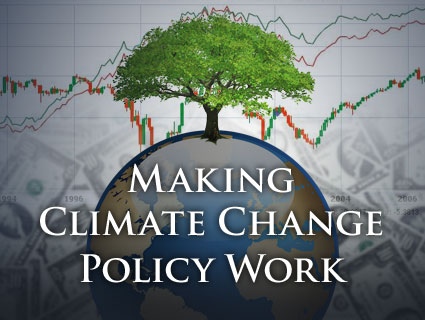
When President Obama took office three years ago, he put climate change at the top of the agenda. However, to have climate change policy you need an energy policy. People confuse the two — you need both for sustainable development.

20120301-120602.jpg

In this year’s State of the Union address, President Obama tempered his message, saying the country needs an “all of the above” energy policy to provide supplies that are cleaner and cheaper. That is nice political rhetoric — but a gross oversimplification of the challenges ahead.

At the same time, the energy industry must do a much better job informing the public and educating political leaders about the pragmatic realities we face and the difficult choices we must make. Sound energy policy can only emerge if the government, energy industry and the public have a shared understanding of the challenge. To achieve this, the energy industry needs to regain the public trust. In a Gallup poll last year of public opinion of 25 business sectors and government, oil and gas ranked next to last. Only the federal government had worse ratings.

20120301-122218.jpg

These are the energy realities that we face:

Eighty-five percent of the world’s energy comes from hydrocarbons: 35 percent oil, 30 percent coal and 20 percent natural gas.

It is estimated that the world population will grow from seven billion today to nine billion by 2050, with much of that growth in developing countries. With a corresponding increase in living standards, hydrocarbon energy is essential for economic development.

20120301-122511.jpg

World demand for oil is expected to grow on an annual basis by at least one million barrels per day, driven by the developing economies of the world and growth in transportation, which is forecast to increase from one billion cars today to two billion in 2050.

We are not running out of oil. We have already produced one trillion barrels and globally there are approximately two trillion barrels remaining of conventional oil. While we currently have world surplus oil production capacity of two to three million barrels per day, as demand grows in the next decade we will not have enough oil production capacity to keep up. Without greater investment in new capacity, tight supply will ration demand and prices will skyrocket — which could bring the world economy to its knees. The per barrel oil price of $140 four years ago was not an aberration, but a warning.

While renewable energy is needed and development should be encouraged to meet future energy demand and reduce our carbon footprint, hydrocarbons will fuel the world’s economy for many decades to come. Renewables do not have the scale, development timeframe or economics to materially change this outcome as much as we would hope.

The energy industry has to stand up to provide strategic vision. Here are some thoughts for a United States energy policy.

20120301-122636.jpg

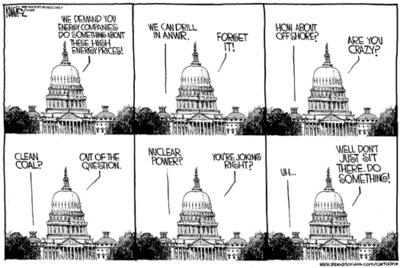
Oil: U.S. energy policy for oil should aim at moderating demand through efficiency and increasing supply by focusing on drilling. In terms of demand, we need to raise the mileage performance standard to 50 miles per gallon as quickly as possible. This can be achieved first and foremost through hybrid electric cars, as well as a combination of vehicle mix, engine downsizing and advanced combustion technology. Replacing the nation’s fleet of 230 million cars and light duty trucks with more fuel-efficient vehicles over 15 years could save three million barrels of oil equivalent per day. At today’s price of $100 per barrel, this change would save over $100 billion a year in energy costs — a worthy prize.

20120301-123124.jpg

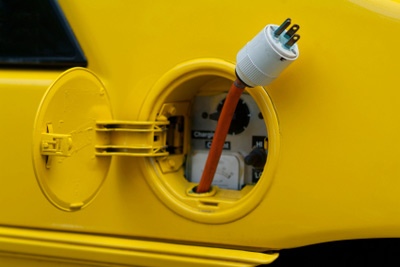
Electric battery powered cars are viewed by some as the ultimate solution for moderating oil demand. Unfortunately, there are significant obstacles to the widespread implementation of electric cars. The challenge is that range is generally limited to 40 miles on an eight-hour charge and batteries cost more than $10,000 per car. The laws of physics explain the range challenge. The energy density of today’s best battery is 200 watt-hours per kilogram versus the energy density of gasoline — 13,000 watt-hours per kilogram.

To increase oil supply, we must maintain tax provisions that incentivize drilling and strengthen energy security. In 2010, the oil and gas industry spent approximately $135 billion in intangible drilling costs (IDCs), which are current cash operating costs of drilling that tax law allows companies to expense in the year incurred. President Obama recently said in his State of the Union Address that we have subsidized oil companies for a century and that is long enough. Taking this position might be good politics — but it’s not good policy. It serves nobody’s purpose for our political leadership to vilify oil producers. These costs are neither tax breaks nor subsidies for oil companies; they are an investment in America’s energy future. Eliminating expensing of IDCs would decrease domestic supply, increase foreign imports, hurt our balance of trade, decrease jobs and reduce energy security.

20120301-123426.jpg

We also must do all we can to increase the world’s oil supply. With non-OPEC production nearing a plateau, the supply burden in the future will increase on OPEC, specifically Saudi Arabia and Iraq. The global oil and gas industry is expected to spend $600 billion this year on exploration and production, or 10 percent more than a year ago. With the long lead times in our business, the world is not investing enough globally to ensure surplus capacity in the next five to ten years.

20120301-123730.jpg

Natural Gas: U.S. energy policy for natural gas should focus on shale gas, which is a real game changer. Five years ago, shale gas accounted for approximately five percent of U.S. natural gas production; today it makes up almost 30 percent. Natural gas provides a significant competitive cost advantage for the United States in terms of cost per unit, which is several times lower than it is in other countries. It also has environmental advantages, with half the carbon footprint of coal, and helps our nation’s energy security as supplies are forecast to last for the next 100 years.

We should grow gas demand as a fuel in heating, electricity, petrochemical manufacturing and transportation. However, the biggest opportunity is electricity generation, where natural gas has lower costs and higher efficiency than in transportation. An electric plant is 50 percent efficient, whereas natural gas used in transportation is 15 percent efficient.

20120301-124231.jpg

We must use hydraulic fracturing to develop our abundant natural gas resources. This has been a common practice since 1949 and over one million wells have been hydraulically fractured in the U.S. Eighty percent of the 44,000 wells drilled in our country each year require hydraulic fracturing, using a closed system with water, sand and a small percentage of additives to fracture rock and release hydrocarbons. Most states do a very good job regulating this activity. Adding duplicative federal regulation would be counterproductive.

20120301-124453.jpg

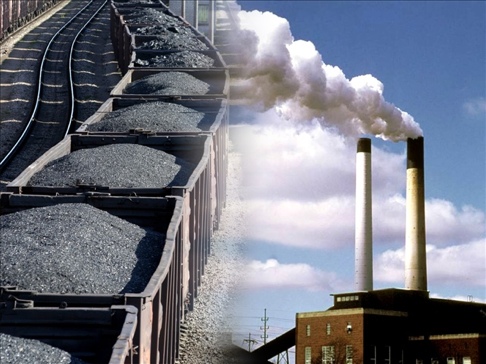
Coal: U.S. energy policy for coal should reduce its use until research breakthroughs make clean coal technically feasible and commercially viable. While almost 50 percent of our electricity comes from coal, Al Gore’s words ring true: “Clean coal,” he said, “is like healthy cigarettes.” At present, it does not exist. We have more than 600 coal plants in the U.S., one third of which are over 50 years old; many need significant investments to meet anticipated environmental regulations. With the superior economics of natural gas, older plant capacity should be replaced with gas-fired plants.

20120301-124750.jpg

Nuclear: Even before the disaster in Japan, nuclear power had problems due to the high cost of new plants, the long lead time needed to build them and the challenges of secure nuclear waste disposal. While we need to maintain our technical capability and portfolio options by building a few new plants a year, the high cost of nuclear plants means they cannot compete economically against natural gas and they will have a limited role going forward.

20120301-125026.jpg

Climate change: U.S. energy policy must also deal with climate change in a way that sets targets that sustain economic growth and protect the environment. Proposals to reduce the world’s carbon emissions by 80 percent by 2050 are not achievable. A study done by Princeton University’s Carbon Mitigation Initiative sets forth strategies needed to mitigate emissions globally such as setting 60 miles per gallon for fuel efficiency, doubling the number of nuclear plants, capturing and storing carbon from 800 coal plants and increasing wind power by 10 times today’s capacity. Executing eight of these herculean initiatives would hold CO2 emissions flat by 2060. We should be realistic about targets we set and make sure we do not put the economy into reverse.

20120301-125439.jpg

The United States and Europe cannot meet the challenge of climate change alone. The role of China, which now accounts for 10 percent of the world GDP, is critical. China recently surpassed the U.S. in CO2 emissions and will probably triple its CO2 emissions in the next 30 years. China’s energy policy is integral to its national security and foreign policy. In the last three years, China spent over $45 billion to acquire oil and gas reserves worldwide.

20120301-125614.jpg

The United States needs to get serious about climate change once our economy recovers and people get back to work. Some say we should then consider energy taxes, such as a $1 per gallon gasoline tax for transportation and a $10 per ton carbon tax for electric generation. While it would take political courage, these taxes should be given full examination. They should be introduced over a five-year period and only when other major industrial powers in the G-20 take similar measures.

20120301-133506.jpg

Carbon price signals would ensure that we use hydrocarbon energy more efficiently and make meaningful reductions in CO2 emissions. When fully implemented, such taxes would generate over $200 billion per year. Ninety percent of the revenue could be directed at reducing our nation’s financial deficit — provided it is coupled with spending cuts. The remaining ten percent could be dedicated to research in alternative energy technologies such as batteries, biofuels and carbon capture and storage, as well as infrastructure projects such as smart grids and the hydrogen economy. We need to develop these technologies so that one day they can reach their promise and competitively position the U.S. economy for the future.

20120301-130333.jpg

Three C’s: Energy and climate change have been called the greatest challenge of the 21st Century. Energy industry leaders should help offer a solution by following three principles I call the “Three C’s”: Communication, Courage and Collaboration.

20120301-130637.jpg

First, we must communicate the pragmatic realities we face and the fact that hydrocarbons are critical to our future.

20120301-130923.jpg

Second, we must have the courage to provide the strategic vision for a secure energy future that underpins economic growth and protects the environment.

20120301-131238.jpg

Third, we must collaborate — Democrats and Republicans, government and industry and the United States with the rest of the world — in the spirit of compromise for the common good. We need to put energy policy at the top of the U.S. political agenda and that of the G-20 as well. Together, we can create an energy policy to make our country more competitive and secure economic prosperity for future generations.

20120301-131802.jpg

Read More: part of the HBR Insight Center on American Competitiveness .

20120301-132751.jpg
Get full story by John B. Hess

SUBSCRIBE to The Hispanic Blog and stay on top of the latest Latino news, politics and entertainment!

Don’t be shy SUBSCRIBE – COMMENT – LIKE ME -CIRCLE ME AND FOLLOW ME

If you have any questions, concerns or simply would like to get a quote on my Marketing, Public Relations, Social Media and/or Events services, please feel free to contact me at thehispanicblog@gmail.com.

God Bless and may you have a fabulous day!

powered by Influential Access – “Transforming the Ordinary to EXTRAordinary!” – CEO – Jessica Marie Gutierrez – Creator of The Hispanic Blog #thehispanicblog
 

ROMNEY’S “MODEL” BEHAVIOR: YOU HAVE TO WORK HARD TO OFFEND 50 MILLION LATINOS

THE HISPANIC BLOG BY JESSICA MARIE GUTIERREZ

CONGRESSMAN LUIS GUTIERREZ makes Latinos proud!

20120229-172605.jpg

Watch the video! Thank you Mr. Congressman 4 being a great voice to our Latino community!

SUBSCRIBE to The Hispanic Blog and stay on top of the latest Latino news, politics and entertainment!

Don’t be shy SUBSCRIBE – COMMENT – LIKE ME -CIRCLE ME AND FOLLOW ME

If you have any questions, concerns or simply would like to get a quote on my Marketing, Public Relations, Social Media and/or Events services, please feel free to contact me at thehispanicblog@gmail.com.

God Bless and may you have a fabulous day!

powered by Influential Access – “Transforming the Ordinary to EXTRAordinary!” – CEO – Jessica Marie Gutierrez – Creator of The Hispanic Blog #thehispanicblog

 

DID FEDERAL JUDGES FINALLY APPROVE TX REDISTRICTING MAPS?

20120229-085038.jpg photo from Texas Tribune

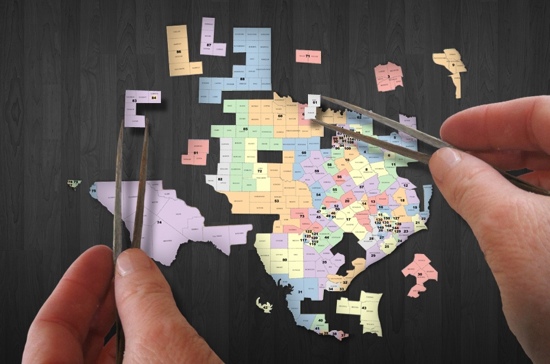
A federal three-judge panel in San Antonio on Tuesday issued the last remaining sets of Texas political maps that had been at the center of a redistricting dispute, appearing to end uncertainty over the state’s long-delayed primary elections.

The judges released new interim maps for Congressional and State House districts. It had issued a State Senate district map this month.

The legal wrangling over the three sets of maps had thrown much of the state’s political machinery into limbo, as the judges twice pushed back the date of the primary and lawmakers and candidates struggled to campaign without viable electoral maps.

20120229-084612.jpg Joe Cardenas III Former TX State Director of LULAC and one of the main leaders of the Latino Task Force

Minority groups and Democratic lawmakers sued the state in federal court over the maps drawn by the Republican-controlled Legislature, arguing that they discriminated against blacks and Hispanics. Lawyers for Greg Abbott, the Texas attorney general, who is representing the state, have argued that the maps were drawn to help Republicans maintain power, not to discriminate.

At a hearing earlier this month, one of the judges said the primary, which had been set for March 6 and then April 3, would most likely be on May 29. Jacquelyn F. Callanen, the elections administrator for Bexar County, told the judges that elections officials statewide would need the maps by March 3. With all of the maps having been issued before March 3, May 29 appears to be the primary date, though the judges have yet to make the date official.

The court’s new Congressional map is based in large part on a compromise map that the state and lawyers for some of the minority groups had recently agreed to. The court’s map gives blacks and Hispanics three of the state’s four new Congressional seats, but it also appears to weaken the minority voting strength in three other seats that blacks and Hispanics had been competitive in, experts said.

“It clearly is better than the state’s map, but arguably it doesn’t go as far for minorities,” said Michael Li, an election law attorney in Dallas who has followed the case’s developments on his Web site, Txredistricting.org.

20120229-084112.jpg Texas Attorney General Greg Abbott has served as the 50th Attorney General of Texas since December 2, 2002. Prior to his election as Attorney General, he was a Justice on the Texas Supreme Court and a State District Judge in Harris County.

The attorney general said in a statement that the new maps reflect the intent of the Legislature, and he applauded the court for leaving numerous districts as they were drawn by the state and rejecting “the demands by some plaintiffs to draw drastic and overreaching interim maps.”

The federal judges had previously drawn a set of maps that differed from the Legislature’s maps and benefited minorities, but the attorney general asked the Supreme Court to intervene. The Supreme Court ruled in January that the San Antonio judges had not paid enough deference to the Legislature’s maps and sent the case back to the lower court.

Read More: Story from The New York Times

SUBSCRIBE to The Hispanic Blog and stay on top of the latest Latino news, politics and entertainment!

Don’t be shy SUBSCRIBE – COMMENT – LIKE ME -CIRCLE ME AND FOLLOW ME

If you have any questions, concerns or simply would like to get a quote on my Marketing, Public Relations, Social Media and/or Events services, please feel free to contact me at thehispanicblog@gmail.com.

God Bless and may you have a fabulous day!

powered by Influential Access – “Transforming the Ordinary to EXTRAordinary!” – CEO – Jessica Marie Gutierrez – Creator of The Hispanic Blog #thehispanicblog
 

IS ALABAMA “LIGHTENING UP” ON HISPANICS?

THE HISPANIC BLOG BY JESSICA MARIE GUTIERREZ

20120228-170254.jpg

On March 1, the ACLU will be in court challenging the constitutionality of both Alabama and Georgia’s discriminatory anti-immigrant laws. Of the five Arizona-inspired laws to pass, only Alabama’s has had significant provisions go into effect. The result: divided communities and devastation to the State’s economy and reputation.

Five months have now passed since those parts of Alabama’s law, H.B. 56, went into effect, and Alabama’s immigrant and Latino communities remain in a state of terror. Although tens of thousands fled Alabama in those first few days and weeks, others have committed to staying in their communities, hoping the legal challenges and basic human decency would prevail. People have held out hoping they would not have to uproot their families and leave their homes, notwithstanding the clear message that they were no longer welcome, at least by those in charge of the State government.Creator of The Hispanic Blog

20120228-171850.jpg

Several realities are missed or ignored by those in favor of coercive policies like H.B. 56, that are meant to force immigrants to “self-deport.” One is the incredible resourcefulness of the community they have targeted. People don’t leave their home countries and travel thousands of miles to escape violence, repression, and grinding poverty without a willingness to endure hardship and to overcome obstacles that would persuade those of less resolute spirit to turn back. Having put down roots in Alabama and made contributions to their local communities, many immigrants are therefore willing to take a wait-and-see approach, and tolerate — at least for a while — outrages that are far out of place in 21st-century America.

Alabama is fertile ground for outrage for anyone with a conscience. Although arrests and detentions of foreign auto executives make headlines, the everyday lived experience of H.B. 56 involves far more commonplace affronts to human dignity. Indignities like being denied water service for six weeks, even while your 9-year-old U.S.-citizen child falls ill for lack of running water in the home; or being told that without a valid Social Security number, you can’t have electricity at your home, receive emergency dental care, take classes at the local community college, or renew your lease — even though you are willing and able to pay just like the next person. Other frequent affronts to human dignity include being told that even though your family qualifies for federal food stamps or emergency medical care, you can’t have those services because the state has decided otherwise; or being warned that if you offer a neighbor a hand by providing a meal or a ride, you could be prosecuted for the new state crime of harboring; or being arrested by local police, not for any crime, but because the officer wants to check your immigration status — and besides, you were standing on the sidewalk for too long anyway.

Not all of these consequences are actually mandated by H.B. 56, but such things happen when you enact a broadly worded law that, in the words of Rep. Micky Hammon, one of its sponsors, “attacks every aspect” of the lives of an entire community, in the hopes that “they will deport themselves.” It signals and gives license to those who think they either can or are now required to discriminate (and it doesn’t help when Rep. Hammon openly uses “Hispanic” and “illegal immigrant” interchangeably).
And so those who look or sound “foreign,” even though they are U.S. citizens, are collateral casualties, looked upon with suspicion and harassed — asked if they have “papers” — when they buy groceries, go to school or a restaurant, or attempt to return a blouse to the local department store.br />
20120228-171127.jpg photo of beyond anti-immigrant Gov Brewer of AZ & Gov Bentley of AL

Some recent reports have noted that amongst the thousands who fled Alabama last fall, some have returned. And it’s true: there has been a slight rebound in some places. Some have decided that even though life is far more difficult in Alabama than other places, it’s still their home. And so they will have faith that the State will come to its collective senses and remedy what has become a colossal self-inflicted injury; we’ve seen some state lawmakers calling for repeal, while others are considering measures that would try and mitigate the law’s widespread harms. Many families are counting on the courts and the compassion of their neighbors (immigrant, Latino, or otherwise) so that they can carry on with the lives they have built in Alabama. In short, despite all evidence to the contrary, some immigrants in Alabama continue to have faith in the American values they have come to respect and love as their own. I just hope their faith is not misplaced.

Read More: ACLU BLOG BY JUSTIN COX

SUBSCRIBE to The Hispanic Blog and stay on top of the latest Latino news, politics and entertainment!

Don’t be shy SUBSCRIBE – COMMENT – LIKE ME -CIRCLE ME AND FOLLOW ME

If you have any questions, concerns or simply would like to get a quote on my Marketing, Public Relations, Social Media and/or Events services, please feel free to contact me at thehispanicblog@gmail.com.

God Bless and may you have a fabulous day!

powered by Influential Access – “Transforming the Ordinary to EXTRAordinary!” – CEO – Jessica Marie Gutierrez – Creator of The Hispanic Blog #thehispanicblog