WHAT IS THE LATEST WITH IMMIGRATION AND THE ELECTION?

THE HISPANIC BLOG IS THE LATEST HISPANIC NEWS BY JESSICA MARIE GUTIERREZ

This has been a historic week on immigration policy in an election year.

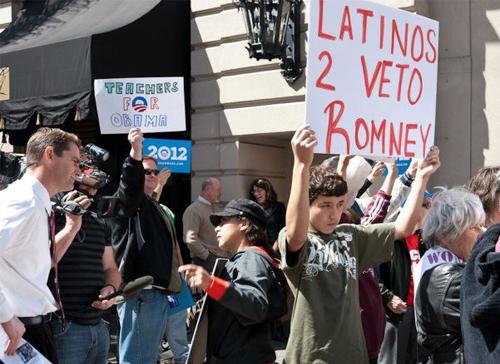
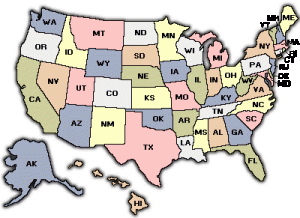
If upheld, the Supreme Court ruling on the Arizona “show me your papers” provision would have a huge mobilizing effect on Latino voters.  At the Supreme Court’s Arizona v. United States hearing on Wednesday, the narrow legal focus of the proceedings and Justices’ related discussion led many commentators to speculate that the “show me your papers” provision of Arizona’s anti-immigrant law would likely stand.  A ruling to uphold the law would not only unleash widespread discrimination in Arizona and other states with copycat legislation, it would mobilize Latino voters and other voters for whom the immigration debate is important and viewed through a personal lens.  Regardless of the outcome, the ruling will have major political ramifications in 2012 presidential race.
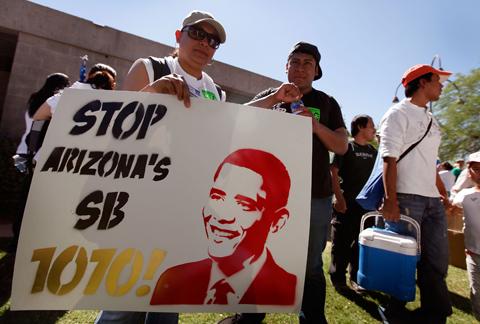
Coming in the heat of a race in which Democrats hope for huge Latino turnout and Republicans hope for just the opposite, the decision will draw a sharp contrast between a President who fought the Arizona law and a Republican nominee who supports it.

“Will Mitt Etch-a-Sketch on immigration?”

Probably not, but if he does, it won’t work. In diagnosing Mitt Romney’s problem with Latino voters, many commentators have concluded that Romney will tack toward the middle on immigration. We beg to differ. He may come up with some legal immigration package designed to soften his image a bit, but it’s our view that he has pandered too much and too recently to the nativist minority in the GOP to flip flop now. The last thing the Romney campaign wants is a fight with the right over immigration combined with a week of stories about his “Etch-a-Sketch” on immigration. And if we are wrong and he does shift positions, would it work? We think not. He’s already branded with Latino voters.  As Ron Brownstein notes of recent polling, “Obama’s share of the vote among Latinos notably exceeds his approval rating with them.
That’s a telling measure of how much Romney has alienated those voters, because it’s unusual for a president to poll much above his approval rating with any group.”  And Latino voters are not stupid.  They are not going to fall for a little general election shuffle.  Just ask Meg Whitman.  Some salt and pepper for the stew: Andrew Sullivan predicts Romney will stay hard right here; Michael Tomasky thinks Romney will bust a move to the center but argues it wouldn’t work here.

Marco Rubio’s DREAMs: looking past 2012 to 2016? 

                                                                           Jae C. Hong/AP Photo

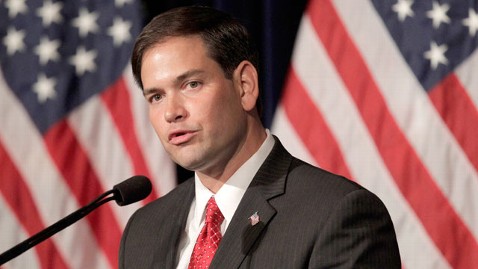
The chatter surrounding Senator Marco Rubio’s impending legislation modeled on the DREAM Act has reached a fever pitch. Much of the commentary focuses on what Rubio and the DREAM legislation might mean for Romney in 2012 and Rubio’s chances in the Veepstakes.  Again, we beg to differ.  We doubt Rubio will be the VP choice and we believe he has a longer-term vision in mind. Our take is that Rubio knows Romney is cooked with Latino voters and is already focused on Republican Party’s post-2012 effort to repair its image among Latino voters.  Eventual passage of a Rubio-championed DREAM Act would indeed help Rubio’s chances to be the leader of a more Latino-friendly GOP going into 2016.

Pundits and insiders agree – immigration helping Democrats and hurting Republicans:

photo source Getty Images

What a difference a few years makes.  During 2005 and 2006, many Republicans thought they would reap the political rewards of using a hard line immigration stance as a wedge issue.  Though post-election analyses in 20062008, and 2010 showed that a hardline immigration position did not help politically, and in many cases hurt candidates politically, it seems as though the conventional wisdom has finally caught up with the election results.  A National Journal’s political Insiders generally agreed across the aisle that the issue of immigration stands to help Democrats and hurt Republicans in the November elections.  Almost half of the Democratic Insiders said the immigration issue would “help a little” while a little more than a third said it would “help a lot.” Among the Republican insiders, more than half believed immigration would “hurt a little,” a handful predicted it would “hurt a lot,” while three in ten said the issue would have “no effect.”

Read More: America’s Voice

SUBSCRIBE to The Hispanic Blog to stay on top of the latest latino news, politics and entertainment!

Don’t be shy SUBSCRIBE – COMMENT – LIKE ME -CIRCLE ME AND FOLLOW ME

If you have any questions, concerns or simply would like to get a quote on my Marketing, Public Relations, Social Media and/or Events services, please feel free to contact me.

God Bless and make it a fabulous day!

powered by Influential Access – “Transforming the Ordinary to EXTRAordinary!” – CEO – Jessica Marie Gutierrez – Creator of The Hispanic Blog #thehispanicblog


WHAT DID SUPREME COURT JUSTICE SONIA SOTOMAYOR SAY ABOUT SB 1070?

THE HISPANIC BLOG IS THE LATEST HISPANIC NEWS BY JESSICA MARIE GUTIERREZ

“You are involving the federal government in your prosecution,” the justice said, according to the hearing’s transcript, drawing attention to one class of non-citizens who may not appear in available databases of documented residents.”

(Photo credit should read SAUL LOEB/AFP/Getty Images)

The U.S. Supreme Court’s first Hispanic justice took a lead role in criticizing oral arguments over Arizona’s controversial immigration law. The liberal Sotomayor, President Barack Obama’s first Supreme Court appointee, was most widely quoted for her stinging criticism of the government’s argument that Arizona’s law preempts federal authority over immigration. But her lines of questioning and criticism of Arizona’s rebuttal also indicated skepticism about the most contentious provisions of the state law.

CLICK ON SCREEN BELOW TO WATCH INTERVIEW WITH GOVERNOR JAN BREWER

The questions Sotomayor posed to Paul Clement, the attorney representing Arizona, hinged on what would happen to people detained under SB 1070, as the law is known, who did not readily appear in databases. She noted that some people, like political asylum applicants, may not be registered with the federal government because the process requires them to keep their status private.

AP

“What’s going to happen now is that if there is no statement by the federal agency of legality, the person is arrested, and now we’re going to have federal resources spent on trying to figure out whether they have that, whether they are exempted for this reason, whether the failure to carry was accidental or not,” Sotomayor said. Sotomayor was the only justice to pose questions during Clement’s rebuttal.

AP

The Latina justice also jumped in with the first line of questioning, parsing out how detention processes under suspended provisions of the Arizona law would differ from current practice, and she posed questions highlighting the limitations of current federal databases to check people’s immigration status efficiently after being stopped.

photo Diane Ovalle / Puente Arizona

There is no federal database of authorized residents, only a passport registry, according to U.S. Solicitor General Donald Verrilli, who is arguing on behalf of the Obama administration. The federal government also checks reports of undocumented immigrants against another eight to10 federal databases, Verrilli said. Hypothetically, then, under the Arizona law a person stopped for an offense and held on suspicion of unlawful residence could wind up in custody for long periods of time, Sotomayor posited. While Sotomayor’s line of questioning indicated skepticism of parts of Arizona’s case, it was her biting criticism of Verrilli’s argument that Arizona’s enforcement of immigration undermined federal authority that caught the most attention.

photo by Diane Ovalle / Puente Arizona

“You can see it’s not selling very well,” Sotomayor said, commenting on a series of both tough questions and outright assertions made by the country’s highest court, where conservatives hold a majority.

Justice Antonin Scalia. Image from Legal Geekery

“Arizona is not trying to kick out anybody that the federal government has not already said do not belong here,” said Justice Antonin Scalia.

Chief Justice Roberts SOURCE: AP/Evan Vucci

The most forceful argument in favor of the controversial immigration law’s provision requiring police to check the immigration status of those they stop came from Chief Justice Roberts.

U.S. Solicitor General Donald Verrilli
Photo by Mark Wilson/Getty Images

“It is still your decision,” Roberts told Verrilli. “And if you don’t want to know who is in this country illegally, you don’t have to.”

Read more: FOX NEWS LATINO

SUBSCRIBE to The Hispanic Blog to stay on top of the latest latino news, politics and entertainment!

Don’t be shy SUBSCRIBE – COMMENT – LIKE ME -CIRCLE ME AND FOLLOW ME

If you have any questions, concerns or simply would like to get a quote on my Marketing, Public Relations, Social Media and/or Events services, please feel free to contact me.

God Bless and make it a fabulous day!

powered by Influential Access – “Transforming the Ordinary to EXTRAordinary!” – CEO – Jessica Marie Gutierrez – Creator of The Hispanic Blog #thehispanicblog

RUBIO HAS A DREAM

THE HISPANIC BLOG IS THE LATEST HISPANIC NEWS BY JESSICA MARIE GUTIERREZ

Jonathan Ernst / Reuters

Hoping to defuse an issue hurting Republicans among Hispanic voters, Florida Sen. Marco Rubio is working on a compromise alternative to the DREAM Act, a proposal backed strongly by Democrats and Hispanics to offer a normal life to children of illegal immigrant families.

But Rubio is taking a risk that his compromise will please neither side. It could anger tea party-style Republicans while failing to satisfy many of his own Hispanic constituents. So far, he hasn’t persuaded even leaders of his own party, including presumptive presidential nominee Mitt Romney and House Speaker John Boehner, to get in line.

According to teaparty.org if the Tea Party wins so does America…

“It’s a significant risk,” said retired University of South Florida political scientist Darryl Paulson, a Republican. “The primary thing any political candidate wants to do is solidify his base, and this could fracture that base.” 
Rubio has been accused of using the issue as an election-year ploy, but his spokesman Alex Conant said, “There’s just as much political peril as there is potential benefit in doing anything like this.”
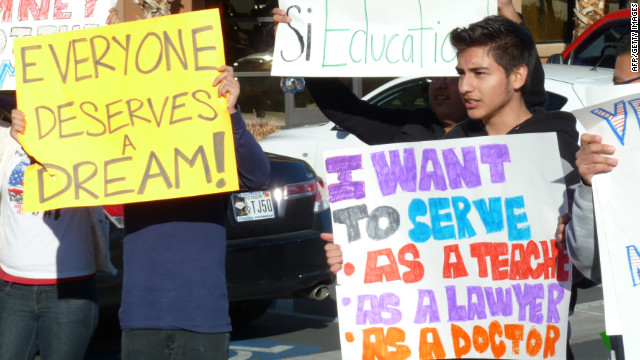
Originally proposed by members of both parties 10 years ago, the original DREAM Act would allow a path to citizenship for young people brought here as children when their families illegally immigrated, if they attend college or serve in the military. The name is an acronym for Development, Relief, and Education for Alien Minors. Such young people, not having known any other home, often are prevented from going to college because of their undocumented status, even after serving in the military. The DREAM Act would allow student loans and work-study jobs but not federal higher education grants for the students.

Daniela Pelaez/ Photo by Bill Clark/Roll Call

One recent case involved the valedictorian of North Miami High School, Daniela Pelaez, an aspiring surgeon. Admitted to the University of Florida and Dartmouth College, she instead faced deportation because her family came here illegally from Colombia when she was 4 years old. Pelaez got a respite from deportation last month after her case made headlines and sparked demonstrations by fellow students.

Daniela Pelaez 18, Alberto Carvalho, superintendent for Miami-Dade Public Schools, and Dayana Pelaez 26, at press conference, where over twenty-five hundred students protest the possible deportation of student Daniela Pelaez 18, this Friday morning, March 2, 2012, at the North Miami Senior High School. Walter Michot / Miami Herald

Rubio recently told The Huffington Post he wants “a bipartisan solution … that does not reward or encourage illegal immigration by granting amnesty, but helps accommodate talented young people like Daniela, who find themselves undocumented through no fault of their own.” Throughout his career, Rubio has had to thread the needle on immigration issues, trying on the one hand to please his conservative base, but also satisfy his Hispanic constituency. That has led him to compromise or to take ambivalent positions on issues, including official English and tough state anti-illegal immigrant laws. The son of a Cuban immigrant family, Rubio has said the original DREAM Act is flawed because allowing a path to citizenship could lead to “chain migration,” in which family members sponsor each other.

His proposal, which he hopes will be considered this summer, will include a temporary student visa rather than citizenship or legal resident status for students. But it likely would allow the students eventually to apply for legal residency without returning to their parents’ home countries. Those honorably discharged from the military, Conant said, also would be able to seek legal residency or citizenship.

Getty Images

Democrats who back the original DREAM Act, a 10-year-old proposal that passed in the House last year but failed in the Senate, decry Rubio’s idea as creating a permanent underclass of “bracero” non-citizen workers.

Rodolfo De La Garza CU Political Scientist/ Columbia Talk Radio

“It makes a very limited offer to a small segment of the population,” said Rodolfo de la Garza, a Columbia University political scientist who specializes in Hispanic voters. “I think what most Latinos are going to pick up on is what I have to characterize as either a political ploy or profound disingenuousness to the point of deceit on Rubio’s part.” He called the DREAM Act “the one issue on which there is a clear Latino position — they are 75-80 percent in favor of it in numerous polls.”
Conant called the bracero allegation “nonsense.” “Nothing is in this proposal that would prohibit these kids from someday seeking permanent residence or citizenship.”

Immigrants chant slogans during a rally Monday, May 1, 2006, in Miami. Hundreds of thousands of mostly Hispanic immigrants skipped work and took to the streets Monday, flexing their newfound political muscle in a nationwide boycott that succeeded in slowing or shutting many farms, factories, markets and restaurants. (AP Photo/Alan Diaz)

In a national poll of Hispanic voters in January by Univision, ABC and Latino Decisions, respondents cited “immigration reform/DREAM Act” as tied with the economy and jobs as the top issue in their voting decisions for the November election. In Florida, where large numbers of Hispanics are either Cuban refugees, who automatically receive resident status, or Puerto Ricans who are citizens, immigration and the DREAM Act were still in second place, with 17 percent, to 23 percent for the economy. Despite that, Romney said during the primary campaign that he would veto the DREAM Act, although he favored the idea for illegal immigrants who serve in the military.

Republican presidential candidate Mitt Romney shakes hands with Sen. Marco Rubio (R-Fla.) after Romney was introduced by Rubio during a town-hall-style meeting in Aston, Pa.
Jae C. Hong / AP

Earlier this week, Romney declined to endorse Rubio’s compromise, even though he was standing next to Rubio in a joint news conference in Pennsylvania at the time. “It has many features to commend it,” Romney said, “but it’s something that we’re studying.” He said he expects to lay out immigration proposals before the November election, but added, “Obviously our first priority is to secure the border.”
Also this week, Boehner said it is unlikely Rubio’s proposal could pass the House this year, citing “a very hostile political environment.” “To deal with a very difficult issue like this, I think it would be difficult at best,” he said. Conant called Romney’s reluctance “totally understandable, that he would want to see the plan’s details before endorsing the plan. But the idea isn’t likely to be popular with the tea party Republicans to whom Romney and Boehner must appeal. 

Boehner To Rubio: DREAM On, Dude! photo by Jeff Malet

“It’s an amnesty bill — it rewards lawbreaking,” said Bob Dane, spokesman for the Federation for American Immigration Reform, an anti-illegal immigration advocacy group. “Rubio is marching off into McCain-land” — a reference to Ariz. Sen. JohnMcCain’s support for an immigration reform bill that would have allowed a path to citizenship. “Whatever support he’s going to pick up from Hispanics is probably going to be far outweighed by what he loses from his conservative base.” he said. Rubio’s idea may get a better reception, but still not unanimous approval, from tea partiers in his home state, who consider him a hero.

Sen. Orrin Hatch (R) of Utah waits to speak during a Tea Party Express town hall meeting at the National Press Club in Washington Tuesday.
Cliff Owen/AP

“Some people draw the hard line, absolutely no amnesty, but some tea party groups understand you’re trying to address a difficult issue,” said tea party leader Karin Hoffman, who said she formed her opinion from online forums and message boards. “They acknowledge you’re providing a way for them (young illegal immigrants) to be a contributing member of society, and it’s not blanket amnesty — it’s for the individual alone.”

Read More: Tampa Bay Online

SUBSCRIBE to The Hispanic Blog to stay on top of the latest latino news, politics and entertainment!

Don’t be shy SUBSCRIBE – COMMENT – LIKE ME -CIRCLE ME AND FOLLOW ME

If you have any questions, concerns or simply would like to get a quote on my Marketing, Public Relations, Social Media and/or Events services, please feel free to contact me.

God Bless and make it a fabulous day!

powered by Influential Access – “Transforming the Ordinary to EXTRAordinary!” – CEO – Jessica Marie Gutierrez – Creator of The Hispanic Blog #thehispanicblog


IS CUBA IMPLEMENTING MIGRATORY REFORM IN A FEW MONTHS?

THE HISPANIC BLOG IS THE LATEST HISPANIC NEWS BY JESSICA MARIE GUTIERREZ

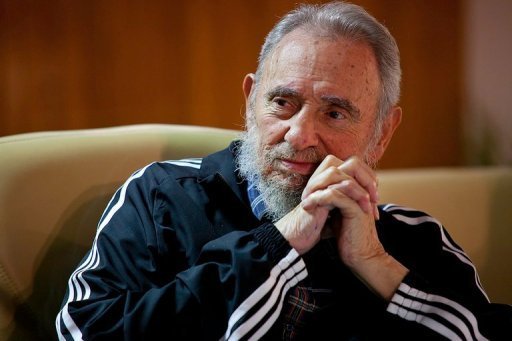
Former Cuban President Fidel Castro accused Barack Obama of looking down on Latin America.

Cuba will implement migratory reform in the next months to eliminate the old restrictions impeding Cubans from traveling abroad

“One of the issues currently under discussion at the highest level of the Cuban State is the issue of migration. We will carry out a radical and deep immigration reform in the coming months, in order to eliminate this type of restriction,” said Alarcon, president of the National Assembly of the People’s Power. Alarcon said the migratory control in the last five decades was one of the resources used by the revolution that began in 1959 to defend itself from “the long terrorist campaign,” for which some Cuban immigrants were responsible. “Now things have changed a lot,” Alarcon said, adding that “nearly half a million Cubans living abroad visit us each year. The vast majority of Cuban emigrants have normal relations with their country of origin.” “Currently it is an economic emigration, whose fundamental interest is to keep peaceful links with its country of origin, they have family and friends on the island, and they wish above all stability,” he said. “This new reality leads us to a ‘substantial’ reform of our migratory policy. Some rules must be changed and others eliminated,” Alarcon saidAlarcon also recalled that the migration issue has been always a “weapon used by the U.S. government to destabilize the revolution.” Cubans are the only foreign immigrants who may automatically gain residence after a year in U.S. territory according to the Cuban Adjustment Act, established in 1966 to encourage illegal Cuban immigration by crossing the Florida Strait in unsteady boats, he said.

The first announcement on a migratory reform in Cuba was made in August 2011 by President Raul Castro at the parliament and was ratified in December

HAVANA – People walk through the streets December 3, 2006 in Havana, Cuba. The island nation continues to wait for a glimpse of President Fidel Castro, who has ruled Cuba since 1959, he temporarily transferred his powers as president to his younger brother Raul Castro, the defense minister, due to his ailing health on July 31. Since that time he has been seen by the public only in videos and photographs released by the government. (Photo by Joe Raedle/Getty Images)

Castro’s government has removed several restrictions observed in the country for half a century, but Cubans still can travel into and out of the country freely. To travel abroad, a Cuban citizen must suffer a winding net of limitations and expensive permits that cost nearly 1,000 dollars. If successful, the travel permission is granted for 30 days and may be extended ten times. People must return within the time limit, otherwise they will lose the right to reside on the island.

Read More: Business Ghana

SUBSCRIBE to The Hispanic Blog to stay on top of the latest latino news, politics and entertainment!

Don’t be shy SUBSCRIBE – COMMENT – LIKE ME -CIRCLE ME AND FOLLOW ME

If you have any questions, concerns or simply would like to get a quote on my Marketing, Public Relations, Social Media and/or Events services, please feel free to contact me.

God Bless and make it a fabulous day!

powered by Influential Access – “Transforming the Ordinary to EXTRAordinary!” – CEO – Jessica Marie Gutierrez – Creator of The Hispanic Blog #thehispanicblog


PRESIDENT OBAMA JOINS THE MEETING OF NORTH AND SOUTH AMERICAN LEADERS AT THE SUMMIT OF THE AMERICAS

THE HISPANIC BLOG IS THE LATEST HISPANIC NEWS BY JESSICA MARIE GUTIERREZ

President Barack Obama leaves today for a trip to a summit in Latin America that may have as much resonance in domestic politics as in hemispheric economics. Discussions at the meeting of North and South American leaders in the resort city of Cartagena, Colombia, will cover trade, economic growth and the battle against drug trafficking. Yet the White House is mindful that about 16 percent of U.S. residents trace their roots to the region, and that group may play an outsized role in the November presidential election.

photo source AP

“The president desperately needs high voter turnout among Hispanic Americans,” said Douglas Brinkley, a presidential historian at Rice University in Houston. “It doesn’t hurt for him to be in Colombia, and being seen with Latino leaders of the hemisphere is not a bad photo-op in an election year.”

Obama’s campaign is gearing up for a close election fight against Republican Mitt Romney, putting a premium on gaining an edge with any voting group. Obama is actively courting Hispanics — who gave him 67 percent of their votes in 2008 — with a Spanish-language website and by recruiting Spanish-speaking volunteers and using Spanish-language voter registration forms and phone banks.

President Barack Obama addresses the Congressional Hispanic Caucus Institute’s 34th Annual Awards Gala in Washington, Wednesday, Sept. 14, 2011. (AP Photo/Cliff Owen)

“Key swing states that have large Hispanic populations will be extremely attentive” to the trip, said Susan MacManus, professor of political science at the University of South Florida in Tampa. “Many feel that Latin and South America has been ignored.”

Swing State

One of those states is Florida, with 29 of the 270 electoral votes needed to win the presidency and where Hispanics make up 22.5 percent of the population. Before Obama meets with the other 32 leaders at the Summit of the Americas he’s scheduled to stop at the Port of Tampa.The theme for that visit, as at the summit, will be expanding U.S. exports and gaining greater access to Latin markets for small businesses. About 40 percent of all exports from Tampa go to Latin America, and the port means 100,000 jobs and generates almost $8 billion in annual economic impact, according to its website.

President Obama waves as he arrives to speak at the Port of Tampa in Tampa, Fla., Friday April 13, 2012. (AP Photo/Chris O’Meara) CHRIS O’MEARA — AP

Total U.S. exports in the Americas amount to $700 billion a year out of $1.5 trillion worldwide, according to Commerce Department figures. Among the summit participants, Canada is the biggest U.S. trading partner, Mexico is the third largest and Brazil ranks ninth.

Hemispheric Trade

U.S. President Barack Obama speaks during a visit to the Port of Tampa on April 13, 2012 in Tampa, Florida. The President, on his way to the Summit of the Americas in Colombia, used the visit to emphasis small business trade with countries in Latin America.
(April 12, 2012 – Photo by Joe Raedle/Getty Images North America)

“The U.S. economy benefits substantially from our trade in the Americas, and over 40 percent of our exports currently go to the Americas,” Ben Rhodes, Obama’s deputy national security adviser for strategic communications, told reporters in an April 11 briefing. “Those exports are growing faster than our trade with the rest of the world.”

US President Barack Obama with Brazil’s President Dilma Rousseff Photo: Reuters

Latin America managed to largely escape the financial crisis of 2008-2009. Brazil (BZGDYOY%) is the world’s sixth largest economy, and the ranks of the middle class have swelled. The World Bank classifies most countries in the region as middle- income or higher. As countries in the region have grown more prosperous, they are less reliant on the U.S., the world’s biggest economy. That growth also comes as the Obama administration has made a deliberate pivot to focus more on Asia.

Diminished Role

Obama is “quite comfortable with the diminished role of the United States in the hemisphere” and that it’s “the natural order of things,” said Andrew Selee, director of the Mexico Institute at the Wilson Center. “The U.S. is going to continue to be engaged but no longer has the domineering authority it once did.”

President Obama arrives in Cartagena, Colombia, on April 13 for the Summit of the Americas

The summit host, Colombian President Juan Manuel Santos, has an agenda focusing on boosting advances in technology, finalizing the free-trade deal between the U.S. and Colombia, lessening income inequality and improving responses to natural disasters, such as earthquakes.

Obama remains popular in Central and South America, though promises to rebuild cooperation at the last summit, in 2009 in Trinidad, may have fallen short, according to the Inter-American Dialogue, a Washington-based policy group that focuses on the Western Hemisphere.

“The U.S. must regain its credibility in the region by dealing seriously with an unfinished agenda of problems — including immigration, drugs and Cuba — that stands in the way of a real partnership,” according to a policy report issued yesterday.

Illicit Drugs

Bigger issues that aren’t on the official agenda are legalization or decriminalization of illicit drugs and whether Cuba should be allowed at the next summit. Selee said that while he doesn’t expect “dramatic outcomes” from the summit, one area where “sparks” might fly would be the debate raging in Latin America over drugs. The presidents of Colombia and Mexico have called for a discussion about easing penalties for drug use. Obama’s aides say the U.S. will resist such proposals.

Mexico’s President Felipe Calderon (R) speaks to journalists as Colombia’s President Alvaro Uribe listens during a news conference at the presidential residence Los Pinos, in Mexico City November 10, 2008. REUTERS/Henry Romero (MEXICO)

“The president doesn’t support decriminalization,” Dan Restrepo, Obama’s senior director for Western Hemisphere Affairs, told reporters.

There is friction between the U.S. and some summit leaders over restrictive U.S. policies toward Cuba. Ecuador’s President Rafael Correa is boycotting the summit because of Cuba’s absence. The region’s sole dictatorship is the only nation excluded from the gathering of heads of state from the Western Hemisphere.

Brazilian President

Brazilian President Dilma Rousseff told Obama during a White House meeting April 9 that this should be the last such regional meeting without Cuba in attendance. In an e-mail interview with a group of Latin American newspapers, Obama said his administration has done more than any in decades to improve U.S. relations with Cuba and blamed the communist regime for the nation’s exclusion from the summit.

SOURCE: AP/ Pablo Martinez Monsivais
President Barack Obama meets with Brazilian President Dilma Rousseff at the United Nations in September 2011.

“We’re looking for a new era in the relationship between our two countries,” Obama said, according to a transcript of the interview published in Spanish by Bogota’s El Tiempo newspaper. “History shows that the longing for liberty and human dignity can’t be ignored forever. No authoritarian regime lasts forever. The day will arrive when the Cuban people will be free to determine their own destiny.”

While Obama moved to ease travel restrictions earlier in his presidency, the U.S. wants Cuba to release political prisoners, increase political freedoms and adopt democratic principles.

File: Barack Obama attends Cuban Independence Day celebrations in Miami in May during his run for president.
Read more: FOX NEWS

“Cuba authorities continue to deny the Cuban people their universal rights and the president will continue to stand up for those rights,” Restrepo said.

The policy is in keeping with those of past U.S. presidents from both parties, said MacManus, the Florida professor. As with other issues at the summit, Obama’s position on Cuba has political implications.

“If Obama can keep some of the Cubans who voted for him last time, appease them with that kind of stance, then that could be the difference” in winning Florida, MacManus said.

Read More: Bloomberg 

SUBSCRIBE to The Hispanic Blog to stay on top of the latest latino news, politics and entertainment!

Don’t be shy SUBSCRIBE – COMMENT – LIKE ME -CIRCLE ME AND FOLLOW ME

If you have any questions, concerns or simply would like to get a quote on my Marketing, Public Relations, Social Media and/or Events services, please feel free to contact me.

God Bless and make it a fabulous day!

powered by Influential Access – “Transforming the Ordinary to EXTRAordinary!” – CEO – Jessica Marie Gutierrez – Creator of The Hispanic Blog #thehispanicblog