HOW HAS CONGRESS DEALT WITH IMMIGRATION IN THE PAST 25 YEARS?

THE HISPANIC BLOG IS THE LATEST HISPANIC NEWS BY JESSICA MARIE GUTIERREZ
photo source: AP

1986: The Immigration Reform and Control Act of 1986 both tightens controls on illegal immigration and extends amnesty for many illegal immigrants. It requires that employers attest to employees’ immigration status and make it illegal to hire or recruit illegal immigrants. It also grants amnesty to some seasonal agricultural workers and to illegal immigrants who entered the United States prior to 1982 and have lived in the country continuously.

President Reagan signed the Immigration Reform and Control Act of 1986, which provided amnesty to illegal immigrants who qualified.

1990: The Immigration Act of 1990 created a lottery program that randomly assigned a number of visas, and increased the number of immigrants allowed into the country each year. The law also included exceptions for the English-language portion of the naturalization test.

The green card lottery is held annually to randomly select 50,000 applicants to be awarded with green cards.

1996: Under President Bill Clinton, several pieces of legislation are enacted that crack down on various facets of immigration. Specifically, there is a sharp increase in the categories of criminal activity for which immigrants, including permanent residents, can be deported. The laws also impose mandatory detention for certain types of deportation cases, and as a result deportation rates skyrocket.

Photo: J. Scott Applewhite / AP

Sept. 11, 2001: Terrorists attack New York and Washington, D.C., killing nearly 3,000 people. The events put immigration under a microscope because the attackers were foreigners, and change the way many politicians and Americans view immigration. Former Mexican President Vicente Fox goes so far as to say that if it were not for the attacks, Congress would have passed reform legislation that benefited Mexican emigration to America.

President George W. Bush walks with Mexico President Vicente Fox, left, and Canadian Prime Minister Paul Martin upon their arrival Wednesday, March 23, 2005, at the Bill Daniels Activity Center at Baylor University in Waco, Texas. White House photo by Eric Draper

2003: The Supreme Court upholds mandatory detention regardless of flight risk for any immigrant offender, even permanent residents.

2005: In 2005 and 2006, Congress holds field hearings on immigration and border security across the country. The Senate introduces a significant bipartisan effort to create a path for legalization for many illegal immigrants.

Pullman Daily News photo: Dean Hare

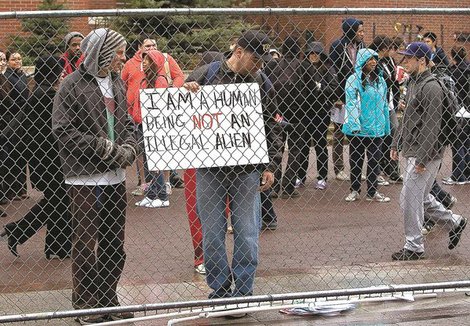
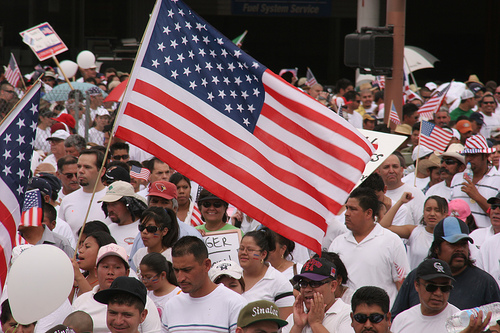
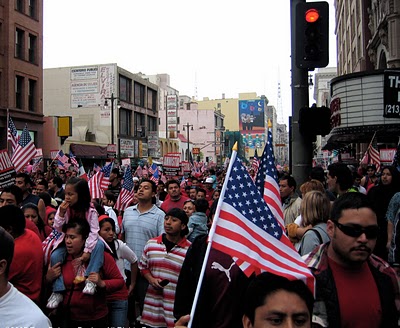
December 2005: The House passes a bill criminalizing illegal immigrants, sparking massive pro-immigrant protests nationwide. The Senate refuses to take it up.

photo source AP

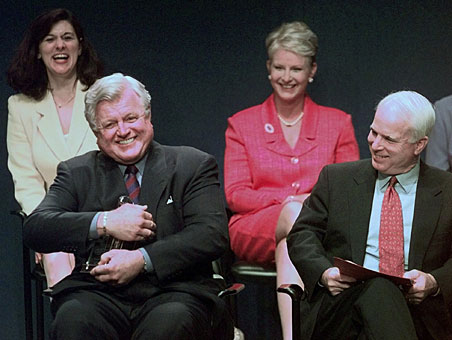
May 2006: Instead of the House bill, the Senate passes a tougher version of a bill crafted by Sens. John McCain, R-Arizona, and Ted Kennedy, D-Mass., which includes a path to legal residency for many illegal immigrants.

October 2006: The fiscal year 2007 budget boosts funding for Immigration and Customs Enforcement by more than 20 percent, about $1 billion more than President George Bush requested, mostly for detention and transport of immigrants.

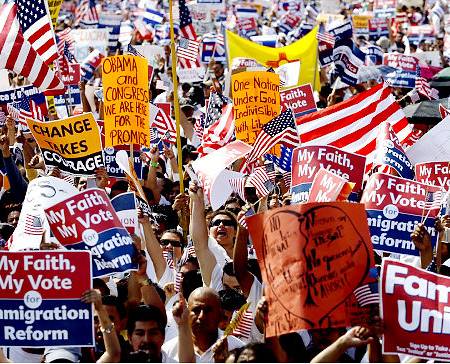
Thousands of immigrant rights advocates pack the National Mall during an immigration reform rally in Washington, Sunday, March 21, 2010. (AP Photo)

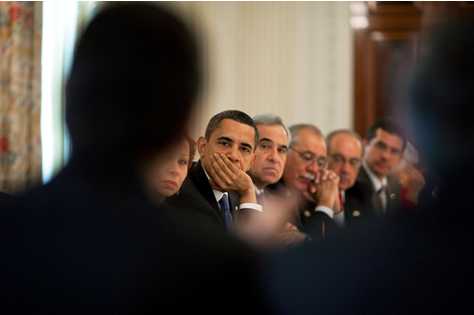
November 2008: President Barack Obama is elected, and Democrats sweep both chambers of Congress, giving hope that a major immigration reform bill will be enacted. Obama had signaled interest in reform that included enhanced border enforcement, crackdowns on people who overstay their visa and employers who hire illegal immigrants and a path to citizenship for some illegal immigrants.

Body language experts interpret that a hand placed over the mouth, as Obama is pictured doing, indicates negative impulses and disapproval. photo source: AP

2009: A comprehensive immigration reform bill introduced in the House fails despite efforts by the Obama administration to get it traction.

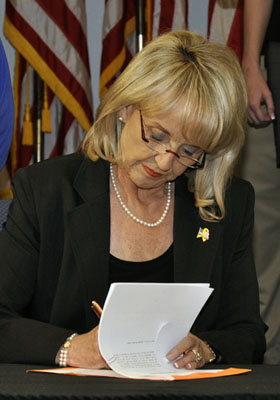
Arizona Gov. Jan Brewer signs SB 1070 in April 2010. (Photo courtesy of the Arizona Office of the Governor)

April 2010: Saying the Congress had failed to enforce U.S. immigration laws, Arizona passes a law to crack down on various facets of illegal immigration. Most controversial is that the law directs police to ask for immigration papers from anyone they stop or arrest who they suspect may be in the country illegally.

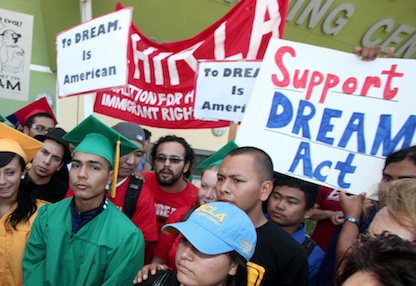
Sep 20, 2010 – Los Angeles, California, USA – Los Angeles Mayor ANTONIO VILLARAIGOSA during a rally that supports the Dream Act which allows temporary legal status for immigrant students.
(Credit Image: © Mark Samala/ZUMApress.com)

December 2010: The so-called Dream Act, which would allow illegal immigrant students a path to citizenship, passes the House in the lame duck session. The Senate GOP filibusters, effectively killing the bill.

Hundreds of immigrant rights activists rallied outside the Supreme Court building Wednesday as did several dozen supporters of Arizona’s law. Photo: Creative Commons/Talk Radio News Service

April 2012: The Supreme Court takes up the Arizona law. While a decision isn’t expected until June, during initial arguments the justices appear to have little issue with provisions requiring police to check the legal status of people they stop for other reasons.

Courtesy of the AP to Read More: Washington Post

SUBSCRIBE to The Hispanic Blog to stay on top of the latest latino news, politics and entertainment!

Don’t be shy SUBSCRIBE – COMMENT – LIKE ME -CIRCLE ME AND FOLLOW ME

If you have any questions, concerns or simply would like to get a quote on my Marketing, Public Relations, Social Media and/or Events services, please feel free to contact me.

God Bless and make it a fabulous day!

powered by Influential Access – “Transforming the Ordinary to EXTRAordinary!” – CEO – Jessica Marie Gutierrez – Creator of The Hispanic Blog #thehispanicblog


DID THE CEO OF AMERICAN APPAREL MARCH IN SUPPORT OF IMMIGRANTS’ RIGHTS: ACCORDING TO CHARNEY IMMIGRATION REFORM IS CRITICALLY IMPORTANT FROM A HUMANITARIAN AND ECONOMIC PERSPECTIVE

THE HISPANIC BLOG IS THE LATEST HISPANIC NEWS BY JESSICA MARIE GUTIERREZ

A May Day activist dressed as U.S. President Barack Obama marches through downtown Los Angeles marking the International Worker’s Day on May 1, 2012 in Los Angeles, California. Occupy Wall Street groups across the country have joined with unions during the May Day protests, a traditional day of global protests in sympathy with unions and leftist politics.

On May 1, 2012, several rallies and protests took part in Los Angeles to recognize the contributions workers are making to the country and to protest for better working conditions, fair pay, and immigration reform.
American Apparel (AMEX: APP), which has long advocated for comprehensive immigration reform and criticized the apartheid-like treatment of undocumented workers, will close its factory for several hours May 1 so its workers can join the march and related pro-worker activities.

Hayley Fox/Blogdowntown
Dov Charney, founder and CEO of American Apparel marched in support of immigrants’ rights at the downtown L.A. May Day parade on Tuesday.

CEO Dov Charney joined the workers to show his support for the fair treatment of all workers, domestically and internationally, and his unwavering support for prompt, fair, and effective immigration reform in the United States.

According to Charney, “Immigration reform is critically important not just from a humanitarian perspective, but also from an economic perspective. Economic growth and stability are adversely affected by the ability of employers to exploit undocumented workers, engage in sweatshop tactics, and drive wages down. Immigration reform will help raise wages and working conditions in Los Angeles and throughout the country.”

Read more here: Sun Herald

SUBSCRIBE to The Hispanic Blog to stay on top of the latest latino news, politics and entertainment!

Don’t be shy SUBSCRIBE – COMMENT – LIKE ME -CIRCLE ME AND FOLLOW ME

If you have any questions, concerns or simply would like to get a quote on my Marketing, Public Relations, Social Media and/or Events services, please feel free to contact me.

God Bless and make it a fabulous day!

powered by Influential Access – “Transforming the Ordinary to EXTRAordinary!” – CEO – Jessica Marie Gutierrez – Creator of The Hispanic Blog #thehispanicblog


WHAT WILL VOTER TURNOUT BE LIKE IN 2012: HERE ARE THREE SCENARIOS

THE HISPANIC BLOG IS THE LATEST HISPANIC NEWS BY JESSICA MARIE GUTIERREZ

Will strong turnout by minority voters lock up the November election for President Barack Obama? Or will the enthusiasm of the 2010 midterms carry over to boost white voter turnout, helping the Republican nominee? William H. Frey, a senior fellow at the Brookings Institution, examines that question in a new paper.

photo source: Dallas Observer blog

The minority vote in 2008 played a decisive role for Mr. Obama both nationally and in several key states. He lost the white vote but outperformed among all other races. In North Carolina, where Mr. Obama won by a mere 14,000 votes, African Americans accounted for nearly a quarter of the electorate, and 95% of them voted for Mr. Obama, according to exit polls. Minority voters also helped push Mr. Obama over the top in Indiana, Virginia and New Mexico, while expanding his margins in big states such as Ohio and Pennsylvania.

photo source: ThirdCoast Digest

Indeed in 2008, the paper notes, turnout by African Americans, Hispanics and Asian Americans was a few percentage points higher in each group than in 2004 (65% in 2008 vs. 60% in 2004; 50% vs. 47%; and 47% vs. 44% respectively for each group), while white turnout was one point less (66% vs. 67%).

Jae C. Hong AP Photo
Republican presidential candidate, former Massachusetts Gov. Mitt Romney speaks at the RNC State Chairman’s National Meeting in Scottsdale, Ariz., Friday, April 20, 2012.

Also, the margin of votes for the Democrats among minority groups, already sizable in 2004, expanded greatly in 2008. That is, more minorities were voting, and those votes were much more heavily Democratic. For white voters, which lean toward Republicans, the margin narrowed, but was still in the Republican column. In short, white turnout slumped, and whites who did vote voted less Republican than four years earlier.

photo source: AP

With this as background, Mr. Frey poses the question:
As we approach November, minorities will account for a slightly larger share of eligible voters than in 2008. At the same time, white support for the Republican candidate may be greater than in 2008. Which dynamic will prevail?

photo source Reuters

He has three scenarios:

Scenario A assumes that the 2008 turnout and voting patterns again apply to 2012 voters. If that occurs, Obama wins with 29 states and 358 electoral votes. (270 electoral votes are needed to win.)

Scenario B applies 2004 turnout and voting patterns to the 2012 population. In this scenario, Mr. Romney beats Mr. Obama, with 286 electoral votes in 30 states.

Scenario C assumes strong partisan participation for both whites and minorities in 2012. This scenario is perhaps the most likely of the  three, says Mr. Frey. In this scenario, whites in each state are assumed to have more enthusiasm for the GOP nominee (likely Mitt Romney) in 2012 than in 2008 (John McCain) and as a result will mimic their 2004 patterns. Meanwhile, minorities are presumed to follow their strong 2008 turnout and voting margins. In this scenario, Mr. Obama wins, narrowly, with 292 electoral votes spread among 24 states.

Read more: The Wall Street Journal

SUBSCRIBE to The Hispanic Blog to stay on top of the latest latino news, politics and entertainment!

Don’t be shy SUBSCRIBE – COMMENT – LIKE ME -CIRCLE ME AND FOLLOW ME

If you have any questions, concerns or simply would like to get a quote on my Marketing, Public Relations, Social Media and/or Events services, please feel free to contact me.

God Bless and make it a fabulous day!

powered by Influential Access – “Transforming the Ordinary to EXTRAordinary!” – CEO – Jessica Marie Gutierrez – Creator of The Hispanic Blog #thehispanicblog


WILL THE SB 1070 SUPREME COURT CASE CHANGE THE ELECTION?

THE HISPANIC BLOG IS THE LATEST HISPANIC NEWS BY JESSICA MARIE GUTIERREZ

PHOENIX – APRIL 25: Opponents of Arizona‘s new immigration enforcement law protest outside the state capitol building on April 25, 2010 in Phoenix, Arizona. More than 1,000 gathered to protest the passage of Arizona’s tough new law which was signed by the state’s Republican governor Jan Brewer two days before. Critics of the law say that it will encourage racial profiling by law enforcement and endanger civil rights in the state. (Photo by John Moore/Getty Images) Original Filename: GYI0060270245.jpg

With the Supreme Court likely to uphold portions of Arizona’s infamous immigration law, the state will remain front and center in national headlines up until this year’s general election. While Hispanic voters in the state have no control over the Supreme Court’s decision, they will be able to have their voices heard at the Arizona ballot box in November.

SOURCE: AP/Matt York
Immigration-rights demonstrators march to the Arizona state Capitol in April 2006. These immigration protests sent hundreds of thousands of people into the streets this spring and promised to leave behind a surge of new Hispanic voters.

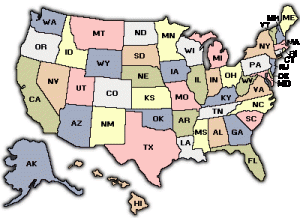
The Obama campaign certainly believes that the agitation of Hispanic and independent voters in Arizona puts the state in play for the general election.  Historical evidence and recent polling indicate that the states may well be up for grabs this year. Putting Arizona’s 11 electoral votes in play would not only shake up the electoral map but also send a clear message that extremist immigration laws are political poison. In 2008 – with minimal investment from the Obama Campaign – the President commanded a large share of the Hispanic vote in Arizona, besting hometown Senator John McCain 56% to 41%. If the President can boost Hispanic turnout, the statewide electorate could become much more Democratic. With recent polling showing Arizona as a toss-up, a solid investment in Hispanic mobilization could make the state very competitive.

A Hispanic youth holds up a sign questioning Latinos’ support for President Barack Obama during a protest outside local Democratic Party headquarters in Charlotte, North Carolina. (EFE)

A recent NBC News/Marist Poll reveals that President Obama is only trailing in Arizona by 5 points. The real eye-popping numbers for the President, however, are the preferences of independent voters. Among independents in Arizona, the President outperforms Romney 45 percent to 36 percent, with 19 percent undecided. Another poll by the Merrill/Morrison Institute puts the race within the margin of error. 42 percent of Arizona registered voters preferred Mitt Romney, while 40 percent supported the President. With a margin of error of plus or minus 4.4 percent, so if the election were held today the contest for Arizona’s 11 electoral votes would be a toss-up.
The real question on everyone’s mind is; can an investment in maximizing the Hispanic vote in Arizona generate enough support to push Obama and down ticket Democrats over the top? Trends in Hispanic turnout from neighboring states with similar demographics suggest that these investments could pay off. Significant efforts to boost turnout in 2008 resulted in substantial increases in Hispanic voter participation.  Colorado, New Mexico, and Nevada saw Hispanic voter participation increase by 33 percent, 62 percent and 32 percent respectively from 2004 to 2008. The overwhelming majority of that increased Hispanic vote went to Obama. The growing voter turnout from Hispanics helped the President carry all three of those states on his way to the White House, and this same dynamic could bring Arizona into the fold later this year.

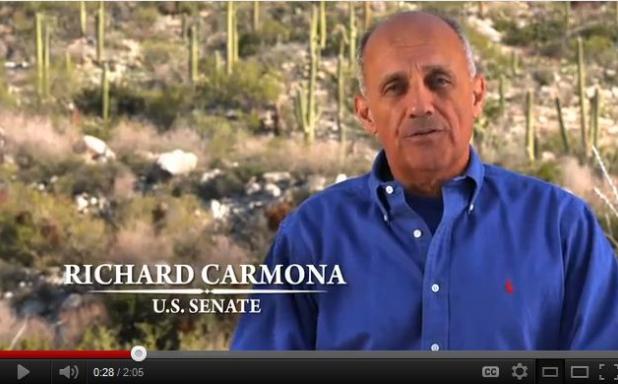
Hispanics nationally are breaking nearly three to one for the President, if this holds true in Arizona increasing the vote of this population could swing the general election vote for more moderate voices in Arizona as well.  For the first time ever there is viable Hispanic Senatorial candidate in former Surgeon General Richard Carmona.

If this former U.S Surgeon General is any example, you can be anything you want to be if you set your mind to it–high school dropouts included. In 1967 Carmona quit Dewitt Clinton High School at age 16 and enlisted in the U.S. Army, where he eventually earned his GED. Carmona graduated at the top of his medical program at University of California, San Francisco in 1979. President George W. Bush appointed Carmona Surgeon General of the United States in 2002.

Carmona, a military veteran, has a huge lead with Hispanic voters. Politico notes that Hispanic voters favor him 61% – 25% percent statewide. Hispanic women are even more supportive, giving him a 70% – 14% advantage over Flake. At this point in the race he is an unknown quantity. Just 22 percent of voters can identify Richard Carmona, including just 19 percent of white voters, giving him room to expand support. The reality is the more Carmona is able to galvanize Hispanic support in Arizona the better off the Obama campaign will do in the state.

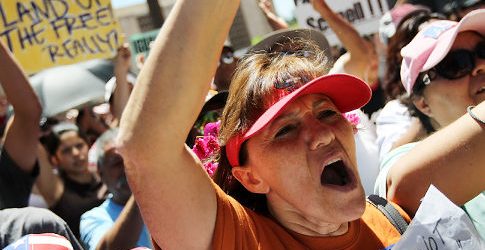
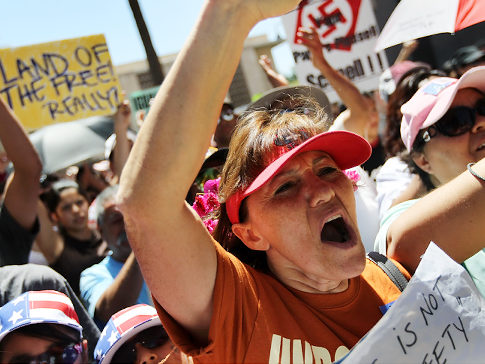
Tens of Thousands March in Phoenix, AZ Against SB 1070. (Photo: José Muñoz) 2010

If any segment of the Arizona population should want to change the dynamic of the state’s political apparatus it would be Hispanics. The current political environment in Arizona is toxic for Hispanics, and has been hijacked by political extremists. For those in the state vested in sending a strong message to the country that Arizona is turning a corner on this brand of governance, voting against the likes of Jan Brewer, Joe Arpaio, and Russell Pearce would speak loud and clear. With the Supreme Court likely to uphold parts of SB1070, November will be the earliest that Arizona voters can let the country know where they truly stand on this law.
Read more: Fox News Latino

SUBSCRIBE to The Hispanic Blog to stay on top of the latest latino news, politics and entertainment!

Don’t be shy SUBSCRIBE – COMMENT – LIKE ME -CIRCLE ME AND FOLLOW ME

If you have any questions, concerns or simply would like to get a quote on my Marketing, Public Relations, Social Media and/or Events services, please feel free to contact me.

God Bless and make it a fabulous day!

powered by Influential Access – “Transforming the Ordinary to EXTRAordinary!” – CEO – Jessica Marie Gutierrez – Creator of The Hispanic Blog #thehispanicblog
 

WHAT DID SUPREME COURT JUSTICE SONIA SOTOMAYOR SAY ABOUT SB 1070?

THE HISPANIC BLOG IS THE LATEST HISPANIC NEWS BY JESSICA MARIE GUTIERREZ

“You are involving the federal government in your prosecution,” the justice said, according to the hearing’s transcript, drawing attention to one class of non-citizens who may not appear in available databases of documented residents.”

(Photo credit should read SAUL LOEB/AFP/Getty Images)

The U.S. Supreme Court’s first Hispanic justice took a lead role in criticizing oral arguments over Arizona’s controversial immigration law. The liberal Sotomayor, President Barack Obama’s first Supreme Court appointee, was most widely quoted for her stinging criticism of the government’s argument that Arizona’s law preempts federal authority over immigration. But her lines of questioning and criticism of Arizona’s rebuttal also indicated skepticism about the most contentious provisions of the state law.

CLICK ON SCREEN BELOW TO WATCH INTERVIEW WITH GOVERNOR JAN BREWER

The questions Sotomayor posed to Paul Clement, the attorney representing Arizona, hinged on what would happen to people detained under SB 1070, as the law is known, who did not readily appear in databases. She noted that some people, like political asylum applicants, may not be registered with the federal government because the process requires them to keep their status private.

AP

“What’s going to happen now is that if there is no statement by the federal agency of legality, the person is arrested, and now we’re going to have federal resources spent on trying to figure out whether they have that, whether they are exempted for this reason, whether the failure to carry was accidental or not,” Sotomayor said. Sotomayor was the only justice to pose questions during Clement’s rebuttal.

AP

The Latina justice also jumped in with the first line of questioning, parsing out how detention processes under suspended provisions of the Arizona law would differ from current practice, and she posed questions highlighting the limitations of current federal databases to check people’s immigration status efficiently after being stopped.

photo Diane Ovalle / Puente Arizona

There is no federal database of authorized residents, only a passport registry, according to U.S. Solicitor General Donald Verrilli, who is arguing on behalf of the Obama administration. The federal government also checks reports of undocumented immigrants against another eight to10 federal databases, Verrilli said. Hypothetically, then, under the Arizona law a person stopped for an offense and held on suspicion of unlawful residence could wind up in custody for long periods of time, Sotomayor posited. While Sotomayor’s line of questioning indicated skepticism of parts of Arizona’s case, it was her biting criticism of Verrilli’s argument that Arizona’s enforcement of immigration undermined federal authority that caught the most attention.

photo by Diane Ovalle / Puente Arizona

“You can see it’s not selling very well,” Sotomayor said, commenting on a series of both tough questions and outright assertions made by the country’s highest court, where conservatives hold a majority.

Justice Antonin Scalia. Image from Legal Geekery

“Arizona is not trying to kick out anybody that the federal government has not already said do not belong here,” said Justice Antonin Scalia.

Chief Justice Roberts SOURCE: AP/Evan Vucci

The most forceful argument in favor of the controversial immigration law’s provision requiring police to check the immigration status of those they stop came from Chief Justice Roberts.

U.S. Solicitor General Donald Verrilli
Photo by Mark Wilson/Getty Images

“It is still your decision,” Roberts told Verrilli. “And if you don’t want to know who is in this country illegally, you don’t have to.”

Read more: FOX NEWS LATINO

SUBSCRIBE to The Hispanic Blog to stay on top of the latest latino news, politics and entertainment!

Don’t be shy SUBSCRIBE – COMMENT – LIKE ME -CIRCLE ME AND FOLLOW ME

If you have any questions, concerns or simply would like to get a quote on my Marketing, Public Relations, Social Media and/or Events services, please feel free to contact me.

God Bless and make it a fabulous day!

powered by Influential Access – “Transforming the Ordinary to EXTRAordinary!” – CEO – Jessica Marie Gutierrez – Creator of The Hispanic Blog #thehispanicblog