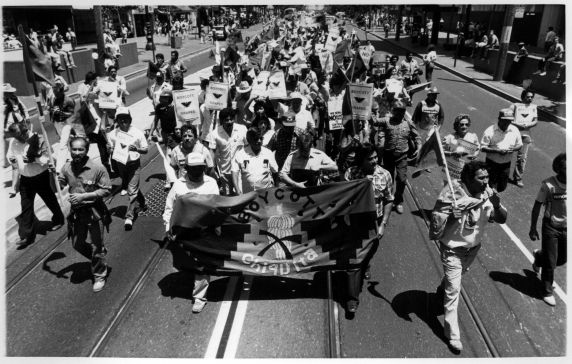
WHO IS MICKEY IBARRA: MEET THE FORMER PRESIDENT & DIRECTOR OF INTERGOVERNMENTAL AFFAIRS AT THE WHITE HOUSE

THE HISPANIC BLOG IS THE LATEST HISPANIC NEWS BY JESSICA MARIE GUTIERREZ
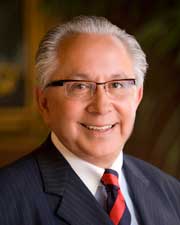
Mickey Ibarra served as assistant to former President Bill Clinton and was the director of the Office of Intergovernmental Affairs. He was born in Salt Lake City to a Mexican father and American mother, but grew up in foster care. Before beginning his career in politics, he taught at-risk high school students in Spanish Fork. In March, he donated his collection of photographs, correspondence and other memorabilia documenting his career at the White House to the University of Utah Marriott Library. He also recently gave a speech at the Hinckley Institute of Politics on his journey from schoolteacher to public servant, the importance of being involved politics, and the issue of immigration.

How does a high school teacher end up working at the White House?

My road to the White House was paved by the National Education Association, the teachers union I had the privilege of working for for 16 years of my professional career. But actually it started sooner than that: The person who sparked my interest in government, public service, campaigning, elections and our great democracy and the need for engagement was my high school government teacher, Mr. Steinberg.

I had the privilege of attending high school in Sacramento, the capital of California, so government and politics were certainly available to students who wanted to engage. Mr. Steinberg would provide extra credit for attending a city-council meeting, a school-board meeting. It was Mr. Steinberg who gave me extra credit for attending my first presidential campaign rally and major speech; it was delivered by Hubert Humphrey in 1968 at the Sacramento Memorial Auditorium. And as I heard him speak, I can tell you it sent tingles from my toes to the top of my head. And it was that interest established in high school that propelled me to decide that I was going to figure out a way to engage in public service. And it also provided the seed for wanting to first do that as a teacher. So I was a political-science major at BYU with no intention ever of attending law school. I wanted to be a teacher. And I had an opportunity to do that for five years starting as a teacher at a public alternative high school.

photo source: Brigham Young High School
Class of 1969

That teaching experience led to my political experience with the Utah Education Association. I was a first-year teacher and attended my first national convention of the NEA as a delegate with the UEA. When I walked in that auditorium in Minneapolis and saw 15,000 of my colleagues in convention, many of them of color, it got my attention. This is the organization that I want to be a part of.

photo source: Brigham Young High School
Class of 1969 

I went from a volunteer to a staff member becoming their political manager, which put me responsible for leading the charge of the NEA to endorse Bill Clinton in 1992 for president. then served in the staff of the Clinton/Gore re-election campaign in 1996, posted up at the headquarters in Washington, D.C., and with our re-election, again the first Democrat to be re-elected president since Franklin Roosevelt, I was invited then to serve at the White House as the assistant for Intergovernmental Affairs.

“I prepared myself for that opportunity. Did I ever believe that an opportunity to serve the president would come my way? No. And is anybody ever fully prepared to be at the White House? I don’t think so. But I was prepared to be asked, and I got that chance, and here we went.” 

Why does the United States need immigration reform?
The issue of immigration is personal to me. It is more than a debate around public policy; it is personal, given my history. My father came to this country as a bracero in 1945, and his first labor camp was in Spanish Fork. My father was undocumented for 30-plus years, even though he served in the U.S. Army, had his own business. You don’t need to be documented to make a contribution. And everyone should be documented. But what we’ve got is a system that’s absolutely broken. It actually encourages people to come here without documents, because they’re not going to wait in line for five years to get a visa to come work here if their families are in need of help now. Who would do that? So, yes, that’s an issue that remains a priority for me, and I’m very troubled and concerned about what I see happening—states, including Utah, taking off on their own to decide what immigration law is going to look like. The most extreme case in Alabama, where they’ve turned teachers into immigration agents who can turn children in and their families in if they suspect that they may be undocumented. They have given license to racists in this country who now are emboldened to do the unthinkable. A nation trying to turn back the clock to the Jim Crow days of the ’60s and ’50s and earlier that I thought we had addressed. That’s very unfortunate and not up to the standards that America ought to be all about.

What misconceptions do people have about immigration reform and immigrants?

(1) They’re taking away our jobs.” That’s just nonsense. They’re not taking away anybody’s jobs. Ninety percent of them are doing jobs that none of us would do. Talk to the farmers about how important these workers are to them helping them harvest their crops—to make a profit, to stay in business. So that’s one of the misconceptions. The United States needs that labor; they need that workforce. And without it, they’d be in very difficult circumstances.
(2) They’re just here to freeload; they’re taking down benefits from us”—again, silly. I would say, as a class, there are no harder-working people in the world than the Latino community in this country. They’re not here to freeload, they’re not here to get something for nothing; they’re here to make a living. And are there exceptions to that? Of course there are. But I feel confident in saying that the vast majority of those residents in this country, who are without documentation, would love to figure out how to become documented. And the vast majority of them are also being taxed, and paying their taxes. If we’d come to our senses and document these folks, we’d even realize more taxes from them, and that would be a good thing.
What concerns me is we have so many people giving license and cover to racists. I’m not suggesting everybody who opposes immigration reform is racist.

USHLI Announces Mickey Ibarra Medallion for Excellence in Government Relations

(3) We have a right to protect our border. That’s a responsibility that we have. And that’s what argues for comprehensive immigration reform so we can secure our borders. We’re not going to secure our borders simply by building a taller fence. That’s not going to work. It’s got to be a combination of things, and my hope is that I’ll live long enough to see our country embrace a comprehensive approach in order to deal with this issue. It was Ronald Reagan who was the last president to try and deal with this in a responsible manner, which included providing more than 3 million undocumented residents with amnesty. So if Ronald Reagan can get it done, I’ve got to believe that we ought to keep hope alive for that, too.

What would successful immigration reform look like?


In its broadest context, one, we’ve got to provide for security, to be sure. Two, we’ve got to figure out a sensible visa program that allows for demand to match the supply. Something that’s reasonable. Asking somebody to wait in line for five years so they can come here and work as a dishwasher is nuts. So we’ve got to figure that out, that whole ebb and flow of the workforce—that’s a big piece of it. [Also] how do we deal with at least 11 million undocumented residents now? Do we really think we’re going to ship that 11 million back to the country they came from? I don’t think so; it’s just ridiculous. We’re not going to do that, it’s not possible to do that, and it’s stupid to do that. Should there be a penalty [for being undocumented]? Absolutely. Should there be requirement for them to learn English? That’s fine. Should they be responsible for paying their taxes and all that sort of thing? Absolutely. Should they have to show proof of employment for five, six years, whatever it is, yes. But those criteria can be set, and where they’re met, there ought to be a path to being made legal residents of this country.

It may not be possible to adopt comprehensive immigration reform; I do think it’s possible for us to make incremental progress. For me, step one is addressing the Dream Act: the idea of providing a pathway, an opportunity, for youngsters who were brought to this country by their parents and no responsibility whatsoever for being here without legal status, and have done the right thing and graduated from high school, ought to be provided the opportunity to continue their education here. And if they graduate and stay out of trouble, be provided a pathway for citizenship—that ought to be an easy one. So I’m all for taking a look at taking a bite of the apple rather than trying to swallow the whole thing. It seems to be the Dream Act is where we ought to start.

With Congressman Luis Gutierrez

Why is it important to be involved in politics?

When people disengage from their civic responsibilities, when they check out, others check in. And unfortunately that seems to be too often the extremes of both ends of the political spectrum. And that’s not good. What we need to do is have every citizen of this country embrace the responsibility that they have to engage. This is a democracy. Democracy requires participation. It’s very important to ensure that we engage, that we register, that we vote, that we support candidates who reflect our views and that we hold them accountable for doing the right thing for us, rather than simply reflecting the views of, in many cases, an extreme minority. Some suggest that we get the government that we deserve; I think we deserve better. And to get better, we’re going to have to do more engagement.

What’s your favorite part of being involved in politics?

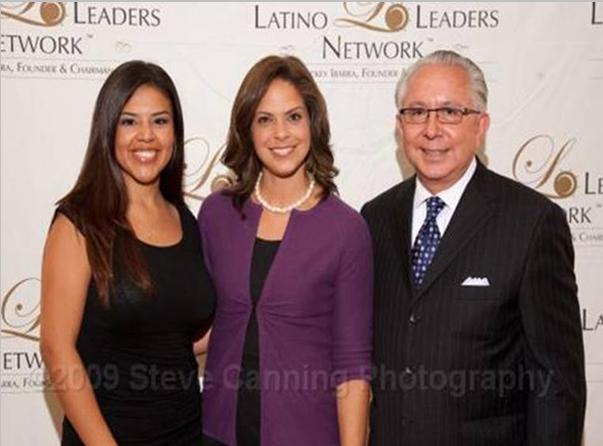
photo source: Mickey Ibarra, founder and chairman of the Latino Leaders Network (LLN) presented Julie Stav with the Eagle Leadership Award at the 30th LLN Luncheon. Photo by Steve Canning.

Helping people; putting people first. That was the theme in 1992 of Bill Clinton: putting people first again. And that’s really what makes politics and public service one of the most noble endeavors of all. When it’s understood that your core responsibility is helping people accomplish all they can with their God-given talents, helping them overcome the obstacles to success, helping someone has a great reward that I enjoyed at the White House. I was in a position, and I realized that—that very few people get an opportunity to do—to help someone.   
Read More: CITY WEEKLY

SUBSCRIBE to The Hispanic Blog to stay on top of the latest latino news, politics and entertainment!

Don’t be shy SUBSCRIBE – COMMENT – LIKE ME -CIRCLE ME AND FOLLOW ME

If you have any questions, concerns or simply would like to get a quote on my Marketing, Public Relations, Social Media and/or Events services, please feel free to contact me at thehispanicblog@gmail.com.

God Bless and make it a fabulous day!

powered by Influential Access – “Transforming the Ordinary to EXTRAordinary!” – CEO – Jessica Marie Gutierrez – Creator of The Hispanic Blog #thehispanicblog
COMEDY CENTRAL’S STEPHEN COLBERT GIVES ROMNEY ADVICE: “APPEAL 2 VOTERS – SPECIFICALLY, ONE KEY DEMOGRAFICO!”

THE HISPANIC BLOG IS THE LATEST HISPANIC NEWS BY JESSICA MARIE GUTIERREZ

VIDEO EVERY LATINO MUST SEE

CLICK HERE                   CLICK HERE

WATCH STEPHEN COLBERT: VIDEO EVERY LATINO MUST SEE!

CLICK HERE                   CLICK HERE

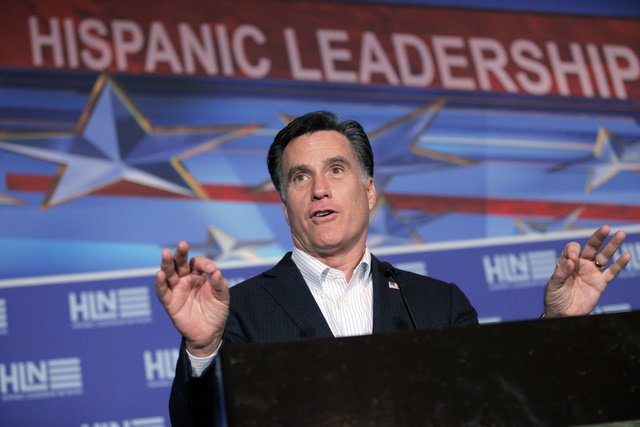
Presumptive Republican presidential nominee Mitt Romney has a well-documentedLatino Problem.”

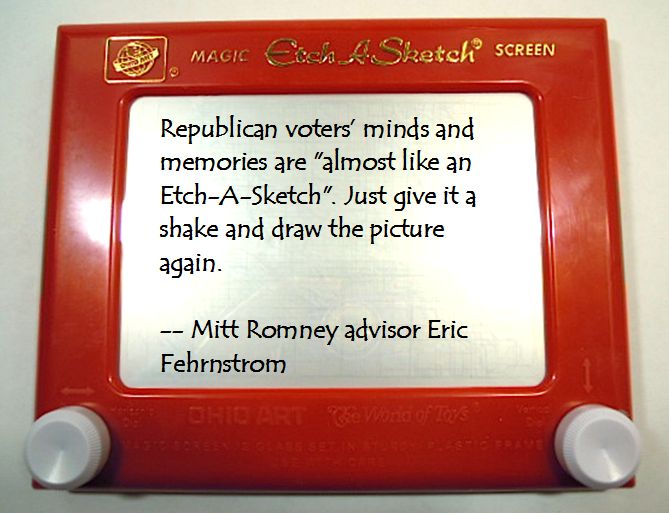
photo source: Comedy Central COLBERT MAKES FUN OF THE ETCH A SKETCH REMARK MADE BY ROMNEY'S TEAM

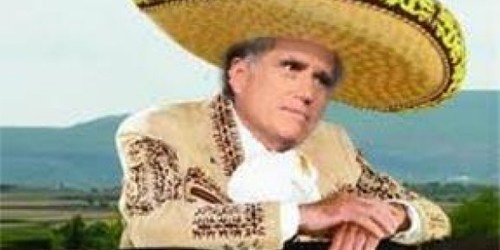
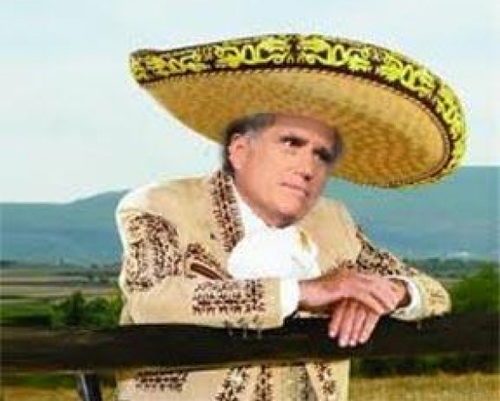
The former Massachusetts governor‘s positions on key issues—illegal immigration policy, deportation practices—have reportedly alienated many Latino votersAccording to a recent Fox News Latino poll, Pres. Obama has the backing of a whopping 70% of Latino voters, while Gov. Romney nabs just 14%. Fortunately for Romney, Comedy Central’s Stephen Colbert knows how to fix the candidate’s “Latino Problem” as the general election heats up. “I believe that Romney’s got a shot because of his Hispanic roots that run deep,” Colbert said.

photo source America’s Voice Blog

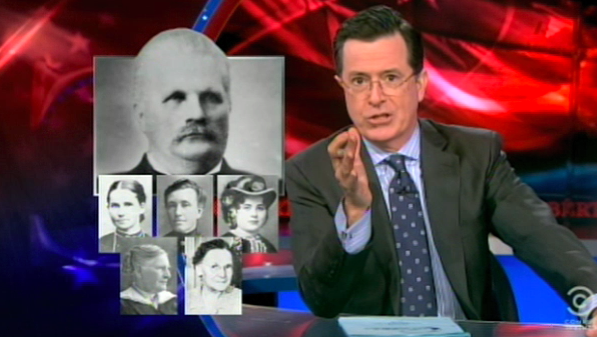
The late-night host reminded viewers that Romney’s great-grandfather and grandfather lived in Mexico, and his father was born there—”with young Mitt strapped to the roof of his car,” Colbert quipped, referencing the semi-scandal that has “dogged” Romney throughout the GOP primary race.

“Back in 1885, Mitt’s great-grandfather—Miles Park Romney—emigrated to Mexico to escape religious persecution of Mormons. Sadly, the U.S. government simply would not leave Mr. Romney and his wife, and his wife, and his wife, and his wife, and his wife alone!”

photo source Comedy Central
According to Colbert, Romney has a chance to score Latino support by playing up his heritage—and rolling out an advertisement produced by Colbert’s very own Super PAC.

(In other news, that particular running-gag helped earned Colbert and his writing staff nab a coveted Peabody Award on Wednesday).

MAKE SURE YOU WATCH THE COLBERT REPORT

The Colbert Report on COMEDY CENTRAL

Mon – Thurs 11:30pm / 10:30c

Colbert Super PAC – Republicans & the Latino Vote

www.colbertnation.com

REPUBLICANS DISSING THEIR BASE
CNN HOST: Is there a concern that Santorum and Gingrich might force the governor to tack so far to the right it would hurt him with moderate voters in the general election.
FEHRNSTROM: Well, I think you hit a reset button for the fall campaign. Everything changes. It’s almost like an Etch A Sketch. You can kind of shake it up and restart all of over again.

READ MORE: NBC BAY AREA

SUBSCRIBE to The Hispanic Blog to stay on top of the latest latino news, politics and entertainment!

Don’t be shy SUBSCRIBE – COMMENT – LIKE ME -CIRCLE ME AND FOLLOW ME

If you have any questions, concerns or simply would like to get a quote on my Marketing, Public Relations, Social Media and/or Events services, please feel free to contact me at thehispanicblog@gmail.com.

God Bless and may you have a fabulous day!

powered by Influential Access – “Transforming the Ordinary to EXTRAordinary!” – CEO – Jessica Marie Gutierrez – Creator of The Hispanic Blog #thehispanicblog

WHY ARE LATINO DEMOCRATS CALLING ROMNEY “RADICAL?”

THE HISPANIC BLOG IS THE LATEST HISPANIC NEWS BY JESSICA MARIE GUTIERREZ

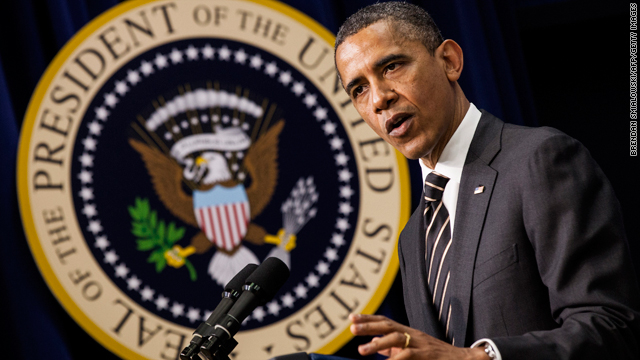
Democratic state legislators from the Southwest followed President Obama’s example on Wednesday by putting the “radical” label on GOP presidential hopeful Mitt Romney’s agenda as they blasted the candidate’s immigration stance.

State Reps. Trey Martinez Fischer of Texas, Crisanta Duran of Colorado and Ruben Gallego of Arizona condemned Romney during a conference call organized by the Democratic National Committee for aligning himself with some of the most anti-immigrant voices in his party.

Photo credit: Tim Gaynor

“If Mitt Romney intends to go after President Obama on immigration, he has a problem: Latinos have been following Romney’s extreme policies, and he has zero credibility with our community,” Duran said.

photo source: Cafferty File  

The state legislators at the same time described President Obama as an “ally” and “friend” of the Hispanic community, which has traditionally been at the center of the immigration debate.

The “radical” characterization of Romney appeared on the state legislators’ par langue only a day after Obama used it to denounce the current Republican vision on the country, which the president said “is antithetical to our entire history as a land of opportunity.”

Martinez Fischer attacked Romney specifically for the candidate’s promise to veto the DREAM Act – a bill that would provide lawful status to undocumented immigrants who graduate from college or enroll in the military – should Congress pass it.

photo source: AP

“Let’s just make it very clear. Ninety one percent of Latinos support the DREAM Act,” Martinez Fischer said. “Translation: Romney is out of step with 91 percent of Latinos in this country.”

The representative from San Antonio acknowledged that Obama has been “tough” on illegal immigration, but he amended the president’s record breaking number of deportations estimated at more than 1 million since taking office, by arguing that Obama has tried to obtain immigration reform.

photo source: AP

“We need to recognize that when Latinos say ‘Who is our advocate?’ At least Obama’s name is in the conversation,” Martinez Fischer said. “You will not find (Republican Sen.) John McCain anymore.”

READ MORE: HOUSTON CHRONICLE

SUBSCRIBE to The Hispanic Blog to stay on top of the latest latino news, politics and entertainment!

Don’t be shy SUBSCRIBE – COMMENT – LIKE ME -CIRCLE ME AND FOLLOW ME

If you have any questions, concerns or simply would like to get a quote on my Marketing, Public Relations, Social Media and/or Events services, please feel free to contact me at thehispanicblog@gmail.com.

God Bless and may you have a fabulous day!

powered by Influential Access – “Transforming the Ordinary to EXTRAordinary!” – CEO – Jessica Marie Gutierrez – Creator of The Hispanic Blog #thehispanicblog
WHAT IS THE SUPREME COURT GOING TO DO ON THE QUESTION OF OBAMA’S SIGNATURE HEALTH CARE OVERHAUL LAW?

THE HISPANIC BLOG IS THE LATEST HISPANIC NEWS BY JESSICA MARIE GUTIERREZ

U.S. Supreme Court Justice Sonia Sotomayor is keeping quiet what the Supreme Court is going to do on the question of whether President Barack Obama’s signature health care overhaul law is constitutional. Sotomayor was the featured speaker Monday night at a lecture hosted by the University of the District of Columbia.

The court recently heard arguments on the health care law and is expected to make a decision before the end of June. But Sotomayor made no comment on the widely followed case.

The justice used most of her conversation with Wade Henderson, president of the Leadership Conference on Civil and Human Rights, to explain how the Supreme Court works and how she decided to become a lawyer and a prosecutor.

Sotomayor was born in the Bronx to Puerto Rican parents and received her B.A. from Princeton before earning her law degree at Yale. She worked as an assistant district attorney in New York before going into going into private practice in 1984.

President George H. W. Bush nominated Sotomayor to the U.S. District Court for the Southern District of New York in 1991 and she was confirmed in 1992. President Obama nominated Sotomayor for appointment to the U.S. Supreme Court to replace retired Justice David Souter and her appointment was confirmed in 2009.

Supreme Court nominee Sonia Sotomayor testifies on Capitol Hill in Washington, Wednesday July 15, 2009, before the Senate Judiciary Committee. (AP Photo/Charles Dharapak) Original Filename: Sotomayor_Senate_WCAP118.jpg

Sotomayor also said she’s a fan of Jeremy Lin, whose NBA career with the New York Knicks has spawned “Linsanity.” Sotomayor, a New York native, says “New York loves him” but decried some of the racist comments the Asian-American basketball player has faced as “ugly.”

“It’s a sad statement people that people still say those words,” said Sotomayor, who is Hispanic.

Based on reporting by The Associated Press

Read more: http://latino.foxnews.com/latino/politics/2012/04/03/sotomayor-keeps-quiet-health-care-decision/#ixzz1r3ETuGmE

SUBSCRIBE to The Hispanic Blog to stay on top of the latest latino news, politics and entertainment!

Don’t be shy SUBSCRIBE – COMMENT – LIKE ME -CIRCLE ME AND FOLLOW ME

If you have any questions, concerns or simply would like to get a quote on my Marketing, Public Relations, Social Media and/or Events services, please feel free to contact me at thehispanicblog@gmail.com.

God Bless and may you have a fabulous day!

powered by Influential Access – “Transforming the Ordinary to EXTRAordinary!” – CEO – Jessica Marie Gutierrez – Creator of The Hispanic Blog #thehispanicblog
CESAR CHAVEZ DAY: REMEMBERING A HISPANIC LEGEND AND ICONIC SAYING “SI SE PUEDE…YES WE CAN”

THE HISPANIC BLOG IS THE LATEST HISPANIC NEWS BY JESSICA MARIE GUTIERREZ

When Barack Obama campaigned to be the nation’s 44th president, he used the simple mantra, “Yes We Can” — a translation of civil rights leader Cesar Chavez‘s chant, “Si se puede.”Nearly four years after the presidential election, Obama’s paying homage to the man whose words helped him win office, decreeing Saturday, March 31st of 2012, the 85th anniversary of the civil rights icon’s birthday, Cesar Chavez Day.

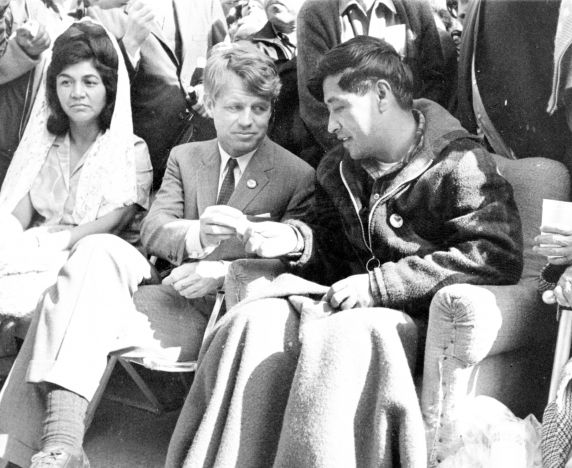
This LA Times photo captures a moment of
friendship between Bobby Kennedy and Chavez
during Chavez's 25-day fast in 1960.

The civil rights leader, who fought for fair wages and humane treatment for California’s farm workers in California, championed principles of nonviolence through boycotts, fasts, and marches. In conjunction with Dolores Huerta, Chavez founded the United Farm Workers of America, an organization devoted to defending the rights of farmhands and field workers across the country.
Earlier this week, the White House honored ten local leaders who “exemplify Cesar Chavez’s core values,” inviting the activists, farmworkers, and professors to speak at a panel called, “Champions of Change,” hosted by HuffPost LatinoVoices blogger, Viviana Hurtado.

On March 10th, 1968, Cesar Chavez breaks his 25-day fast by accepting bread from Senator Robert Kennedy, Delano, California.
Left to right: Helen Chavez, Robert Kennedy, Cesar Chavez Photographer: Richard Darby

One of those “champions” was Rogelio Lona, a a farm worker, activist, and community organizer who worked in the fields of California for more than 47 years.
Unbearable working conditions lead Lona to join UFW in 1972.  “We were treated as slaves, we did not have any representation in society, we were discriminated against and there were neither benefits nor labor protections,” Lona wrote in a blog on the White House website. Lona said that he accepted the award on behalf of all of those working in America’s fields, and was adamant that he will never be done fighting. “Rogelio, the struggle will never end, we must always be prepared,” Lona recalls Chavez telling him.

Senator Edward (Ted) Kennedy and Cesar Chavez address the audience at an unknown meeting, possibly on the floor of the United States Senate.

Many of the panelists that spoke on Thursday focused on the importance of placing Cesar Chavez’s legacy in a modern context. A few of the activists said Cesar Chavez’s words should be remembered in the fight for comprehensive immigration reform, the Dream Act, and the on-going struggle to end harsh state immigration laws like those in Arizona and Alabama.

Activists in Tucson, Arizona say that Chavez’s fight against discrimination is especially alive in their city. After the Tucson Unified School District (TUSD) banned the city’s Mexican-American studies program, organizers say that the annual Cesar Chavez march would no longer be held at a local high school because of further censorship from the school district.

According to Laura Dent, an organizer of the Arizona Cesar Chavez Holiday Coalition, the TUSD stipulated that there could be no mention to the elimination of Tucson’s Mexican-American studies program in order for it to be held at Pueblo High Magnet School, where it has been held for more than a decade.
“So the Chavez Coalition decided that with that kind of level of censorship, we would just move the staging area of the event,” Dent told NPR.

Viviana Hurtado, the moderator of the White House’s commemorative panel, told The Huffington Post that she was able to chat briefly with Cesar Chavez’s son about what advice his father would give us in a modern context.

Cesar Chavez, co-founder of the United Farm Workers Union,
with McGovern for President supporters ("Grassroot McGoverners" in the language of the time) marching from the Civic Center to Union Square in San Francisco against Proposition 22 which forbade secondary boycotts.
Fall, 1972.

According to Hurtado, Chavez’s son believes his father would say, “Don’t just be frustrated with the situation ahead of you. Get up and do something. Take action.”

Read More: HUFFINGTON POST

SUBSCRIBE to The Hispanic Blog to stay on top of the latest latino news, politics and entertainment!

Don’t be shy SUBSCRIBE – COMMENT – LIKE ME -CIRCLE ME AND FOLLOW ME

If you have any questions, concerns or simply would like to get a quote on my Marketing, Public Relations, Social Media and/or Events services, please feel free to contact me at thehispanicblog@gmail.com.

God Bless and may you have a fabulous day!

powered by Influential Access – “Transforming the Ordinary to EXTRAordinary!” – CEO – Jessica Marie Gutierrez – Creator of The Hispanic Blog #thehispanicblog