WHY ARE THERE SO FEW LATINO LIBERTARIANS?

THE HISPANIC BLOG IS THE LATEST HISPANIC NEWS BY JESSICA MARIE GUTIERREZ
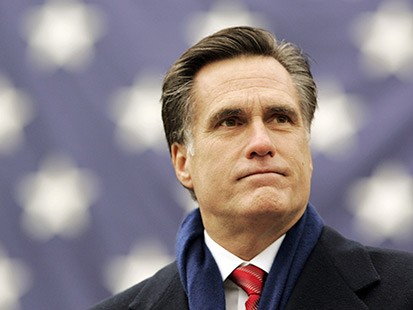
photo source: Romney-Rubio 2012

The Republican Party is in serious trouble with Latinos. If Mitt Romney gets any less popular with Hispanics, he’ll disappear from their consciousness altogether. The reasons for Latinos’ antipathy toward the GOP include the endless insults that Republicans have lobbed at Hispanics, along with the fact that Latinos are not as socially conservative as people think.
Still, one would think more Hispanics would embrace that offshoot of conservative thought known as

photo source: Pew Research Center

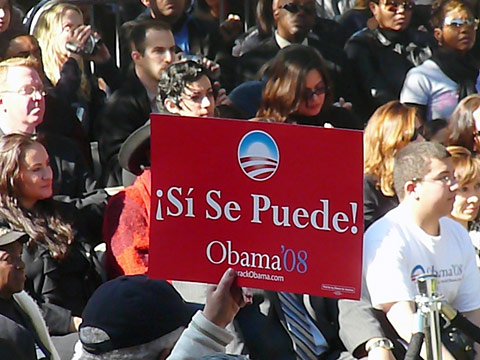
This philosophy, which holds that the individual is the basic unit of society and must be subject to as little governmental influence as possible, should really resonate with people who have roots in lands where the government crushes all free thought. It should also appeal to people who often have to pull themselves up from their bootstraps (to use a favorite conservative cliché) and start over in a new country.

photo source: REUTERS/Mark Makela

But that hasn’t happened. Currently, libertarians “are largely white, well-educated, and affluent.” One could even say that “libertarians are mostly rich young white guys who, compared to most other Americans, live comfortable and financially secure lives.”

Of course, there are Latino libertarians out there. But in general, talking Hispanics into espousing the Ron Paul agenda is only slightly easier than getting the pope to show up at the Stonewall Inn for a drink.

photo source: AP

Libertarianism is still overwhelmingly the privilege of white men, who have a cultural advantage over other groups, regardless of what economic class they were born into. As such, they may believe they have achieved success solely through their own initiative. They may be blind to all the help they received, especially if their consciences are clear and they never discriminate against other ethnicities. They are certain they can do anything they set their minds to, because quite frankly, they often have done so (with society’s help, of course).
However, this mindset blinds them to the fact that certain things — and this is un-American to say — are beyond their individual control. These can range from sudden health issues to global economic upheavals. They can also include the fact that the game is rigged to benefit the rich and that people’s freewill decisions can be manipulated more easily than you think.

Perhaps Latinos, with our cultural baggage of Catholic fatalism and dictatorial governments, are more likely to know that a single person does not have unlimited power. Or maybe our emphasis on family provokes us to think beyond our individual needs. Or perhaps we realize that, despite a work ethic second to none, ceaseless labor and ambition are not always sufficient to get a person ahead in life.

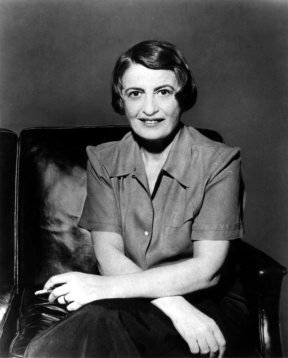
Or maybe it comes down to the possibility that it’s very easy to demand a libertarian system when one has gotten a good start in life and reaps the benefits of being on top of the socioeconomic pyramid. It’s less common to advocate for that when you’re still trying to claw your way upward. In any case, I’m sure that if she had it to do all over again, Ayn Rand would have included at least one plucky Chicano objectivist named Hernandez in Atlas Shrugged.
Talk about a missed opportunity.

SUBSCRIBE to The Hispanic Blog to stay on top of the latest latino news, politics and entertainment!

Don’t be shy SUBSCRIBE – COMMENT – LIKE ME -CIRCLE ME AND FOLLOW ME

If you have any questions, concerns or simply would like to get a quote on my Marketing, Public Relations, Social Media and/or Events services, please feel free to contact me.

God Bless and make it a fabulous day!

powered by Influential Access – “Transforming the Ordinary to EXTRAordinary!” – CEO – Jessica Marie Gutierrez – Creator of The Hispanic Blog #thehispanicblog

Read More: Huffington Post

WHICH EIGHT STATES WILL SHAPE THE 2012 ELECTION

THE HISPANIC BLOG IS THE LATEST HISPANIC NEWS BY JESSICA MARIE GUTIERREZ

CLICK HERE TO VIEW THE PBS SPECIAL

JUDY WOODRUFF: Christina, what does it look like, 50/50?
CHRISTINA BELLANTONI: Yeah, absolutely.
You’ve got — first of all, you’re going to see dozens and dozens of polls over the next five months. And some of them are going to be a little bit more important than others. But one of the things that you’re seeing nationally is that, since it’s been clear that Mitt Romney is the presumptive Republican nominee here, he’s starting to inch up a little bit on the president in national perspective.

But in the battleground states, where the president’s team has really invested a lot of money in their ground game, their campaign infrastructure, hiring a lot of people and registering voters, you’re seeing it a little bit stronger for the president in some of them and then Romney having a little bit of ground to make up in both.
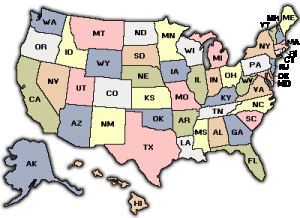
JUDY WOODRUFF: So, speaking of those battlegrounds states, if you look at a map of the United States — and we just happen to have our Vote 2012 Map Center right here to show everybody — you see those states in blue that are considered either solidly or leaning Democratic. In red, we’re showing the states that are solidly or leaning Republican, and then yellow, eight states that are tossups.
So, Stu, let’s talk about those. And let’s start on the East Coast and work our way west with Florida, which keeps everybody guessing, at least at this stage of the campaign. What does Florida look like?

photo source: Flickr

STUART ROTHENBERG: Right, certainly as it did in 2000.
Well, there’s a recent NBC News/Marist poll that has the president up by four points, 48 to 44. That’s among registered voters. If you look historically at Florida, Judy it performs more Republican than the country as a whole. That is a few points more Republican. So, although President Obama won it last time, he didn’t win it by anything close to the over seven points he won nationally.
I think you have to look at Florida in a number of ways. Hispanics are an important constituency, senior citizens, of course. But really Florida is three states in one. North Florida performs the way the South does. It’s conservative. South Florida, particularly the Gold Coast, the Miami-Broward portion of the state, is more like New Jersey. So Florida is going to be determined probably by swing voters in the I-4 Corridor, that central part of the belt stretching from Orlando all the way over to Tampa-St. Pete.
JUDY WOODRUFF: Which we hear about in every election.
So, let’s move up a little bit north there to Virginia.
CHRISTINA BELLANTONI: Right. Virginia is the battleground of all battlegrounds. Of course, it did not vote Democratic — it voted Democratic in 2008, but it hadn’t since 1964. This was a big win for Barack Obama in 2008.
And they did that in part by targeting a lot of the expanding suburbs in the Washington area in Northern Virginia and also looking at this military region, Hampton Roads, and also targeting younger voters and the changing demographics of Virginia.
So, this is something — you’re going to see this, both campaigns put a lot of energy and resources there. It’s very easy for the president to cross over into Virginia and campaign here. You saw him hold one of his first reelection rallies in Richmond.
And you’re going to see a lot more there. And Mitt Romney has made very clear he’s going to contest here. When you look at where these campaigns are advertising, Virginia is almost always on the list for the campaigns and the super PACs that are backing them.
JUDY WOODRUFF: So long, as you say, a state the Republicans could almost take for granted, but not anymore.
So, Stu, let’s turn to the Midwest, and quickly look at three states there, starting with Ohio.
STUART ROTHENBERG: So there’s a recent NBC News/Marist poll that shows the president up by five points, though only in the mid-40s, against Mitt Romney. Ohio went for Bush in 2000 and 2004.
It then went for President Obama, not the way it did it nationally. Nationally, the president won by seven. In Ohio, it was about 4.5 points. I think one of the interesting things about Ohio is the economic recovery. The automobile industry and the overall sense that the economy is coming back, will that help the president enough to help him carry a state that, all things being equal — and they are never equal, Judy — but all things being equal, the Republicans have a slight advantage in.
JUDY WOODRUFF: Okay, and near and still in the Midwest, Christina,  Iowa.
CHRISTINA BELLANTONI: Iowa, this is a really interesting state because it has swung for both parties over the presidential years.
And, obviously, it’s very near and dear to President Obama’s heart because it is where he was able to sort of start his path to the Democratic nomination in 2008 by winning the caucuses. He put a lot of investment in getting the young college voters in that state to get engaged for him. He has campaigned there many times.
He has sent the vice president there many times. But it’s also an interesting state because the economy is a little bit better in Iowa than it is in other parts of the country. And you’re also seeing a pretty strong Republican effort in some of the down-ballot races. So, you have got some competitive congressional races. You’re seeing a lot of advertising at that level.
So, this is not a state that the Obama campaign can take for granted this year.
JUDY WOODRUFF: And, Stu, quickly to Wisconsin, which is a state that all — that also has a very closely watched governor recall.
STUART ROTHENBERG: Right. Right.
And the state is very polarized. The recall shows the race close, as Gov. Scott Walker facing a recall against Tom Barrett. Fascinating state, Judy. In 2000 and 2004, this state went Democratic by each time less than one-half of 1 percent. And yet in 2008, it blew open. The president won it by almost 14 percentage points.
The question is, now, is it going to come back? Some of these Upper Midwest states like good government candidates who talk about bringing the country together. I think the thing to watch here is white working-class voters and to what extent are they dissatisfied with the economy.
JUDY WOODRUFF: All right, we’re going to touch just very briefly now on these last few states we want to talk about.
Christina, in New   Hampshire, it’s only four electoral votes, but in a close race, that could matter.
CHRISTINA BELLANTONI: Especially when you have got Mitt Romney, who was the governor of Massachusetts. He owns property in New Hampshire. He has spent a lot of time there. He’s beloved by a lot of these residents and it really has got this independent streak. It backed President Obama in 2008, but they do like to make a little bit of a switch here.
JUDY WOODRUFF: And, Stu, moving out west, Colorado?
STUART ROTHENBERG: I would say the two keys here are Hispanics and suburban voters. This is the West, but it’s not the West like Wyoming or Arizona or Montana.
There are a whole bunch of suburban voters here around the Denver area that probably will decide this election and again the Hispanic turnout.
JUDY WOODRUFF: And, Christina, the last of these swing states we’re looking at is Nevada.
CHRISTINA BELLANTONI: Yes. And the Hispanic turnout is very, very important in this race.
And you have also got the president was able to activate a very strong Democratic base in that state in 2008. He helped Senator — Senate Majority Leader Harry Reid win reelection in 2010 with that. And that’s what he’s trying to do now. And we have noticed these campaigns are not advertising there, in part because the president is standing strong.
JUDY WOODRUFF: So let’s finally look at the map again and talk just quickly about what the president and what Gov. Romney have to do to get to that 270, which is what they need. Several paths, Stu, for the president, but maybe only a few for Gov. Romney.
STUART ROTHENBERG: That’s true. Romney must win Ohio and Florida.
And then I think the key is going to come down to Wisconsin, Virginia, Colorado. I think Virginia is going to be a crucial state, Judy. And I don’t say that just because we’re located in Virginia at the moment. You know, when you do the math, if the Republicans win the states that they have in the past, if Romney wins them, it’s going to come down to a handful of states.
The president has a lot more opportunities. If he can pick off Ohio, for example, he makes it impossible for Mitt Romney to win.
JUDY WOODRUFF: Quick last word.
CHRISTINA BELLANTONI: And you can take a look on our Map Center. Basically, if the president is able to win all of these states, he wins reelection fairly easily. But if Mitt Romney is able to pick off just a few — he’s going to need a lot more than that. He’s basically going to run the table with some of these states to be able to make this happen.
JUDY WOODRUFF: And when our — I should just say that our viewers can go online to our Web site, look at this map. You can play with it. You can see what it means when different states go Romney or Obama. You can see the different paths and make it turn out any way you want. Is that right?
STUART ROTHENBERG: Yes, sure.
JUDY WOODRUFF: Unlike in November, when it really counts.
STUART ROTHENBERG: Right.
(LAUGHTER)
JUDY WOODRUFF: Christina Bellantoni, Stu Rothenberg, thank you both.
STUART ROTHENBERG: Thanks, Judy.

SUBSCRIBE to The Hispanic Blog to stay on top of the latest latino news, politics and entertainment!

Don’t be shy SUBSCRIBE – COMMENT – LIKE ME -CIRCLE ME AND FOLLOW ME

If you have any questions, concerns or simply would like to get a quote on my Marketing, Public Relations, Social Media and/or Events services, please feel free to contact me at thehispanicblog@me.com.

God Bless and make it a fabulous day!

powered by Influential Access – “Transforming the Ordinary to EXTRAordinary!” – CEO – Jessica Marie Gutierrez – Creator of The Hispanic Blog #thehispanicblog

TOP 9 LINGERING QUESTIONS ON THE POLITICAL IMPACT OF GAY MARRIAGE

THE HISPANIC BLOG IS THE LATEST HISPANIC NEWS BY JESSICA MARIE GUTIERREZ

WILL GAY MARRIAGE HAVE AN IMPACT ON THE LATINO VOTE?

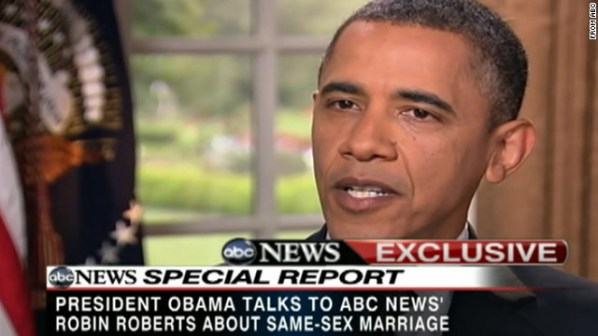
President Obama made history at the White House yesterday when he told my GMA co-anchor Robin Roberts that he supports same-sex marriage. But how will the politics play out come November?  That’s the question we’re tackling today on the Bottom Line.

Hard to read — and certain not to supplant the economy as the campaign’s top issue.  No question that’s right.  To borrow a phrase from Donald Rumsfeld, Obama’s shift raises more “known unknowns” than firm conclusions.  So I have more questions about the politics of same-sex marriage right now than answers.
Here are my top nine:

#1 — Will this fire up Christian Conservatives who have had some real qualms about Mitt Romney and skepticism about his Mormon faith?  Enough to put them enthusiastically in Romney’s camp in solid numbers?
#2 — Did this cost President Obama North Carolina? We saw the results of the referendum on Tuesday with 79 percent of the electorate supporting a ban on same-sex marriage. Additionally twenty percent of voters in the Democratic primary voted against Obama, which could show that he’s got some trouble in a state he won four years ago.

#3 — Will this motivate under 30 voters enough to get their turnout back to 2008 levels? We know they haven’t been “fired up” yet, but it’s also true that young voters are driving support for gay marriage.  According to our ABC News/ Washington Post poll 61 percent of voters under the age of 40 support same-sex marriage compared to only 40% of voters over the age of 65 who support it.  Will Obama’s shift make them believe again that he’s the candidate of “hope and change?”
#4 — On the flip side, how much will older voters be turned off?  Are they more likely to focus on Obama’s stance on gay marriage, or Romney’s plans for Medicare?  That’s the key question for this group — and how they turn could make the difference in the mega battleground of Ohio.  Same goes for Iowa — and Obama’s marriage shift could put Wisconsin in play for Romney too.

#5 — A majority of African American voters are against gay marriage, but will Obama’s support for this issue reduce turnout in the black community in November? ( I doubt it)
#6 — And what about Hispanics? President Obama was counting on their vote in the Southwest, specifically in Colorado, New Mexico and Nevada. But many Hispanics are Catholic and culturally conservative. Could this issue somehow tamp down turnout for the president in those key states?

#7 —Six of Obama’s top bundlers come from the gay community. Will this increase their pull in the campaign? And will it open up more contributions, especially in the Obama aligned Super PACS which have been lagging in fundraising compared to the Republican aligned Super PACS?
# 8 —Voters tend to punish whichever candidate seems to be putting the issue of same-sex marriage front and center in a political campaign.  By November will it still be front and center?  If so, will voters blame Obama for his switch — or buy his argument that Romney made it a national issue by supporting a Constitutional amendment to ban same-sex marriages everywhere?

# 9 — The President told Robin that he wants to leave the question of same sex marriage to the states for now. But will he face pressure to have the Justice Department join litigation seeking to strike down state bans?  That could be the next front in this war.

Those are my nine questions. Let me know yours.  I’d love to hear some of your answers too.

Read More: Yahoo News

SUBSCRIBE to The Hispanic Blog to stay on top of the latest latino news, politics and entertainment!

Don’t be shy SUBSCRIBE – COMMENT – LIKE ME -CIRCLE ME AND FOLLOW ME

God Bless and make it a fabulous day!

powered by Influential Access – “Transforming the Ordinary to EXTRAordinary!” – CEO – Jessica Marie Gutierrez – Creator of The Hispanic Blog #thehispanicblog


WHAT WILL VOTER TURNOUT BE LIKE IN 2012: HERE ARE THREE SCENARIOS

THE HISPANIC BLOG IS THE LATEST HISPANIC NEWS BY JESSICA MARIE GUTIERREZ

Will strong turnout by minority voters lock up the November election for President Barack Obama? Or will the enthusiasm of the 2010 midterms carry over to boost white voter turnout, helping the Republican nominee? William H. Frey, a senior fellow at the Brookings Institution, examines that question in a new paper.

photo source: Dallas Observer blog

The minority vote in 2008 played a decisive role for Mr. Obama both nationally and in several key states. He lost the white vote but outperformed among all other races. In North Carolina, where Mr. Obama won by a mere 14,000 votes, African Americans accounted for nearly a quarter of the electorate, and 95% of them voted for Mr. Obama, according to exit polls. Minority voters also helped push Mr. Obama over the top in Indiana, Virginia and New Mexico, while expanding his margins in big states such as Ohio and Pennsylvania.

photo source: ThirdCoast Digest

Indeed in 2008, the paper notes, turnout by African Americans, Hispanics and Asian Americans was a few percentage points higher in each group than in 2004 (65% in 2008 vs. 60% in 2004; 50% vs. 47%; and 47% vs. 44% respectively for each group), while white turnout was one point less (66% vs. 67%).

Jae C. Hong AP Photo
Republican presidential candidate, former Massachusetts Gov. Mitt Romney speaks at the RNC State Chairman’s National Meeting in Scottsdale, Ariz., Friday, April 20, 2012.

Also, the margin of votes for the Democrats among minority groups, already sizable in 2004, expanded greatly in 2008. That is, more minorities were voting, and those votes were much more heavily Democratic. For white voters, which lean toward Republicans, the margin narrowed, but was still in the Republican column. In short, white turnout slumped, and whites who did vote voted less Republican than four years earlier.

photo source: AP

With this as background, Mr. Frey poses the question:
As we approach November, minorities will account for a slightly larger share of eligible voters than in 2008. At the same time, white support for the Republican candidate may be greater than in 2008. Which dynamic will prevail?

photo source Reuters

He has three scenarios:

Scenario A assumes that the 2008 turnout and voting patterns again apply to 2012 voters. If that occurs, Obama wins with 29 states and 358 electoral votes. (270 electoral votes are needed to win.)

Scenario B applies 2004 turnout and voting patterns to the 2012 population. In this scenario, Mr. Romney beats Mr. Obama, with 286 electoral votes in 30 states.

Scenario C assumes strong partisan participation for both whites and minorities in 2012. This scenario is perhaps the most likely of the  three, says Mr. Frey. In this scenario, whites in each state are assumed to have more enthusiasm for the GOP nominee (likely Mitt Romney) in 2012 than in 2008 (John McCain) and as a result will mimic their 2004 patterns. Meanwhile, minorities are presumed to follow their strong 2008 turnout and voting margins. In this scenario, Mr. Obama wins, narrowly, with 292 electoral votes spread among 24 states.

Read more: The Wall Street Journal

SUBSCRIBE to The Hispanic Blog to stay on top of the latest latino news, politics and entertainment!

Don’t be shy SUBSCRIBE – COMMENT – LIKE ME -CIRCLE ME AND FOLLOW ME

If you have any questions, concerns or simply would like to get a quote on my Marketing, Public Relations, Social Media and/or Events services, please feel free to contact me.

God Bless and make it a fabulous day!

powered by Influential Access – “Transforming the Ordinary to EXTRAordinary!” – CEO – Jessica Marie Gutierrez – Creator of The Hispanic Blog #thehispanicblog


WILL THE SB 1070 SUPREME COURT CASE CHANGE THE ELECTION?

THE HISPANIC BLOG IS THE LATEST HISPANIC NEWS BY JESSICA MARIE GUTIERREZ

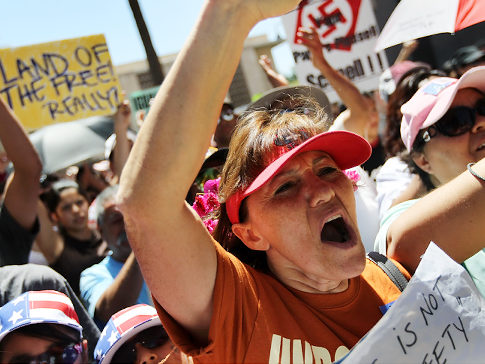
PHOENIX – APRIL 25: Opponents of Arizona‘s new immigration enforcement law protest outside the state capitol building on April 25, 2010 in Phoenix, Arizona. More than 1,000 gathered to protest the passage of Arizona’s tough new law which was signed by the state’s Republican governor Jan Brewer two days before. Critics of the law say that it will encourage racial profiling by law enforcement and endanger civil rights in the state. (Photo by John Moore/Getty Images) Original Filename: GYI0060270245.jpg

With the Supreme Court likely to uphold portions of Arizona’s infamous immigration law, the state will remain front and center in national headlines up until this year’s general election. While Hispanic voters in the state have no control over the Supreme Court’s decision, they will be able to have their voices heard at the Arizona ballot box in November.

SOURCE: AP/Matt York
Immigration-rights demonstrators march to the Arizona state Capitol in April 2006. These immigration protests sent hundreds of thousands of people into the streets this spring and promised to leave behind a surge of new Hispanic voters.

The Obama campaign certainly believes that the agitation of Hispanic and independent voters in Arizona puts the state in play for the general election.  Historical evidence and recent polling indicate that the states may well be up for grabs this year. Putting Arizona’s 11 electoral votes in play would not only shake up the electoral map but also send a clear message that extremist immigration laws are political poison. In 2008 – with minimal investment from the Obama Campaign – the President commanded a large share of the Hispanic vote in Arizona, besting hometown Senator John McCain 56% to 41%. If the President can boost Hispanic turnout, the statewide electorate could become much more Democratic. With recent polling showing Arizona as a toss-up, a solid investment in Hispanic mobilization could make the state very competitive.

A Hispanic youth holds up a sign questioning Latinos’ support for President Barack Obama during a protest outside local Democratic Party headquarters in Charlotte, North Carolina. (EFE)

A recent NBC News/Marist Poll reveals that President Obama is only trailing in Arizona by 5 points. The real eye-popping numbers for the President, however, are the preferences of independent voters. Among independents in Arizona, the President outperforms Romney 45 percent to 36 percent, with 19 percent undecided. Another poll by the Merrill/Morrison Institute puts the race within the margin of error. 42 percent of Arizona registered voters preferred Mitt Romney, while 40 percent supported the President. With a margin of error of plus or minus 4.4 percent, so if the election were held today the contest for Arizona’s 11 electoral votes would be a toss-up.
The real question on everyone’s mind is; can an investment in maximizing the Hispanic vote in Arizona generate enough support to push Obama and down ticket Democrats over the top? Trends in Hispanic turnout from neighboring states with similar demographics suggest that these investments could pay off. Significant efforts to boost turnout in 2008 resulted in substantial increases in Hispanic voter participation.  Colorado, New Mexico, and Nevada saw Hispanic voter participation increase by 33 percent, 62 percent and 32 percent respectively from 2004 to 2008. The overwhelming majority of that increased Hispanic vote went to Obama. The growing voter turnout from Hispanics helped the President carry all three of those states on his way to the White House, and this same dynamic could bring Arizona into the fold later this year.

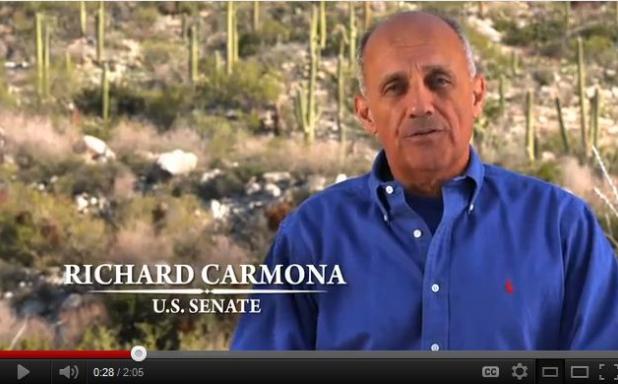
Hispanics nationally are breaking nearly three to one for the President, if this holds true in Arizona increasing the vote of this population could swing the general election vote for more moderate voices in Arizona as well.  For the first time ever there is viable Hispanic Senatorial candidate in former Surgeon General Richard Carmona.

If this former U.S Surgeon General is any example, you can be anything you want to be if you set your mind to it–high school dropouts included. In 1967 Carmona quit Dewitt Clinton High School at age 16 and enlisted in the U.S. Army, where he eventually earned his GED. Carmona graduated at the top of his medical program at University of California, San Francisco in 1979. President George W. Bush appointed Carmona Surgeon General of the United States in 2002.

Carmona, a military veteran, has a huge lead with Hispanic voters. Politico notes that Hispanic voters favor him 61% – 25% percent statewide. Hispanic women are even more supportive, giving him a 70% – 14% advantage over Flake. At this point in the race he is an unknown quantity. Just 22 percent of voters can identify Richard Carmona, including just 19 percent of white voters, giving him room to expand support. The reality is the more Carmona is able to galvanize Hispanic support in Arizona the better off the Obama campaign will do in the state.

Tens of Thousands March in Phoenix, AZ Against SB 1070. (Photo: José Muñoz) 2010

If any segment of the Arizona population should want to change the dynamic of the state’s political apparatus it would be Hispanics. The current political environment in Arizona is toxic for Hispanics, and has been hijacked by political extremists. For those in the state vested in sending a strong message to the country that Arizona is turning a corner on this brand of governance, voting against the likes of Jan Brewer, Joe Arpaio, and Russell Pearce would speak loud and clear. With the Supreme Court likely to uphold parts of SB1070, November will be the earliest that Arizona voters can let the country know where they truly stand on this law.
Read more: Fox News Latino

SUBSCRIBE to The Hispanic Blog to stay on top of the latest latino news, politics and entertainment!

Don’t be shy SUBSCRIBE – COMMENT – LIKE ME -CIRCLE ME AND FOLLOW ME

If you have any questions, concerns or simply would like to get a quote on my Marketing, Public Relations, Social Media and/or Events services, please feel free to contact me.

God Bless and make it a fabulous day!

powered by Influential Access – “Transforming the Ordinary to EXTRAordinary!” – CEO – Jessica Marie Gutierrez – Creator of The Hispanic Blog #thehispanicblog