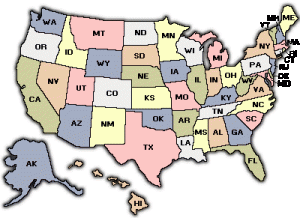
WHAT IS THE “SECURE COMMUNITIES” ACT: DON’T MEND IT…END IT!

THE HISPANIC BLOG IS THE LATEST HISPANIC NEWS BY JESSICA MARIE GUTIERREZ

Photo courtesy of ICE

Any day now Immigration and Customs Enforcement (ICE) will announce a second round of “reforms” to the disgraced “Secure Communitiesdeportation program, S-Comm. And once again, it appears that ICE is more interested in spin than substance. The timing of the announcement–immediately before the DHS Office of Inspector General Report–seems primarily designed to take the pressure off of ICE rather than an honest attempt to address the fundamental flaws of the program.

We’ve been here before. In 2010, ICE tried the same tactic by announcing “reforms” to S-COMM’s predecessor, the 287(g) program to try to save the agency from the embarrassment of that year’s Inspector General report that described the program as an unmitigated disaster.

“Secure Communities” turns local police into defacto agents of deportation, forcing them to enforce unjust immigration laws, inviting racial profiling, and undermining community safety. It’s a program that has been leading to the “Arizonification” of the country, and has placed ICE under fire since it’s start in 2008. The only way forward on S-Comm is termination.

Since its inception, “Secure Communities” has gained fame for outright deception, starting with its very name. And now, after the release of thousands of internal emails and the agency’s own deportation data, there is no longer any doubt that ICE lied to local lawmakers, Congress, and the American public.

So-called “Secure Communities”, “S-Comm” or “In-Secure Communities” as it has been dubbed is the most recent attempt of ICE-DHS to control the immigration “problem”. This anti-immigrant program allows Immigration and Customs Enforcement (ICE), the Federal Bureau of Investigation (FBI) and local law enforcement agencies to share all fingerprints processed at local jails. This mandated sharing occurs regardless of the type of crime and even if the charges are dropped. The inaccurately named program, “Secure Communities” was said to have been initiated to target “level one” criminals (kidnappers, drug dealers, murders), but in practice has been successful in targeting jay-walkers, victims of domestic violence, mentally challenged citizens, and those who do not look “American”.

So why is the Administration holding on to a program that has a very public record of deception? One that law enforcement officers, Governors, cities, and Congressional representatives reject as damaging to public safety. And why is it continuing to operate the program in places like Georgia, with its unconstitutional anti-immigrant hate law, HB 87, while finally suspending it–at least partially–in Alabama and restricting it in Maricopa County? Clearly, this violates common sense. It also demonstrates a distorted sense of priorities.

Janet Napolitano announces record high deportations at ICE headquarters in Washington. Photo: Getty Images/Chip Somodevilla

In its blind quest to meet its arbitrary deportation quota of 400,000 people per year, the Obama Administration is driving a wedge between communities and local police, making it more difficult to solve crimes, and turning a blind eye to the fact that people are being placed into deportation through unconstitutional arrests. Civil immigration enforcement above public safety and constitutional protections? Really?

The upcoming announcement will be a significant opportunity for the President to demonstrate leadership on a program that has come to symbolize his broken immigration promises. Will it be business as usual or will the Obama Administration finally abandon their growing legacy of deportation? Will the Obama Administration stop attempting to convince the public that ICE may reform itself, despite every indicator that it’s incapable? Will the Obama Administration embrace the consensus against S-Comm or continue gripping onto the program despite its failure?

The next few days will tell. For the communities that are left to cope with the disasters of the Administration’s draconian immigration enforcement policies, the commitment to break ICE’s hold continues regardless of this month’s announcement. Communities reeling from this growing crisis have already documented the conclusive demand that S-COMM be terminated. Their pledge to restore trust and to break ICE’s hold on their community and the country will only grow stronger.

READ MORE: THE HUFFINGTON POST 

SUBSCRIBE to The Hispanic Blog to stay on top of the latest latino news, politics and entertainment!

Don’t be shy SUBSCRIBE – COMMENT – LIKE ME -CIRCLE ME AND FOLLOW ME

If you have any questions, concerns or simply would like to get a quote on my Marketing, Public Relations, Social Media and/or Events services, please feel free to contact me at thehispanicblog@gmail.com.

God Bless and may you have a fabulous day!

powered by Influential Access – “Transforming the Ordinary to EXTRAordinary!” – CEO – Jessica Marie Gutierrez – Creator of The Hispanic Blog #thehispanicblog
HOW WILL “OBAMACARE” AFFECT YOU: FIND OUT IN JUST MINUTES

THE HISPANIC BLOG IS THE LATEST HISPANIC NEWS BY JESSICA MARIE GUTIERREZ

Ever wondered exactly what the Affordable Care Act is going to do for you?

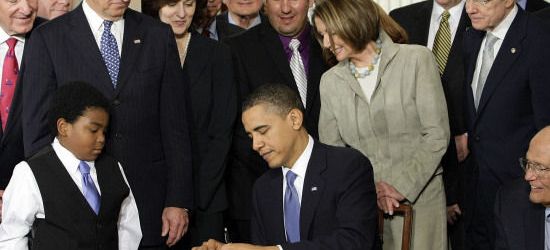
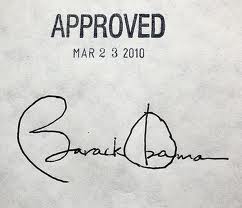
On March 23rd, 2010 — President Obama signed the Affordable Care Act into law in order to give nearly every American access to quality health care.
This blog is not stating if it is for it or against it rather we provide information and resources that will help you determine who is the best candidate for you. Check President Obama’s new health care app — and make sure to pass it on to everyone you know who’s asked what this law really means for them.

photo source: AP     President Obama signs the Affordable Care Act                                                                                                                                                                                                               

CLICK ON THE BOX BELOW TO FIND OUT HOW YOU QUALIFY

Check out the health care app

SUBSCRIBE to The Hispanic Blog to stay on top of the latest latino news, politics and entertainment!

Don’t be shy SUBSCRIBE – COMMENT – LIKE ME -CIRCLE ME AND FOLLOW ME

If you have any questions, concerns or simply would like to get a quote on my Marketing, Public Relations, Social Media and/or Events services, please feel free to contact me.

God Bless and may you have a fabulous day!

powered by Influential Access – “Transforming the Ordinary to EXTRAordinary!” – CEO – Jessica Marie Gutierrez – Creator of The Hispanic Blog #thehispanicblog

HOW HAS ROMNEY’S POSITION CHANGED TOWARD THE LATINO ISSUES: FROM DREAM ACT TO IMMIGRATION

THE HISPANIC BLOG IS THE LATEST HISPANIC NEWS BY JESSICA MARIE GUTIERREZ

Hispanic Chamber Of Commerce And Univision Hold "Meet The Candidates" Event January 24, 2012 - Photo by Chip Somodevilla/Getty Images North America

Mitt Romney won a landslide victory over Rick Santorum in Puerto Rico last weekend and Santorum is not taking his 75-point defeat lightly.

Santorum, who spent two full days campaigning in the Caribbean island, congratulated Romney on his victory in a press release late Sunday night, but in the same breath accused the former governor of pandering to Puerto Rico’s Latino voters by switching his position on making English the official language of every U.S. state.

“Their decision to put political expedience and political deception ahead of previously held policy positions further erodes their candidate’s credibility and trust,” Santorum spokesman Hogan Gidley said of the Romney campaign in the statement. “We all know Mitt Romney will do and say anything to get votes, and this is just another example of that.”

But just how much of a conservative two-step did Romney dance while courting Puerto Ricans? Here’s a look at some of the positions Romney softened, and those he stood by while attempting to woo Latino voters.

English as the Official Language

After Santorum was skewered for saying Puerto Rico would have to make English their official language in order to become a state, Romney toned down his own position on the issue while campaigning in Puerto Rico last week.

“I don’t have preconditions that I would impose,” Romney said shortly after touching down on the Island Friday. “English has been an official language of Puerto Rico for 100 years and I think selecting the words of your governor, Spanish is the language of Puerto Rico’s heritage, English is the language of opportunity.”

Both languages are currently considered “official” in the island territory and Romney encouraged young people to “learn both.” While he emphasized the importance of learning English, he did not say it should be the sole official language.

But that’s not what he said during debates in January.

“I believe English should be the official language of the United States,” Romney said on the debate stage.

The U.S. currently does not have an “official” language. If English was adopted as the “official” language, no government documents could be printed or written in any language besides English. Many federal documents are currently printed in both Spanish and English.

At another January debate, Romney noted that “English is the language of this nation” and touted his efforts as the governor of Massachusetts to get rid of bilingual education in favor of English emersion programs.

“People need to learn English to be successful to get great jobs,” Romney said at the NBC Debate. “We don’t want to have people to be limited in their ability to achieve the American Dream because they don’t speak English.”

A Romney spokeswoman disputed that Romney’s position had changed, arguing that even though Romney supports making English the official language of the U.S., that would have no bearing on Puerto Rico becoming a state. “These positions are not at odds,” said campaign spokeswoman Andrea Saul in an email. “What the federal government does regarding the official language is separate from what states do.”

The Dream Act

Romney has been firm in his opposition to the Dream Act, which would give undocumented minors a path to legal residency if they attend college or join the military.

While campaigning in Iowa Romney explicitly said he would veto the Dream Act if elected president. As governor of Massachusetts he vetoed the state version of the bill which would have provided in-state tuition to undocumented immigrants.

“The answer is yes,” Romney said of whether he would veto the legislation at the federal level.

Romney later added that giving “special benefits” to “people who come here illegally” was “contrary to the idea of the nation of law.” Romney would, however, support giving legal status to undocumented immigrants who serve in the military.

“I am delighted with the idea that people who come to this country and wish to serve in the military can be given a path to become permanent residents in this country,” he said while campaigning in Iowa. “Those who serve in our military and fulfill those requirements I respect and acknowledge that path.”

Romney has more recently focused on this portion of the Dream Act that he does support.

“I wouldn’t sign the Dream Act as it currently exists, but I would sign the Dream Act if it were focused on military service,” Romney said during a debate in Florida, where 22 percent of the state’s population is Hispanic.

Latino Decisions poll conducted for Univision showed that 84 percent of Latinos nationwide support the Dream Act.

Supreme Court Justice Sonia Sotomayor

While Romney softened his firm opposition to the Dream Act while talking to Latino voters, he stood firm on his condemnation of Supreme Court Justice Sonia Sotomayor, whose parents are from Puerto Rico.

While campaigning in Puerto Rico last week, Romney said he would support a Puerto Rican Supreme Court justice, just not one whose “philosophy is quite different than my own.”

He also dubbed Sotomayor “an activist, a liberal jurist.”

The former governor launched a campaign ad against Santorum, criticizing the former Pennsylvania senator for voting to appoint Sotomayor to the Second Circuit Court of Appeals in 1998, a post that put her on the fast track to the Supreme Court, the ad claims.

Romney has never been a Sotomayor fan. During her bitter confirmation process in 2009 Romney said her nomination to the Supreme Court was “troubling.”

“There are some things she said that are troubling for those of us who believe that the job of a justice is to follow the law and the Constitution, not to create law,” Romney said in 2009, according to CNN.

Self-Deportation of Undocumented Immigrants

Romney has stood firm on his opposition to amnesty for undocumented immigrants, but his views on deporting the millions of illegal immigrants who are already in America took a new twist during this campaign cycle.

At a Florida debate in January, Romney said he supports “self-deportation,” in which conditions would become so unbearable for undocumented immigrants that they would chose to leave the country.

“The answer is self-deportation,” Romney said at an NBC debate. “People decide that they can do better by going home because they can’t find work here because they don’t have legal documentation to allow them to work here.”

Under Romney’s plan, legal immigrants would have a card proving they were eligible to work in the United States. Without a card, Romney said people would not be able to find work.

“If people don’t get work here, they’re going to self-deport to a place they can get work,” he concluded.

But during his 2008 bid for the presidency, Romney said undocumented immigrants should be allowed to stay in the country for a “set period” while applying for legal residency. If that is not granted within the allotted amount of time, he said they should return home.

“Those 12 million who’ve come here illegally should be given the opportunity to sign up to stay here, but they should not be given any advantage in becoming a permanent resident or citizen by virtue of simply coming here illegally,” Romney told with NBC’s Tim Russert during the 2008 campaign.

“For the great majority, they’ll be going home,” Romney added, stopping short of saying those unapproved immigrants would be deported.

READ MORE: ABC NEWS

Matthew Jaffe, who is covering the 2012 campaign for ABC News and Univision, contributed to this report

SUBSCRIBE to The Hispanic Blog to stay on top of the latest latino news, politics and entertainment!

Don’t be shy SUBSCRIBE – COMMENT – LIKE ME -CIRCLE ME AND FOLLOW ME

If you have any questions, concerns or simply would like to get a quote on my Marketing, Public Relations, Social Media and/or Events services, please feel free to contact me at thehispanicblog@gmail.com.

God Bless and may you have a fabulous day!

powered by Influential Access – “Transforming the Ordinary to EXTRAordinary!” – CEO – Jessica Marie Gutierrez – Creator of The Hispanic Blog #thehispanicblog

DID MISSISSIPPI VOTE FOR A CRACKDOWN ON UNDOCUMENTED IMMIGRANTS?

THE HISPANIC BLOG IS THE LATEST HISPANIC NEWS BY JESSICA MARIE GUTIERREZ

Joining a nationwide trend, Mississippi House members voted for a bill Thursday that seeks to crack down on undocumented immigrants.

The bill, which passed with a 70-47 vote, calls for police to check the immigration status of people they arrest.

Leaders stripped more controversial provisions before the vote on House Bill 488. Next, the Republican-controlled state Senate is expected to pass it, and the governor has expressed support for the measure.

After initially failing, opponents of the bill were able on a second attempt to strip a provision requiring schools to count undocumented immigrants, saying it would violate federal law.

House Judiciary B Committee Chairman Andy Gipson, a Braxton Republican, denied opponents’ claims that the measure was racist or immoral, saying it was about enforcing the law. Gipson said he tried to craft a bill that would survive court challenges and allow charity toward migrants.

“It’s about the rule of law,” he told House members. “We want to say you’re welcome here, we just want you to follow the proper procedures, the proper protocols.”

Opponents warned families would be shattered by deportations and that the bill would reinforce outsiders’ stereotypes of Mississippi.

“If we pass this bill, it will set Mississippi back 60 years,” said Rep. Sonya Williams-Barnes, D-Gulfport. “Let us show America we are not the narrow-minded people they say we are.”

No Republicans opposed the bill, while 10 mostly white and rural Democrats voted for it. They crossed party lines despite an appeal from House Agriculture Chairman Preston Sullivan, D-Okolona, a rural white Democrat who warned the bill would hurt farmers.

A provision that allowed law enforcement officers to ask about a person’s immigration status in a traffic stop was removed. That means someone would have to be arrested for another offense before inquiries could be made.

“If they’re stopped, that in itself will not trigger this bill,” Gipson said. “It would require an arrest to be made. If they are found to be unlawful, then they would be deported.”

Among earlier changes was the removal of a clause that said people could be arrested for not carrying identification, a clause that had led opponents to nickname the measure the “papers, please” bill. That portion, like several others removed in committee last month, have been blocked by courts in Arizona, Alabama and elsewhere.

During the debate that ran from late Wednesday into Thursday, Gipson also removed a provision that could have allowed municipal utilities to refuse power, water, sewer and other services to undocumented immigrants. Such a provision was also recently blocked by a federal court in Alabama.

Gipson said he was balancing the need to write a law that will survive court scrutiny versus the desire to remove undocumented immigrants.

“I have tried to bring the best possible product to the body for a vote,” he said.

The changes did little to mollify critics, who continued to question whether the bill was needed. Opponents emphasize that Mississippi doesn’t need to summon any ghosts of its racist past.

Opponents in the House debate zeroed in on the possibility that parents could be arrested, leaving behind children who are U.S. citizens. Those who have fought the Alabama and Arizona measures have highlighted such problems.

“Your bill has nothing in it to show any kind of compassion or any kind of consideration for the children who are left behind,” said Rep. Kelvin Buck, D-Holly Springs.

Gipson admitted that “some separations” were a possibility.

Mississippi has a relatively small undocumented population, although it appears to have grown in recent years. The Pew Hispanic Center estimated that in 2010, the state had about 45,000 undocumented immigrants out of nearly 3 million total residents.

The bill is supported by Gov. Phil Bryant, a Republican who has been campaigning against illegal immigration since his days as state auditor.

Proponents say the state spends more money providing services to immigrants than it reaps in taxes, and claim that undocumented immigrants, if they leave, will vacate jobs that unemployed citizens can take. They say the bill is about legal compliance and that they welcome legal immigrants.

Gipson denied any racist intent, saying he had helped start a Hispanic ministry at a church nearly 20 years ago.

“I have been accused of being a racist,” he said. “I reject that.”

Gipson earlier added an amendment that allows any church or religious organization to minister to “immediate basic and human needs.”

He told a questioner Wednesday that a soup kitchen could feed an undocumented immigrant every day and not run afoul of the proposed bill. But Gipson said that, “if the question is `Can they harbor these people?’ the answer is `No.”‘

The bill now goes to the Senate, which has not advanced its own immigration bill.

Based on reporting by The Associated Press.

Photo: jimmywayne @ Flickr

Read more: LATINO FOX NEWS

SUBSCRIBE to The Hispanic Blog to stay on top of the latest latino news, politics and entertainment!

Don’t be shy SUBSCRIBE – COMMENT – LIKE ME -CIRCLE ME AND FOLLOW ME

If you have any questions, concerns or simply would like to get a quote on my Marketing, Public Relations, Social Media and/or Events services, please feel free to contact me at thehispanicblog@gmail.com.

God Bless and may you have a fabulous day!

powered by Influential Access – “Transforming the Ordinary to EXTRAordinary!” – CEO – Jessica Marie Gutierrez – Creator of The Hispanic Blog #thehispanicblog

HOW MUCH DO HISPANICS SPEND ON MOBILE DEVICES: A WHOPPING $17.6B IN 2012

THE HISPANIC BLOG IS THE LATEST HISPANIC NEWS BY JESSICA MARIE GUTIERREZ

U.S. Hispanic consumers will spend more than $17.6 billion on mobile devices and over $500 million on mobile apps in 2012, as illustrated in a new Zpryme INFOgraphic, 2012 Hispanic Mobile Consumer Trends (based on a survey and comprehensive analysis of Hispanic residents in the U.S.).

Producing consistent growth in a stagnant U.S. economy has become a chore for companies delivering consumer electronic products and related services in the U.S. To curb sluggish consumer spending, more and more companies have refocused marketing efforts and aggressively pursuing the massive Hispanic market via mobile. Overall, Hispanics are less likely to own a home computer than the overall mainstream – as a result, they turn to mobile devices for all-things-web. According to the Zpryme survey, almost 20 percent of all social media activity by Hispanic consumers occurs on a smartphone with Facebook (79 percent of Hispanics) being the go-to social network. What’s more striking is that according to the same survey, 26 percent of Hispanics click on online advertising about half of the time with 84 percent of all apps consumed in English (only three percent viewed primarily in Spanish).

Hispanics are not only powering the growth of the mobile device and entertainment industries, they are shaping it. From the purchase of a new Apple iPad to chatting with friends on Facebook, advertisers must understand how to carve brands to be more culturally relevant to the Hispanic mobile consumer”, explained Jason S. Rodriguez, Zpryme CEO and Director of Research.


What’s more, according to Credit Suisse, the leaders in spending on Hispanic marketing have outperformed those firms who have not spent much on Hispanic advertising by 270 basis points in terms of organic sales growth in the United States over the last three years. Association of Hispanic Advertising Agencies offered similar sentiment with companies that consistently devoted more than 25 percent of their advertising budgets to Latino media had seen sustained revenue growth over a five-year period with the top 500 U.S. advertisers dedicated $4.3 billion to targeting Hispanics in 2010 (the most recent year for which numbers are available).

SUBSCRIBE to The Hispanic Blog to stay on top of the latest latino news, politics and entertainment!

Don’t be shy SUBSCRIBE – COMMENT – LIKE ME -CIRCLE ME AND FOLLOW ME

If you have any questions, concerns or simply would like to get a quote on my Marketing, Public Relations, Social Media and/or Events services, please feel free to contact me at thehispanicblog@gmail.com.

God Bless and may you have a fabulous day!

powered by Influential Access – “Transforming the Ordinary to EXTRAordinary!” – CEO – Jessica Marie Gutierrez – Creator of The Hispanic Blog #thehispanicblog