DID THE CEO OF AMERICAN APPAREL MARCH IN SUPPORT OF IMMIGRANTS’ RIGHTS: ACCORDING TO CHARNEY IMMIGRATION REFORM IS CRITICALLY IMPORTANT FROM A HUMANITARIAN AND ECONOMIC PERSPECTIVE

THE HISPANIC BLOG IS THE LATEST HISPANIC NEWS BY JESSICA MARIE GUTIERREZ

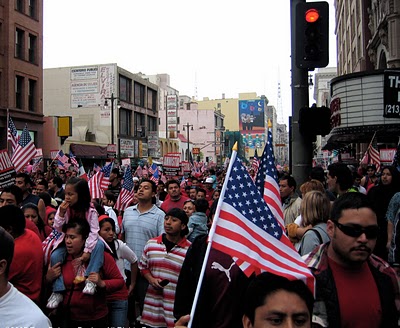
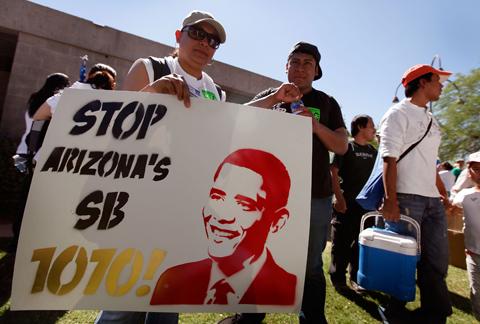
A May Day activist dressed as U.S. President Barack Obama marches through downtown Los Angeles marking the International Worker’s Day on May 1, 2012 in Los Angeles, California. Occupy Wall Street groups across the country have joined with unions during the May Day protests, a traditional day of global protests in sympathy with unions and leftist politics.

On May 1, 2012, several rallies and protests took part in Los Angeles to recognize the contributions workers are making to the country and to protest for better working conditions, fair pay, and immigration reform.
American Apparel (AMEX: APP), which has long advocated for comprehensive immigration reform and criticized the apartheid-like treatment of undocumented workers, will close its factory for several hours May 1 so its workers can join the march and related pro-worker activities.

Hayley Fox/Blogdowntown
Dov Charney, founder and CEO of American Apparel marched in support of immigrants’ rights at the downtown L.A. May Day parade on Tuesday.

CEO Dov Charney joined the workers to show his support for the fair treatment of all workers, domestically and internationally, and his unwavering support for prompt, fair, and effective immigration reform in the United States.

According to Charney, “Immigration reform is critically important not just from a humanitarian perspective, but also from an economic perspective. Economic growth and stability are adversely affected by the ability of employers to exploit undocumented workers, engage in sweatshop tactics, and drive wages down. Immigration reform will help raise wages and working conditions in Los Angeles and throughout the country.”

Read more here: Sun Herald

SUBSCRIBE to The Hispanic Blog to stay on top of the latest latino news, politics and entertainment!

Don’t be shy SUBSCRIBE – COMMENT – LIKE ME -CIRCLE ME AND FOLLOW ME

If you have any questions, concerns or simply would like to get a quote on my Marketing, Public Relations, Social Media and/or Events services, please feel free to contact me.

God Bless and make it a fabulous day!

powered by Influential Access – “Transforming the Ordinary to EXTRAordinary!” – CEO – Jessica Marie Gutierrez – Creator of The Hispanic Blog #thehispanicblog

 

WHAT WILL VOTER TURNOUT BE LIKE IN 2012: HERE ARE THREE SCENARIOS

THE HISPANIC BLOG IS THE LATEST HISPANIC NEWS BY JESSICA MARIE GUTIERREZ

Will strong turnout by minority voters lock up the November election for President Barack Obama? Or will the enthusiasm of the 2010 midterms carry over to boost white voter turnout, helping the Republican nominee? William H. Frey, a senior fellow at the Brookings Institution, examines that question in a new paper.

photo source: Dallas Observer blog

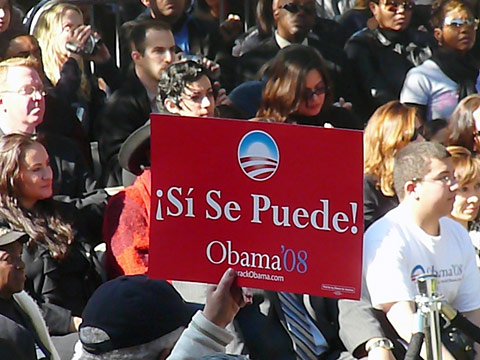
The minority vote in 2008 played a decisive role for Mr. Obama both nationally and in several key states. He lost the white vote but outperformed among all other races. In North Carolina, where Mr. Obama won by a mere 14,000 votes, African Americans accounted for nearly a quarter of the electorate, and 95% of them voted for Mr. Obama, according to exit polls. Minority voters also helped push Mr. Obama over the top in Indiana, Virginia and New Mexico, while expanding his margins in big states such as Ohio and Pennsylvania.

photo source: ThirdCoast Digest

Indeed in 2008, the paper notes, turnout by African Americans, Hispanics and Asian Americans was a few percentage points higher in each group than in 2004 (65% in 2008 vs. 60% in 2004; 50% vs. 47%; and 47% vs. 44% respectively for each group), while white turnout was one point less (66% vs. 67%).

Jae C. Hong AP Photo
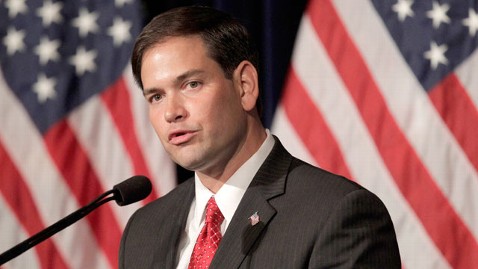
Republican presidential candidate, former Massachusetts Gov. Mitt Romney speaks at the RNC State Chairman’s National Meeting in Scottsdale, Ariz., Friday, April 20, 2012.

Also, the margin of votes for the Democrats among minority groups, already sizable in 2004, expanded greatly in 2008. That is, more minorities were voting, and those votes were much more heavily Democratic. For white voters, which lean toward Republicans, the margin narrowed, but was still in the Republican column. In short, white turnout slumped, and whites who did vote voted less Republican than four years earlier.

photo source: AP

With this as background, Mr. Frey poses the question:
As we approach November, minorities will account for a slightly larger share of eligible voters than in 2008. At the same time, white support for the Republican candidate may be greater than in 2008. Which dynamic will prevail?

photo source Reuters

He has three scenarios:

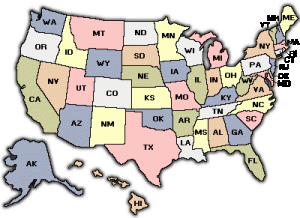
Scenario A assumes that the 2008 turnout and voting patterns again apply to 2012 voters. If that occurs, Obama wins with 29 states and 358 electoral votes. (270 electoral votes are needed to win.)

Scenario B applies 2004 turnout and voting patterns to the 2012 population. In this scenario, Mr. Romney beats Mr. Obama, with 286 electoral votes in 30 states.

Scenario C assumes strong partisan participation for both whites and minorities in 2012. This scenario is perhaps the most likely of the  three, says Mr. Frey. In this scenario, whites in each state are assumed to have more enthusiasm for the GOP nominee (likely Mitt Romney) in 2012 than in 2008 (John McCain) and as a result will mimic their 2004 patterns. Meanwhile, minorities are presumed to follow their strong 2008 turnout and voting margins. In this scenario, Mr. Obama wins, narrowly, with 292 electoral votes spread among 24 states.

Read more: The Wall Street Journal

SUBSCRIBE to The Hispanic Blog to stay on top of the latest latino news, politics and entertainment!

Don’t be shy SUBSCRIBE – COMMENT – LIKE ME -CIRCLE ME AND FOLLOW ME

If you have any questions, concerns or simply would like to get a quote on my Marketing, Public Relations, Social Media and/or Events services, please feel free to contact me.

God Bless and make it a fabulous day!

powered by Influential Access – “Transforming the Ordinary to EXTRAordinary!” – CEO – Jessica Marie Gutierrez – Creator of The Hispanic Blog #thehispanicblog


WHY DO WE CELEBRATE CINCO DE MAYO – IS IT MEXICAN INDEPENDENCE DAY: THE TRUTH AND HISTORY BEHIND WHAT THIS DAY REALLY MEANS IN THE UNITED STATES AND IN MEXICO

THE HISPANIC BLOG IS THE LATEST HISPANIC NEWS BY JESSICA MARIE GUTIERREZ

GrandProfile.com is your one stop for Myspace Graphics

It’s almost May 5, 2012, so Happy Cinco de Mayo everyone! The day commemorates the Mexican army’s unlikely victory over French forces at the Battle of Puebla on May 5, 1862, under the leadership of Texas born General Ignacio Zaragoza Seguín. Cinco de Mayo is observed in the United States and other locations around the world as a celebration of Mexican heritage and pride.

Cinco de Mayo in Mexico

Within Mexico, Cinco de Mayo is primarily observed in the state of Puebla, where Zaragoza’s unlikely triumph occurred, for many Mexicans, however, May 5 is a day like any other: It is not a federal holiday, so offices, banks and stores remain open.

Cinco de Mayo in the United States

In the United States, Cinco de Mayo is widely interpreted as a celebration of Mexican culture and heritage, particularly in areas with substantial Mexican-American populations.

Chicano activists raised awareness of the holiday in the 1960s because the day commemorates the Mexican army’s unlikely victory over French forces at the Battle of Puebla. They identified with the victory of indigenous Mexicans over European invaders.

Cinco de Mayo: And It’s Fiesta Time (To find out about the Seven Biggest Cinco De Mayo Parties in the US CLICK HERE

Today, revelers mark the occasion with parades, parties, mariachi music, Mexican folk dancing and traditional foods such as tacos and mole poblano. Some of the largest festivals are held in Los Angeles, Chicago and Arizona.

Confusion with Mexican Independence Day

Many people outside Mexico mistakenly believe that Cinco de Mayo is a celebration of Mexican independence, which was declared more than 50 years before the Battle of Puebla. That event is commemorated on September 16, the anniversary of the revolutionary priest Miguel Hidalgo y Costilla’s famous “Grito de Dolores” (“Cry of Dolores”), a call to arms that amounted to a declaration of war against the Spanish colonial government in 1810. The book The Course of Mexican History states “The exact words of this most famous of all Mexican speeches are not known, or, rather, they are reproduced in almost as many variations as there are historians to reproduce them.”The book goes on to claim that “the essential spirit of the message is…

‘My children: a new dispensation comes to us today. Will you receive it? Will you free yourselves? Will you recover the lands stolen three hundred years ago from your forefathers by the hated Spaniards? We must act at once… Will you defend your religion and your rights as true patriots? Long live our Lady of Guadalupe! Death to bad government! Death to the gachupines!’

Hidalgo’s Grito did not condemn the notion of monarchy or criticize the current social order in detail, but his opposition to the events in Spain and the current viceregal government was clearly expressed in his reference to bad government. The Grito also emphasized loyalty to the Catholic religion, a sentiment with which both Creoles and Peninsulares (native Spaniards) could sympathize; however, the strong anti-Spanish cry of “Death to the Gachupines” (Gachupines was a nickname given to Peninsulares) probably had caused horror among Mexico’s elite.

Cinco de Mayo: The History Behind What this Day Truly Means

GrandProfile.com is your one stop for Myspace Graphics

cPhoto: Battle of Puebla

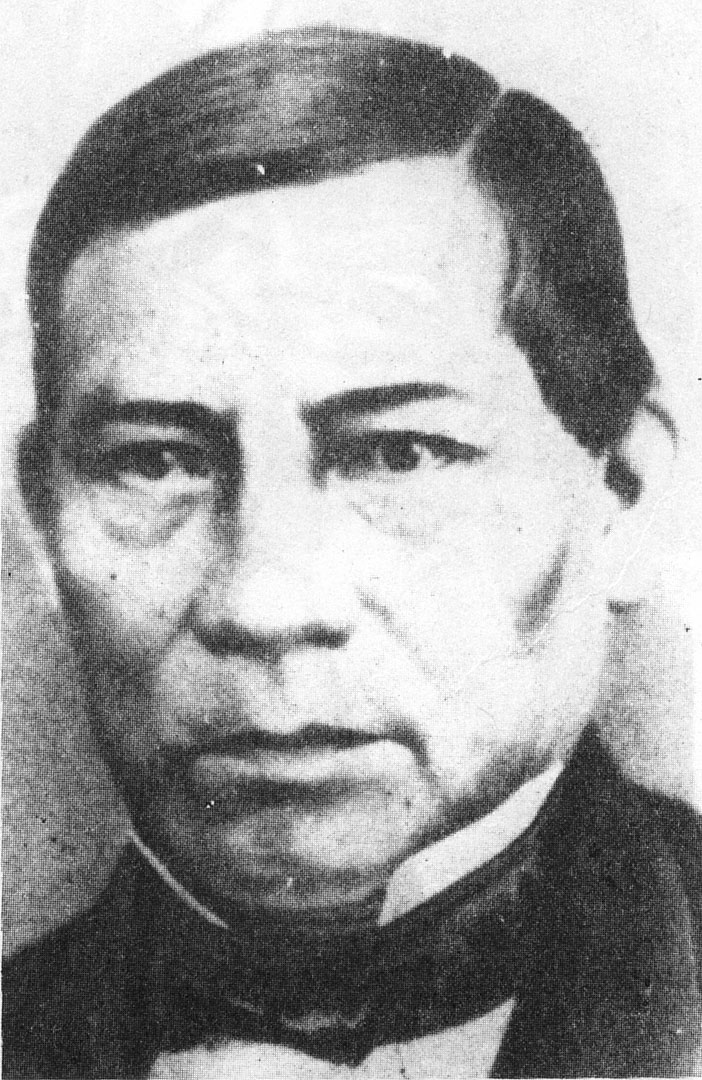
In Mexico, the various factions that fought their civil war had borrowed large sums of money from foreign creditors. The fighting devastated Mexico’s economy, and the country had to suspend payments on its debts. Taking advantage of the relative weakness of the United States during the US Civil War, in December of 1861 the governments of France, Great Britain and Spain landed an allied military force at Vera Cruz to protect their interests in Mexico and to try to collect the debts owed to their citizens. Juárez negotiated with the allies and promised to resume payments, and the British and Spanish troops began to withdraw from Mexico in April, 1862.

source unknown

The French, however, did not withdraw and instead sent reinforcements to their troops in Mexico. At the time France was ruled by Louis Napoleon, the nephew of Napoleon Bonaparte. Louis Napoleon was elected President of France, but after the election he proclaimed himself Napoleon III, Emperor of the French (the British referred to him as “the nephew of the uncle”). While negotiations for the Mexican government to repay its debts were ongoing, the French commander, General Charles Ferdinand Latrille, comte (Count) de Lorencez, advanced on Mexico City from Vera Cruz, occupying the mountain passes which led down into the Valley of Mexico. At this point it became clear that Napoleon III planned to turn Mexico into a colony. The French advance was along a route that had been used several times in the past to conquer Mexico, first by the conquistador Hernan Cortes and most recently by US General Winfield Scott during the Mexican War.

Napoleon III

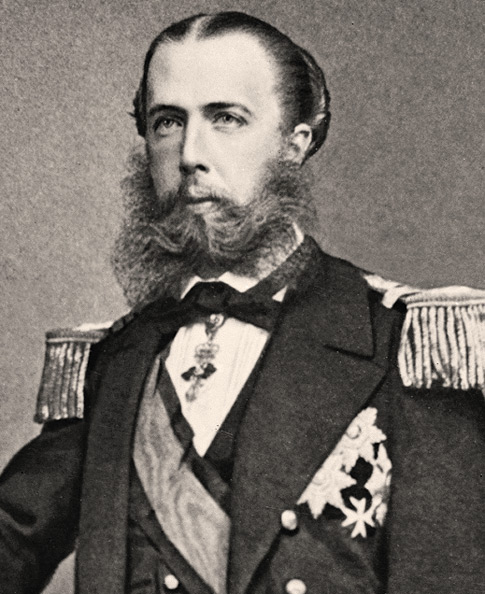
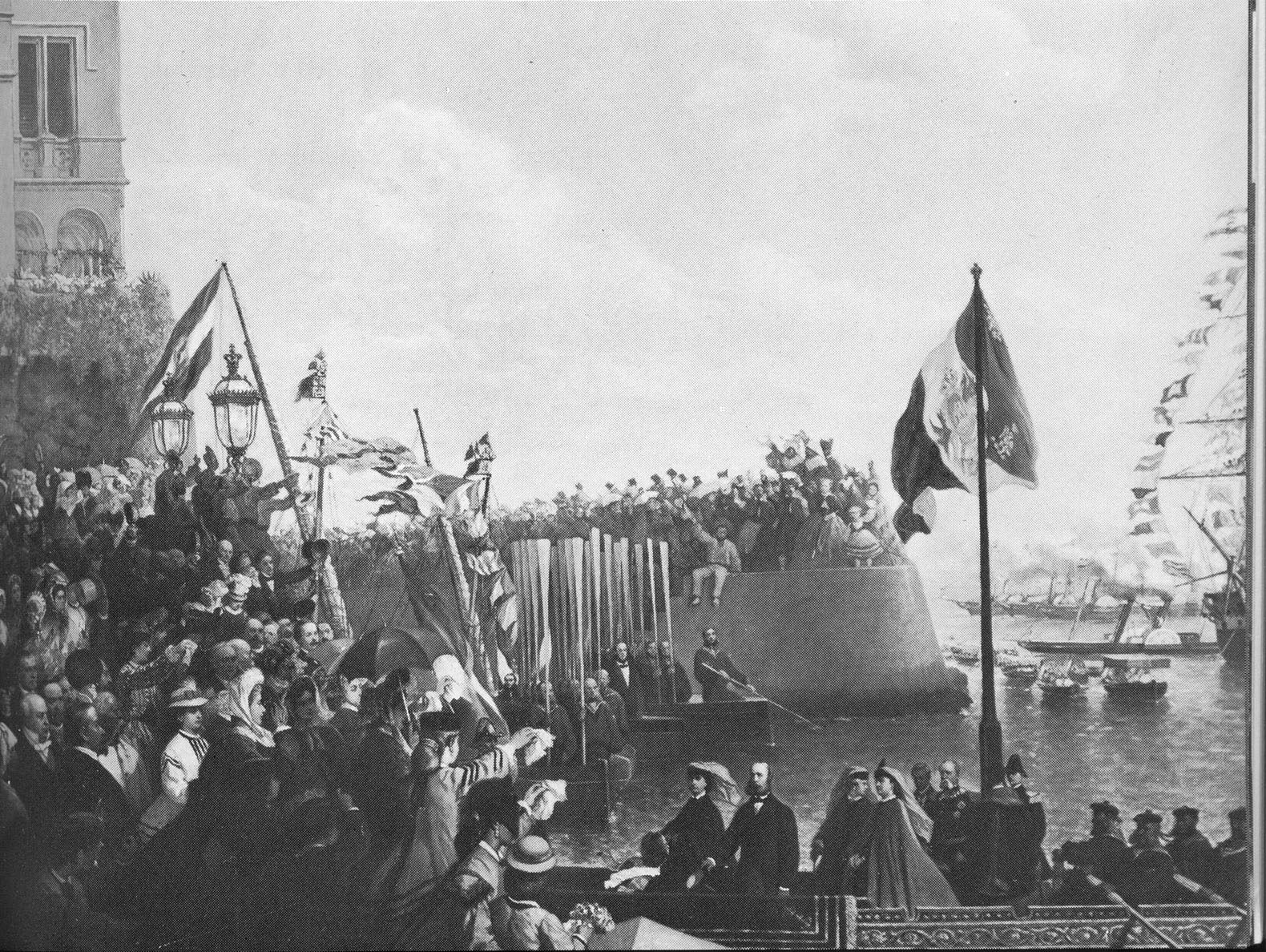
France declared war on Mexico, and called on those Mexicans who had fought on the side of the Conservative Party in the civil war to join them. Napoleon III planned to turn Mexico into an empire ruled by Archduke Ferdinand Maximilian Josef von Habsburg, the younger brother of the Emperor of Austria-Hungary.

Archduke Ferdinand Maximilian Josef von Habsburg

General Charles Ferdinand Latrille, Count de Lorencez, was the leader of the French forces – the Corps Expéditionnaire – which numbered about 7,300 men. He had been their commander for about two months. He was confident of victory. He boldly proclaimed, “we are so superior to the Mexicans in race, organization, morality, and elevated sentiments that as the head of 6,000 soldiers I am already master of Mexico.” He knew that less than 6,000 US troops – considered poorly trained and disciplined by European officers – had defeated a Mexican Army of 30,000 men under President General Antonio de Santa Anna (Antonio López de Santa Anna y Pérez de Lebrón) and taken Mexico City in 1847. General Count de Lorencez had over 1,000 more men than US General Winfield Scott, and the Mexican Army facing the French at Puebla numbered about 6,000 men (the French would later say 12,000) – far less than the army General Scott had defeated.
Left: Napoleon III, Emperor of the French (Chateau de Versailles); Right: Díaz at Puebla - This painting shows one of the critical moments of the Cinco de Mayo battle.  The French assault has begun to break up under the deadly fire of Mexican marksmen from Fort Loreto and the fortified monastery of Guadalupe.  Just then, General Porfirio Díaz appears, leading a detachment of Mexican cavalry in a charge against the dispirited French troops.

Left: Napoleon III, Emperor of the French (Chateau de Versailles); Right: Díaz at Puebla – This painting shows one of the critical moments of the Cinco de Mayo battle. The French assault has begun to break up under the deadly fire of Mexican marksmen from Fort Loreto and the fortified monastery of Guadalupe. Just then, General Porfirio Díaz appears, leading a detachment of Mexican cavalry in a charge against the dispirited French troops.

Furthermore, de Lorencez considered his own French troops far better trained and disciplined than the troops fielded by either the United States or Mexico. In order to make his entry into Puebla as impressive as possible, General Count de Lorencez ordered his troops to apply fresh whitening to their gaiters before the attack.

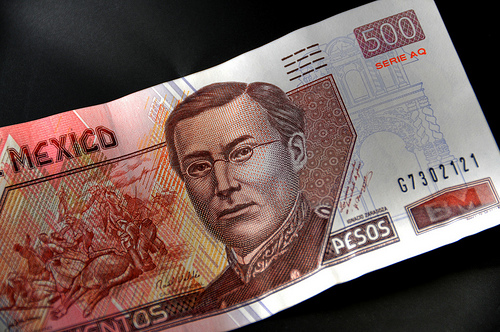
Texas born General Ignacio Zaragoza on Mexico’s 500 Pesos

The Mexican Army of the East (Ejército de Oriente), under the command of Texas-born General Ignacio Zaragoza (1829-1862), the vastly outnumbered and poorly supplied Mexicans fortified the town and prepared for the French assault. General Ignacio Zaragoza, took up positions at the town of Puebla (Puebla de los Angeles). This maneuver blocked the French advance on Mexico City. General Ignacio Zaragoza addressed his troops, telling them, “Your enemies are the first soldiers in the world, but you are the first sons of Mexico. They have come to take your country away from you.” Zaragoza ordered his commanders – Generals Felipe B. Berriozabal, Porfirio Díaz (José de la Cruz Porfirio Díaz Mori), Félix Díaz, Miguel Negrete and Francisco de Lamadrid, to occupy the Cerro de Guadalupe, a ridge of high ground dominating the entrance to Puebla, and the five forts which surrounded the town.

Of the forts, the two most prominent were situated on the Cerro de Guadalupe on either side of the road to Mexico City — the fort of Loretto to the right, and the fortified monastery of Guadalupe to the left. These were the positions that General Count de Lorencez ordered the Corps. After a brief artillery bombardment the French began their assault. Caught in a devastating crossfire from the Mexican troops manning the loopholes of the two forts, the French line faltered and then broke. The soldiers of the Corps Expéditionnaire charged the Mexican positions two more times, but each attack was repulsed by the withering musket fire of the Mexican troops. As the beaten French began their retreat, Mexican General Porfirio Díaz, at the head of a troop of cavalry, attacked them. Though badly shot up, the Corps Expéditionnaire was able to retreat in good order. They spent the evening of Cinco de Mayo waiting for an attack which never came. The next day, they began to withdraw back down the road towards Vera Cruz.

When word of the defeat reached Napoleon III, he replaced General Count de Lorencez as commander of the Corps Expéditionnaire with General Elias Frederic Forey, and sent 30,000 troops as reinforcements. The French reaction did little to lessen the shock of the defeat in Europe, and particularly in France. The Mexican Army had proved itself capable of standing up to a first-class European army, and defeating it. The victory of the Cinco de Mayo at Puebla is still celebrated today.

SUBSCRIBE to The Hispanic Blog to stay on top of the latest latino news, politics and entertainment!

Don’t be shy SUBSCRIBE – COMMENT – LIKE ME -CIRCLE ME AND FOLLOW ME

If you have any questions, concerns or simply would like to get a quote on my Marketing, Public Relations, Social Media and/or Events services, please feel free to contact me.

God Bless and make it a fabulous day!

powered by Influential Access – “Transforming the Ordinary to EXTRAordinary!” – CEO – Jessica Marie Gutierrez – Creator of The Hispanic Blog #thehispanicblog

NIELSEN REPORTS THAT ENGAGING THE HISPANIC MARKET IS AN IMPERATIVE FOR FUTURE SUCCESS: THIS MEANS YEAR ROUND NOT JUST ON CINCO DE MAYO

THE HISPANIC BLOG IS THE LATEST HISPANIC NEWS BY JESSICA MARIE GUTIERREZ

Myspace Layouts, Myspace graphics
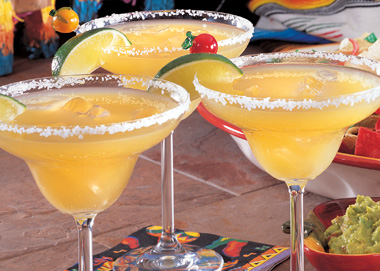
Cinco de Mayo is around the corner, and some brands are leveraging the holiday to roll out special promotions and discounts. (For example, Tyson Foods, Tabasco brand and Jose Cuervo’s nonalcoholic margarita mix have teamed up on a “Fiesta of Flavor” retail savings promotion.)
While I love the idea of engaging consumers around special events like holidays (and this Fiesta of Flavor campaigns seems like an innovative, multi-channel winner), I also want to add a few words of caution. If you’re a brand that wants to be more relevant to Hispanics (and you should be), it’s time to start thinking beyond Cinco de Mayo alone. These days, Hispanic marketing campaigns need to be comprehensive, consistent and year-round.
Why do you need to start focusing on the Hispanic market? A recent Nielsen report doesn’t mince words. From State of the Hispanic Consumer: The Hispanic Market Imperative:
“The U.S. Hispanic population is the largest minority segment and is growing at a dramatic rate towards ethnic plurality, which has already occurred in the most populous states and is beginning to occur among the U.S. baby population. Ethnic plurality refers to the coexistence of numerous ethnicities and races with no one segment in the majority. If the present U.S. economy substantially benefits from Hispanics, the future U.S. economy will depend on Hispanics by virtue of demographic change and the social and cultural shifts expected to accompany their continued growth.”
“The Hispanic market’s size, sheer size, growing clout, and buying power of $1 trillion in 2010 and $1.5 trillion by 2015 require thoughtful understanding about what the market represents to a company’s bottom line.”

“Hispanics are a primary driver of growth and change in the American marketplace, and marketers must recognize that engaging the Hispanic market is now an imperative for future success.”

How can you make an authentic connection to Hispanics so that you can start truly engaging them and provide a relevant and personalized customer experience? Execute, evaluate, evolve.

The biggest mistake you can make in marketing to Hispanics is relying on a one-hit-wonder campaign centered around Cinco de Mayo.  Today’s Hispanic population is diverse, discerning and engaged –as such, it demands your consistent, thoughtful attention year-round.

SUBSCRIBE to The Hispanic Blog to stay on top of the latest latino news, politics and entertainment!

Don’t be shy SUBSCRIBE – COMMENT – LIKE ME -CIRCLE ME AND FOLLOW ME

If you have any questions, concerns or simply would like to get a quote on my Marketing, Public Relations, Social Media and/or Events services, please feel free to contact me.

God Bless and make it a fabulous day!

powered by Influential Access – “Transforming the Ordinary to EXTRAordinary!” – CEO – Jessica Marie Gutierrez – Creator of The Hispanic Blog #thehispanicblog
 

WHAT IS THE LATEST WITH IMMIGRATION AND THE ELECTION?

THE HISPANIC BLOG IS THE LATEST HISPANIC NEWS BY JESSICA MARIE GUTIERREZ

This has been a historic week on immigration policy in an election year.

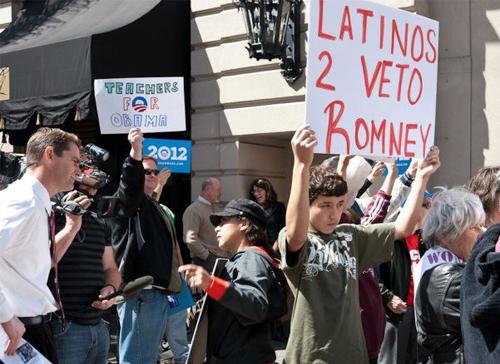
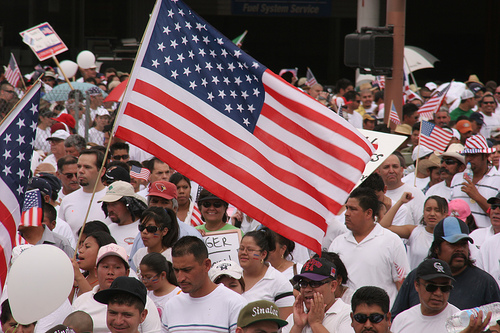
If upheld, the Supreme Court ruling on the Arizona “show me your papers” provision would have a huge mobilizing effect on Latino voters.  At the Supreme Court’s Arizona v. United States hearing on Wednesday, the narrow legal focus of the proceedings and Justices’ related discussion led many commentators to speculate that the “show me your papers” provision of Arizona’s anti-immigrant law would likely stand.  A ruling to uphold the law would not only unleash widespread discrimination in Arizona and other states with copycat legislation, it would mobilize Latino voters and other voters for whom the immigration debate is important and viewed through a personal lens.  Regardless of the outcome, the ruling will have major political ramifications in 2012 presidential race.
Coming in the heat of a race in which Democrats hope for huge Latino turnout and Republicans hope for just the opposite, the decision will draw a sharp contrast between a President who fought the Arizona law and a Republican nominee who supports it.

“Will Mitt Etch-a-Sketch on immigration?”

Probably not, but if he does, it won’t work. In diagnosing Mitt Romney’s problem with Latino voters, many commentators have concluded that Romney will tack toward the middle on immigration. We beg to differ. He may come up with some legal immigration package designed to soften his image a bit, but it’s our view that he has pandered too much and too recently to the nativist minority in the GOP to flip flop now. The last thing the Romney campaign wants is a fight with the right over immigration combined with a week of stories about his “Etch-a-Sketch” on immigration. And if we are wrong and he does shift positions, would it work? We think not. He’s already branded with Latino voters.  As Ron Brownstein notes of recent polling, “Obama’s share of the vote among Latinos notably exceeds his approval rating with them.
That’s a telling measure of how much Romney has alienated those voters, because it’s unusual for a president to poll much above his approval rating with any group.”  And Latino voters are not stupid.  They are not going to fall for a little general election shuffle.  Just ask Meg Whitman.  Some salt and pepper for the stew: Andrew Sullivan predicts Romney will stay hard right here; Michael Tomasky thinks Romney will bust a move to the center but argues it wouldn’t work here.

Marco Rubio’s DREAMs: looking past 2012 to 2016? 

                                                                           Jae C. Hong/AP Photo

The chatter surrounding Senator Marco Rubio’s impending legislation modeled on the DREAM Act has reached a fever pitch. Much of the commentary focuses on what Rubio and the DREAM legislation might mean for Romney in 2012 and Rubio’s chances in the Veepstakes.  Again, we beg to differ.  We doubt Rubio will be the VP choice and we believe he has a longer-term vision in mind. Our take is that Rubio knows Romney is cooked with Latino voters and is already focused on Republican Party’s post-2012 effort to repair its image among Latino voters.  Eventual passage of a Rubio-championed DREAM Act would indeed help Rubio’s chances to be the leader of a more Latino-friendly GOP going into 2016.

Pundits and insiders agree – immigration helping Democrats and hurting Republicans:

photo source Getty Images

What a difference a few years makes.  During 2005 and 2006, many Republicans thought they would reap the political rewards of using a hard line immigration stance as a wedge issue.  Though post-election analyses in 20062008, and 2010 showed that a hardline immigration position did not help politically, and in many cases hurt candidates politically, it seems as though the conventional wisdom has finally caught up with the election results.  A National Journal’s political Insiders generally agreed across the aisle that the issue of immigration stands to help Democrats and hurt Republicans in the November elections.  Almost half of the Democratic Insiders said the immigration issue would “help a little” while a little more than a third said it would “help a lot.” Among the Republican insiders, more than half believed immigration would “hurt a little,” a handful predicted it would “hurt a lot,” while three in ten said the issue would have “no effect.”

Read More: America’s Voice

SUBSCRIBE to The Hispanic Blog to stay on top of the latest latino news, politics and entertainment!

Don’t be shy SUBSCRIBE – COMMENT – LIKE ME -CIRCLE ME AND FOLLOW ME

If you have any questions, concerns or simply would like to get a quote on my Marketing, Public Relations, Social Media and/or Events services, please feel free to contact me.

God Bless and make it a fabulous day!

powered by Influential Access – “Transforming the Ordinary to EXTRAordinary!” – CEO – Jessica Marie Gutierrez – Creator of The Hispanic Blog #thehispanicblog