DOES A LATINA RUN THE GIRL SCOUTS: CELEBRATING 100 YEARS WITH CEO ANA MARIA CHAVEZ

THE HISPANIC BLOG IS THE LATEST HISPANIC NEWS BY JESSICA MARIE GUTIERREZ

Latina leader to her Girl Scouts: Prepare to lead

When 10-year-old Anna Maria Chavez joined Girl Scout Troop 304 in the small town of Eloy, Arizona, she never thought the experience would eventually lead her to occupy a colorful office just off Fifth Avenue in the heart of Manhattan.

While about half of all women in the United States were Girl Scouts at some point in their lives,  today, one in 10 of those girls are Latina. One of them is Chavez, who last year became the first Hispanic CEO of the organization.

At the headquarters of Girls Scouts Inc., Chavez is celebrating the organization’s 100th anniversary surrounded by apple-green walls and shelves of memorabilia. Instead of magazines in the small waiting area, there are cookie jars.

“I never ever imagined that I would become the national CEO of Girl Scouts,” she said. “You need to understand where I came from.”
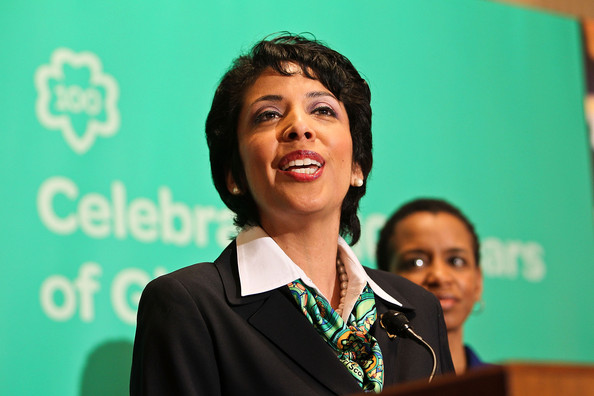
In This Photo: Anna Maria Chavez Photo by Paul Morigi/Getty Images North America)

Chavez was the only daughter in a Mexican immigrant family that came to the U.S. to work on farms. Hers was the first generation in the family to attend college.

Chavez said when she was a girl her own family had no knowledge about Girl Scouts and what they do. “I went home to my abuelita, my nana, and I said, ‘Nana I’m gonna be a Girl Scout,’ and she said ‘Y eso? Que hacen?’ you know, ‘What do they do?’” Chavez recalled.

For a young Chavez, camping and meeting girls from different backgrounds helped her to become more confident and independent. That helped in her teen years, when she moved from Eloy to Phoenix, and entered a large school where she was one of about a dozen Mexican students.

Her undergraduate education was at Yale, where a high SAT score helped her get accepted and earn a scholarship.

“When I got in, people were shocked and dismayed because nobody in our high school had gotten into this school. ‘You’re Latina, don’t you think you should stay in state?’” she said. “And I was like ‘Wait a minute, I have no boundaries!’”  She credits her Girl Scouts experience with helping her to make that decision.

Gallery: The first Girl Scout: Daisy Gordon Lawrence

Her tenure in the Girl Scouts also helped her make her career choice. Chavez remembered a family picnic during childhood, when she discovered a cave with Native American drawings that had been scribbled over with graffiti. Her outrage, she recalled, turned into a desire to become an attorney and “make laws” to stop things like this from happening.

“Only the Girl Scouts could charge me in a way to understand that even as a small girl, I could make a difference…” she said.

So after Yale, she returned to Phoenix to get a law degree and went on to become a successful attorney, eventually working for former Arizona Governor – and Girl Scouts alumna – Janet Napolitano. Later, she took up regional direction of Girl Scouts in San Antonio, Texas.

The position paved the way for her current job at the helm of the organization in New York.  “Girl Scouts and my family taught me to dream big,” she said. “Nothing was impossible.”

Now, she’s on a mission: To help the Girl Scouts of today become the leaders of tomorrow, like she did.

“If you look across the country, the top 10 job sectors, only 18 percent of leadership positions in those sectors are held by women,” she said, citing a survey conducted by Girl Scouts. “What were saying is, ‘Wouldn’t it be great if we could increase women in these leadership roles?’”

That message of leadership especially resonates with Latina mothers, who “want their daughters to succeed; they want their daughters to explore other options in their lives,” Chavez said.

According to the Girl Scouts, there are three million girls and women volunteers in the United States alone. The organization is present in 90 countries and claims to have made an impact in the lives of more than 59 million members in the course of its history.

As the scouts turn a century old, Chavez is intent on revamping the organization’s image. “People love Girl Scouts… they see our brand and they smile and think cookies, camp and crafts, but we want them to see premier leadership organization for girls in this country, if not this world,” she said.

Her vision for the future was already working in Queens Village, New York, where several troops met to commemorate World Thinking Day, a celebration of Girl Scouts around the world and a chance for scouts to pin new badges to their vests.

READ MORE: CNN IN AMERICA

SUBSCRIBE to The Hispanic Blog to stay on top of the latest latino news, politics and entertainment!

Don’t be shy SUBSCRIBE – COMMENT – LIKE ME -CIRCLE ME AND FOLLOW ME

If you have any questions, concerns or simply would like to get a quote on my Marketing, Public Relations, Social Media and/or Events services, please feel free to contact me at thehispanicblog@gmail.com.

God Bless and may you have a fabulous day!

powered by Influential Access – “Transforming the Ordinary to EXTRAordinary!” – CEO – Jessica Marie Gutierrez – Creator of The Hispanic Blog #thehispanicblog

IS RESPECT A MAJOR ISSUE FOR LATINOS: ELECTION 2012 COVERAGE ON THE HISPANIC VOTE

THE HISPANIC BLOG IS THE LATEST HISPANIC NEWS BY JESSICA MARIE GUTIERREZ

Maria Teresa Kumar is the founding executive director of Voto Latino, a non-partisan group created in 2004 with the mission to find, register, and turn out young Latino voters in the United States. With Latino Americans poised to make up a considerable slice of the swing-state electorate this year, plenty of operatives on both the right and left are eagerly watching to see which they’ll fall. But Kumar and Voto Latino are after something longer term. With Kumar in Austin to talk at SXSW about social media’s ability to shape a political contest, we talked by phone about online experimentation’s lessons for converting trending topics into action, how President Obama made this election personal, and what it will take to convince Democrats and Republicans to pay attention to Latinos after Election Day. This interview has been condensed and edited.


As perfectly sensible as it might be to focus on voter registration, we seem to have the same conversation every two or four years. There’s work done to engage a group of voters and pull them into the process, and then in the next election cycle it becomes about doing it over again. How much of this work is about the binariness of registration and how much of it is about creating a relationship with a voter that’s sustainable?

(March 9, 2010 - Photo by Michael Buckner/Getty Images North America)

Long-term engagement, right. This is based on the findings from the experimenting we did in 2010 with the Census. What we found is that the difference with this demographic — first of all, we target acculturated American Latinos, meaning that they are English-dominant — is that 80 percent of all Latino voters are English-dominant, but that doesn’t mean that there’s a news source that’s actually targeting them. So that’s why we work very closely with celebrities and with media. We have roughly 87 radio DJs who are part of our coalition in our top 25 markets. We use them as messengers to get folks to not only learn about the election but come back to us.

We’re right now creating a site called Election Center: News You Can Use. Our hope is to make it really robust so that not only, say, Rosario starts tweeting about the environment post-election but that her followers look at it and then come for more information about it on our site. And then they get active. Not only did they just read that Congress is about to vote on fracking but now they can go ahead and sign a petition for or against fracking, depending on how they feel, that will then immediately go to their member of Congress. What happens now is that people woo individuals every four years and then they feel like, ‘You invited me to the party, but you didn’t call me the next day.’

But if you were to ask me what the obstacles are going to be to voting this year, it’s not necessarily going to be being registered to vote. It’s going to be that a lot of voter ID laws have changed from 2008. So with the Election Center we’re going to also give you all the information you need to go to the polls.

When you say that a Latino celebrity is going to be tweeting about fracking, that’s not necessarily what people think of as a Latino-focused issue. And if you read anything about Latino voters it’s about how there are a lot of different people with a lot of different backgrounds with a lot of different interests. How do you take the broad-brush approach of registration and apply it to the rest of the process? 

The media’s reaction is always that Latinos’ number one issue is immigration. And it’s not immigration. It’s the tone in which people talk about immigration. All of the sudden, you can be a third or fourth-generation Mexican American from Colorado and not really realize you’re Mexican until someone pulls you over and asks you for your papers. That’s a catalyst for political awakening. I use that as an example because in the 2010 election [in Nevada], Sharron Angle, who was running against Senator Reid, basically said that her path to victory was to vilify Latinos. A hundred percent of the media she posted was racially tinged. And that mobilized nine out of ten Latinos to vote against her. But they still voted for a Republican candidate for governor. Yes, they paid attention because of [Angle’s] tone, but when it came to other candidates they voted on the issues.

The same thing for [Arizona state senator] Russell Pearce, who was the architect behind SB1070. The Latino community galvanized around him and recalled him. But they didn’t put in a Democrat. They put in the moderate Republican, someone who was talking to their issues.

When you talk about what mobilizes Latinos most, sadly, it’s when you’re vilifying the community. But if you talk to them about education and jobs in a way that is not condescending and doesn’t end with hasta luego, then you’re going to do pretty well. You do have to talk to them in an authentic way. That’s what’s missing from presidential politics. That’s what Mitt Romney is going to be challenged with. He, up to a point, was so moderate. If Governor Romney was running today he would do incredibly well with the Latino community because he would talk about small business and taxes. Latina women, particularly, are the fastest purveyors of small businesses in the country.

But instead, the election has been so polarized for the right that Romney finds himself moving to a place that he’s going to have a hard time recovering from, I think. If you’re trying engage with someone and they say, ‘Yeah, but I don’t like you,’ then it’s hard to move past that to a conversation about, ‘Okay, what else are you going to do for me?’

What you’re going to see with the 2012 election is that, you see the polls right now where the Latino community is overwhelmingly supporting President Obama over Mitt Romney. But I’m one of the folks who says that they’re doing that because of the tone. If Mitt Romney tomorrow was to change the tone and actually demonstrate what he was going to do for the Latino community — again, what all Americans want, job creation and the economy — it would be a completely different ball game.

.www.bauer-griffin.com. Photo by Bauer Griffin)

In Time’s recent “Yo Decido” issue, Obama campaign manager Jim Messina celebrated the Obama campaign’s ability to turn out Latino voters in the Western states through “grassroots stuff.” Have you seen evidence of the Obama campaign or any other doing targeted outreach to Latino communities?

Not yet, and I say that because I know that the Obama campaign is going to start going into Arizona come April. But they’re not yet full-fledged. They’re going to be deploying a lot of folks, and what they’re going to be coming down heavily with is peer-to-peer conversations similar to what they’ve done in the past.

This election for Latinos is going to be very much a personal one because Obama, sadly enough, has his own baggage. There have been record deportations. So when he goes into Arizona, he’s talking to a voter who may have voted for him last time but now they’ve had a loved one deported. Colorado was a swing state in 2008 and that was because they were passing very rough immigration laws. They were really racially profiling. Now, in Alabama, you have school children being pulled out of the classroom to be asked they’re American or not. If you’re a parent, that becomes personal. Now they’re attacking your family. So in 2008 we had Colorado. In 2012, we have five states that have similar legislation to Arizona. They’re North Carolina, Texas, Florida, Virginia — not surprisingly, key battleground states.

What’s cool is that at the same time they also have an increased electoral power because of the shift in votes. You definitely have this anti-Latino backlash at the state level but you also have this increased political voice that you didn’t have in 2008. Arizona is an example, but it’s an example that has spread that because electoral power is so much more heavily weighted in Latino districts. There’s actually a chance that that’s the clear path to victory.

As you focus on one identity group, even one that has been under-addressed in the past, do you worry that you’re turning the Latino vote into something for the parties to fight for by simply becoming the lesser of two evils, where the bar becomes just not being as big a jerk as the other guy?

Yeah, that’s what the Democrats are thinking. And that’s where their strategy is going to lose.

If I were advising the Democratic party, I’d say that, yes, Republicans aren’t being nice but the Democrats are being cowardly lions. Right now, there’s an open field for them to really go after the Latino community and solidify them. People forget that the Latino vote has been a swing vote since Reagan. They voted for Reagan and then voted for Clinton, then they back for Bush, and then they went back for Obama. Historically, it’s a pendulum. But because of sheer numbers now, if either the Republican Party or the Democratic Party figure out how to solidify them, they can basically become the Dixie Democrats of the 1940s. That hasn’t happened because both parties are timid. They don’t quite understand them.

But if you look at the trajectory of Latino growth, one out of six Americans are Latino. Over 55 percent of the growth in the Census over the last 10 years was due to Hispanic population growth. And it wasn’t immigration. It was the children of immigration.

They’re still so severely underserved, and they’re one of the hardest groups to target. It’s expensive because most of them have never voted before in their lives. For a campaign, they’re the least likely person to go after. Instead of spending two dollars on a progressive white voter all of a sudden you have to spend 25 or 30. There’s a cost to it. It’s harder work, but once you can get them to vote three times they become a life-long voter.

It has to be a continuous conversation. But no one is really having it.

Respect often gets mentioned as a major factor when it comes to Latino voters. Does a Marco Rubio as a vice presidential candidate change that dynamic for the better or come across as pandering?

At this point, it’s pandering.

What I try to communicate is that Latinos fundamentally care about the issues. I use the case of when candidate Barack Obama was running for Senate he ran against a Latino candidate named Gery Chico. And Gery Chico looked like he was going to have overwhelming support in the Latino community. He had great ties. But what candidate Obama was able to do was so well was to talk to the issues of the Latino community. He beat a Latino candidate overwhelmingly. At the end of the day they want to be able to make their lives better.

Since the foreclosure crisis Latinos’ wealth has decreased by 66 percent. It’s sadly competing with that of African Americans. When it comes to the unemployment rate, ditto. We’re talking about double digits when the majority of the country is enjoying eight percent. So the issues are a harsh reality.

But at the same time they’re incredibly optimistic about America’s future, more than any other group. They still have that immigrant experience where they came from countries or their parents came from countries that were so horrible that they still see the vast amount of opportunity and America’s potential here. If I’m a candidate, how did I package that message of, ‘These are my policies on education so that your child can achieve and overcome the hardships you’re facing today’?

Voters are increasingly sophisticated. You do have a swath of voters in the Latino community who are increasingly registering as independent, except for in the last year or so where they’ve been declaring themselves independent but leaning more Democratic.

But that has to do with tone, not because the Democrats are offering them any policy initiatives. They’re just basically not being mean to them and their families.

READ MORE: THE ATLANTIC

SUBSCRIBE to The Hispanic Blog to stay on top of the latest latino news, politics and entertainment!

Don’t be shy SUBSCRIBE – COMMENT – LIKE ME -CIRCLE ME AND FOLLOW ME

If you have any questions, concerns or simply would like to get a quote on my Marketing, Public Relations, Social Media and/or Events services, please feel free to contact me at thehispanicblog@gmail.com.

God Bless and may you have a fabulous day!

powered by Influential Access – “Transforming the Ordinary to EXTRAordinary!” – CEO – Jessica Marie Gutierrez – Creator of The Hispanic Blog #thehispanicblog

JUSTICE DEPARTMENT GIVES TEXAS JUSTICE AND BLOCKS THE VOTER ID BILL

THE HISPANIC BLOG IS THE LATEST HISPANIC NEWS BY JESSICA MARIE GUTIERREZ

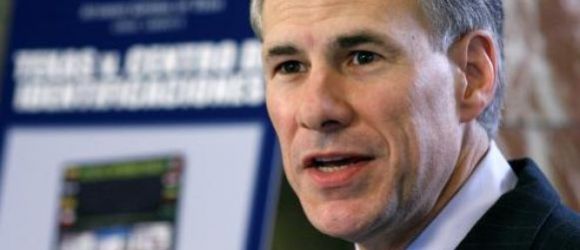
Attorney General Greg Abbott took the dispute over Texas’ maps to federal court in Washington. Photo: Harry Cabluck, AP / HC

The Justice Department’s civil rights division on Monday blocked Texas from enforcing a new law requiring voters to present photo identification at the polls, contending that the rule would disproportionately suppress turnout among eligible Hispanic voters.

The decision, which follows a similar move in December blocking a law in South Carolina, brought the Obama administration deeper into the politically and racially charged fight over a wave of new voting restrictions, enacted largely by Republicans in the name of combating voter fraud.

In a letter to the Texas state governmentThomas E. Perez, the assistant attorney general for civil rights, said the state had failed to meet its requirement, under the Voting Rights Act, to show that the measure would not disproportionately disenfranchise registered minority voters.

“Even using the data most favorable to the state, Hispanics disproportionately lack either a driver’s license or a personal identification card,” Mr. Perez wrote, “and that disparity is statistically significant.”

Texas has roughly 12.8 million registered voters, of whom about 2.8 million are Hispanic. The state had supplied two sets of data comparing its voter rolls to a list of people who had valid state-issued photo identification cards — one for September and the other in January — showing that Hispanic voters were 46.5 percent to 120 percent more likely to lack such identification.

PHOTO ILLUSTRATION BY TODD WISEMAN / TEXAS TRIBUNE

Under the Voting Rights Act, certain jurisdictions that have a history of suppressing minority voting — like Texas — must show that any proposed change to voting rules would not have a disproportionate effect on minority voters, even if there is no evidence of discriminatory intent. Such “preclearance” can be granted either by the Justice Department or by a panel of federal judges.

Texas officials had argued that they would take sufficient steps to mitigate any impact of the law, including giving free identification cards to voters who lacked them. But the Justice Department said the proposed efforts were not enough, citing the cost of obtaining birth certificates or other documents necessary to get the cards and the bureaucratic difficulties of that process.

In anticipation that the Obama administration might not clear the law, Texas officials had already asked a panel of judges to allow them to enforce the law. A hearing in that case is scheduled for this week, and the Justice Department filed a copy of its letter before the court.

The offices of Gov. Rick Perry and Attorney General Greg Abbott did not immediately respond to a request for comment. But Representative Lamar Smith, the Texas Republican who is chairman of the House Judiciary Committee, criticized the Justice Department, saying that “the people of Texas overwhelmingly supported” the law to prevent fraudulently cast votes from canceling out legitimate ones.

“This is an abuse of executive authority and an affront to the citizens of Texas,” Mr. Smith said in a statement. “It’s time for the Obama administration to learn not to mess with Texas.”

Under the state’s existing system, voters are issued certificates when they register that enable them to vote. But last year, Mr. Perry signed a law that would replace that system with one requiring voters to present one of several photographic cards at their polling station. The approved documents include a state-issued driver’s license or identification, a federal military card, a passport, a citizenship certificate or a concealed gun license issued by Texas. Other forms of identification, like student identification cards, would not count.

The measure was part of a wave of new voting restrictions passed in states around the country, mostly by Republicans following their sweeping victories in the 2010 elections.

Supporters argue that the restrictions are necessary to prevent fraud. Critics say there is no evidence of significant amounts of in-person voter impersonation fraud — the kind addressed by photo identification requirements — and contend the restrictions are a veiled effort to suppress turnout by legitimate voters who tend to vote disproportionally for Democrats.

READ MORE: THE NEW YORK TIMES

SUBSCRIBE to The Hispanic Blog to stay on top of the latest latino news, politics and entertainment!

Don’t be shy SUBSCRIBE – COMMENT – LIKE ME -CIRCLE ME AND FOLLOW ME

If you have any questions, concerns or simply would like to get a quote on my Marketing, Public Relations, Social Media and/or Events services, please feel free to contact me at thehispanicblog@gmail.com.

God Bless and may you have a fabulous day!

powered by Influential Access – “Transforming the Ordinary to EXTRAordinary!” – CEO – Jessica Marie Gutierrez – Creator of The Hispanic Blog #thehispanicblog

 

WILL JESSICA SANCHEZ BE THE NEXT AMERICAN IDOL?

THE HISPANIC BLOG IS THE LATEST HISPANIC NEWS BY JESSICA MARIE GUTIERREZ

Jessica Sanchez wows Jennifer Hudson, Ruben Studdard

After Jessica Sanchez earned a standing ovation for her powerhouse rendition of Whitney Houston’sI Will Always Love You” Wednesday night, she got a special Twitter shout out from season 3 alum and Oscar winner, Jennifer Hudson! “Yes Jessica! That’s it!!” Jennifer tweeted. Jessica told Access Hollywood, “Me and my uncle were in the same room when we saw the tweet and we were, like, crying and freaking out.” Hudson recently sang the song at the Grammys as a tribute to the late singer.

SUBSCRIBE to The Hispanic Blog to stay on top of the latest latino news, politics and entertainment!

Don’t be shy SUBSCRIBE – COMMENT – LIKE ME -CIRCLE ME AND FOLLOW ME

If you have any questions, concerns or simply would like to get a quote on my Marketing, Public Relations, Social Media and/or Events services, please feel free to contact me at thehispanicblog@gmail.com.

God Bless and may you have a fabulous day!

powered by Influential Access – “Transforming the Ordinary to EXTRAordinary!” – CEO – Jessica Marie Gutierrez – Creator of The Hispanic Blog #thehispanicblog
HISPANIC HOMEBUYER MEGA MARKET IS EMERGING

THE HISPANIC BLOG IS THE LATEST HISPANIC NEWS BY JESSICA MARIE GUTIERREZ

Hispanic Real Estate Leaders Say Youth, Population Growth, Household Formation, High Desire, Labor Force Trend, to Make Latinos an Exponential Force in Housing

SAN DIEGO, Mar 12, 2012 (BUSINESS WIRE) — The era of the Hispanic homebuyer is upon us, according to the 2011 State of Hispanic Homeownership Report released this week by the National Association of Hispanic Real Estate Professionals (NAHREP). The 36-page document offers an analysis of data on the Hispanic homebuyer market and points to youth, birth rates, household formation, rising purchasing power, labor trends, educational achievements and desire as key indicators that will make Latinos a major purchase force in the first-time homebuyer market.

“Despite recent losses suffered by Hispanics during the housing crisis, young Latino families that were unaffected by foreclosure or lost home values are ready to enter the market,” said Carmen Mercado, president of the 20,000-member group. “When they do, they will have an exponential impact on housing sales.”

According to the report, demographic forces are aligning with Latinos poised to take center stage as a mega force in housing. Latinos filled 1.4 million or 60 percent of the 2.3 million jobs added to the economy in 2011, are expected to account for 40 percent of the estimated 12 million new households over the next 10 years, and their collective purchasing power is expected to jump 50 percent by 2016 — just four short years from now.

Hispanic homeownership grew by 288,000 units in the third quarter of 2011, accounting for more than half the total growth in owner-occupant homeownership in the United States. Hispanic real estate leaders maintain that while this is just a short-term indicator, it is an example of what’s to come as Latino echo boomers move from renting to homeownership. They also predict as Latinos start to buy en masse that total owner-occupant housing units purchased — not homeownership rate — will be the most outstanding metric of the group.

“In recent years, the headlines have focused on foreclosure and wealth losses in the Hispanic community. But the untold story is the growth, labor force participation, higher educational achievements and attitudes toward homeownership that are crystallizing into a trend with Latinos taking center stage as a mega force in housing,” added Mercado.

The report, which was written by former Housing Fellow, Researcher, Author & Watchdog Alejandro Becerra, asserts that due to a combination of forces Hispanics are poised to become a mega consumer force in housing:

— Population Driver: The Hispanic population expanded 3.5 times between 1980 and 2010. Since 1980, more than two in five (44 percent) persons added to the U.S. population have been Hispanic. From 2000 to 2009, Whites experienced 1.1 births for every 1.0 death, while Hispanics experienced 8.9 births for every death, implying a sizeable widening of the growth rates between the two major population groups. Hispanics were responsible for most of the overall population growth in the country over the past decade.

— Consumerism: The Hispanic market made up over 50 percent of real growth in the U.S. consumer economy from 2005 to 2008. During that time span, the $52 billion in new Hispanic spending outpaced the $40 billion in new spending by non-Hispanics, with Hispanic consumer spending increasing by 6.4 percent while non-Hispanic spending increased by only 2.9 percent.

Labor Force: Latinos filled 1.4 million or 60 percent of the 2.3 million jobs added to the economy in 2011. Hispanics are expected to account for 74 percent of the growth in the nation’s labor force from 2010 to 2020.

— Mobility: Hispanics are mobile and willing to relocate where employment is available. Hispanics alone drove the population growth of Philadelphia, Phoenix, Indianapolis, Omaha, and Atlanta, and comprised the greatest component of population increases in San Antonio, Fort Worth, and El Paso, and Raleigh and Charlotte, North Carolina.

— Education: From 2009 to 2010, the number of Hispanic young adults enrolled in college grew by 349,000 (a remarkable increase of 24 percent), compared with a decrease of 320,000 among young non-Hispanic Whites. In 2010, 73 percent of young Hispanics completed high school, up from 60 percent in 2000, and 32 percent of young Hispanics were enrolled in college, up from 22 percent in 2000.

National housing surveys continue to demonstrate that Hispanics strongly aspire to become homeowners in spite of uncertainty over jobs and the general economy. In particular, surveys also show that almost two in three Hispanic renters maintain high aspirations for owning a home.

Hispanic real estate leaders assert that changes in the nation’s housing finance system must be made to accommodate the mega force of first-time homebuyers entering the market between now and 2020. This includes creating access to affordable, safe mortgage products and low-priced bank owned properties that meet financing standards, among other measures.

“New household growth will be substantially greater for Hispanics than for any other demographic group in the country,” said David Stevens, president of the Mortgage Banker’s Association. “The need to recognize the most critical variables in housing type, price range, affordability, and mortgage product terms will be critical for all housing stakeholders — from lenders and realtors to policy makers — in order to ensure that the homeownership needs of Hispanics and other Americans are met.”

The 2011 State of Hispanic Homeownership Report includes policy recommendations from Hispanic real estate leaders that are needed to accommodate new buyers. This includes: Improved access to affordable mortgage financing, no new taxes or increased fees on mortgages, increased supplier diversity, improved access to REO listings for owner-occupant buyers, sensible immigration reforms and continued financial education for mortgagees.

About NAHREP

The National Association of Hispanic Real Estate Professionals, a non-profit 501c6 trade association, is dedicated to increasing the homeownership rate among Latinos by educating and empowering the real estate professionals that serve them. Based in San Diego, NAHREP is the premier trade organization for Hispanics and has more than 20,000 members in 48 states and 50 affiliate chapters.

SOURCE: National Association of Hispanic Real Estate Professionals  A digital copy of the report is available for download at: http://nahrep.org/state-of-hispanic-homeownership.php

Read More: Market Watch

SUBSCRIBE to The Hispanic Blog to stay on top of the latest latino news, politics and entertainment!

Don’t be shy SUBSCRIBE – COMMENT – LIKE ME -CIRCLE ME AND FOLLOW ME

If you have any questions, concerns or simply would like to get a quote on my Marketing, Public Relations, Social Media and/or Events services, please feel free to contact me at thehispanicblog@gmail.com.

God Bless and may you have a fabulous day!

powered by Influential Access – “Transforming the Ordinary to EXTRAordinary!” – CEO – Jessica Marie Gutierrez – Creator of The Hispanic Blog #thehispanicblog