HAS SENATOR MARCO RUBIO BUMPED UP HIS AUTOBIOGRAPHY TO BE RELEASED BEFORE GOP CONVENTION?

Rubio moves publication of memoir before GOP convention

EXCLUSIVE: Marco Rubio, the 41-year-old first-term senator from Florida of Cuban extraction with sterling conservative credentials and matinee star looks, has bumped up the publication of his autobiography from October to June. Politico‘s Mike Allen broke the news this morning. The Sentinel imprint of Penguin Group is moving up the publication of Sen. Marco Rubio’s memoir, “An American Son.” It was originally planned for October but will now go on sale June 19. The jacket is attached, including the flap copy. There will also be a Spanish language edition, “Un Hijo Americano.” Adrian Zackheim, president and publisher of Sentinel: “National interest in Senator Rubio keeps heating up and we want the book out in the world as quickly as possible. It’s important to the Senator and to us that people hear his remarkable story, and that of his family, directly from him.”
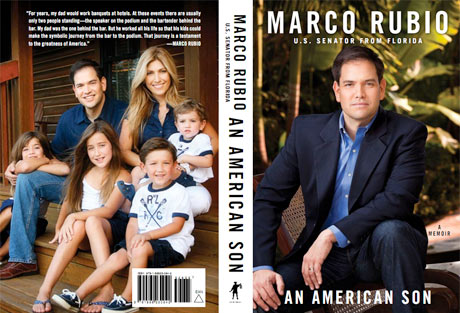
See the jacket full size

–Rubio is racing a more critical version, “The Rise of Marco Rubio,” by WashPost’s Manuel Roig-Franzia, edited by Simon & Schuster’s Priscilla Painton, scheduled for release July 3.

–From Rubio’s jacket: “Rubio spent countless hours with his grandfather … ‘Papa’ loved being Cuban, but he also loved America for being a beacon of liberty to oppressed people around the world. As Rubio puts it, ‘My grandfather didn’t know America was exceptional because he read about it in a book. He lived it and saw it with his own eyes. … Conservatism is not about leaving people behind. Conservatism is about allowing people to catch up. … [M]y dad would work banquets at hotels. At these events there are usually only two people standing—the speaker on the podium and the bartender behind the bar. My dad was the one behind the bar. But he worked all his life so that his kids could make the symbolic journey from the bar to the podium.’”

READ MORE: POLITICO

SUBSCRIBE to The Hispanic Blog to stay on top of the latest latino news, politics and entertainment!

Don’t be shy SUBSCRIBE – COMMENT – LIKE ME -CIRCLE ME AND FOLLOW ME

If you have any questions, concerns or simply would like to get a quote on my Marketing, Public Relations, Social Media and/or Events services, please feel free to contact me at thehispanicblog@gmail.com.

God Bless and may you have a fabulous day!

powered by Influential Access – “Transforming the Ordinary to EXTRAordinary!” – CEO – Jessica Marie Gutierrez – Creator of The Hispanic Blog #thehispanicblog

CAN DREAMS COME TRUE?

THE HISPANIC BLOG IS THE LATEST HISPANIC NEWS BY JESSICA MARIE GUTIERREZ

photo source AP

If you can look a poor child in the eye and tell her that she can’t attend the college of her choice — a university to which her hard work and exceptional grades earned her admission — then you might believe that immigration reform is not the answer.

But, if you experience what I do each day, then you would quickly recognize the need for relief for undocumented students.

The sooner, the better.

I encounter many undocumented students in my role as chairman of the LEAP Academy Charter School in the impoverished city of Camden, New Jersey. Our school sets high goals for students from pre-K through high school and makes strong academic demands, all in the name of helping each child achieve college placement and study for more than just a job, but a career of their own making. For these kids, education represents a chance to emerge from a culture of poverty into a career of their dreams.

Unfortunately there are restrictions on the dreams of undocumented students, roadblocks that may compromise their true potential.

I had the difficult conversation with an undocumented student — to tell her that the Ivy League school to which she was admitted will not offer a financial aid package because she is not a legal U.S. resident.

Despite bipartisan support, the proposed DREAM Act was handed a setback this week, turning the focus back onto how to deal with the issue of children of illegal immigrants. (DreamActivist / Flickr.com)

That student eventually went to college — a state university, though, not an Ivy League institution. Her tuition and board was paid for with private scholarship money, not federal aid. That student has been admitted to graduate medical school and again is confronted with the same challenge.

It is unfair. Yet it is fixable.

Could an Ivy League education improve that student’s life and career outlook significantly?

Sadly, we’ll never find out.

The most difficult challenge that college-ready undocumented students confront is restricted access to financial support for college tuition. In addition to employment restrictions, they are ineligible for federal and state aid and have limited scholarship opportunities.

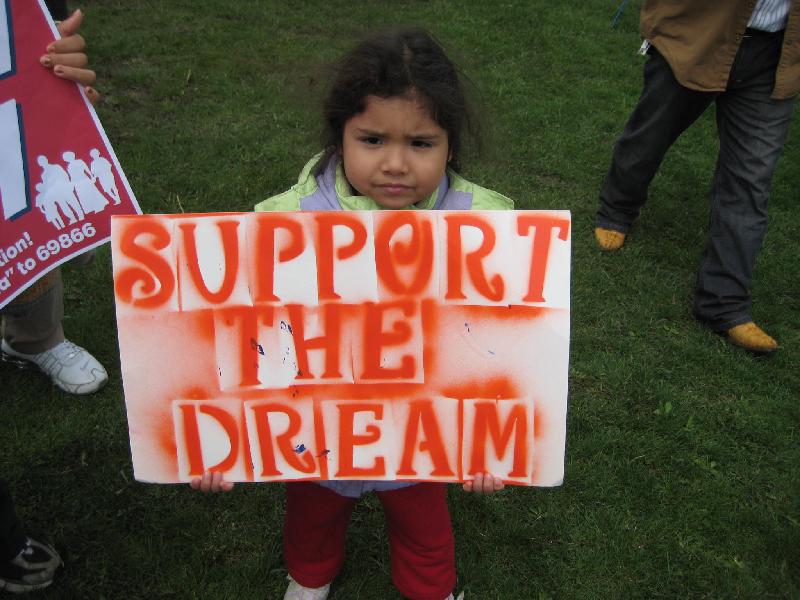
The DREAM (Development, Relief and Education for Alien Minors) Act — which would increase the financial resources available to undocumented students — remains in limbo despite support from President Obama, members of his Cabinet, the business community and organized labor. Presidents and Chancellors at more than 73 colleges and universities across the U.S. have also voiced enthusiastic support for the bill.

The DREAM Act, if passed, could grant as many as 2.1 million students access to legal residency and limited forms of federal financial aid. Its passage is the most important political issue for the more than 48 million Latinos living in this country.

Our undocumented student did not choose to violate the law. In so many cases, students like her were brought to the U.S. as babies by their parents. In almost every case, these students love the United States — the only country they have ever really known — as much as any of us.

Denying opportunities to the children of undocumented immigrants creates a bitter and disenchanted group of young people who are unable to take advantage of the vehicles that would allow them to contribute to our economy and society.

The DREAM Act needs to be reintroduced, passed and implemented without delay. Preferably before I have to look another promising student in the eye to tell her that her immigration status is the reason her Ivy League dreams are being denied.

Read More: The Huffington Post

SUBSCRIBE to The Hispanic Blog to stay on top of the latest latino news, politics and entertainment!

Don’t be shy SUBSCRIBE – COMMENT – LIKE ME -CIRCLE ME AND FOLLOW ME

If you have any questions, concerns or simply would like to get a quote on my Marketing, Public Relations, Social Media and/or Events services, please feel free to contact me at thehispanicblog@gmail.com.

God Bless and may you have a fabulous day!

powered by Influential Access – “Transforming the Ordinary to EXTRAordinary!” – CEO – Jessica Marie Gutierrez – Creator of The Hispanic Blog #thehispanicblog

ROMNEY WINS PUERTO RICO’S GOP PRIMARY

THE HISPANIC BLOG IS THE LATEST HISPANIC NEWS BY JESSICA MARIE GUTIERREZ

Romney handily wins Puerto Rico‘s GOP primary

Mitt Romney heads in to Illinois’s presidential primary this week with a handy win in Puerto Rico, pocketing the territory’s 20 GOP delegates in a bruising race that has become a numbers game for the Republican nomination.

With about 83% of total ballots accounted for early Monday in Puerto Rico, Romney had garnered more than 98,000 votes — or 83% of the total — based on unofficial results obtained from local party and election officials.

Rick Santorum was a distant second, at 8% with slightly more than 9,500 votes.

The other two candidates, former House Speaker Newt Gingrich and Texas Rep. Ron Paul, were barely registered in the race with 2,431 votes, or 2% of the vote, and 1,452 votes, or 1%, respectively.

Even as the vote was being counted in Puerto Rico, Romney, Santorum and the other candidates were already on the mainland vying for delegates in Illinois and Louisiana.

Illinois holds its primary on Tuesday and Louisiana on Saturday.

CNN’s latest delegate estimates show Romney with 518 delegates to Santorum’s 239. Gingrich has 139 delegates, and Paul, the libertarian champion, has 69 delegates. To secure the nomination, 1,144 delegates are needed.

Santorum, the former Pennsylvania senator, was in Louisiana late Sunday, where he is expected to win the primary.

Romney was in Illinois where polls indicate he holds a small lead over Santorum, with Gingrich and Paul well behind.

Romney framed his win in Puerto Rico as the territory’s desire for a candidate that “most represents their feelings” — and especially their desire to nominate some who can bring about a stronger economy and a smaller government.

He also said his party can appeal to Latinos, and win the presidency, with a low-tax, pro-business message.

“Those people who don’t think that Latinos will vote for a Republican need to take a look in Puerto Rico,” said the former Massachusetts governor, noting that the territory’s governor and its legislative leaders are conservative.

photo AP

“Hispanic voters are going to vote for Republicans if we stand for something — conservative principles that bring growth and good jobs and rising home values. That’s how we’re going to win, and we’re going to get Latino voters to help us out.”

Romney had entered the contest in Puerto Rico as the favorite. He was largely backed by the island government’s political establishment, including Gov. Luis Fortuno, who campaigned with Romney last week.

Santorum, the former Pennsylvania senator, created a small political firestorm on the island in the days leading up to the primary when he said English should be the principal language in Puerto Rico before it could gain statehood. Puerto Rico will vote on a statehood referendum in November.

After arriving in Puerto Rico on Friday, Romney said he would have “no preconditions” on language for Puerto Rico to gain statehood, though during a CNN debate in January he said English should be the nation’s official language.

Santorum immediately hit back, accusing Romney of flip-flopping.

Romney fired back that English has been the official language of the government in Puerto Rico for more than 100 years.

The heated, see-saw allegations between the two candidates have marked much of the race for the GOP nomination, which Sen. John McCain, R-Arizona, called “the nastiest I’ve ever seen” during an appearance Sunday on NBC’s “Meet The Press.”

Puerto Rico’s primary came two days before the showdown in Illinois, where 54 delegates will be awarded proportionally and polls show a tight race between Romney and Santorum.

Asked over the weekend while campaigning in Missouri about whether a win in Illinois would mean he’d win the nomination, Santorum said: “We feel very, very good about it. Let’s put it that way. Really good about it.”

Santorum also challenged Romney’s assertion that his business experience is one of his strongest credentials, telling CNN’s Candy Crowley on “State of the Union” on Sunday that, “If Gov. Romney thinks that he is the CEO of America and can run and manage the economy, he doesn’t understand what conservatives believe in.”

Romney’s campaign released an ad in Illinois on Friday, attacking Santorum for having “never run a business or a state.”

Santorum on Sunday said he had experience in the private sector as a lawyer, but argued that executive experience at a company is not necessary to be commander-in-chief.

“Running a business is not the same as being president of the United States,” he said.

Santorum also gave no indication that he has plans to drop out of the race should his campaign reach a point where the delegate math doesn’t add up in his favor.

“What I’m hearing is that we want a conservative nominee, that the establishment is trying to push a moderate like they did in 1976 against Ronald Reagan, like they did in 1996 with Bob Dole and what they did with John McCain,” Santorum said. “I think conservatives would like an opportunity to nominate a conservative, and that’s an opportunity.”

Both Santorum and Romney also focused their rhetoric at President Barack Obama, particularly with regard to rising gas prices.

Romney said Obama needed to fire Secretary of Energy Steven Chu and Interior Secretary Ken Salazar for their role in driving up gas prices.

“Given the fact that (Obama has) changed his policies, wants lower gas prices, he needs to fire them and return to the energy policies we need,” Romney said during a town hall meeting in Collinsville, Illinois.

Santorum told a crowd in Effingham, Illinois, to remember Obama at the gas pumps.

“When you see that zero come up, when it gets to the $100 range, when you see the zero, think of ‘O’ for Obama because that’s why you are paying that extra amount of money,” Santorum said.

READ MORE: CNN NEWS

SUBSCRIBE to The Hispanic Blog to stay on top of the latest latino news, politics and entertainment!

Don’t be shy SUBSCRIBE – COMMENT – LIKE ME -CIRCLE ME AND FOLLOW ME

If you have any questions, concerns or simply would like to get a quote on my Marketing, Public Relations, Social Media and/or Events services, please feel free to contact me at thehispanicblog@gmail.com.

God Bless and may you have a fabulous day!

powered by Influential Access – “Transforming the Ordinary to EXTRAordinary!” – CEO – Jessica Marie Gutierrez – Creator of The Hispanic Blog #thehispanicblog

WILL TEXAS PLAY A ROLE FOR GOP CANDIDATES?

THE HISPANIC BLOG IS THE LATEST HISPANIC NEWS BY JESSICA MARIE GUTIERREZ

Speaking to the RJC, the candidates all promised to strengthen the alliance with Israel. | AP Photos

With the Texas primary still more than two months away, and no assurances that the GOP presidential nominating process will have been decided by then, folks in the Lone Star State are anxiously preparing for company.

Some state officials are bemoaning the fact that Texas elections have been delayed until May 29 because of redistricting court battles, forcing the state to miss March’s much-heralded “Super Tuesday,” when 10 other states participated in primaries and caucuses.

The concern was that the nation’s second-largest state would have no real say in choosing the next Republican nominee for president.

But after Rick Santorum chalked up wins in Alabama and Mississippi last week, although still greatly trailing front-runner Mitt Romney in the delegate count, there is a feeling among many party faithful and political pundits that the momentum is with him. “True conservatives” are giddy about the prospect of Santorum winning enough races between now and June to cause a brokered convention in August.

The trail to the convention would become more interesting in Texas, where Republicans are armed with the second-most delegates in the country (155). Even Californians, whose primary is in June, are holding out hope that their 172 delegates will be the ones to really decide the nominee to face President Barack Obama in the general election.

If there truly is a contested campaign in this state, it could have ramifications for others on the ballot as the GOP old guard battles Tea Party upstarts. And depending how much money the candidates and their supporting super political action committees spend on advertising, it could get dirty real quick.

Former first lady Barbara Bush, a Romney supporter, is on record voicing her disgust with this year’s campaign.

“I think it’s been the worst campaign I’ve ever seen in my life,” Bush said during an appearance this month with daughter-in-law Laura at Southern Methodist University.

Intra-party battle lines have been drawn for a while as the elder Bushes and other GOP heavyweights backed Romney, and Gov. Rick Perry, after a failed presidential bid, threw his staunch support behind Newt Gingrich.

That leaves Santorum — with his growing Tea Party, social conservative and evangelical support — and Rep. Ron Paul, who has a following of Libertarians and other big-government haters.

A new poll out last week by Wilson Perkins Allen Opinion Research, a GOP survey group, showed Santorum ahead of Romney in Texas by 8 percentage points, 35 percent to 27 percent, followed by Gingrich with 20 percent and Paul with 8 percent.

Should Santorum hang on to that lead, who knows what impact his voters will have on down-ballot races — statewide, congressional and legislative and even county elections.

A lot will depend on who can get their message and their voters out. This is not Kansas or Mississippi.

Texas has 20 media markets, including the fifth- and 10th-largest in the country (Dallas-Fort Worth and Houston, respectively). That means candidates will have to spend a lot of money on advertising and a lot of face-time in the state.

And, based on what we’ve seen in other primary and caucus states, it’s sure to get downright nasty.

The candidates, however, will try to balance their mean streaks with their softer personas demonstrated by imitating local accents, holding babies and eating down-home food like grits, biscuits and barbecue. Of course, in Texas they’ll have to add tamales to that list — and I trust none will eat the Mexican staple with corn husk still on it.

After the Alabama and Mississippi contests, The Associated Press tabulated the delegate count at 495 for Romney, 252 for Santorum, 131 for Gingrich and 48 for Paul. It takes 1,144 to win.

Because Gingrich and Santorum have vowed to take their campaigns all the way to the convention in Florida regardless of delegate count, Texans can expect to see quite a bit of the candidates here in the next few weeks.

So, get out the welcome mats, y’all. While you’re at it, you might want to stock up on some bicarbonate of soda.

Read more here: Star-Telegram

SUBSCRIBE to The Hispanic Blog to stay on top of the latest latino news, politics and entertainment!

Don’t be shy SUBSCRIBE – COMMENT – LIKE ME -CIRCLE ME AND FOLLOW ME

If you have any questions, concerns or simply would like to get a quote on my Marketing, Public Relations, Social Media and/or Events services, please feel free to contact me at thehispanicblog@gmail.com.

God Bless and may you have a fabulous day!

powered by Influential Access – “Transforming the Ordinary to EXTRAordinary!” – CEO – Jessica Marie Gutierrez – Creator of The Hispanic Blog #thehispanicblog

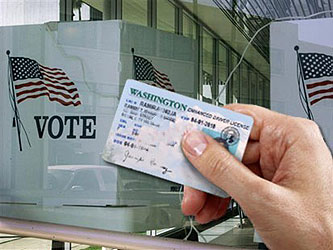
DOES VOTER TURNOUT AMONG HISPANICS DECREASE AFTER STRICT VOTER ID LAWS?

THE HISPANIC BLOG IS THE LATEST HISPANIC NEWS BY JESSICA MARIE GUTIERREZ

Analyzing Minority Turnout After Voter ID

Minnesota currently has a proposed constitutional amendment moving through its legislature to impose strict photo ID restrictions on voters and possibly eliminate Election Day registration. I take great pride in the fact that my home state of Minnesota consistently has the highest turnout in the country, and I’m pained by this legislation that is sure to reduce opportunities for voter participation across the state.

I want to correct a common misperception that came up during show, suggesting that voter turnout among Hispanic voters in Georgia has increased since the passage of its restrictive no-photo, no-vote photo ID law.

Motivation for voter turnout is notoriously difficult to measure. It’s a moving target, not lending itself easily to empirical methods of evaluation. But in this case, any assertion that voter turnout among Hispanics increased in Georgia following enactment of its strict voter ID law is simply not true.

According to the GA Secretary of State,Georgia’s Hispanic turnout (calculated as a percentage of registered voters) was lower in 2010 than in 2006, and it was lower in 2008 than in 2004. See table below:

Registered Hispanic Voters Actual Hispanic Voters Hispanic Turnout %
2004 30,148 18,240 60.5%
2006 43,514 11,601 26.7%
2008 73,375 43,717 59.6%
2010 75,658 19,320 25.5%

The number of Hispanic voters was greater in the 2010 election than in the 2006 election, and in the 2008 election than in the 2004 election, as the total population of registered Hispanic voters increased by 73.9 percent and 144 percent, respectively. However, there was a slight reduction in the percentage of voter turnout for Hispanics between presidential election years 2004 and 2008 and non-presidential election years 2006 and 2010.

While simple turnout numbers from a single state cannot tell us exactly what impact new voter restrictions have on voter turnout, it’s clear that in Georgia, the percentage of minority voter turnout has not increased following enactment of its strict voter ID law.

Strict voter ID laws are absolutely the wrong policy direction for this country. Voter participation rates across all racial, ethnic and socio-economic are dropping each election year. Georgia has seen voter participation rates in the fastest growing ethnic population over the past decade stay flat or decline.  As we consider what is best for America, increased voter participation is essential to restoring faith in our democracy and strict voter ID laws that fail to solve any real problems are wrong for America.

READ MORE: http://www.brennancenter.org/blog/archives/analyzing_minority_turnout_after_voter_id/

SUBSCRIBE to The Hispanic Blog to stay on top of the latest latino news, politics and entertainment!

Don’t be shy SUBSCRIBE – COMMENT – LIKE ME -CIRCLE ME AND FOLLOW ME

If you have any questions, concerns or simply would like to get a quote on my Marketing, Public Relations, Social Media and/or Events services, please feel free to contact me at thehispanicblog@gmail.com.

God Bless and may you have a fabulous day!

powered by Influential Access – “Transforming the Ordinary to EXTRAordinary!” – CEO – Jessica Marie Gutierrez – Creator of The Hispanic Blog #thehispanicblog