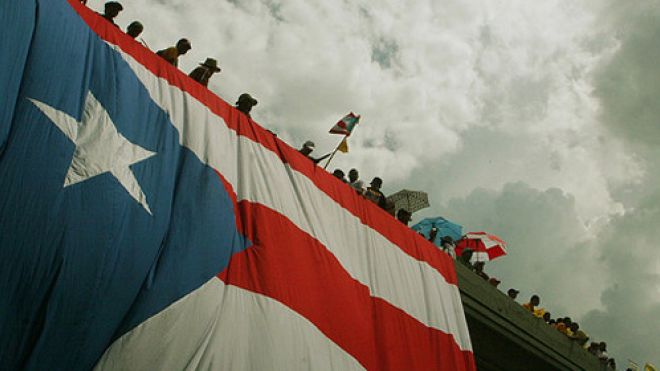
WILL ROMNEY HELP GOVERNOR LUIS FORTUñO PUSH FOR PUERTO RICO TO BECOME A STATE?

The most important issue for Gov. Luis Fortuño during Puerto Rico’s GOP primary may not be at the top of the list for most Latinos, but Mitt Romney hopes his endorsement will help win Latino voters.

Fortuño is pushing for Puerto Rico to become a state—and he sees Romney as an ally.

The former Massachusetts governor sympathizes more openly with Puerto Rico’s pro-statehood camp than his GOP competitors. While Romney’s top rival, Rick Santorum, called on Wednesday for Puerto Rico to adopt English as the island’s official language as a condition for becoming a state, Romney says Puerto Rico should be admitted to the union without such a condition if its citizens decide to vote to join in a referendum scheduled for Nov. 6.

“It just makes sense,” Fortuño told Fox News. “We have been part of the United States since 1898. Natural-born citizens since 1917. Our men and women have served in greater numbers than most states since then. And I believe that it’s the right thing to do in the 21st century, to allow almost 4 million American citizens to express our will and then to work with the White House and hopefully President Romney to address this issue.”

President Barack Obama does not have an official position on Puerto Rico’s status, saying he will respect the decision of the island’s voters.

Only voters affiliated with the Fortuño’s conservative New Progressive Party were permitted to cast ballots in the island’s Republican primary this year – a requirement that obligated pro-Republican Puerto Ricans to declare their support for statehood.

With the combined benefit of Fortuño’s endorsement and Santorum’s gaffes with the local press, Romney cruised to an easy victory, taking some 83 percent of the vote and all of the 20 delegates up for grabs. About 130,000 Puerto Ricans cast votes in Sunday’s primary, according to the Associated Press.

The victory emboldened Romney, who polls poorly among Latinos nationally.

“Those people who don’t think that Latinos will vote for a Republican need to take a look in Puerto Rico,” Romney said. “I intend to become our nominee and I intend to get Latino voters to vote for a Republican.”

A Fox News Latino poll found only 14 percent of likely Hispanic voters favored Romney in a head-to-head race with Obama.

SUMMARY

Puerto Rico Primary By the Numbers

83 percent of vote reported

VOTES    PERCENT

Romney        98,375      83%

Santorum        9,524       8%

Gingrich          2,431       2%

Paul                1,452       1%
Read more: LATINO FOX NEWS

SUBSCRIBE to The Hispanic Blog to stay on top of the latest latino news, politics and entertainment!

Don’t be shy SUBSCRIBE – COMMENT – LIKE ME -CIRCLE ME AND FOLLOW ME

If you have any questions, concerns or simply would like to get a quote on my Marketing, Public Relations, Social Media and/or Events services, please feel free to contact me at thehispanicblog@gmail.com.

God Bless and may you have a fabulous day!

powered by Influential Access – “Transforming the Ordinary to EXTRAordinary!” – CEO – Jessica Marie Gutierrez – Creator of The Hispanic Blog #thehispanicblog


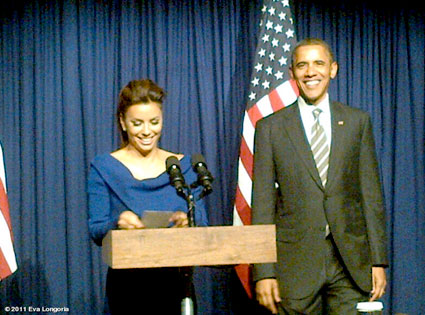
FROM HOUSEWIFE TO POLITICA: WATCH THE EVA LONGORIA INTERVIEW IN HER NEW ROLE AS NATIONAL CO-CHAIR FOR PRESIDENT OBAMA

THE HISPANIC BLOG IS THE LATEST HISPANIC NEWS BY JESSICA MARIE GUTIERREZ

WATCH THE INTERVIEW ON MSNBC CLICK HERE TO WATCH

Actress Eva Longoria talks about her new role as a national co-chair for President Barack Obama’s reelection campaign.

>>> poised to become a deciding factor in key states like colorado, new mexico and nevada, the obama campaign is now deploying some star power to sell its message tolatinos . eva longoria shot to fame playing is gabriel solis on the tv show “desperate housewives” now. she joins me now. so nice to meet you. you were very involved in the last election campaign four years ago. you’re taking a larger role now. what is your main purpose and how do you see yourself being helpful to the candidate?

>> i was asked to be a co-chair. my roles are to engage and mobilize the voters specifically with the latino and women ‘s community. those are two areas of interest i participate in heavily and pretty literate about. i’ll be going to swing states .

FLICKR | IMAGINECUP

>> you know a lot about health carey know. and we in fact, profiled you on nbc nightly news because of what you’re doing with special needs community.

>> yes.

>> but the women ‘s issues, women ‘s health issues have become front and center force of what has happened on the republican side . now in texas, interestingly, governor perry has turned back $35 million for planned parenthood preventive programs, including pap tests and mammograms and texas as you know better than i has i think it’s your home state has the highest number of uninsured women .

>> yeah.

photo source: AP

>> do you think this is going to become a mobilizing force?

>> absolutely. the election is going to be about choice and pretty clear for womenwho’s on their side. there is an attack on women ‘s health care and president obama ‘s policies are the only ones that are going to move the agenda for women ‘s rights. there’s so much dismantling of what we’ve accomplished as women by the right side. so i’m going to be out there and campaigning for him. i think one of the things about the affordable care act that just came out was that the gender rating for women , we’re charged more because we go to the doctors more. the affordable care act will eliminate the gender rating for insurers. women need to be educated on everything that obama has done in his first term regarding their rights and access to health care .

>> now, one of the striking things that is quite noticeable is that there are seven co-chair co-chairs who are latino .

>> that’s not a mistake, you know?

>> that is absolutely targeting 16.3% of the population. mitt romney had this to say after winning puerto rico on his chances of doing very well with hispanic voters.

>> those people who don’t think that latinos need to vote for a republican need to look in puerto rico and see there the conservative principles and latino voters go together and hispanic voters are going to vote for republicans if we stand for something, conservative principles that bring growth and good jobs and rising home values. that’s why we’re going to get latino voters to help us out.

>> now, george bush did very well in his first election with hispanic voters.

2011 Eva Longoria / WhoSay

>> right.

>> and that has gone down.

>> he’s also from the state of texas . .

>> do you think that immigration reform is the issue that has —

AP

>> the clip is interesting. he makes a huge generalization because he won the primary so puerto rico voters, republicans who live in puerto rico voted for him is a huge generalization he’s going to get the latino vote. 63% of latinos in america are mexican-american. there’s central americans and of all the candidates, pitt romney is probably the one on the wrong side of every issue pertaining to latinos , education, the economy. he’s campaigning with — he’s causing the anti- immigration law from arizona a model law for the rest of the country. he’s campaigning with the author of it. that is polarizing to latinos . he wants to veto the d.r.e.a.m. act if he was in office. that is dangerous for our community. obama for me is the only one that understands that the success of the future of america is intricately tied to the success of the hispanic community.

>> there have been many hispanic leaders in the last couple years who have been disappointed in the president for not doing more on immigration reform .

>> its an a problem. reform has been on the national agenda for three administrations.

>> even longer.

[photo source: Judy Eddy/WENN.] via Perez Hilton

>> and it does need to be fixed. it’s broken. nobody wants illegal immigration . the misconception is latinos are for illegal immigration . that is not true. i know there’s disappointment in the latino community but what he has done, what he can do, he’s proposed changes to keep families together. he has reallocated resources from thedepartment of homeland security to focus on deporting criminals, not students. so i think also because the gop primary has been so long, all we’ve heard is attacks on his record and that’s what i’m going to be doing is getting out there and showing the great things about what he’s done in his first term. latinos need to hear it.

WATCH THE INTERVIEW ON MSNBC

SUBSCRIBE to The Hispanic Blog to stay on top of the latest latino news, politics and entertainment!

Don’t be shy SUBSCRIBE – COMMENT – LIKE ME -CIRCLE ME AND FOLLOW ME

If you have any questions, concerns or simply would like to get a quote on my Marketing, Public Relations, Social Media and/or Events services, please feel free to contact me at thehispanicblog@gmail.com.

God Bless and may you have a fabulous day!

powered by Influential Access – “Transforming the Ordinary to EXTRAordinary!” – CEO – Jessica Marie Gutierrez – Creator of The Hispanic Blog #thehispanicblog

TOP 10 THINGS YOU SHOULD KNOW BEFORE ILLINOIS’ REPUBLICAN PRIMARY: STATE’S EMERGING COMMUNITIES OF COLOR & IMMIGRATION POLITICS


THE HISPANIC BLOG IS THE LATEST HISPANIC NEWS BY JESSICA MARIE GUTIERREZ

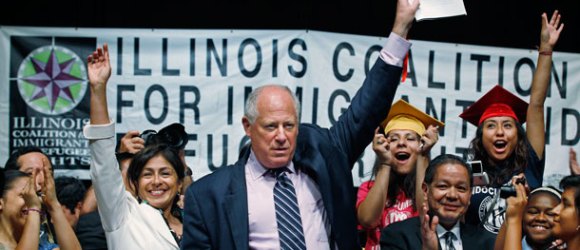
photo source AP/M. SPENCER GREENE Gov. Pat Quinn celebrates with students and supporters after signing the Illinois DREAM Act into law on August 1, 2011.

A Look at the State’s Emerging Communities of Color in Light of the Republican Primary

Illinois’s slow population growth over the last decade—3.3 percent, compared to a nationwide average of 9.7 percent—masks striking demographic changes in the state. While the white share of the population declined by 4.1 percent between 2000 and 2010, the state’s Hispanic, Asian American, Native American, Alaska Native, and mixed-race communities grew significantly. In 2010 Illinois had the fifth-largest Hispanic population in the country and the 10th-largest Hispanic share as a percent of the total population.

In light of the state’s primary tomorrow, here are some facts about how the state’s growing communities of color are changing Illinois’s economy and electorate.

1. Communities of color—particularly Latinos—drive Illinois’s population growth. The surging Hispanic population in particular propelled the state’s population increase. In 2010 Hispanics represented 15.8 percent of the state’s population, a growth rate of 32 percent over the decade. Hispanic population growth alone accounted for 89.5 percentof the state’s total growth from 2000 to 2009.

2. Children of color now make up close to half of the children in Illinois. In 2008 Illinois was 1 of 20 states in the nation with a child population that was more than 40 percent minority.

3. Communities of color are younger and represent the future of the state. In 2010 the median age of non-Hispanic whites in the state was 41.6 years. By comparison, Hispanics’ median age was only 26.3 years, while the median age of African Americans was32.7 years and Asians 34.6 years.

4. The increase in Illinois’s communities of color will soon translate into political power. In 2008 there were 749,000 eligible Hispanic voters in Illinois—the sixth-largesteligible Hispanic voter population in the nation. In that year the state had the 10th-largestHispanic voting share nationwide, with Hispanics comprising 8 percent of the total eligible voter population in the state. In the 2010 elections 658,000 African Americans, 241,000Hispanics, and 88,000 Asians voted in Illinois, and there is room for these numbers to grow. The pressure to turn numbers into political power will rise along with the number of eligible voters of color in the state.

5. In 2008 the support of Illinois’s voters of color helped then-Sen. Barack Obama (D-IL) defeat Sen. John McCain (R-AZ) in the state. Even though Sen. McCain won 57 percent of white voters, Sen. Obama won the state with 61.8 percent of the total vote in 2008. More than 1 million voters of color cast their ballots in Illinois in 2008—more than 25 percent of all votes cast. Exit polls suggest that 95 percent of African American voters, 67 percent of Hispanic voters, and 62 percent of Asian voters supported Sen. Obama at the polls.

6. Illinois is a standout state in protecting its foreign-born population. On May 5, 2011, Gov. Pat Quinn (D) announced that Illinois would not participate in the controversial Secure Communities program (where immigrants booked into a county jail in a participating jurisdiction have their fingerprints shared with Immigration and Customs Enforcement), because of concerns that the program was being used to racially profile Latinos and resulting in the deportation of immigrants not convicted of serious crimes. This action spurred other states, such as Massachusetts and New York, to drop the program as well.

7. Illinois passed a DREAM Act and stopped an Arizona-style anti-immigration law. The Illinois DREAM Act creates a privately funded “DREAM Fund,” giving undocumented immigrants access to much-needed financial aid to afford college, and putting them one step closer to reaching the American Dream. On the flip side, Illinois State Rep. Randy Ramey’s (R) Arizona-styled bill H.B. 1969—filed in February 2011—has not been able to make it out of committee.

8. Families of color in Illinois face significant economic hurdles. In 2010 the median household income for African Americans in the state was $32,866—just above 55 percent of the household income for whites. The median household income for Hispanic residents in Illinois that year was 76 percent of non-Hispanic white income.

9. Unemployment hits these communities harder than any other. In 2010, 22.6 percent of the African American civilian labor force over the age of 16 in Illinois was unemployed. This level was 2.4 times as high as the comparable unemployment rate of whites (9.2 percent). Hispanic unemployment in 2010 was also high, at 13.2 percent.

10. Nevertheless, communities of color contribute significantly to the state’s economy. Unauthorized immigrants paid $500 million in state and local taxes in 2010. In 2009 the purchasing power of Illinois Latinos totaled $43.6 billion. The same year Asian American buying power totaled $23.8 billion. The 56,567 Latino-owned businesses in the state made more than $10 billion in sales in 2007, the last year for which data are available, while the state’s 59,367 Asian-owned businesses generated more than $18 billion in sales.

READ MORE: CENTER FOR AMERICAN PROGRESS

SUBSCRIBE to The Hispanic Blog to stay on top of the latest latino news, politics and entertainment!

Don’t be shy SUBSCRIBE – COMMENT – LIKE ME -CIRCLE ME AND FOLLOW ME

If you have any questions, concerns or simply would like to get a quote on my Marketing, Public Relations, Social Media and/or Events services, please feel free to contact me at thehispanicblog@gmail.com.

God Bless and may you have a fabulous day!

powered by Influential Access – “Transforming the Ordinary to EXTRAordinary!” – CEO – Jessica Marie Gutierrez – Creator of The Hispanic Blog #thehispanicblog


CAN DREAMS COME TRUE?

THE HISPANIC BLOG IS THE LATEST HISPANIC NEWS BY JESSICA MARIE GUTIERREZ

photo source AP

If you can look a poor child in the eye and tell her that she can’t attend the college of her choice — a university to which her hard work and exceptional grades earned her admission — then you might believe that immigration reform is not the answer.

But, if you experience what I do each day, then you would quickly recognize the need for relief for undocumented students.

The sooner, the better.

I encounter many undocumented students in my role as chairman of the LEAP Academy Charter School in the impoverished city of Camden, New Jersey. Our school sets high goals for students from pre-K through high school and makes strong academic demands, all in the name of helping each child achieve college placement and study for more than just a job, but a career of their own making. For these kids, education represents a chance to emerge from a culture of poverty into a career of their dreams.

Unfortunately there are restrictions on the dreams of undocumented students, roadblocks that may compromise their true potential.

I had the difficult conversation with an undocumented student — to tell her that the Ivy League school to which she was admitted will not offer a financial aid package because she is not a legal U.S. resident.

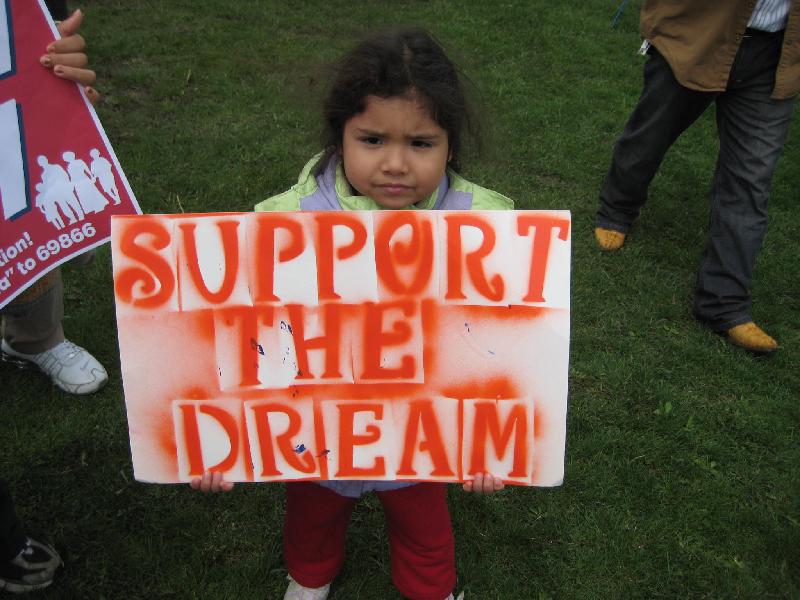
Despite bipartisan support, the proposed DREAM Act was handed a setback this week, turning the focus back onto how to deal with the issue of children of illegal immigrants. (DreamActivist / Flickr.com)

That student eventually went to college — a state university, though, not an Ivy League institution. Her tuition and board was paid for with private scholarship money, not federal aid. That student has been admitted to graduate medical school and again is confronted with the same challenge.

It is unfair. Yet it is fixable.

Could an Ivy League education improve that student’s life and career outlook significantly?

Sadly, we’ll never find out.

The most difficult challenge that college-ready undocumented students confront is restricted access to financial support for college tuition. In addition to employment restrictions, they are ineligible for federal and state aid and have limited scholarship opportunities.

The DREAM (Development, Relief and Education for Alien Minors) Act — which would increase the financial resources available to undocumented students — remains in limbo despite support from President Obama, members of his Cabinet, the business community and organized labor. Presidents and Chancellors at more than 73 colleges and universities across the U.S. have also voiced enthusiastic support for the bill.

The DREAM Act, if passed, could grant as many as 2.1 million students access to legal residency and limited forms of federal financial aid. Its passage is the most important political issue for the more than 48 million Latinos living in this country.

Our undocumented student did not choose to violate the law. In so many cases, students like her were brought to the U.S. as babies by their parents. In almost every case, these students love the United States — the only country they have ever really known — as much as any of us.

Denying opportunities to the children of undocumented immigrants creates a bitter and disenchanted group of young people who are unable to take advantage of the vehicles that would allow them to contribute to our economy and society.

The DREAM Act needs to be reintroduced, passed and implemented without delay. Preferably before I have to look another promising student in the eye to tell her that her immigration status is the reason her Ivy League dreams are being denied.

Read More: The Huffington Post

SUBSCRIBE to The Hispanic Blog to stay on top of the latest latino news, politics and entertainment!

Don’t be shy SUBSCRIBE – COMMENT – LIKE ME -CIRCLE ME AND FOLLOW ME

If you have any questions, concerns or simply would like to get a quote on my Marketing, Public Relations, Social Media and/or Events services, please feel free to contact me at thehispanicblog@gmail.com.

God Bless and may you have a fabulous day!

powered by Influential Access – “Transforming the Ordinary to EXTRAordinary!” – CEO – Jessica Marie Gutierrez – Creator of The Hispanic Blog #thehispanicblog

ROMNEY WINS PUERTO RICO’S GOP PRIMARY

THE HISPANIC BLOG IS THE LATEST HISPANIC NEWS BY JESSICA MARIE GUTIERREZ

Romney handily wins Puerto Rico‘s GOP primary

Mitt Romney heads in to Illinois’s presidential primary this week with a handy win in Puerto Rico, pocketing the territory’s 20 GOP delegates in a bruising race that has become a numbers game for the Republican nomination.

With about 83% of total ballots accounted for early Monday in Puerto Rico, Romney had garnered more than 98,000 votes — or 83% of the total — based on unofficial results obtained from local party and election officials.

Rick Santorum was a distant second, at 8% with slightly more than 9,500 votes.

The other two candidates, former House Speaker Newt Gingrich and Texas Rep. Ron Paul, were barely registered in the race with 2,431 votes, or 2% of the vote, and 1,452 votes, or 1%, respectively.

Even as the vote was being counted in Puerto Rico, Romney, Santorum and the other candidates were already on the mainland vying for delegates in Illinois and Louisiana.

Illinois holds its primary on Tuesday and Louisiana on Saturday.

CNN’s latest delegate estimates show Romney with 518 delegates to Santorum’s 239. Gingrich has 139 delegates, and Paul, the libertarian champion, has 69 delegates. To secure the nomination, 1,144 delegates are needed.

Santorum, the former Pennsylvania senator, was in Louisiana late Sunday, where he is expected to win the primary.

Romney was in Illinois where polls indicate he holds a small lead over Santorum, with Gingrich and Paul well behind.

Romney framed his win in Puerto Rico as the territory’s desire for a candidate that “most represents their feelings” — and especially their desire to nominate some who can bring about a stronger economy and a smaller government.

He also said his party can appeal to Latinos, and win the presidency, with a low-tax, pro-business message.

“Those people who don’t think that Latinos will vote for a Republican need to take a look in Puerto Rico,” said the former Massachusetts governor, noting that the territory’s governor and its legislative leaders are conservative.

photo AP

“Hispanic voters are going to vote for Republicans if we stand for something — conservative principles that bring growth and good jobs and rising home values. That’s how we’re going to win, and we’re going to get Latino voters to help us out.”

Romney had entered the contest in Puerto Rico as the favorite. He was largely backed by the island government’s political establishment, including Gov. Luis Fortuno, who campaigned with Romney last week.

Santorum, the former Pennsylvania senator, created a small political firestorm on the island in the days leading up to the primary when he said English should be the principal language in Puerto Rico before it could gain statehood. Puerto Rico will vote on a statehood referendum in November.

After arriving in Puerto Rico on Friday, Romney said he would have “no preconditions” on language for Puerto Rico to gain statehood, though during a CNN debate in January he said English should be the nation’s official language.

Santorum immediately hit back, accusing Romney of flip-flopping.

Romney fired back that English has been the official language of the government in Puerto Rico for more than 100 years.

The heated, see-saw allegations between the two candidates have marked much of the race for the GOP nomination, which Sen. John McCain, R-Arizona, called “the nastiest I’ve ever seen” during an appearance Sunday on NBC’s “Meet The Press.”

Puerto Rico’s primary came two days before the showdown in Illinois, where 54 delegates will be awarded proportionally and polls show a tight race between Romney and Santorum.

Asked over the weekend while campaigning in Missouri about whether a win in Illinois would mean he’d win the nomination, Santorum said: “We feel very, very good about it. Let’s put it that way. Really good about it.”

Santorum also challenged Romney’s assertion that his business experience is one of his strongest credentials, telling CNN’s Candy Crowley on “State of the Union” on Sunday that, “If Gov. Romney thinks that he is the CEO of America and can run and manage the economy, he doesn’t understand what conservatives believe in.”

Romney’s campaign released an ad in Illinois on Friday, attacking Santorum for having “never run a business or a state.”

Santorum on Sunday said he had experience in the private sector as a lawyer, but argued that executive experience at a company is not necessary to be commander-in-chief.

“Running a business is not the same as being president of the United States,” he said.

Santorum also gave no indication that he has plans to drop out of the race should his campaign reach a point where the delegate math doesn’t add up in his favor.

“What I’m hearing is that we want a conservative nominee, that the establishment is trying to push a moderate like they did in 1976 against Ronald Reagan, like they did in 1996 with Bob Dole and what they did with John McCain,” Santorum said. “I think conservatives would like an opportunity to nominate a conservative, and that’s an opportunity.”

Both Santorum and Romney also focused their rhetoric at President Barack Obama, particularly with regard to rising gas prices.

Romney said Obama needed to fire Secretary of Energy Steven Chu and Interior Secretary Ken Salazar for their role in driving up gas prices.

“Given the fact that (Obama has) changed his policies, wants lower gas prices, he needs to fire them and return to the energy policies we need,” Romney said during a town hall meeting in Collinsville, Illinois.

Santorum told a crowd in Effingham, Illinois, to remember Obama at the gas pumps.

“When you see that zero come up, when it gets to the $100 range, when you see the zero, think of ‘O’ for Obama because that’s why you are paying that extra amount of money,” Santorum said.

READ MORE: CNN NEWS

SUBSCRIBE to The Hispanic Blog to stay on top of the latest latino news, politics and entertainment!

Don’t be shy SUBSCRIBE – COMMENT – LIKE ME -CIRCLE ME AND FOLLOW ME

If you have any questions, concerns or simply would like to get a quote on my Marketing, Public Relations, Social Media and/or Events services, please feel free to contact me at thehispanicblog@gmail.com.

God Bless and may you have a fabulous day!

powered by Influential Access – “Transforming the Ordinary to EXTRAordinary!” – CEO – Jessica Marie Gutierrez – Creator of The Hispanic Blog #thehispanicblog