HOW TO BEGIN MARKETING TO HISPANICS

THE HISPANIC BLOG IS THE LATEST HISPANIC NEWS BY JESSICA MARIE GUTIERREZ

Hispanic Consumer Research: A Beginner’s Guide to Spotting and Seizing Opportunity

family

THE MANDATE

It is a very common situation – marketers who had never gotten around to establishing a specialized Hispanic program are suddenly faced with a corporate mandate – “Go after the Hispanic market!” Other companies and brands are clearly benefiting from having done so and may appear to be very far down this road – but you are just taking your first steps.

DON’T BE DISCOURAGED

There’s no need to be intimidated; in fact, by starting now you can benefit from the best practices established by others and avoid the pitfalls (and the bumps and bruises) they encountered.

Before you get going, you need to do your homework – to understand what you should do, could do and need to avoid at all costs. Most advertisers begin with research, both internal and with a partner who intimately understands the Hispanic market. You can be wiser than those who may appear to be further along by relying on expert research that has much more refined tools and methods – that recognizes that the “Hispanic market” is heterogeneous and ever-changing.

Syndicated data has its place in this process, yet often falls short by having no Hispanic data view. To properly identify the Hispanic opportunities for your products in your categories, you need to develop a tailored program – one that reflects both your needs and your budget.

Of course, there is no one singular way to go about this process of discovery – but here is a general guide, based on years of experience with clients in dozens of CPG categories.

SECONDARY COMES FIRST

Start with some secondary research to quantify basic information about your company categories, to see which are the lowest hanging fruit – the ones in which Hispanics over-index. For this you would use shopper data or syndicated studies that show market activity and incidence levels by market (and ethnicity).

There may, however, be bigger opportunities in categories in which Hispanics under-index; here you can examine why there is a lack of interest, possibly “introduce” the category, present your brand as the solution, and own it. But tougher categories are best taken on when you have a better idea of what you are doing; it’s best to start with the simplest tasks.

To make this effort more than an activity you need a filter. The bottom line is to ask yourself the following questions as you examine the secondary data:

  • What are my objectives in targeting the Hispanic population?
  • What can I learn from competitive brands that target Hispanics?
  • What has my company done that has succeeded or failed?
  • What holes in my discovery need to be filled with custom research in order to have a solid strategy and activate tactics?

WHERE CONSULTANTS AND AGENCIES FIT IN

At some point, if it has not been done already, the group will consider hiring an ad agency and/or a strategic consultant that specializes in the multi-cultural or Hispanic-specific market. This can be done at any point, but the strategic consultant is often brought in to lead the secondary data search. An ad agency typically comes on board after the secondary research phase but before the start of custom research; this way, the agency can be part of the learning and benefit from the insights and consumer input (as well as contribute to the process from their own unique perspective).

Because hiring an ad agency can be a long and involved process, this is sometimes done after the client has figured out what categories, brands and products they will be focusing on. The client might pick a very different agency depending on their starting point, as they will be looking for teams with certain types of experience. At the very least, sub-optimally, the agency people can then be exposed to the video tapes and transcripts of the earlier qual work.

CUSTOM RESEARCH STARTS WITH QUALITATIVE

Most companies start with exploratory qualitative, just to get the lay of the land. Likely areas to explore include:

  • key issues
  • views of the competitive set
  • category drivers for Hispanics
  • usage occasions for the category and brands
  • histories with the category and brands in Latin America

If you have the budget and need to find out more based on the qual results, you may want to consider ethnographic research – shop-alongs, home visits, groups of “comadres” or “compadres” who will gather at someone’s home and talk informally or go out together to partake in the retail experience.

GETTING QUANTITATIVE

photo source: courtesy of the Little in the Middle denim brand. The leader in denim for Latinos. http://www.littleinthemiddle.com

Your quantitative research path will depend on your objectives in targeting the Hispanic population. For instance: Are you targeting within the existing brand portfolio? Are you thinking about a separate ad campaign, with or without specific in-store activation? Or, are you launching a new brand? With quantitative research, you can test the hypotheses that well-executed secondary and qual has developed.

Many clients simply start with an Attitude and Usage study to quantify the opportunities raised in the qual and ethnographic work, and to get a clear idea of where an existing brand is positioned in the market. Yet, an A&U could fall very short of providing the information you need if you are talking about messages and/or new product launches. For these, you need to undertake more comprehensive research.

With a solid A&U in your pocket, you can confidently pick a category to start with, a brand to focus on, make projections for ROI, establish budgets – and really get going. You can also use the A&U as a benchmark wave for any future tracking or brand health monitoring.

MORE CUSTOM RESEARCH AS NEEDED

Clients often try to simply adapt their general market strategy to the Hispanic market. This can be problematic, as needs/priorities can be very different among Hispanics – especially when the issue is messaging and ad creative.

This is why, as part of the ad development process, clients will often commission more Hispanic-focused quant research to test the positioning concepts or messaging before picking one to be produced. The client may then set up some test markets (and a control or two) to monitor the progress for the brand and the quality of the campaign. After two or three waves of a pre/post tracker, the client can decide to go national with the effort or to roll out regional approaches if deemed best for the category.

After a campaign has proven its potential, other elements are added, such as in-store promotions and co-op marketing like store flyers, events, online, and promotions – all of which can and should be researched prior to launch.

MATURITY ENSUES

As the effort matures, additional categories can be tackled, and ultimately you reach the holy grail of marketing to Hispanics – marketing not just your products, but your Master Brand. This is one of the more effective ways of building a deep, abiding relationship with Hispanic consumers, one based on confidence that the brand will be there for them.

Eventually, doing solid Hispanic research and marketing will become a standard part of every company’s everyday business. You will have integrated your Hispanic effort into your mainstream campaigns, so it will be seamless and synergistic. For the moment, however, adoption of Hispanic marketing into the mainstream is inconsistent – which means that untapped opportunities still abound; so don’t feel bad you’re getting a late jump. Start the process of finding your Hispanic-market-fueled profit growth today!

READ MORE: KNOWLEDGE NETWORKS

SUBSCRIBE to The Hispanic Blog to stay on top of the latest latino news, politics and entertainment!

Don’t be shy SUBSCRIBE – COMMENT – LIKE ME -CIRCLE ME AND FOLLOW ME

If you have any questions, concerns or simply would like to get a quote on my Marketing, Public Relations, Social Media and/or Events services, please feel free to contact me at thehispanicblog@gmail.com.

God Bless and may you have a fabulous day!

powered by Influential Access – “Transforming the Ordinary to EXTRAordinary!” – CEO – Jessica Marie Gutierrez – Creator of The Hispanic Blog #thehispanicblog

HOW ACCULTURATION AFFECTS TWO GENERATIONS OF HISPANICS

THE HISPANIC BLOG IS THE LATEST HISPANIC NEWS BY JESSICA MARIE GUTIERREZ

According to the study, developed by Yahoo, Mindshare, and Added Value, marketers must understand the nuances between the two generations of Hispanics, and how acculturation affects their preferences. The findings stress the notion of how the majority of the Latino population is second generationAmerican born, and bilingual/English speaking.

ac·cul·tur·a·tion

noun \ə-ˌkəl-chə-ˈrā-shən, a-\

1: cultural modification of an individual, group, or people by adapting to or borrowing traits from another culture; also : a merging of cultures as a result of prolonged contact
2: the process by which a human being acquires the culture of a particular society from infancy

Latinos do nurture ethnicity more than other segments. This is manifested through a series of behaviors like exposing their children to their Latino background, trying to get in touch with their Hispanic identity, feeling very comfortable as it relates to their ethnicity, and being part of activities/traditions that celebrate their heritage.

The Generational Latino Gap

When it comes to generation breakdown, there are some differences that marketers need to consider. Let’s take identity and values, for example.

First-generation Latino behavior is much more influenced by ethnicity. Their Latino background plays a major role when it comes to feelings about their individuality, religion, and values. It also affects how they socialize (neighborhoods, close circle of friends, etc.) and other behaviors (eating habits, celebrations, vacations, etc.). For second-generation Latinos, ethnicity is more about outward expression and bicultural in nature.

Content plays an important yet different role. First-generation Hispanics seek content that is in Spanish language and speaks to their ethnicity for topics like news, entertainment, and food. Second-generation Hispanics are more sensitive to how their ethnicity is portrayed in the media.

Second-generation Latinos have a stronger civic commitment. They care about the role Latinos are playing in today’s American society. They are very involved in discussions about Latinos’ role in the elections, immigration debates, etc. They want to play a major (influential) role and want to make sure that they are taken into consideration.

latino-news-coverage

The Common Thread: Authenticity

For both first- and second-generations, ethnicity is an important part of the past and the present. Both segments agreed: it influences “who I am” and both feel very proud of “how I grew up” as well as “my ethnic identity.”

Ethnicity plays a significant part of the Latino identity. As David Iudica, a bicultural Latino himself, said to me: “I have my feet firmly planted in both worlds, it’s an important part of my identity.”

Overall, it seems that marketers have a long way to go in order to better impact Latino audiences. For different reasons, both first- and second-generations feel they aren’t being represented or spoken to in the right way.

1st-generation

2ndgeneration

This reminds me of a controversy that happened a couple of weeks ago around a proposal to recreate a mural on the walls of the Mission Drive-In Theater in San Antonio, Texas. The images, one of a Mexican sitting asleep against the wall with his sombrero covering his face and another with a stereotypical Mexican posing with a burro, backfired. Sometimes marketers, in trying to connect with Latinos, get hooked with their own stereotypes and generate negative reactions rather than relevance.

The (Right) Approach When Marketing to Latinos

A successful Latino marketing strategy should be built on a common thread: what are the attitudes and behaviors – related to your product category – that bring Latinos together?

A sense of pride, identity, and authenticity (the world I live in) are important for all Latinos.

Authenticity is key. Choosing an authentic Hispanic spokesperson, rather than a well-known spokesperson, is relevant to all Latinos.

Latinos crave ethnic-specific marketing messages, yet portraying an appropriate level of diversity in advertising is critical.

If done right, Hispanics will talk about advertising positively, but they will also be quick to call out negative portrayals.

Messaging should be customized to speak to the individual needs of each generation:

  • For first-generation Hispanics: speak in their language and make sure to authentically represent their ethnicity.
  • For second-generation Hispanics, you need to portray them as part of a bigger whole: represent diversity in general messaging and show how Latinos are influencing the mainstream. Don’t address them simply as Latinos: talk to their whole bicultural identity.

First-generations want Latino content, second-generations want mainstream content but with a Latino flavor.

Authentic Bobbleheads

Will Ferrell’s “Casa de mi Padre” seemed to connect with the Latino audience and is set to be a box office success. But, when it comes to how brands “talk” to Latinos, not all are successful stories. Think of Jaime Jarrin, a Hall of Fame broadcaster, who has not been included in the Dodger’s 50th-anniversary bobbleheads. Jaime is Latino and broadcasts in Spanish and, according to The Los Angeles Times, that’s why he was left out. As the article says, “Jaime Jarrin’s primary language has always been Dodger. It’s a shame that, in this case, the Dodgers seem to be the only ones who don’t understand.”

Ask second-generation Latinos. See if they find this kind of behavior to be authentic.

READ MORE: CLICK Z

SUBSCRIBE to The Hispanic Blog to stay on top of the latest latino news, politics and entertainment!

Don’t be shy SUBSCRIBE – COMMENT – LIKE ME -CIRCLE ME AND FOLLOW ME

If you have any questions, concerns or simply would like to get a quote on my Marketing, Public Relations, Social Media and/or Events services, please feel free to contact me at thehispanicblog@gmail.com.

God Bless and may you have a fabulous day!

powered by Influential Access – “Transforming the Ordinary to EXTRAordinary!” – CEO – Jessica Marie Gutierrez – Creator of The Hispanic Blog #thehispanicblog

FROM HOUSEWIFE TO POLITICA: WATCH THE EVA LONGORIA INTERVIEW IN HER NEW ROLE AS NATIONAL CO-CHAIR FOR PRESIDENT OBAMA

THE HISPANIC BLOG IS THE LATEST HISPANIC NEWS BY JESSICA MARIE GUTIERREZ

WATCH THE INTERVIEW ON MSNBC CLICK HERE TO WATCH

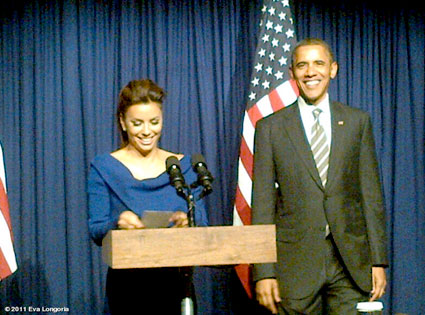
Actress Eva Longoria talks about her new role as a national co-chair for President Barack Obama’s reelection campaign.

>>> poised to become a deciding factor in key states like colorado, new mexico and nevada, the obama campaign is now deploying some star power to sell its message tolatinos . eva longoria shot to fame playing is gabriel solis on the tv show “desperate housewives” now. she joins me now. so nice to meet you. you were very involved in the last election campaign four years ago. you’re taking a larger role now. what is your main purpose and how do you see yourself being helpful to the candidate?

>> i was asked to be a co-chair. my roles are to engage and mobilize the voters specifically with the latino and women ‘s community. those are two areas of interest i participate in heavily and pretty literate about. i’ll be going to swing states .

FLICKR | IMAGINECUP

>> you know a lot about health carey know. and we in fact, profiled you on nbc nightly news because of what you’re doing with special needs community.

>> yes.

>> but the women ‘s issues, women ‘s health issues have become front and center force of what has happened on the republican side . now in texas, interestingly, governor perry has turned back $35 million for planned parenthood preventive programs, including pap tests and mammograms and texas as you know better than i has i think it’s your home state has the highest number of uninsured women .

>> yeah.

photo source: AP

>> do you think this is going to become a mobilizing force?

>> absolutely. the election is going to be about choice and pretty clear for womenwho’s on their side. there is an attack on women ‘s health care and president obama ‘s policies are the only ones that are going to move the agenda for women ‘s rights. there’s so much dismantling of what we’ve accomplished as women by the right side. so i’m going to be out there and campaigning for him. i think one of the things about the affordable care act that just came out was that the gender rating for women , we’re charged more because we go to the doctors more. the affordable care act will eliminate the gender rating for insurers. women need to be educated on everything that obama has done in his first term regarding their rights and access to health care .

>> now, one of the striking things that is quite noticeable is that there are seven co-chair co-chairs who are latino .

>> that’s not a mistake, you know?

>> that is absolutely targeting 16.3% of the population. mitt romney had this to say after winning puerto rico on his chances of doing very well with hispanic voters.

>> those people who don’t think that latinos need to vote for a republican need to look in puerto rico and see there the conservative principles and latino voters go together and hispanic voters are going to vote for republicans if we stand for something, conservative principles that bring growth and good jobs and rising home values. that’s why we’re going to get latino voters to help us out.

>> now, george bush did very well in his first election with hispanic voters.

2011 Eva Longoria / WhoSay

>> right.

>> and that has gone down.

>> he’s also from the state of texas . .

>> do you think that immigration reform is the issue that has —

AP

>> the clip is interesting. he makes a huge generalization because he won the primary so puerto rico voters, republicans who live in puerto rico voted for him is a huge generalization he’s going to get the latino vote. 63% of latinos in america are mexican-american. there’s central americans and of all the candidates, pitt romney is probably the one on the wrong side of every issue pertaining to latinos , education, the economy. he’s campaigning with — he’s causing the anti- immigration law from arizona a model law for the rest of the country. he’s campaigning with the author of it. that is polarizing to latinos . he wants to veto the d.r.e.a.m. act if he was in office. that is dangerous for our community. obama for me is the only one that understands that the success of the future of america is intricately tied to the success of the hispanic community.

>> there have been many hispanic leaders in the last couple years who have been disappointed in the president for not doing more on immigration reform .

>> its an a problem. reform has been on the national agenda for three administrations.

>> even longer.

[photo source: Judy Eddy/WENN.] via Perez Hilton

>> and it does need to be fixed. it’s broken. nobody wants illegal immigration . the misconception is latinos are for illegal immigration . that is not true. i know there’s disappointment in the latino community but what he has done, what he can do, he’s proposed changes to keep families together. he has reallocated resources from thedepartment of homeland security to focus on deporting criminals, not students. so i think also because the gop primary has been so long, all we’ve heard is attacks on his record and that’s what i’m going to be doing is getting out there and showing the great things about what he’s done in his first term. latinos need to hear it.

WATCH THE INTERVIEW ON MSNBC

SUBSCRIBE to The Hispanic Blog to stay on top of the latest latino news, politics and entertainment!

Don’t be shy SUBSCRIBE – COMMENT – LIKE ME -CIRCLE ME AND FOLLOW ME

If you have any questions, concerns or simply would like to get a quote on my Marketing, Public Relations, Social Media and/or Events services, please feel free to contact me at thehispanicblog@gmail.com.

God Bless and may you have a fabulous day!

powered by Influential Access – “Transforming the Ordinary to EXTRAordinary!” – CEO – Jessica Marie Gutierrez – Creator of The Hispanic Blog #thehispanicblog

TOP 10 THINGS YOU SHOULD KNOW BEFORE ILLINOIS’ REPUBLICAN PRIMARY: STATE’S EMERGING COMMUNITIES OF COLOR & IMMIGRATION POLITICS


THE HISPANIC BLOG IS THE LATEST HISPANIC NEWS BY JESSICA MARIE GUTIERREZ

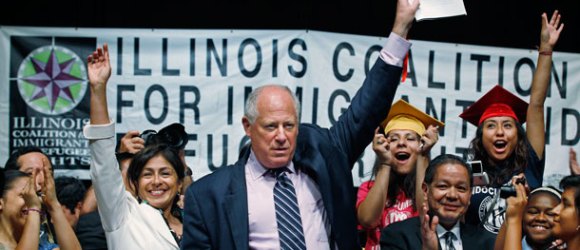
photo source AP/M. SPENCER GREENE Gov. Pat Quinn celebrates with students and supporters after signing the Illinois DREAM Act into law on August 1, 2011.

A Look at the State’s Emerging Communities of Color in Light of the Republican Primary

Illinois’s slow population growth over the last decade—3.3 percent, compared to a nationwide average of 9.7 percent—masks striking demographic changes in the state. While the white share of the population declined by 4.1 percent between 2000 and 2010, the state’s Hispanic, Asian American, Native American, Alaska Native, and mixed-race communities grew significantly. In 2010 Illinois had the fifth-largest Hispanic population in the country and the 10th-largest Hispanic share as a percent of the total population.

In light of the state’s primary tomorrow, here are some facts about how the state’s growing communities of color are changing Illinois’s economy and electorate.

1. Communities of color—particularly Latinos—drive Illinois’s population growth. The surging Hispanic population in particular propelled the state’s population increase. In 2010 Hispanics represented 15.8 percent of the state’s population, a growth rate of 32 percent over the decade. Hispanic population growth alone accounted for 89.5 percentof the state’s total growth from 2000 to 2009.

2. Children of color now make up close to half of the children in Illinois. In 2008 Illinois was 1 of 20 states in the nation with a child population that was more than 40 percent minority.

3. Communities of color are younger and represent the future of the state. In 2010 the median age of non-Hispanic whites in the state was 41.6 years. By comparison, Hispanics’ median age was only 26.3 years, while the median age of African Americans was32.7 years and Asians 34.6 years.

4. The increase in Illinois’s communities of color will soon translate into political power. In 2008 there were 749,000 eligible Hispanic voters in Illinois—the sixth-largesteligible Hispanic voter population in the nation. In that year the state had the 10th-largestHispanic voting share nationwide, with Hispanics comprising 8 percent of the total eligible voter population in the state. In the 2010 elections 658,000 African Americans, 241,000Hispanics, and 88,000 Asians voted in Illinois, and there is room for these numbers to grow. The pressure to turn numbers into political power will rise along with the number of eligible voters of color in the state.

5. In 2008 the support of Illinois’s voters of color helped then-Sen. Barack Obama (D-IL) defeat Sen. John McCain (R-AZ) in the state. Even though Sen. McCain won 57 percent of white voters, Sen. Obama won the state with 61.8 percent of the total vote in 2008. More than 1 million voters of color cast their ballots in Illinois in 2008—more than 25 percent of all votes cast. Exit polls suggest that 95 percent of African American voters, 67 percent of Hispanic voters, and 62 percent of Asian voters supported Sen. Obama at the polls.

6. Illinois is a standout state in protecting its foreign-born population. On May 5, 2011, Gov. Pat Quinn (D) announced that Illinois would not participate in the controversial Secure Communities program (where immigrants booked into a county jail in a participating jurisdiction have their fingerprints shared with Immigration and Customs Enforcement), because of concerns that the program was being used to racially profile Latinos and resulting in the deportation of immigrants not convicted of serious crimes. This action spurred other states, such as Massachusetts and New York, to drop the program as well.

7. Illinois passed a DREAM Act and stopped an Arizona-style anti-immigration law. The Illinois DREAM Act creates a privately funded “DREAM Fund,” giving undocumented immigrants access to much-needed financial aid to afford college, and putting them one step closer to reaching the American Dream. On the flip side, Illinois State Rep. Randy Ramey’s (R) Arizona-styled bill H.B. 1969—filed in February 2011—has not been able to make it out of committee.

8. Families of color in Illinois face significant economic hurdles. In 2010 the median household income for African Americans in the state was $32,866—just above 55 percent of the household income for whites. The median household income for Hispanic residents in Illinois that year was 76 percent of non-Hispanic white income.

9. Unemployment hits these communities harder than any other. In 2010, 22.6 percent of the African American civilian labor force over the age of 16 in Illinois was unemployed. This level was 2.4 times as high as the comparable unemployment rate of whites (9.2 percent). Hispanic unemployment in 2010 was also high, at 13.2 percent.

10. Nevertheless, communities of color contribute significantly to the state’s economy. Unauthorized immigrants paid $500 million in state and local taxes in 2010. In 2009 the purchasing power of Illinois Latinos totaled $43.6 billion. The same year Asian American buying power totaled $23.8 billion. The 56,567 Latino-owned businesses in the state made more than $10 billion in sales in 2007, the last year for which data are available, while the state’s 59,367 Asian-owned businesses generated more than $18 billion in sales.

READ MORE: CENTER FOR AMERICAN PROGRESS

SUBSCRIBE to The Hispanic Blog to stay on top of the latest latino news, politics and entertainment!

Don’t be shy SUBSCRIBE – COMMENT – LIKE ME -CIRCLE ME AND FOLLOW ME

If you have any questions, concerns or simply would like to get a quote on my Marketing, Public Relations, Social Media and/or Events services, please feel free to contact me at thehispanicblog@gmail.com.

God Bless and may you have a fabulous day!

powered by Influential Access – “Transforming the Ordinary to EXTRAordinary!” – CEO – Jessica Marie Gutierrez – Creator of The Hispanic Blog #thehispanicblog


DOES VOTER TURNOUT AMONG HISPANICS DECREASE AFTER STRICT VOTER ID LAWS?

THE HISPANIC BLOG IS THE LATEST HISPANIC NEWS BY JESSICA MARIE GUTIERREZ

Analyzing Minority Turnout After Voter ID

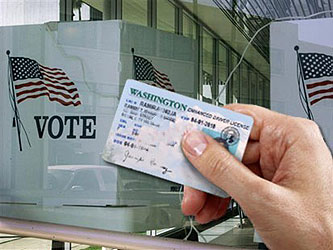
Minnesota currently has a proposed constitutional amendment moving through its legislature to impose strict photo ID restrictions on voters and possibly eliminate Election Day registration. I take great pride in the fact that my home state of Minnesota consistently has the highest turnout in the country, and I’m pained by this legislation that is sure to reduce opportunities for voter participation across the state.

I want to correct a common misperception that came up during show, suggesting that voter turnout among Hispanic voters in Georgia has increased since the passage of its restrictive no-photo, no-vote photo ID law.

Motivation for voter turnout is notoriously difficult to measure. It’s a moving target, not lending itself easily to empirical methods of evaluation. But in this case, any assertion that voter turnout among Hispanics increased in Georgia following enactment of its strict voter ID law is simply not true.

According to the GA Secretary of State,Georgia’s Hispanic turnout (calculated as a percentage of registered voters) was lower in 2010 than in 2006, and it was lower in 2008 than in 2004. See table below:

Registered Hispanic Voters Actual Hispanic Voters Hispanic Turnout %
2004 30,148 18,240 60.5%
2006 43,514 11,601 26.7%
2008 73,375 43,717 59.6%
2010 75,658 19,320 25.5%

The number of Hispanic voters was greater in the 2010 election than in the 2006 election, and in the 2008 election than in the 2004 election, as the total population of registered Hispanic voters increased by 73.9 percent and 144 percent, respectively. However, there was a slight reduction in the percentage of voter turnout for Hispanics between presidential election years 2004 and 2008 and non-presidential election years 2006 and 2010.

While simple turnout numbers from a single state cannot tell us exactly what impact new voter restrictions have on voter turnout, it’s clear that in Georgia, the percentage of minority voter turnout has not increased following enactment of its strict voter ID law.

Strict voter ID laws are absolutely the wrong policy direction for this country. Voter participation rates across all racial, ethnic and socio-economic are dropping each election year. Georgia has seen voter participation rates in the fastest growing ethnic population over the past decade stay flat or decline.  As we consider what is best for America, increased voter participation is essential to restoring faith in our democracy and strict voter ID laws that fail to solve any real problems are wrong for America.

READ MORE: http://www.brennancenter.org/blog/archives/analyzing_minority_turnout_after_voter_id/

SUBSCRIBE to The Hispanic Blog to stay on top of the latest latino news, politics and entertainment!

Don’t be shy SUBSCRIBE – COMMENT – LIKE ME -CIRCLE ME AND FOLLOW ME

If you have any questions, concerns or simply would like to get a quote on my Marketing, Public Relations, Social Media and/or Events services, please feel free to contact me at thehispanicblog@gmail.com.

God Bless and may you have a fabulous day!

powered by Influential Access – “Transforming the Ordinary to EXTRAordinary!” – CEO – Jessica Marie Gutierrez – Creator of The Hispanic Blog #thehispanicblog