DOES VOTER TURNOUT AMONG HISPANICS DECREASE AFTER STRICT VOTER ID LAWS?

THE HISPANIC BLOG IS THE LATEST HISPANIC NEWS BY JESSICA MARIE GUTIERREZ

Analyzing Minority Turnout After Voter ID

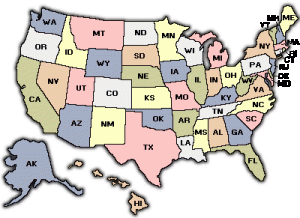
Minnesota currently has a proposed constitutional amendment moving through its legislature to impose strict photo ID restrictions on voters and possibly eliminate Election Day registration. I take great pride in the fact that my home state of Minnesota consistently has the highest turnout in the country, and I’m pained by this legislation that is sure to reduce opportunities for voter participation across the state.

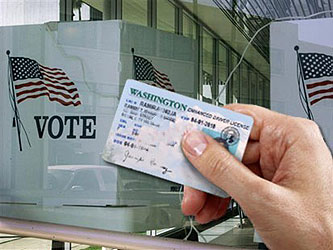
I want to correct a common misperception that came up during show, suggesting that voter turnout among Hispanic voters in Georgia has increased since the passage of its restrictive no-photo, no-vote photo ID law.

Motivation for voter turnout is notoriously difficult to measure. It’s a moving target, not lending itself easily to empirical methods of evaluation. But in this case, any assertion that voter turnout among Hispanics increased in Georgia following enactment of its strict voter ID law is simply not true.

According to the GA Secretary of State,Georgia’s Hispanic turnout (calculated as a percentage of registered voters) was lower in 2010 than in 2006, and it was lower in 2008 than in 2004. See table below:

Registered Hispanic Voters Actual Hispanic Voters Hispanic Turnout %
2004 30,148 18,240 60.5%
2006 43,514 11,601 26.7%
2008 73,375 43,717 59.6%
2010 75,658 19,320 25.5%

The number of Hispanic voters was greater in the 2010 election than in the 2006 election, and in the 2008 election than in the 2004 election, as the total population of registered Hispanic voters increased by 73.9 percent and 144 percent, respectively. However, there was a slight reduction in the percentage of voter turnout for Hispanics between presidential election years 2004 and 2008 and non-presidential election years 2006 and 2010.

While simple turnout numbers from a single state cannot tell us exactly what impact new voter restrictions have on voter turnout, it’s clear that in Georgia, the percentage of minority voter turnout has not increased following enactment of its strict voter ID law.

Strict voter ID laws are absolutely the wrong policy direction for this country. Voter participation rates across all racial, ethnic and socio-economic are dropping each election year. Georgia has seen voter participation rates in the fastest growing ethnic population over the past decade stay flat or decline.  As we consider what is best for America, increased voter participation is essential to restoring faith in our democracy and strict voter ID laws that fail to solve any real problems are wrong for America.

READ MORE: http://www.brennancenter.org/blog/archives/analyzing_minority_turnout_after_voter_id/

SUBSCRIBE to The Hispanic Blog to stay on top of the latest latino news, politics and entertainment!

Don’t be shy SUBSCRIBE – COMMENT – LIKE ME -CIRCLE ME AND FOLLOW ME

If you have any questions, concerns or simply would like to get a quote on my Marketing, Public Relations, Social Media and/or Events services, please feel free to contact me at thehispanicblog@gmail.com.

God Bless and may you have a fabulous day!

powered by Influential Access – “Transforming the Ordinary to EXTRAordinary!” – CEO – Jessica Marie Gutierrez – Creator of The Hispanic Blog #thehispanicblog

WHO ARE THE BIGGEST-SPENDING RETAILERS IN THE HISPANIC MARKET?

THE HISPANIC BLOG IS THE LATEST HISPANIC NEWS BY JESSICA MARIE GUTIERREZ

No one lives the “total market” — the term used to describe the blending of the general and multicultural markets — like Walmart.

Last month Gisel Ruiz was elevated to exec VP-chief operating officer at Walmart, and Rosalind G. “Roz” Brewer was named president-CEO of Sam’s Club, becoming the first woman and the first African-American to hold the CEO title at a Walmart unit. Ms. Brewer’s successor as president of one of Walmart’s three U.S. regions is Hispanic.

Walmart is also serious about diversity in its agencies, according to Steven Wolfe Pereira, who has a dual role as exec VP ofMediaVest and managing director of MV42, MediaVest’s multicultural unit on the retailer’s account. “Ten percent of all Walmarts are in Texas, 6% in Florida, 4% in Illinois and 5% in California,” said Mr. Pereira, emphasizing that one-quarter of the stores are in heavily Hispanic states.

Walmart still works with the first U.S. Hispanic agency it hired 17 years ago, Lopez Negrete Communications. The independent survived Walmart’s review, started in 2005, in which it fired all its general-market agencies.

Lopez Negrete gets not just a seat at the table, but a good one. Tony Rogers, Walmart’s senior VP-brand marketing and advertising, said at the Association of National Advertisers‘ multicultural marketing conference in November that the company planned to “blow up” its multicultural marketing budget, moving the money out of that silo and into the individual business units.

About 80 of Lopez Negrete’s 200 staffers are involved with the Walmart business, and one works out of its Bentonville, Ark., headquarters. The agency now deals more with individual category leads. Walmart’s Hispanic Center of Excellence functions primarily as a consultant, which shifts more of the responsibility for growing Walmart’s multicultural business to Lopez Negrete.

The agency, for example, plunged into the humorous “Every Cart Tells a Story” TV campaign developed by the Martin Agency, Walmart’s general-market shop. Spots always start with items at the checkout counter, then cuts to how they’re used at home. One item is always incongruous. Lopez Negrete’s “Tea Time” includes a tea pot, a princess dress, cookies — and mouthwash. At home, a little girl entertains her father with a tea party, until he realizes that she has filled the teapot with water from the toilet (hence the mouthwash).

There are subtly different general-market and Spanish-language spots. The dad in the former version is goofier; in the latter he has more interaction with the daughter. The mouthwash brand is Listerine in the English version, Scope for Hispanics.

Walmart is the biggest-spending retailer in the Hispanic market, and No. 15 among all advertisers in Spanish-language media, at $66.6 million in 2010, according to Ad Age’s Hispanic Fact Pack. Sears Holding Co., which includes Kmart and Sears, is No. 19 with $53.9 million spent in 2010, followed by Target Corp. at No. 27 with $40.3 million. Kohl’s spent $14.8 million.

Some of the discounters focus their efforts on collections with Latino celebrities. Kohl’s rolled out clothing lines with Jennifer Lopez and Marc Anthony last year. It also sponsors their TV show, “Q’Viva! The Chosen,” which airs on both Spanish-language Univision and Fox. 

Kmart is linking with Colombian-born Sofia Vergara of hit comedy “Modern Family.” Kmart launched Sofia Vergara lines of apparel, footwear, accessories and jewelry last fall, with TV and print ads in English and Spanish by PMH. A campaign featuring Ms. Vergara is expected midyear. “The general market and the multicultural market have merged,” said Mr. Stein. “She’s relevant to both.”

The four retailers aren’t big on Spanish-language websites or Facebook pages, although Kmart does have a Spanish-language web presence.

Kmart is continuing last year’s Kmart Latina Smart platform, built around a group of blogueras that has brought in more than 26,000 Facebook fans. And Sears Holding, which includes both Kmart and Sears, is a founding sponsor along with General MillsGeneral Motors‘ Chevy brand and Procter & Gamble of Mamas Latinas, a site for Hispanic moms started by CaféMom in late January and run by Lucia Ballas-Traynor, the former publisher of People en Español magazine. Kmart has built out a style and fashion area, and is running ads throughout the site for the Sofia Vergara collection and Kmart’s layaway program.

READ MORE: AD AGE

SUBSCRIBE to The Hispanic Blog to stay on top of the latest latino news, politics and entertainment!

Don’t be shy SUBSCRIBE – COMMENT – LIKE ME -CIRCLE ME AND FOLLOW ME

If you have any questions, concerns or simply would like to get a quote on my Marketing, Public Relations, Social Media and/or Events services, please feel free to contact me at thehispanicblog@gmail.com.

God Bless and may you have a fabulous day!

powered by Influential Access – “Transforming the Ordinary to EXTRAordinary!” – CEO – Jessica Marie Gutierrez – Creator of The Hispanic Blog #thehispanicblog

NALEO WILL ENLIST LATINAS TO BOOST VOTER TURNOUT

THE HISPANIC BLOG IS THE LATEST HISPANIC NEWS BY JESSICA MARIE GUTIERREZ

NALEO researchers are redirecting their aim to improve Hispanic voter turnout, pointing efforts at the most influential target inside Latino households: the women.

The National Association of Latino Elected and Appointed Officials is using new findings from recently gathered focus groups to retool its campaign for the Hispanic vote, after participants in Houston revealed that a nudge from wives and mothers could be the key.

“We will develop a strategy where we speak to Latinas,” said Arturo Vargas, longtime executive director for NALEO. “There’s something there that we need to tap into to get our Hispanic mother and wife and sister to get their husbands and brothers and sons to vote.”

The groups — eligible-but-nonregistered and registered-but-not-voting Hispanics — were assembled in December to determine if they were tuned in to the political issues and candidates of the day, Vargas explained.

Participants showed that they closely follow platform issues, and demonstrated awareness but no engagement.

Asked who among them planned to vote in the 2012 elections, none raised a hand. Who might influence them to vote? Participants said they would listen to their wives and mothers.

“What do we have to do to get this great unengaged segment of our community to care?” Vargas said. He chuckled, “If it’s nagging, so be it.”

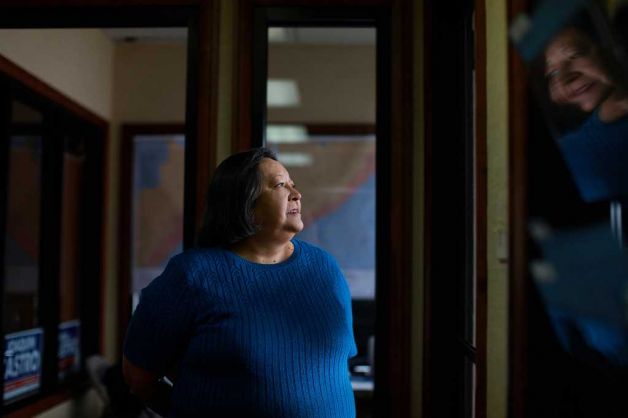
NALEO’s plan for a Latina-centric strategy is a change from when longtime community organizer Rosie Castro began voter registration efforts in San Antonio in the late 1960s.

Fifty years later, the mission — to empower Latino voters — remains difficult but has made major advances, Castro said.

“When I was young and doing voter registration we often would go to a house in the Latino community and the wife would say: ‘I really can’t register to vote right now. I have to ask my husband.’ It’s incredible to me how much that has changed,” said Castro, mother of Mayor Julián Castro and state Rep. Joaquin Castro.

Joaquin Castro said his mom has emphasized the importance of voting since he was a child. “People in government won’t listen to you if you don’t vote,” she would tell the twins.

“She taught us to believe that through public service you can help create opportunities in people’s lives,” he said.

He said his mother “had all the influence in the world, not only on why I vote, but also why I entered public service.”

NALEO’s new strategy is a smart one, he said. Women “are often the glue” in growing families.

Read more: http://www.mysanantonio.com/news/local_news/article/To-boost-Latino-turnout-group-will-enlist-Latinas-3415281.php#ixzz1pXnkOO42

SUBSCRIBE to The Hispanic Blog to stay on top of the latest latino news, politics and entertainment!

Don’t be shy SUBSCRIBE – COMMENT – LIKE ME -CIRCLE ME AND FOLLOW ME

If you have any questions, concerns or simply would like to get a quote on my Marketing, Public Relations, Social Media and/or Events services, please feel free to contact me at thehispanicblog@gmail.com.

God Bless and may you have a fabulous day!

powered by Influential Access – “Transforming the Ordinary to EXTRAordinary!” – CEO – Jessica Marie Gutierrez – Creator of The Hispanic Blog #thehispanicblog

CELEBRITY APPRENTICE’S DAYANA MENDOZA’S FIGHT TO END AIDS IN THE LATINO COMMUNITY

THE HISPANIC BLOG IS THE LATEST HISPANIC NEWS BY JESSICA MARIE GUTIERREZ

For Dayana Mendoza, Celebrity Apprentice is all about helping the Latino community.
The former Miss Universe didn’t waste time in taking her $20,000 check to one of her favorite charities in New York —The Latino Commission on AIDS— an organization focused on giving Latinos the help, support and research needed to fight HIV/AIDS.

photo by Yanira Arias
Miss Universe 2008 Dayana Mendoza taking the HIV Rapid test at an NLAAD event.

“The point is to help,” said Mendoza with tears in her eyes Sunday on Celebrity Apprentice.
The Venezuelan beauty took some time out of her busy schedule to chat with Fox News Latino about what it takes to compete on the Celebrity Apprentice and what it is like having Donald Trump as a mentor.

READ MORE OR TO WATCH THE LIVE INTERVIEW: FOX NEWS LATINO

SUBSCRIBE to The Hispanic Blog to stay on top of the latest latino news, politics and entertainment!

Don’t be shy SUBSCRIBE – COMMENT – LIKE ME -CIRCLE ME AND FOLLOW ME

If you have any questions, concerns or simply would like to get a quote on my Marketing, Public Relations, Social Media and/or Events services, please feel free to contact me at thehispanicblog@gmail.com.

God Bless and may you have a fabulous day!

powered by Influential Access – “Transforming the Ordinary to EXTRAordinary!” – CEO – Jessica Marie Gutierrez – Creator of The Hispanic Blog #thehispanicblog

IS RESPECT A MAJOR ISSUE FOR LATINOS: ELECTION 2012 COVERAGE ON THE HISPANIC VOTE

THE HISPANIC BLOG IS THE LATEST HISPANIC NEWS BY JESSICA MARIE GUTIERREZ

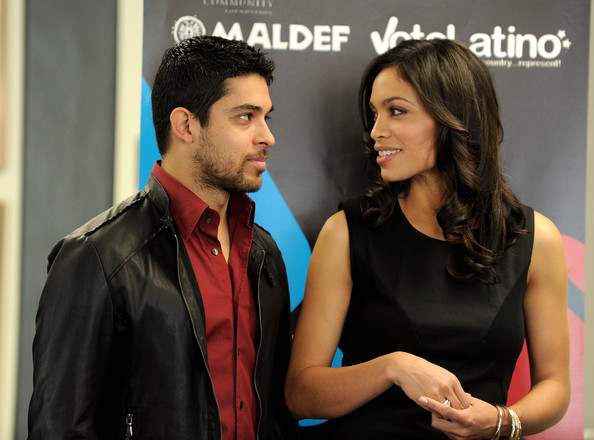
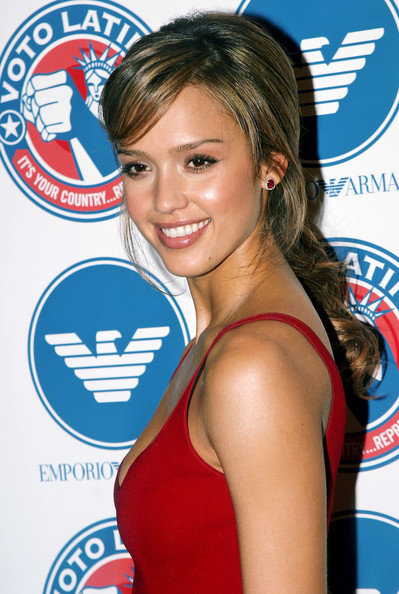
Maria Teresa Kumar is the founding executive director of Voto Latino, a non-partisan group created in 2004 with the mission to find, register, and turn out young Latino voters in the United States. With Latino Americans poised to make up a considerable slice of the swing-state electorate this year, plenty of operatives on both the right and left are eagerly watching to see which they’ll fall. But Kumar and Voto Latino are after something longer term. With Kumar in Austin to talk at SXSW about social media’s ability to shape a political contest, we talked by phone about online experimentation’s lessons for converting trending topics into action, how President Obama made this election personal, and what it will take to convince Democrats and Republicans to pay attention to Latinos after Election Day. This interview has been condensed and edited.


As perfectly sensible as it might be to focus on voter registration, we seem to have the same conversation every two or four years. There’s work done to engage a group of voters and pull them into the process, and then in the next election cycle it becomes about doing it over again. How much of this work is about the binariness of registration and how much of it is about creating a relationship with a voter that’s sustainable?

(March 9, 2010 - Photo by Michael Buckner/Getty Images North America)

Long-term engagement, right. This is based on the findings from the experimenting we did in 2010 with the Census. What we found is that the difference with this demographic — first of all, we target acculturated American Latinos, meaning that they are English-dominant — is that 80 percent of all Latino voters are English-dominant, but that doesn’t mean that there’s a news source that’s actually targeting them. So that’s why we work very closely with celebrities and with media. We have roughly 87 radio DJs who are part of our coalition in our top 25 markets. We use them as messengers to get folks to not only learn about the election but come back to us.

We’re right now creating a site called Election Center: News You Can Use. Our hope is to make it really robust so that not only, say, Rosario starts tweeting about the environment post-election but that her followers look at it and then come for more information about it on our site. And then they get active. Not only did they just read that Congress is about to vote on fracking but now they can go ahead and sign a petition for or against fracking, depending on how they feel, that will then immediately go to their member of Congress. What happens now is that people woo individuals every four years and then they feel like, ‘You invited me to the party, but you didn’t call me the next day.’

But if you were to ask me what the obstacles are going to be to voting this year, it’s not necessarily going to be being registered to vote. It’s going to be that a lot of voter ID laws have changed from 2008. So with the Election Center we’re going to also give you all the information you need to go to the polls.

When you say that a Latino celebrity is going to be tweeting about fracking, that’s not necessarily what people think of as a Latino-focused issue. And if you read anything about Latino voters it’s about how there are a lot of different people with a lot of different backgrounds with a lot of different interests. How do you take the broad-brush approach of registration and apply it to the rest of the process? 

The media’s reaction is always that Latinos’ number one issue is immigration. And it’s not immigration. It’s the tone in which people talk about immigration. All of the sudden, you can be a third or fourth-generation Mexican American from Colorado and not really realize you’re Mexican until someone pulls you over and asks you for your papers. That’s a catalyst for political awakening. I use that as an example because in the 2010 election [in Nevada], Sharron Angle, who was running against Senator Reid, basically said that her path to victory was to vilify Latinos. A hundred percent of the media she posted was racially tinged. And that mobilized nine out of ten Latinos to vote against her. But they still voted for a Republican candidate for governor. Yes, they paid attention because of [Angle’s] tone, but when it came to other candidates they voted on the issues.

The same thing for [Arizona state senator] Russell Pearce, who was the architect behind SB1070. The Latino community galvanized around him and recalled him. But they didn’t put in a Democrat. They put in the moderate Republican, someone who was talking to their issues.

When you talk about what mobilizes Latinos most, sadly, it’s when you’re vilifying the community. But if you talk to them about education and jobs in a way that is not condescending and doesn’t end with hasta luego, then you’re going to do pretty well. You do have to talk to them in an authentic way. That’s what’s missing from presidential politics. That’s what Mitt Romney is going to be challenged with. He, up to a point, was so moderate. If Governor Romney was running today he would do incredibly well with the Latino community because he would talk about small business and taxes. Latina women, particularly, are the fastest purveyors of small businesses in the country.

But instead, the election has been so polarized for the right that Romney finds himself moving to a place that he’s going to have a hard time recovering from, I think. If you’re trying engage with someone and they say, ‘Yeah, but I don’t like you,’ then it’s hard to move past that to a conversation about, ‘Okay, what else are you going to do for me?’

What you’re going to see with the 2012 election is that, you see the polls right now where the Latino community is overwhelmingly supporting President Obama over Mitt Romney. But I’m one of the folks who says that they’re doing that because of the tone. If Mitt Romney tomorrow was to change the tone and actually demonstrate what he was going to do for the Latino community — again, what all Americans want, job creation and the economy — it would be a completely different ball game.

.www.bauer-griffin.com. Photo by Bauer Griffin)

In Time’s recent “Yo Decido” issue, Obama campaign manager Jim Messina celebrated the Obama campaign’s ability to turn out Latino voters in the Western states through “grassroots stuff.” Have you seen evidence of the Obama campaign or any other doing targeted outreach to Latino communities?

Not yet, and I say that because I know that the Obama campaign is going to start going into Arizona come April. But they’re not yet full-fledged. They’re going to be deploying a lot of folks, and what they’re going to be coming down heavily with is peer-to-peer conversations similar to what they’ve done in the past.

This election for Latinos is going to be very much a personal one because Obama, sadly enough, has his own baggage. There have been record deportations. So when he goes into Arizona, he’s talking to a voter who may have voted for him last time but now they’ve had a loved one deported. Colorado was a swing state in 2008 and that was because they were passing very rough immigration laws. They were really racially profiling. Now, in Alabama, you have school children being pulled out of the classroom to be asked they’re American or not. If you’re a parent, that becomes personal. Now they’re attacking your family. So in 2008 we had Colorado. In 2012, we have five states that have similar legislation to Arizona. They’re North Carolina, Texas, Florida, Virginia — not surprisingly, key battleground states.

What’s cool is that at the same time they also have an increased electoral power because of the shift in votes. You definitely have this anti-Latino backlash at the state level but you also have this increased political voice that you didn’t have in 2008. Arizona is an example, but it’s an example that has spread that because electoral power is so much more heavily weighted in Latino districts. There’s actually a chance that that’s the clear path to victory.

As you focus on one identity group, even one that has been under-addressed in the past, do you worry that you’re turning the Latino vote into something for the parties to fight for by simply becoming the lesser of two evils, where the bar becomes just not being as big a jerk as the other guy?

Yeah, that’s what the Democrats are thinking. And that’s where their strategy is going to lose.

If I were advising the Democratic party, I’d say that, yes, Republicans aren’t being nice but the Democrats are being cowardly lions. Right now, there’s an open field for them to really go after the Latino community and solidify them. People forget that the Latino vote has been a swing vote since Reagan. They voted for Reagan and then voted for Clinton, then they back for Bush, and then they went back for Obama. Historically, it’s a pendulum. But because of sheer numbers now, if either the Republican Party or the Democratic Party figure out how to solidify them, they can basically become the Dixie Democrats of the 1940s. That hasn’t happened because both parties are timid. They don’t quite understand them.

But if you look at the trajectory of Latino growth, one out of six Americans are Latino. Over 55 percent of the growth in the Census over the last 10 years was due to Hispanic population growth. And it wasn’t immigration. It was the children of immigration.

They’re still so severely underserved, and they’re one of the hardest groups to target. It’s expensive because most of them have never voted before in their lives. For a campaign, they’re the least likely person to go after. Instead of spending two dollars on a progressive white voter all of a sudden you have to spend 25 or 30. There’s a cost to it. It’s harder work, but once you can get them to vote three times they become a life-long voter.

It has to be a continuous conversation. But no one is really having it.

Respect often gets mentioned as a major factor when it comes to Latino voters. Does a Marco Rubio as a vice presidential candidate change that dynamic for the better or come across as pandering?

At this point, it’s pandering.

What I try to communicate is that Latinos fundamentally care about the issues. I use the case of when candidate Barack Obama was running for Senate he ran against a Latino candidate named Gery Chico. And Gery Chico looked like he was going to have overwhelming support in the Latino community. He had great ties. But what candidate Obama was able to do was so well was to talk to the issues of the Latino community. He beat a Latino candidate overwhelmingly. At the end of the day they want to be able to make their lives better.

Since the foreclosure crisis Latinos’ wealth has decreased by 66 percent. It’s sadly competing with that of African Americans. When it comes to the unemployment rate, ditto. We’re talking about double digits when the majority of the country is enjoying eight percent. So the issues are a harsh reality.

But at the same time they’re incredibly optimistic about America’s future, more than any other group. They still have that immigrant experience where they came from countries or their parents came from countries that were so horrible that they still see the vast amount of opportunity and America’s potential here. If I’m a candidate, how did I package that message of, ‘These are my policies on education so that your child can achieve and overcome the hardships you’re facing today’?

Voters are increasingly sophisticated. You do have a swath of voters in the Latino community who are increasingly registering as independent, except for in the last year or so where they’ve been declaring themselves independent but leaning more Democratic.

But that has to do with tone, not because the Democrats are offering them any policy initiatives. They’re just basically not being mean to them and their families.

READ MORE: THE ATLANTIC

SUBSCRIBE to The Hispanic Blog to stay on top of the latest latino news, politics and entertainment!

Don’t be shy SUBSCRIBE – COMMENT – LIKE ME -CIRCLE ME AND FOLLOW ME

If you have any questions, concerns or simply would like to get a quote on my Marketing, Public Relations, Social Media and/or Events services, please feel free to contact me at thehispanicblog@gmail.com.

God Bless and may you have a fabulous day!

powered by Influential Access – “Transforming the Ordinary to EXTRAordinary!” – CEO – Jessica Marie Gutierrez – Creator of The Hispanic Blog #thehispanicblog