GERALDO RIVERA ASKS FELLOW REPORTERS TO DROP THE “ILLEGAL ALIEN” PHRASE ENTIRELY

THE HISPANIC BLOG IS THE LATEST HISPANIC NEWS BY JESSICA MARIE GUTIERREZ

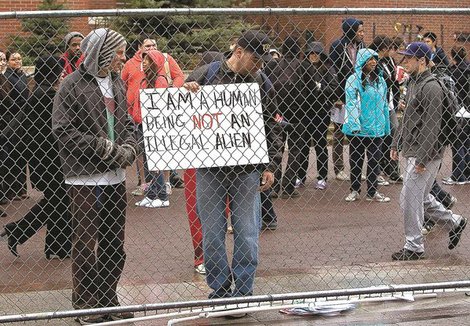
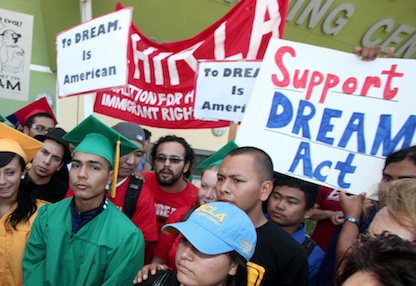
Just as blacks marched in the 1960s for civil rights, Hispanics are marching today for immigrant rights. And just as many non-blacks marched back then in support of black civil rights, today many non-Hispanics are marching in support of Hispanic immigrant rights.

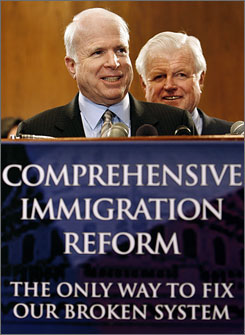
Cable news and talk radio are making a killing demonizing undocumented immigrants. In terms of ratings, few issues resonate as reliably. Since the fiery period of 2006-2008 when Congress first seriously contemplated rational immigration reform under the leadership of senators John McCain, R-AZ, (yes, that John McCain) and the late Ted Kennedy, D-Ma, but then ran from the issue in the face of furious backlash, ample file footage exists in every news outlet’s video library of young Latinos jumping the border wall or wading across the Rio Grande.

The story is therefore easy and cheap to illustrate. The fact that it is a lazy stereotype of undocumented immigrants, which ignores the hefty percentage of European, Asian, Australian and African visitors who overstay their visa is irrelevant, too complicated and lacking emotional punch. Thus, the typical report consists of a TV anchor or radio talk host lamenting either how our nation is being drowned by the brown tsunami from south-of-the-border, how they are sucking the nation’s life blood or how one of the invading Latino hordes committed a crime, which is far more egregious than if a citizen committed the same crime, “because they had no right to be here!”

photo source: AP

Further, no branding has proven more effective than the combination of two powerful pejoratives, illegal and alien.

Like the words ‘Jew’ or ‘slob’ or ‘slut’, the phrase ‘illegal alien’ has the elegance of being harsh, but defensible, if accurate. Although it can be used as a cutting reference, it can still be uttered in polite company without fear of raising many eyebrows, especially among those who feel similarly negative about the individual being described.

photo source AP

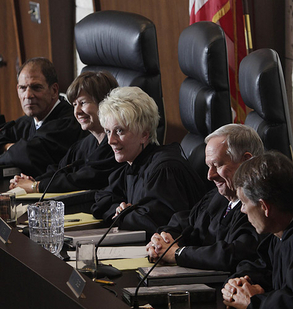
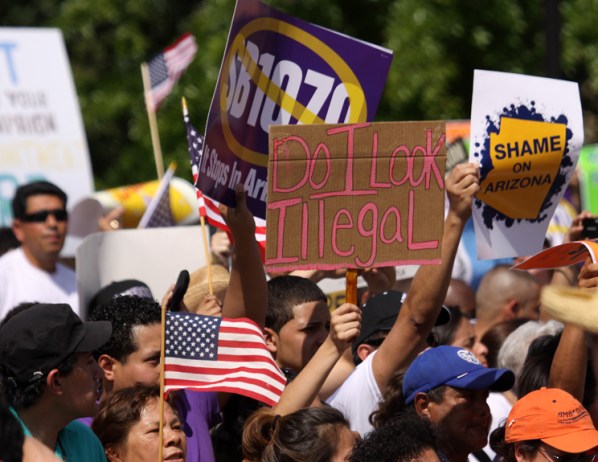
Recently, a campaign has been mounted by Latino activists and supporters to ban use of the “I” word (as in Illegal). Ironically, the campaign has found traction first in Arizona, the state now most vividly associated with anti-immigrant sentiment and the birthplace of SB1070. Back in 2008, before things got truly vitriolic in the Grand Canyon State, Supreme Court Chief Justice Ruth McGregor agreed to ban the terms “illegal” and “alien” in all hearings or trials in state courtrooms.
The decision came after the High Court was criticized for using the words “illegals” and “illegal aliens” in several opinions by Arizona’s Hispanic Bar Association, known locally as “Los Abogados,” which asked Chief Judge McGregor for the ban. Their reasoning is as obvious as the motive of those who resort to using the offensive language. The terms create a contemptible brand, which stokes anti-immigrant bias and in the process, “tarnishes the image of state courts as a place where disputes may be fairly resolved.”

The biggest myth they were peddling, of course, was that Arizona Supreme Court Chief Justice Ruth McGregor had banned the use of the words “illegal” and “aliens” to refer to the undocumented migrants in state courts. In reality, McGregor received a letter from the Hispanic Bar Association (Los Abogados), expressing concern over the use of what they deem to be derogatory terms towards MMPs (Mexicans Minus Papers). McGregor simply shared the letter with her colleagues. She didn’t order them to do anything about it.

Because the cause is righteous, the movement to ban the expression has recently been re-energized and may spread, perhaps first to Florida. There, Congresswoman Frederica Wilson, D-Miami, has introduced a bill to ban the phrase “illegal alien” from official state documents.

(AP Photo/J Pat Carter)

“I personally find the word ‘alien’ offensive when applied to individuals, especially to children,” she said recently. “An alien to me is someone from outer space.” While no penalty is attached for using the expression, the flamboyant Senator Wilson added, “we don’t say ‘alien,’ we say ‘immigrant.'”

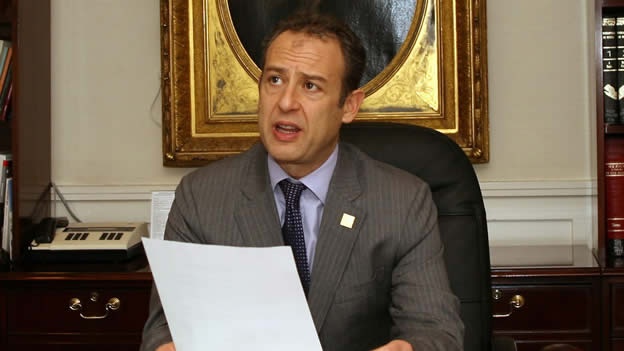
Aside from its unstated but intended negative reaction, I have a lawyer’s reason for wanting media outlets like my own to ban or at least modify the phrase. Absent a finding by a judicial or administrative body, it assumes a legal conclusion, that a person has no right to be in the United States. Given that every person whose resident status is questioned has the presumed right to a hearing on the matter, with an appellate process following a negative result, isn’t the media’s use of the expression as lazy as assuming the guilt of a person accused of every other crime?

Sheriff Richard K. Jones has a website for “illegal aliens” http://butlersheriff.org/illegals/

How is it that accused murderers, robbers and child molesters are called “alleged” perpetrators, but immigrants are not accorded the same courtesy of accuracy, indeed, the same presumption of innocence?“Illegal alien” is a cheap shot. The oft-used plural of the adjective “illegal” as in “illegals” isn’t even recognized as an English noun by Microsoft Word.

photo source: Fickr

It is stigma piled on stigma, and the potential consequences to a person so described following a judicial finding can be devastating. Anyone who suggests that deportation isn’t punishment is being disingenuous. So, if you insist on using the ungrammatical slur, at least await a finding of illegality before branding usually hard-working, otherwise law-abiding undocumented immigrants snared by authorities.

photo source: Flickr

photo source: Flickr

“Alleged illegal alien” may not be much of improvement, but it’s a step in the direction of accuracy. A voluntary decision by my cable news and talk radio colleagues to drop the phrase entirely would be humane and more in keeping with our immigrant nation’s centuries old traditions.
Read more: Latino FOX News

SUBSCRIBE to The Hispanic Blog to stay on top of the latest latino news, politics and entertainment!

Don’t be shy SUBSCRIBE – COMMENT – LIKE ME -CIRCLE ME AND FOLLOW ME

If you have any questions, concerns or simply would like to get a quote on my Marketing, Public Relations, Social Media and/or Events services, please feel free to contact me.

God Bless and make it a fabulous day!

powered by Influential Access – “Transforming the Ordinary to EXTRAordinary!” – CEO – Jessica Marie Gutierrez – Creator of The Hispanic Blog #thehispanicblog
 

HOW IMMIGRATION HAS AFFECTED THE UNITED STATES/MEXICO RELATIONSHIP: MSNBC TALKS TO THE AMBASSADOR OF MEXICO, ARTURO SARUKHAN CASAMITJANA

THE HISPANIC BLOG IS THE LATEST HISPANIC NEWS BY JESSICA MARIE GUTIERREZ

CLICK HERE TO SEE THE MSNBC INTERVIEW WITH ARTURO SARUKHAN CASAMITJANA AMBASSADOR OF MEXICO

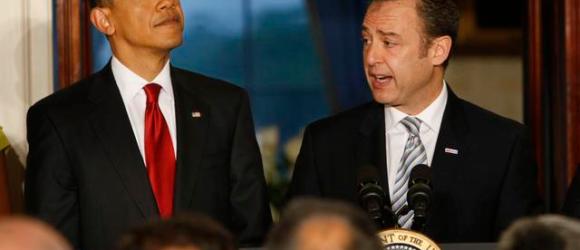
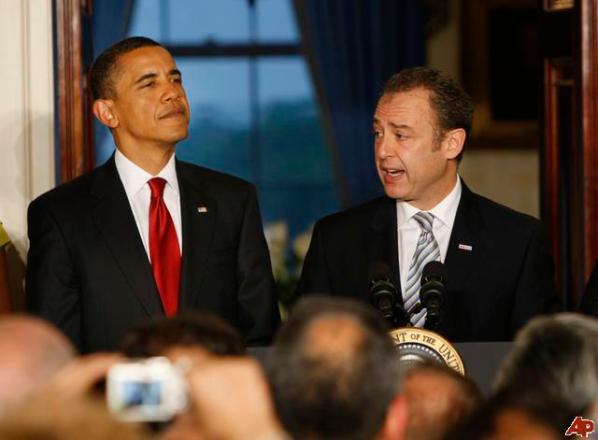
Arturo Sarukhan, Mexican Ambassador to the U.S., makes remarks with President Barack Obama during a Cinco de Mayo celebration in the Grand Foyer of the White House in Washington, Monday, May 4, 2009. (AP Photo/Gerald Herbert)

Ambassador Arturo Sarukhan talks about the affiliation between the U.S. and Mexico as Cinco De Mayo approaches.

SOURCE: AP/Danny Johnston

>>> at home and among our neighbors in mexico . president obama addressed the holiday and the bonds between our two countries on thursday.
>> the united states and mexico have lived intersecting and overlapping histories. our two countries share the ties of history and familia and commerce and culture and values and today, we are more united than ever. in friendship and in common purpose.
>> ambassador arturo sarukhan serves as mexico ambassador to the united states . thank you very much. happy cinco de mayo a day in advance. one of the things you said in your speech yesterday about cinco de mayo was that immigration reform is the unfinished business between our two countries. and you talked about the fact that there are 11 million people living in the shadows. i talked earlier to hilda solis, the labor secretary about this but the argument you get from democrats, from the white house is that oh, it’s the republicans on the hill. the argument you get from the republicans is that the white house won’t negotiate. what is your perspective looking at us?

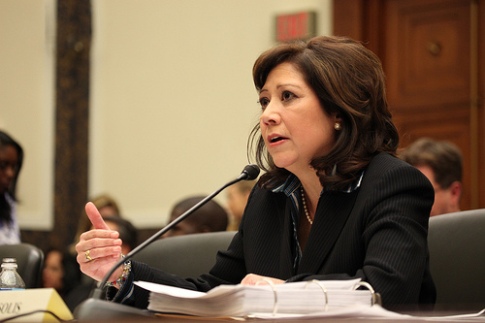
photo source by FlickrU.S. Secretary of LaborHilda Solis testifies at a hearing about Strengthening the Economy and Improving the Lives of American Workers on February 3, 2010.

>> well, look, this is probably the most important single issue in the u.s.- mexico bilateral relationship. nothing will have a more profound impact on the future prosperity, well-being and security of north america of mexico and the united states than getting immigration right. but it is a very toxic and very polar rising issue more so in an election. and more so when so many americans are hurting and out of a job. these issues are very tough to handle and there are people on both sides of the aisle that i think are fully committed to getting this done. the challenge is timing. and the equation, how you put this together so combined all the different groups that have a specific interest in getting immigration done, but that need to come together and agree to big single holistic deal.

photo source: AP

>> immigration, illegal immigration is down. is that because of border security or is that because more jobs are available and the economy has improved so much in mexico ?
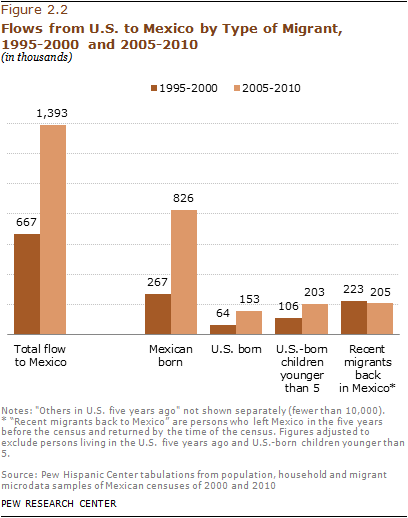
>> this is probably the most important story that is happening today on the u.s.- mexico border which americans are not focusing on. there’s a dramatic drop from undocumented immigration from 2006 to 2011 , we’ve seen a 60% drop in documented immigration. there has just been a report issued by the pew hispanic institute that states what a lot of us had already been seeing that net migration from mexico is zero if not negative. that means that more people are going back than people actually coming across the border. it’s a mix of reasons. certainly a softer u.s. economy especially in the construction sector which has traditionally been a magnet for undocumented labor has to do with it. greater operational control of the border. something a lot of people don’t want to focus on but which is a reality. the pernicious and very troubling musclealing in of organized crime into human trafficking on the border and the impact that has on the well-being and security of migrants. i think the most important reason is that over 15 years, as a result of sustained sound macro economic policies in mexico , one of the largest free trade agreement networks that any country has on the face of the earth by generating export-related job creation and by what is probably by world bank bench marks the most successful extreme poverty aleviation program on the face of the earth. these things combined with a profound shift in the demographics of mexico is expanding the middle classes , is creating better jobs. and is locking in or anchoring people who may be a year ago, two years ago would have decided to cross the border. they’re staying home.

About twice as many Mexicans returned home in the five years previous to the 2010 census than had done so in the five years before the 2000 census. Read Story: Pew Research Center

>> we’re anticipating of course, in june premium court decision on immigration. and the indications from the oral arguments and it’s always difficult to guess, are that the court may uphold some of the more extreme measures . how will that be viewed south of the border ?

>> look, this is an issue that as you can well imagine has garnered a lot of attention in mexico . i think that mexico in the past and we continue to say it, i think that we fully agree to the fact that any country has the right to establish whatever immigration policy it deems fit, but we do believe also that that’s a responsibility of the federal government . and we think that some of these laws, arizona, and a lot of people have forgotten alabama, may be one of the worst pieces of legislation out there and are poisoning the well spring of values of bonds that connect these two countries. it is a very big challenge.

El embajador de México en EU, Arturo Sarukhan, dijo que Centroamérica es “víctima” del éxito de la lucha antinarco (EFE Archivo).

>> let me ask you finally about the violence because as a member of the committee to protect journalists i have to tell you, there’s terrible concern for reporters and photographers in veracruz state murdered only this week. what can we do about what’s happening? it seems to be the targeting by these criminals of reporters and photographers.
>> first of all, we have to do anything in our power to defend journalists who are doing their job and a lot of them do become the target of organized crime that is either seeking to silence them or to ensure that the stories don’t come out. we have to find ways to protect these journalists more importantly we have to build mechanisms in which we can investigate and prosecute a swiftly and as quickly as possible because a society where a free press is muzzled because of intimidation or fear senior a society that’s in trouble.
>> arturo, sarakhan, thank you very much for joining us today.

Read More: MSNBC

SUBSCRIBE to The Hispanic Blog to stay on top of the latest latino news, politics and entertainment!

Don’t be shy SUBSCRIBE – COMMENT – LIKE ME -CIRCLE ME AND FOLLOW ME

If you have any questions, concerns or simply would like to get a quote on my Marketing, Public Relations, Social Media and/or Events services, please feel free to contact me.

God Bless and make it a fabulous day!

powered by Influential Access – “Transforming the Ordinary to EXTRAordinary!” – CEO – Jessica Marie Gutierrez – Creator of The Hispanic Blog #thehispanicblog

 

NEW MEXICO CELEBRATES ITS CENTENNIAL AND GETS A RARE LOOK AT HISTORICAL DOCUMENTS AND ITS 1910 CONSTITUTION

THE HISPANIC BLOG IS THE LATEST HISPANIC NEWS BY JESSICA MARIE GUTIERREZ

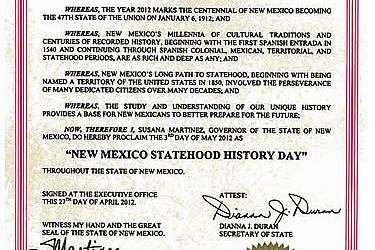
In honor of the State’s Centennial year, the State Records Center and Archives will host an Open House on May 2, 2012, to commemorate the drafting and adoption of the 1910 New Mexico Constitution. The public will be able to view the Constitution and other important documents of statehood. Concurrent with the Open House, the Office of the State Historian will host an exhibit, New Mexico’s Cultural Landscapes, by photographer Sharon Stewart.

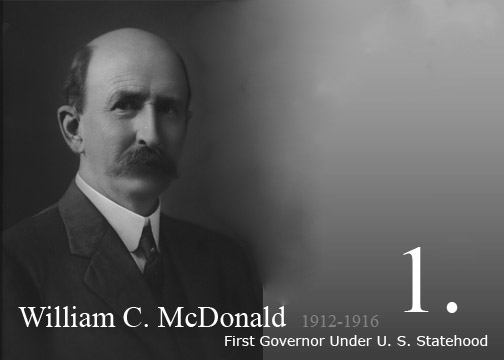
You could find automobiles on the streets in many a New Mexico town back in 1912, and yet it was just as likely you’d see a cowboy ride his horse up to a restaurant to get a bite to eat. The railroad, the telegraph and the telephone brought progress, news and visitors. “We were rural and poor, but New Mexico wasn’t disconnected from the nation,” Rick Hendricks, state historian, said Wednesday. New Mexico cemented its connection in 1912 by attaining statehood and effectively creating a state government based on its own constitution, a goal that was a good 60 years in the making.

“Morley’s Map of New Mexico” Compiled from the Latest Government surveys and other reliable surveys. Ent. Acc. of Congress in the Year 1873 by Harry Whigham and G.A. Bushnell in the Office of the Librarian of Congress, Washington, D.C.

“A fair public school education is due every child and is of the utmost importance not only to the individual but to the welfare of the state.” photo source: NM History

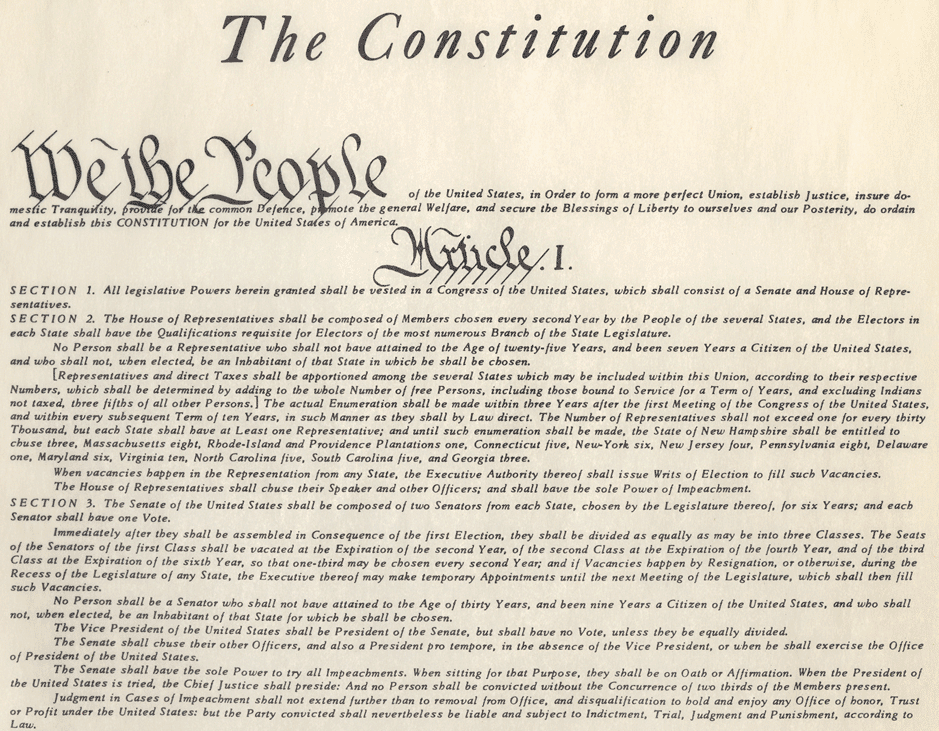
Delayed and foiled over the years by, among other measures, bad timing, racism, anti-Catholic bias, Manifest Destiny, the untimely death of a statehood-supporting president (Zachary Taylor) and opposition by a neighboring territory, the 24-article constitution was finally adopted by a Constitutional Convention in November 1910, ratified by the people a year later and made law in January 1912.

Dedication: To the men of New Mexico who have fought the hard fight for statehood and to those who formed the constitution of the Great New State of New Mexico this book is dedicated.                               photo source: NM History

The original state constitution, normally locked up in a climate-controlled vault, went on display alongside a number of other historical documents on Wednesday — for one afternoon only — at the State Records Center and Archives on Camino Carlos Rey near Cerrillos Road.

“People should have the opportunity to see historical documents we have in the archives,” Hendricks said Wednesday at the records center, noting that usually only historians can request access to the original constitutional document.

Hendricks and New Mexico Supreme Court Justice Charles Daniels both gave short presentations regarding the creation and importance of the state constitution during a noon opening ceremony. Among the visitors were David and Mary Darling of Albuquerque. Her grandfather, Sen. William Dennis Murray, was one of 69 state lawmakers who signed the constitution. Her husband’s grandfather, who ran a newspaper in Deming, was good friends with Murray.

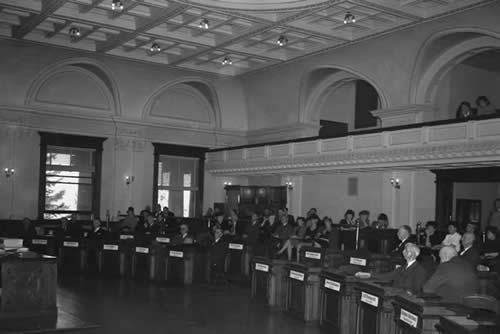
New Mexico State Constitutional Convention, Santa Fe, NM 1910 photo source: NM History

“He ran a general store in Central New Mexico and opened the Murray Hotel in Silver City,” Mary Darling said of her grandfather. “I was such a child when he died; he didn’t speak about the constitution. Later, I read about him and realized he did a lot more important things for this state than I was aware of.”

General Stephen Kearny photo source: Son of the South

The history of the constitution, as far as this exhibit is concerned, dates back to 1846, after Gen. Stephen Watts Kearny declared New Mexico an American Territory at the outset of the Mexican-American War. The exhibit includes Kearny’s proclamation, which asks the Spanish-speaking residents of the city of Santa Fe not to take up arms against the American military, as well as Juan Bautista Vigil y Alarid’s Spanish translation of that proclamation. Vigil y Alarid was the last Mexican governor of the territory of New Mexico.

photo source: NM HIstory

Jerry Vigil of Albuquerque, who said he is a descendent of Vigil y Alarid, was reading over that document at the state records building Wednesday. “These documents are wonderful,” he said. “This [proclamation] makes me very honored.” He said he was aware of his ancestor’s role in state history, but said he was not aware of this specific document. The state constitution — which in some ways mirrors the Constitution of the United States while also including provisions preserving the ethnic and cultural diversity within the state — “still speaks to who we are today,” Vigil said, though he acknowledged there always has been an undercurrent of racial divide within the territory.

The Reunion of the Constitutional Convention of 1910 photo source: NM HIstory

The exhibit showcases the many abortive attempts by state leaders to draw up and ratify a state constitution in 1850, 1866, 1872 and 1889. In 1906, the state came closing to having both a constitution and statehood when its residents were given the chance to vote to become part of the United States as the state of Arizona (which would have enveloped New Mexico in that case).

“That was then, this is now!”

“New Mexicans voted 2-to-1 for it, and Arizona voted 5-to-1 against it … primarily because of our ethnic diversity,” Daniels said in his remarks to the crowd. “Our Hispanic population concerned the people of Arizona. … There was a fear we wouldn’t quite be Americans.”

He praised the original constitution as a document that tried to preserve the culture, language and civil rights of New Mexicans, noting that one of the early provisions included ensuring the teaching of both Spanish and English in the public-school system.He noted that amendments to the constitution must be approved by three-quarters of both of the state’s legislative bodies — as well as state voters. Still, in the past 100 years, there have been more than 160 amendments.

photo source: NM State University

“It’s a surprising number considering how difficult it is to do,” Hendricks noted. “Yes, it’s been changed. But it hasn’t been thrown out.”

Read More: Chicago Tribune Learn More: New Mexico History

SUBSCRIBE to The Hispanic Blog to stay on top of the latest latino news, politics and entertainment!

Don’t be shy SUBSCRIBE – COMMENT – LIKE ME -CIRCLE ME AND FOLLOW ME

If you have any questions, concerns or simply would like to get a quote on my Marketing, Public Relations, Social Media and/or Events services, please feel free to contact me.

God Bless and make it a fabulous day!

powered by Influential Access – “Transforming the Ordinary to EXTRAordinary!” – CEO – Jessica Marie Gutierrez – Creator of The Hispanic Blog #thehispanicblog
 

OBAMA SAYS “NO” IS NOT AN OPTION FOR THE DREAM ACT: THE DREAM OF OPPORTUNITY IS STILL ALIVE IN OUR TIME

THE HISPANIC BLOG IS THE LATEST HISPANIC NEWS BY JESSICA MARIE GUTIERREZ

(AFP OUT) U.S. President Barack Obama greets guests during a Cinco de Mayo reception in the Rose Garden at the White House on May 3, 2012 in Washington, D.C. Cinco de Mayo celebrates the Battle of Puebla between Mexico and France in 1862.
(May 2, 2012 – Source: Pool/Getty Images North America)

THE DREAM OF OPPORTUNITY IS STILL ALIVE IN OUR TIME – LOOKING BACK AT MAY 4, 2009

“While geography has made us neighbors, tradition has made us friends, economics has made us partners and necessity has made us allies, two great and independent nations united by hope instead of fear. Visiting Mexico, I was greeted by children on both our nations waving flags. A powerful reminder that everything we do is to secure a better future for our children and for our grandchildren. And while I was there, I found it impossible not to be touched by the warmth and vigor and the forceful vitality of the Mexican people. The love of life I’ve seen in Mexican American communities throughout this nation, and that’s what we’ll celebrate tomorrow, that’s what we’ll celebrate tonight, and that’s what we’ll celebrate in the future. Feliz Cinco de Mayo.” -President Obama

President Obama told a largely Hispanic audience today that he is ready to sign the DREAM Act and blamed Republicans for the failure of the legislation that would grant illegal immigrant students a path to citizenship.

photo source: AP

“We’re going to keep fighting for this common-sense reform — not just because hundreds of thousands of talented young students depend on it, but because ultimately America depends on it,” the president said at the annual Cinco de Mayo reception at the White House. “‘No’ is not an option. I want to sign the DREAM Act into law. I’ve got the pens all ready. I’m willing to work with anybody who is serious to get this done, and to achieve bipartisan, comprehensive immigration reform that solves this challenge once and for all.”

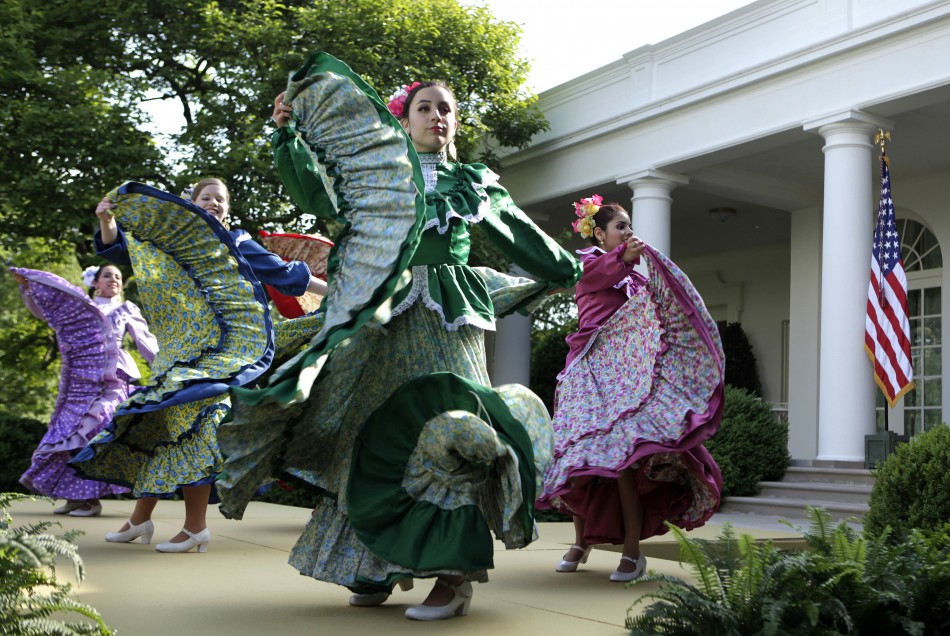
Dancers from Ballet Folklorico Mexicano de Georgetown perform at a Cinco de Mayo reception at the White House in Washington, May 3, 2012. REUTERS/Yuri Gripas
Read more: IB Times

Today’s election-year celebration comes as the president courts Latino voters in the run-up to November.

(AFP OUT) Guests take pictures during a Cinco de Mayo reception in the Rose Garden at the White House in Washington, DC, on May 3, 2012.. Photo by Olivier Douliery/ABACAUSA.com
(May 2, 2012 – Source: Pool/Getty Images North America)

“We know that securing our future depends on making sure that all Americans have the opportunity to reach their potential. And that’s why we’ve worked hard over the last three and a half years to create jobs; to make sure you get the care you need when you get sick; to make college affordable for everybody; to ensure that no matter where you are, where you come from, what you look like, what your last name is — even if it’s Obama– you can make it if you try,” the president said to applause.

(AFP OUT) The Ballet Folklorico Mexicano performs during a Cinco de Mayo reception in the Rose Garden at the White House on May 3, 2012 in Washington, D.C. Cinco de Mayo celebrates the Battle of Puebla between Mexico and France in 1862.
(May 2, 2012 – Source: Pool/Getty Images North America)

In his brief remarks, Obama welcomed everyone to celebrate the “tres de Mayo” at this year’s party. The president will spend the real Cinco de Mayo this Saturday campaigning in Ohio and Virginia. “We just like to get the fiesta started early around here,” he joked. This year’s “fiesta” included dance performances by Georgetown University’s Ballet Folklórico and traditional Mexican music. Guests mingled in the Rose Garden, sipping champagne and, of course, margaritas.

Read More: ABC News

SUBSCRIBE to The Hispanic Blog to stay on top of the latest latino news, politics and entertainment!

Don’t be shy SUBSCRIBE – COMMENT – LIKE ME -CIRCLE ME AND FOLLOW ME

If you have any questions, concerns or simply would like to get a quote on my Marketing, Public Relations, Social Media and/or Events services, please feel free to contact me.

God Bless and make it a fabulous day!

powered by Influential Access – “Transforming the Ordinary to EXTRAordinary!” – CEO – Jessica Marie Gutierrez – Creator of The Hispanic Blog #thehispanicblog


HOW HAS CONGRESS DEALT WITH IMMIGRATION IN THE PAST 25 YEARS?

THE HISPANIC BLOG IS THE LATEST HISPANIC NEWS BY JESSICA MARIE GUTIERREZ

photo source: AP

1986: The Immigration Reform and Control Act of 1986 both tightens controls on illegal immigration and extends amnesty for many illegal immigrants. It requires that employers attest to employees’ immigration status and make it illegal to hire or recruit illegal immigrants. It also grants amnesty to some seasonal agricultural workers and to illegal immigrants who entered the United States prior to 1982 and have lived in the country continuously.

President Reagan signed the Immigration Reform and Control Act of 1986, which provided amnesty to illegal immigrants who qualified.

1990: The Immigration Act of 1990 created a lottery program that randomly assigned a number of visas, and increased the number of immigrants allowed into the country each year. The law also included exceptions for the English-language portion of the naturalization test.

The green card lottery is held annually to randomly select 50,000 applicants to be awarded with green cards.

1996: Under President Bill Clinton, several pieces of legislation are enacted that crack down on various facets of immigration. Specifically, there is a sharp increase in the categories of criminal activity for which immigrants, including permanent residents, can be deported. The laws also impose mandatory detention for certain types of deportation cases, and as a result deportation rates skyrocket.

Photo: J. Scott Applewhite / AP

Sept. 11, 2001: Terrorists attack New York and Washington, D.C., killing nearly 3,000 people. The events put immigration under a microscope because the attackers were foreigners, and change the way many politicians and Americans view immigration. Former Mexican President Vicente Fox goes so far as to say that if it were not for the attacks, Congress would have passed reform legislation that benefited Mexican emigration to America.

President George W. Bush walks with Mexico President Vicente Fox, left, and Canadian Prime Minister Paul Martin upon their arrival Wednesday, March 23, 2005, at the Bill Daniels Activity Center at Baylor University in Waco, Texas. White House photo by Eric Draper

2003: The Supreme Court upholds mandatory detention regardless of flight risk for any immigrant offender, even permanent residents.

2005: In 2005 and 2006, Congress holds field hearings on immigration and border security across the country. The Senate introduces a significant bipartisan effort to create a path for legalization for many illegal immigrants.

Pullman Daily News photo: Dean Hare

December 2005: The House passes a bill criminalizing illegal immigrants, sparking massive pro-immigrant protests nationwide. The Senate refuses to take it up.

photo source AP

May 2006: Instead of the House bill, the Senate passes a tougher version of a bill crafted by Sens. John McCain, R-Arizona, and Ted Kennedy, D-Mass., which includes a path to legal residency for many illegal immigrants.

October 2006: The fiscal year 2007 budget boosts funding for Immigration and Customs Enforcement by more than 20 percent, about $1 billion more than President George Bush requested, mostly for detention and transport of immigrants.

Thousands of immigrant rights advocates pack the National Mall during an immigration reform rally in Washington, Sunday, March 21, 2010. (AP Photo)

November 2008: President Barack Obama is elected, and Democrats sweep both chambers of Congress, giving hope that a major immigration reform bill will be enacted. Obama had signaled interest in reform that included enhanced border enforcement, crackdowns on people who overstay their visa and employers who hire illegal immigrants and a path to citizenship for some illegal immigrants.

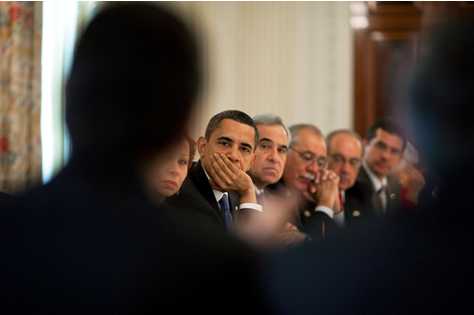
Body language experts interpret that a hand placed over the mouth, as Obama is pictured doing, indicates negative impulses and disapproval. photo source: AP

2009: A comprehensive immigration reform bill introduced in the House fails despite efforts by the Obama administration to get it traction.

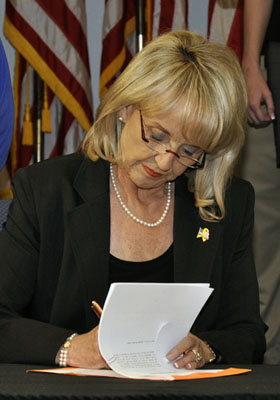
Arizona Gov. Jan Brewer signs SB 1070 in April 2010. (Photo courtesy of the Arizona Office of the Governor)

April 2010: Saying the Congress had failed to enforce U.S. immigration laws, Arizona passes a law to crack down on various facets of illegal immigration. Most controversial is that the law directs police to ask for immigration papers from anyone they stop or arrest who they suspect may be in the country illegally.

Sep 20, 2010 – Los Angeles, California, USA – Los Angeles Mayor ANTONIO VILLARAIGOSA during a rally that supports the Dream Act which allows temporary legal status for immigrant students.
(Credit Image: © Mark Samala/ZUMApress.com)

December 2010: The so-called Dream Act, which would allow illegal immigrant students a path to citizenship, passes the House in the lame duck session. The Senate GOP filibusters, effectively killing the bill.

Hundreds of immigrant rights activists rallied outside the Supreme Court building Wednesday as did several dozen supporters of Arizona’s law. Photo: Creative Commons/Talk Radio News Service

April 2012: The Supreme Court takes up the Arizona law. While a decision isn’t expected until June, during initial arguments the justices appear to have little issue with provisions requiring police to check the legal status of people they stop for other reasons.

Courtesy of the AP to Read More: Washington Post

SUBSCRIBE to The Hispanic Blog to stay on top of the latest latino news, politics and entertainment!

Don’t be shy SUBSCRIBE – COMMENT – LIKE ME -CIRCLE ME AND FOLLOW ME

If you have any questions, concerns or simply would like to get a quote on my Marketing, Public Relations, Social Media and/or Events services, please feel free to contact me.

God Bless and make it a fabulous day!

powered by Influential Access – “Transforming the Ordinary to EXTRAordinary!” – CEO – Jessica Marie Gutierrez – Creator of The Hispanic Blog #thehispanicblog