WHAT IS THIS COUNTRY GOING TO LOOK LIKE AFTER THIS ELECTION?

THE HISPANIC BLOG IS THE LATEST HISPANIC NEWS BY JESSICA MARIE GUTIERREZ

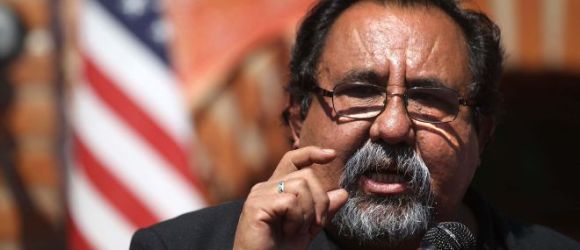
Congressman Raul Grijalva (D-AZ) (2010 GETTY IMAGES)

Arizona Rep. Raul Grijalva has developed a reputation as a blunt, staunch liberal since being elected to represent his state’s 7th District in 2003.

His outspokenness garnered him national headlines in 2010, when he called for an economic boycott of Arizona following the passage of SB1070, the controversial immigration law that has spurred a lawsuit by the Justice Department and is set to be heard before the U.S. Supreme Court in April.

The son of a Mexican migrant worker, Grijalva is also known as one of the long-time leaders of the Latino community in the Southwest.

Fox News Latino spoke with the congressman earlier this week as he was traveling through his district.


FOX NEWS LATINO: Last week Fox News Latino released a poll in which they matched up the remaining Republican candidates against President Obama, and none of them scored above a 14 percent likely voter rating. What do you think of those results and what does that mean for the Republican field as it tries to relate to the Latino community?

Rep. Raul Grijalva: I think the Republican field all through these primaries have boxed themselves into a corner with regard to the Latino community.

They tried to out-hard each other on issues like immigration, their positions on education, their positions on the issues of jobs and opportunity – they boxed themselves into a corner.

So regardless of who wins the primaries, their deficit is obvious but it’s self-created.

It is not a deficit you’re going to gloss over by putting a Hispanic as a VP candidate, it’s not going to be glossed over by trying to mitigate the points that you’ve made because they’re going to hear that rhetoric from the Obama campaign and from us Democrats – the rhetoric and all those clips from their debates over and over and over again.

This was a conscious political calculation on the part of the Republicans and their presidential aspirations to take this line. They took it and now you’ve seen the consequences of taking that line.

FNL: What issue has resonated with the Latino community more? The Dream Act? Immigration?

Grijalva: The issue of immigration, you have to deal with that issue because it’s front and center on this whole debate.

Even for us, who are Latinos born in this country – fourth, fifth generation Latinos that have been born in this country – the issue is relevant and important because of its implications.

It deals with who you are, and that isolation of that group, politically speaking – in terms of the issue of immigration and the very, very hard rhetoric that you’ve heard on the issue and the marginalizing and criminalizing of people on that issue – people take that personally.

Whether there’s security in terms of being fourth or fifth generation in this country becomes irrelevant.

Whether you’re a Puerto Rican and automatically have citizenship; whether you’re a Cuban that touches the soil and automatically has status in this country, that does not matter because that becomes an affront and an attack on a group of people as opposed to the issue of immigration.

The issue of education is about opportunity. It is always the gateway for every immigrant group in this country. It certainly continues to be the gateway for the Latino community, so people’s position is about investing in that issue. And Obama’s effort to invest in that issue despite resistance from Congress is seen as a positive.

And the jobs issue, who’s the hardest community hit by unemployment? Who’s the hardest community hit by foreclosure? Who’s the hardest community hit by this whole economic issue? It’s been the Latino community.

So when you assess who’s saying what, and you have on the part of the Republican candidates a defense of the lending institutions, a rejection of some oversight and regulatory control over what lending institutions and Wall Street is doing, and you begin to see that door of opportunity closing.

And when you see the defunding of education, when you see a tax against Title One, which deals with the poorest children in this country and Head Start; of course you’re going to make those conclusions.

I’m so glad this is happening now in a very personal way for me, because there’s always been this cattle call mentality – and my party’s been guilty of it, too.

You put a surname up, they say this is good for you and you’re going to come vote for them.

Well, that time finally – and gratefully – is over. The ability of our community to discern between who’s on your side and who is not is highly elevated, and the immigration issue brought us to that ability to discern.

And I think that’s why [Republicans] are suffering, as a party, political consequences and huge loss of support from the 40 percent that Bush got to the merely 12 to 14 percent right now.

That is a shift, a gap, that I don’t think the rest of the presidential election is going to close, quite frankly.

FNL: You mentioned even if Republicans put a Latino like Marco Rubio on the ticket, it won’t have any effect. The rhetoric coming out of the Republican party seems to disagree with that as Rubio’s name is constantly being thrown out there as a VP candidate. Do you think his stance and comments on the Dream Act are going to affect his standing within the Latino community?

Grijalva: I think his comments on the Dream Act will.

His comments, his less than genuine comments, on his lineage and how his parents got here is not going to play well.

All of us know they were refugees, but they were already here.

As a refugee from Cuba, and as a national policy, if you touch the sand you have status and protected status in this country as a refugee.

Those are not going to hit in places where you have populations of people who are struggling to make their status permanent and legal in this country. I think that dynamic is more hurtful than his position on immigration because that’s disingenuous what he did.

He used his lineage, his cultural and racial lineage, as an advantage and it backfired on him.

Why I say that, because a surname is not going to change the dynamic and the conversations that have already been done by the Republican Party. You know there’s going to be a platform this party has to adopt and regardless of how nice and how good your Spanish is on radio and TV, there’s a platform attached to your party.

And mark my word, the issue on immigration, the issue on education, the issue on jobs, it’s going to be harsh and it’s going to be, as the community perceives it, not in their favor of opportunity and not into the favor of their family.

That will shift that discussion very much. The Latino community is thinking about the next step. That’s why when you do polling, immigration comes in number four.

There’s an urgency to that issue, but there’s also a huge urgency to the future. This particular family might not have everything thing they need to sustain themselves and have the pure American middle class dream, but they have that dream for their kids. And suddenly you’re closing the door not just on them, but on the future generation. That is a very, very powerful sentiment.

FNL: You mentioned the Latino community knows who’s on their side. What has President Obama or the Democrats done for the Latino community since he’s taken office?

Grijalva: Not enough. Not enough.

They passed the Dream Act out of the House, and three or four Democrats in the Senate kept it from getting to the desk for the President to sign it.

Comprehensive immigration reform, too. We had Democrats in the House who were so afraid of that issue they couldn’t bring themselves to support it or allow it to proceed.

That’s absolutely true. I don’t argue the point.

But I think what the Latino voter is discerning, and there’s this new ethic about discerning who’s who and who’s on your side, there is an A for effort.

And I think in terms of effort and pushing that agenda, Democrats can’t be held guilty for the effort.

Is the result what we wanted? No. But has there been an effort on the part of the Republican Party? No. Has there been obstruction on the part of the Republican Party? Yes.

Has there been an unwillingness to compromise, even on the number of visas? Has there been a willingness to compromise on the Dream Act? No.

So you get to the point where you see where is the effort and where is the push coming from and where is the resistance coming from, the distinctions are so clear. It’s an advantage for Democrats, absolutely.

FNL: Given the drop in Latino support from the Bush era that you mentioned, have Republicans done irreparable harm to their stance within the Latino community?

Grijalva: Generational, no question about that.

There’s kids growing up right now who come from a blended family where one of their parents are not fully documented to be in this country, yet they’re citizens.

There are 3.5 million of those kids running around this country right now. They’re citizens yet their full family is not fully documented.

You think that generation hasn’t learned a listen from this? You don’t think they’ve learned who was pushing for them and trying to protect them? And who was after their parents?

This is kids growing up in this generation, and everybody around them in the community has watched that experience.

So, yeah, I think it’s a generational damage to the Republican Party that it’s done to itself.

The gap with Latinos that has increased, the gap with women that has increased, has been a direct result of the Republican Party not wanting to moderate their tone, but to push into a fringe position to try to win a primary in a presidential election.

Well, that victory is hard won, but it’s also created the hard losses that they’re going to have because those two gaps are critical in this next upcoming election.

FNL: Being based in Southern Arizona, you were close to the Gabby Giffords shooting and at the time there was a lot of discussion about changing the tone in politics. Has the tone gotten better or worse?

Grijalva: It hasn’t gotten better since Gabby’s shooting, no it hasn’t.

Some of us, and I include myself in that group, did our part.

We understand that rhetoric has consequences. Rhetoric has meaning. So some people have learned to bite their tongue and turn the discussion into a debate on policy issues and try to do it with as much civility as possible, but the same saber-rattling on immigration, same saber-rattling on issues dealing with women, same saber-rattling on the President is not born in this country and therefore is illegitimate to be President of the United States (including right here in the state of Arizona) – that same saber-rattling continues.

I would suggest that would be an important step on the most divisive issues that face our society – not necessarily our body politic, but our society.

To continue that hard saber-rattling for a political wedge issue and perceived advantage (which I think is going turn into a disadvantage very quickly and it’s becoming that), you continue that rhetoric, it hasn’t gotten better.

FNL: Do you think it ever will?

Grijalva: I think there’s a lesson in 2012.

There’s a lesson about compromise, that it’s give and take, not just [take]. There’s a lesson to be learned with the American people’s frustration with Congress not doing anything.

There’s a lesson to be learned about dealing with each other on these really divisive issues in a factual, clean, hard debate.

I would love that opportunity. I would love the opportunity to not react on these issues based on my sense of having to be defensive or being protective of groups of people that I think are being picked on.

If we get to that point with issues in Congress, and I think 2012 will help define that, that it’s about getting things done for the greater good as opposed to narrowly defining our country by a very limited, either theological approach to politics or a very fringe approach to politics, I think we can get things done.

Look, what I want out of comprehensive reform I’m not going to get. But what should be done is possible.

FNL: You brought up the birther investigation by Sheriff Joe Arpaio. What are your thoughts on that and what are the rumblings you hear about that within your circles?

Grijalva: It’s Arpaio political posturing at its best.

When under siege from a grand jury, when under siege from a federal investigation, when under siege by the fact that you did not investigate 400 sex crimes (many of them on children) in area of Maricopa [County] that’s predominately Latino – hey, you’ve [got] some problems, Sheriff.

So his strategy is “Let’s take the attention away from me, and put the attention on this issue.”

A non-issue, an issue that only raises the hair of the very fringe on this whole thing – even my good, conservative Republican friends here in Tucson think it’s a stupid issue. [They say,] “We’ve got bigger fights ahead of us with you guys, with you Democrats. We have bigger fights. We’re wasting our time.”

So this kind of rhetoric, unfortunately, this kind of narrow way to look at how we should do public policy has dominated the Republican primaries.

You’ve got [Mitt] Romney and all the other candidates coming in here and basically kiss the ring for Arpaio. He endorsed [Rick] Perry here, but they all said he’s doing a great job. What’s that message across the country? Not just to Latinos but to anybody who cares about ethical law enforcement? It’s embarrassing, one, and two, he’s trying to divert attention from himself.

FNL: We’ve been talking about some big issues here, and it sounds like you believe 2012 is a major turning point for this country.

I really do. I really do.

Everybody tries to magnify the current election as the most important election that ever happened, but going into the 2012 election the American people are going to have some clear choices.

And it’s not about who’s the guy in the White House after this election, it’s about what this country is going to look like after this election.

Demographics tell us what it’s going to look like.

The body politic is going to have to catch up with that change. And I think this election is going to be about what we’re going to look like. This is a future-orientated election. This is why your questions are about Latinos and why they’re so important.

When I look at that [Fox News Latino poll], when immigration was number four it did not surprise me because this is an immigrant community that’s future-looking to their ascendancy and full integration into the society.

And it should be about the future. It should be economics, it should be about education, it should be about those issues that will move that community forward.

So, yeah, within the Latino community it’s a pivotal election, and nationwide it’s defining who this nation is in the future. That is not an exaggeration, I truly feel that and if you talk to voters they feel that, too.

Read more: http://latino.foxnews.com/latino/politics/2012/03/14/q-congressman-grijalva-on-gop-rubio-immigration/#ixzz1pY4pOMce

SUBSCRIBE to The Hispanic Blog to stay on top of the latest latino news, politics and entertainment!

Don’t be shy SUBSCRIBE – COMMENT – LIKE ME -CIRCLE ME AND FOLLOW ME

If you have any questions, concerns or simply would like to get a quote on my Marketing, Public Relations, Social Media and/or Events services, please feel free to contact me at thehispanicblog@gmail.com.

God Bless and may you have a fabulous day!

powered by Influential Access – “Transforming the Ordinary to EXTRAordinary!” – CEO – Jessica Marie Gutierrez – Creator of The Hispanic Blog #thehispanicblog


WHY ARE REPUBLICANS VISITING PUERTO RICO?

THE HISPANIC BLOG IS THE LATEST HISPANIC NEWS BY JESSICA MARIE GUTIERREZ

Romney to Puerto Rico: You can still speak Spanish in my America!

PHOTO BY AP

Mitt Romney landed in Puerto Rico today ahead of the islands primary this Sunday. And unlike what Rick Santorum said Wednesday, Romney would not require Puerto Rico to meet any language requirement prior to becoming a state. When asked by reporters if Romney would require Puerto Rico to make English the territory’s official language, Romney said he had no “preconditions,” ABC News reports.
http://c.brightcove.com/services/viewer/federated_f9?isVid=1

You know a presidential primary has turned into a scramble for every last delegate when the candidates start showing up in Puerto Rico.

Politics is a boisterous pastime on this island territory, where campaigns feature festive parades and caravans of cars blaring music. Few places in the world have higher voter turnout.

So you can imagine the excitement over today’s Republican primary in Puerto Rico, which in most presidential campaigns earns at best a token visit from a candidate’s spouse or kid, but last week had Mitt Romney and Rick Santorum hitting the streets of San Juan.

With 23 Republican delegates at stake, Puerto Rico has more influence on the nomination than Hawaii or Delaware. But in the rare occasions when presidential primaries extend into a fight for every delegate, the commonwealth becomes more than a political afterthought bypassed by the major candidates. Four years ago Hillary Rodham Clinton won Puerto Rico handily after she and Obama campaigned aggressively in the territory, and Romney and Santorum made appearances last week.

“I was referred to by many in my state as Senador Puertorriqueño. They used to make fun of me. ‘Why are you representing Puerto Rico?’ ” Santorum boasted in San Juan, recounting his efforts as a U.S. senator to increase Medicare reimbursements to citizens in Puerto Rico.

His pandering was overshadowed, however, by an interview with the newspaper El Vocero in which he said he would support statehood so long as Puerto Rico made English its primary language.

The Constitution does not require any state to make English its official language, and Santorum stepped into the political mine field that defines why Puerto Ricans are sharply divided by the question of statehood: their identity. One Puerto Rican delegate pledged to Santorum promptly quit his campaign after the English language comment.

“Puerto Rico is very different from the United States, and if we became a state I worry we would lose something vital,” said Therese Santos, a university student, who like many Puerto Ricans speaks perfect English. “To say we have to speak English would be changing centuries of tradition and threaten our identity.”

That’s a common sentiment among Puerto Ricans. They say they’re proud to be Americans, but they are equally proud to wave their own flag, and field their own Olympic teams and Miss Universe contestants.

Republican presidential candidate Rick Santorum waves at supporters following a campaign rally in Old San Juan, Puerto Rico, Thursday. Ricardo Arduengo/AP

“He really bombed with that comment, but I’m glad Santorum said that because he spoke the truth,” said Evelyn Nieves, a teacher. “And I hope people will question the party leaders pushing statehood who keep telling people everything would stay the same and we would continue with our own flag, our own national anthem.”

Romney has managed to antagonize some Hispanic voters with his calls for “self-deportation” of some 11 million undocumented immigrants in America, but he treaded carefully on the language question in San Juan on Friday.

“Spanish is the language of Puerto Rico’s heritage. English is the language of opportunity,” he said at a news conference. “I would hope that young people would learn both languages, but particularly English so that as they trade throughout the country and participate in educational opportunities throughout the country that their English skills would make it even easier for them.”

In November, Puerto Ricans will hold a referendum on whether they support continuing with territorial status or moving to statehood. Congress would have to approve it, but if Puerto Rico became America’s 51st state, most observers believe that would lead to Democrats picking up seats in the U.S. House and Senate.

“If a majority of Puerto Ricans wish to become a state, then I will support that effort in Washington and I will help lead that effort in Washington,” Romney vowed Friday, flanked by pro-statehood Gov. Fortuno, and Puerto Rican and American flags.

Romney is favored to win today’s primary, but other candidates can still pick up delegates if no one receives more than 50 percent of the vote.

“Puerto Rico’s never mattered more in a presidential primary because every delegate matters,” said John Regis, finance chairman of the island’s Republican Party, who hopes more than 130,000 people turn out.

READ MORE: http://www.tampabay.com/news/politics/national/puerto-rico-a-force-in-florida-voting/1220638

SUBSCRIBE to The Hispanic Blog to stay on top of the latest latino news, politics and entertainment!

Don’t be shy SUBSCRIBE – COMMENT – LIKE ME -CIRCLE ME AND FOLLOW ME

If you have any questions, concerns or simply would like to get a quote on my Marketing, Public Relations, Social Media and/or Events services, please feel free to contact me at thehispanicblog@gmail.com.

God Bless and may you have a fabulous day!

powered by Influential Access – “Transforming the Ordinary to EXTRAordinary!” – CEO – Jessica Marie Gutierrez – Creator of The Hispanic Blog #thehispanicblog

WHAT DID VICE PRESIDENT BIDEN DO IN MEXICO AND HONDURAS?

THE HISPANIC BLOG IS THE LATEST HISPANIC NEWS BY JESSICA MARIE GUTIERREZ

Vice President Biden interviews with Telemundo, Univisión, and CNN en Español

Vice President Biden interviewed with Telemundo, Univisión and CNN en Español this week after returning from a visit to Mexico and Honduras as part of the administration’s sustained, high-level engagement with the Americas. The Vice President’s visit comes in advance of the President’s participation in the Summit of the Americas this April in Colombia, which will focus on leveraging Hemispheric connections and partnerships to improve the lives of people throughout the region.

In addition to discussing his visit, the Vice President talked about the DREAM Act, immigration reform, and what it meant to him to visit the Basilica of Our Lady of Guadalupe – one of the most visited Roman Catholic sites in the world and the most holy Roman Catholic site in Mexico.

Both Telemundo and Univision will air larger portions of the interview on their Sunday shows Enfoque and Al Punto so tune in, but here are clips of the interviews they have already run.

Take a look at the Vice President’s comments to Jose Diaz Balart from Telmundo: On the DREAM ActOn his visit to the Basilica

To see the Vice President’s interview with CNN en Español: Click Here

For an excerpt of the Vice President’s comments to Maria Elena Salinas from Univisión: Click Here

To read more about the Vice President’s trip to Mexico and Honduras Click Here, and for a blog post on his visit to the Basilica of Our Lady of Guadalupe Click Here.

See a slideshow of the Vice President’s triphere.

READ MORE: From Luis Miranda the White House Director of Hispanic Media

SUBSCRIBE to The Hispanic Blog to stay on top of the latest latino news, politics and entertainment!

Don’t be shy SUBSCRIBE – COMMENT – LIKE ME -CIRCLE ME AND FOLLOW ME

If you have any questions, concerns or simply would like to get a quote on my Marketing, Public Relations, Social Media and/or Events services, please feel free to contact me at thehispanicblog@gmail.com.

God Bless and may you have a fabulous day!

powered by Influential Access – “Transforming the Ordinary to EXTRAordinary!” – CEO – Jessica Marie Gutierrez – Creator of The Hispanic Blog #thehispanicblog

JUSTICE DEPARTMENT GIVES TEXAS JUSTICE AND BLOCKS THE VOTER ID BILL

THE HISPANIC BLOG IS THE LATEST HISPANIC NEWS BY JESSICA MARIE GUTIERREZ

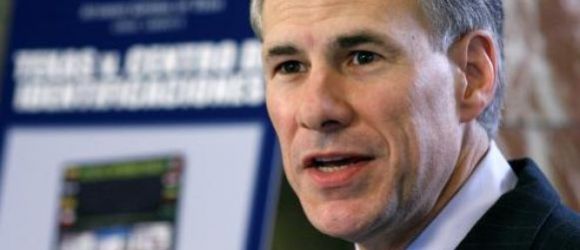
Attorney General Greg Abbott took the dispute over Texas’ maps to federal court in Washington. Photo: Harry Cabluck, AP / HC

The Justice Department’s civil rights division on Monday blocked Texas from enforcing a new law requiring voters to present photo identification at the polls, contending that the rule would disproportionately suppress turnout among eligible Hispanic voters.

The decision, which follows a similar move in December blocking a law in South Carolina, brought the Obama administration deeper into the politically and racially charged fight over a wave of new voting restrictions, enacted largely by Republicans in the name of combating voter fraud.

In a letter to the Texas state governmentThomas E. Perez, the assistant attorney general for civil rights, said the state had failed to meet its requirement, under the Voting Rights Act, to show that the measure would not disproportionately disenfranchise registered minority voters.

“Even using the data most favorable to the state, Hispanics disproportionately lack either a driver’s license or a personal identification card,” Mr. Perez wrote, “and that disparity is statistically significant.”

Texas has roughly 12.8 million registered voters, of whom about 2.8 million are Hispanic. The state had supplied two sets of data comparing its voter rolls to a list of people who had valid state-issued photo identification cards — one for September and the other in January — showing that Hispanic voters were 46.5 percent to 120 percent more likely to lack such identification.

PHOTO ILLUSTRATION BY TODD WISEMAN / TEXAS TRIBUNE

Under the Voting Rights Act, certain jurisdictions that have a history of suppressing minority voting — like Texas — must show that any proposed change to voting rules would not have a disproportionate effect on minority voters, even if there is no evidence of discriminatory intent. Such “preclearance” can be granted either by the Justice Department or by a panel of federal judges.

Texas officials had argued that they would take sufficient steps to mitigate any impact of the law, including giving free identification cards to voters who lacked them. But the Justice Department said the proposed efforts were not enough, citing the cost of obtaining birth certificates or other documents necessary to get the cards and the bureaucratic difficulties of that process.

In anticipation that the Obama administration might not clear the law, Texas officials had already asked a panel of judges to allow them to enforce the law. A hearing in that case is scheduled for this week, and the Justice Department filed a copy of its letter before the court.

The offices of Gov. Rick Perry and Attorney General Greg Abbott did not immediately respond to a request for comment. But Representative Lamar Smith, the Texas Republican who is chairman of the House Judiciary Committee, criticized the Justice Department, saying that “the people of Texas overwhelmingly supported” the law to prevent fraudulently cast votes from canceling out legitimate ones.

“This is an abuse of executive authority and an affront to the citizens of Texas,” Mr. Smith said in a statement. “It’s time for the Obama administration to learn not to mess with Texas.”

Under the state’s existing system, voters are issued certificates when they register that enable them to vote. But last year, Mr. Perry signed a law that would replace that system with one requiring voters to present one of several photographic cards at their polling station. The approved documents include a state-issued driver’s license or identification, a federal military card, a passport, a citizenship certificate or a concealed gun license issued by Texas. Other forms of identification, like student identification cards, would not count.

The measure was part of a wave of new voting restrictions passed in states around the country, mostly by Republicans following their sweeping victories in the 2010 elections.

Supporters argue that the restrictions are necessary to prevent fraud. Critics say there is no evidence of significant amounts of in-person voter impersonation fraud — the kind addressed by photo identification requirements — and contend the restrictions are a veiled effort to suppress turnout by legitimate voters who tend to vote disproportionally for Democrats.

READ MORE: THE NEW YORK TIMES

SUBSCRIBE to The Hispanic Blog to stay on top of the latest latino news, politics and entertainment!

Don’t be shy SUBSCRIBE – COMMENT – LIKE ME -CIRCLE ME AND FOLLOW ME

If you have any questions, concerns or simply would like to get a quote on my Marketing, Public Relations, Social Media and/or Events services, please feel free to contact me at thehispanicblog@gmail.com.

God Bless and may you have a fabulous day!

powered by Influential Access – “Transforming the Ordinary to EXTRAordinary!” – CEO – Jessica Marie Gutierrez – Creator of The Hispanic Blog #thehispanicblog


CAN SANTORUM WIN THE GOP NOMINATION

THE HISPANIC BLOG IS THE LATEST HISPANIC NEWS BY JESSICA MARIE GUTIERREZ

(Foto AP/Jae C. Hong)

Santorum Wins Kansas, Romney Shows Strong in Wyoming

With primaries in the southern states only a week away, former Pennsylvania Sen. Rick Santorum handily won the Kansas caucuses, while GOP frontrunner Mitt Romneyhad a strong showing in Wyoming.

“Things have an amazing way of working out,” Santorum told supporters in Missouri, where he traced his campaign through a series of highs and lows. He called his showing in Kansas a “comfortable win” that would give him the vast majority of the 40 delegates at stake.

A Fox News Latino poll of likely Latino voters, released earlier this week and conducted by Latin Insights, stills showed both candidates struggling far behind U.S. President Barack Obama.

In head-to-head match-ups none of the GOP candidates would garner more than 14 percent of the Latino vote come November, the poll said.

Returns from 89 percent of the state’s precincts showed Santorum with 51 percent support, far outpacing Romney, who had 21 percent. Newt Gingrich had 14 percent and Ron Paul trailed with 13 percent.

Santorum picked up at least 32 of the state’s 40 delegates at stake, cutting slightly into Romney’s overwhelming’s advantage.

Santorum’s triumph, coupled with Romney’s early advantage in Wyoming, came as the candidates pointed toward Tuesday’s primaries in Alabama and Mississippi that loom as unexpectedly important in the race to pick an opponent to President Barack Obama in the fall. Polls show a close race in both states, particularly Alabama, and Romney, Gingrich and Santorum all added to their television advertising overnight for the race’s final days.

Romney, the front-runner by far in the delegate competition, padded his lead overnight when he won all nine delegates on the island of Guam and then again in the Northern Mariana Islands.

Romney had 440 delegates in the AP’s count, more than all his rivals combined. Santorum had 213, while Gingrich had 107 and Paul had 46.

A candidate must win 1,144 to clinch the Republican presidential nomination at the national convention in Tampa next August.

In Wyoming, where some counties caucused earlier in the week, Romney had five of the 12 delegates at stake, Santorum had two, Paul had one, and one was uncommitted. Three more remained to be determined in party meetings on the day’s calendar.

Romney did not campaign in Kansas, leaving the field to Santorum and Paul.

Gingrich cancelled a scheduled trip to the state late in the week to concentrate on the two Southern primaries on Tuesday.

In sparsely populated Wyoming, there were 15 county conventions during the day to pick six convention delegates.

Kansas drew more attention from the White House hopefuls, but not much more, given its position midway between Super Tuesday and potentially pivotal primaries next Tuesday in Mississippi and Alabama.

Paul and Santorum both campaigned in the state on Friday, and Gov. Sam Brownback appeared with each, without making an endorsement.

In Topeka, Paul told an audience of about 500 that Kansas should be a “fertile field” for his libertarian-leaning views but declined to say how many delegates he hoped to gain.

Santorum, who hopes to drive Gingrich from the race in the coming week, lashed out at Obama and Romney simultaneously in remarks in the Kansas capital city.

“We already have one president who doesn’t tell the truth to the American people. We don’t need another,” he said.

The former Pennsylvania senator told reporters he was confident “that we can win Kansas on Saturday and come into Alabama and Mississippi, and this race should come down to two people.”

An aide to Gingrich said earlier in the week that the former House speaker must win both Southern primaries to justify continuing in the campaign.

But Gingrich strongly suggested otherwise on Friday as polls showed a tight three-way contest in Alabama.

“I think there’s a fair chance we’ll win,” he told The Associated Press about the contests in Alabama and Mississippi. “But I just want to set this to rest once and for all. We’re going to Tampa.”

Romney had no campaign appearances Saturday. The former Massachusetts governor won six of 10 Super Tuesday states earlier in the week, and hopes for a Southern breakthrough in Alabama on Tuesday after earlier losing South Carolina and Georgia to Gingrich.

SUBSCRIBE to The Hispanic Blog and stay on top of the latest Latino news, politics and entertainment!

Don’t be shy SUBSCRIBE – COMMENT – LIKE ME -CIRCLE ME AND FOLLOW ME

If you have any questions, concerns or simply would like to get a quote on my Marketing, Public Relations, Social Media and/or Events services, please feel free to contact me at thehispanicblog@gmail.com.

God Bless and may you have a fabulous day!

powered by Influential Access – “Transforming the Ordinary to EXTRAordinary!” – CEO – Jessica Marie Gutierrez – Creator of The Hispanic Blog #thehispanicblog