PRESIDENT OBAMA RESPONDS: WHY IMMIGRATION REFORM WAS NOT PASSED IN FIRST TERM

THE HISPANIC BLOG IS THE LATEST HISPANIC NEWS BY JESSICA MARIE GUTIERREZ

On GOP‘s Super Tuesday, Obama Talks Immigration Reform

President Barack Obama acknowledged Tuesday that his administration was unable to pass comprehensive immigration reform, a promise he made during his 2008 campaign, but said that was because immigration had become a partisan issue.

“When I came into office I said ‘I’m going to push to get this done.’ We didn’t get it done,” Obama said during a press conference at the White House. “The reason we haven’t got it done is because what used to be a bipartisan issue, agreement that we should fix this, ended up becoming a partisan issue.”

Obama was responding to a question about recent polls showing the president holding a favorable lead among Latinos against the GOP candidates in the run-up to November’s elections, despite growing disappointment among the community about the failure of any immigration reform.

A Fox News Latino/Latin Insights poll released Monday of likely Latino voters indicated that 73 percent of them approved of Obama’s performance in office, with over half those questioned looking favorably upon his handling of the healthcare debate and the economy, at 66 percent and 58 percent respectively.

More than half of the poll’s respondents, however, said they felt U.S. immigration policy was too strict and an overwhelming majority – 85 percent – would like to see undocumented immigrants have a chance to legalize their status. A huge percentage, 82 percent, believe undocumented immigrants do work that Americans will not do. They feel the undocumented workers help expand the economy.

“My hope is that after this election the Latino community will have sent a strong message that they want a bipartisan effort to pass comprehensive immigration reform that involves making sure that we got tough border security, and this administration has done more for border security than just about anybody,” Obama said, adding that immigration reform also needed to include making sure companies don’t take advantage of undocumented workers and that there was a clear path to citizenship for undocumented immigrants.

An overwhelming majority of those polled –nine out of ten– support the DREAM Act, which would allow undocumented immigrants brought as children to gain legal U.S. residency if they attend college or join the military.

Obama praised former President George W. Bush and his advisors for saying that immigration reform should not be something that just the Democrats support. “That was good advice then, it’s good advice now,” Obama said.

The president continued on to say that Congress needs to unify under this matter if any progress is going to be made toward passing immigration reform.

“Ultimately I can’t vote for Republicans. They’re going to have to come to the conclusion that this is good for the country and that this is something that they themselves think is important,” Obama said. “Depending on how Congress turns out, we’ll see how many Republican votes we’ll need to get it done.”

Read more: http://latino.foxnews.com/latino/politics/2012/03/06/obama-calls-for-bipartisan-support-in-immigration-reform/#ixzz1oO56iYXI

SUBSCRIBE to The Hispanic Blog and stay on top of the latest Latino news, politics and entertainment!

Don’t be shy SUBSCRIBE – COMMENT – LIKE ME -CIRCLE ME AND FOLLOW ME

If you have any questions, concerns or simply would like to get a quote on my Marketing, Public Relations, Social Media and/or Events services, please feel free to contact me at thehispanicblog@gmail.com.

God Bless and may you have a fabulous day!

powered by Influential Access – “Transforming the Ordinary to EXTRAordinary!” – CEO – Jessica Marie Gutierrez – Creator of The Hispanic Blog #thehispanicblog


CAN SOMEONE EXPLAIN ENERGY POLICY?

THE HISPANIC BLOG BY JESSICA MARIE GUTIERREZ

20120301-120146.jpg

The United States desperately needs an energy policy. It is fundamental to our economic growth, environmental sustainability and national security. With five percent of the world’s population and 20 percent of its energy use, the U.S. has an obligation to lead globally. We need to set the right example at home.

20120301-120413.jpg

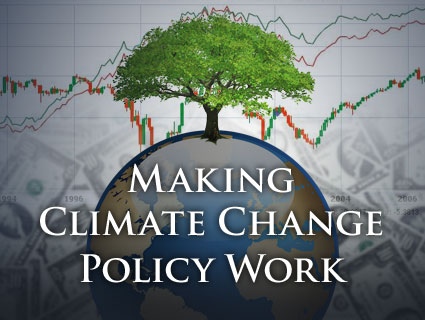
When President Obama took office three years ago, he put climate change at the top of the agenda. However, to have climate change policy you need an energy policy. People confuse the two — you need both for sustainable development.

20120301-120602.jpg

In this year’s State of the Union address, President Obama tempered his message, saying the country needs an “all of the above” energy policy to provide supplies that are cleaner and cheaper. That is nice political rhetoric — but a gross oversimplification of the challenges ahead.

At the same time, the energy industry must do a much better job informing the public and educating political leaders about the pragmatic realities we face and the difficult choices we must make. Sound energy policy can only emerge if the government, energy industry and the public have a shared understanding of the challenge. To achieve this, the energy industry needs to regain the public trust. In a Gallup poll last year of public opinion of 25 business sectors and government, oil and gas ranked next to last. Only the federal government had worse ratings.

20120301-122218.jpg

These are the energy realities that we face:

Eighty-five percent of the world’s energy comes from hydrocarbons: 35 percent oil, 30 percent coal and 20 percent natural gas.

It is estimated that the world population will grow from seven billion today to nine billion by 2050, with much of that growth in developing countries. With a corresponding increase in living standards, hydrocarbon energy is essential for economic development.

20120301-122511.jpg

World demand for oil is expected to grow on an annual basis by at least one million barrels per day, driven by the developing economies of the world and growth in transportation, which is forecast to increase from one billion cars today to two billion in 2050.

We are not running out of oil. We have already produced one trillion barrels and globally there are approximately two trillion barrels remaining of conventional oil. While we currently have world surplus oil production capacity of two to three million barrels per day, as demand grows in the next decade we will not have enough oil production capacity to keep up. Without greater investment in new capacity, tight supply will ration demand and prices will skyrocket — which could bring the world economy to its knees. The per barrel oil price of $140 four years ago was not an aberration, but a warning.

While renewable energy is needed and development should be encouraged to meet future energy demand and reduce our carbon footprint, hydrocarbons will fuel the world’s economy for many decades to come. Renewables do not have the scale, development timeframe or economics to materially change this outcome as much as we would hope.

The energy industry has to stand up to provide strategic vision. Here are some thoughts for a United States energy policy.

20120301-122636.jpg

Oil: U.S. energy policy for oil should aim at moderating demand through efficiency and increasing supply by focusing on drilling. In terms of demand, we need to raise the mileage performance standard to 50 miles per gallon as quickly as possible. This can be achieved first and foremost through hybrid electric cars, as well as a combination of vehicle mix, engine downsizing and advanced combustion technology. Replacing the nation’s fleet of 230 million cars and light duty trucks with more fuel-efficient vehicles over 15 years could save three million barrels of oil equivalent per day. At today’s price of $100 per barrel, this change would save over $100 billion a year in energy costs — a worthy prize.

20120301-123124.jpg

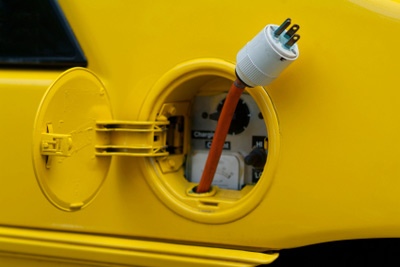
Electric battery powered cars are viewed by some as the ultimate solution for moderating oil demand. Unfortunately, there are significant obstacles to the widespread implementation of electric cars. The challenge is that range is generally limited to 40 miles on an eight-hour charge and batteries cost more than $10,000 per car. The laws of physics explain the range challenge. The energy density of today’s best battery is 200 watt-hours per kilogram versus the energy density of gasoline — 13,000 watt-hours per kilogram.

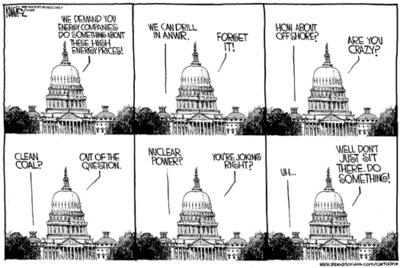
To increase oil supply, we must maintain tax provisions that incentivize drilling and strengthen energy security. In 2010, the oil and gas industry spent approximately $135 billion in intangible drilling costs (IDCs), which are current cash operating costs of drilling that tax law allows companies to expense in the year incurred. President Obama recently said in his State of the Union Address that we have subsidized oil companies for a century and that is long enough. Taking this position might be good politics — but it’s not good policy. It serves nobody’s purpose for our political leadership to vilify oil producers. These costs are neither tax breaks nor subsidies for oil companies; they are an investment in America’s energy future. Eliminating expensing of IDCs would decrease domestic supply, increase foreign imports, hurt our balance of trade, decrease jobs and reduce energy security.

20120301-123426.jpg

We also must do all we can to increase the world’s oil supply. With non-OPEC production nearing a plateau, the supply burden in the future will increase on OPEC, specifically Saudi Arabia and Iraq. The global oil and gas industry is expected to spend $600 billion this year on exploration and production, or 10 percent more than a year ago. With the long lead times in our business, the world is not investing enough globally to ensure surplus capacity in the next five to ten years.

20120301-123730.jpg

Natural Gas: U.S. energy policy for natural gas should focus on shale gas, which is a real game changer. Five years ago, shale gas accounted for approximately five percent of U.S. natural gas production; today it makes up almost 30 percent. Natural gas provides a significant competitive cost advantage for the United States in terms of cost per unit, which is several times lower than it is in other countries. It also has environmental advantages, with half the carbon footprint of coal, and helps our nation’s energy security as supplies are forecast to last for the next 100 years.

We should grow gas demand as a fuel in heating, electricity, petrochemical manufacturing and transportation. However, the biggest opportunity is electricity generation, where natural gas has lower costs and higher efficiency than in transportation. An electric plant is 50 percent efficient, whereas natural gas used in transportation is 15 percent efficient.

20120301-124231.jpg

We must use hydraulic fracturing to develop our abundant natural gas resources. This has been a common practice since 1949 and over one million wells have been hydraulically fractured in the U.S. Eighty percent of the 44,000 wells drilled in our country each year require hydraulic fracturing, using a closed system with water, sand and a small percentage of additives to fracture rock and release hydrocarbons. Most states do a very good job regulating this activity. Adding duplicative federal regulation would be counterproductive.

20120301-124453.jpg

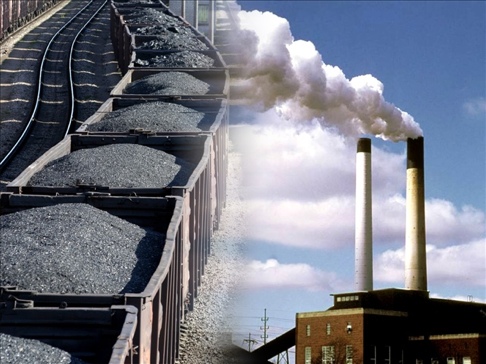
Coal: U.S. energy policy for coal should reduce its use until research breakthroughs make clean coal technically feasible and commercially viable. While almost 50 percent of our electricity comes from coal, Al Gore’s words ring true: “Clean coal,” he said, “is like healthy cigarettes.” At present, it does not exist. We have more than 600 coal plants in the U.S., one third of which are over 50 years old; many need significant investments to meet anticipated environmental regulations. With the superior economics of natural gas, older plant capacity should be replaced with gas-fired plants.

20120301-124750.jpg

Nuclear: Even before the disaster in Japan, nuclear power had problems due to the high cost of new plants, the long lead time needed to build them and the challenges of secure nuclear waste disposal. While we need to maintain our technical capability and portfolio options by building a few new plants a year, the high cost of nuclear plants means they cannot compete economically against natural gas and they will have a limited role going forward.

20120301-125026.jpg

Climate change: U.S. energy policy must also deal with climate change in a way that sets targets that sustain economic growth and protect the environment. Proposals to reduce the world’s carbon emissions by 80 percent by 2050 are not achievable. A study done by Princeton University’s Carbon Mitigation Initiative sets forth strategies needed to mitigate emissions globally such as setting 60 miles per gallon for fuel efficiency, doubling the number of nuclear plants, capturing and storing carbon from 800 coal plants and increasing wind power by 10 times today’s capacity. Executing eight of these herculean initiatives would hold CO2 emissions flat by 2060. We should be realistic about targets we set and make sure we do not put the economy into reverse.

20120301-125439.jpg

The United States and Europe cannot meet the challenge of climate change alone. The role of China, which now accounts for 10 percent of the world GDP, is critical. China recently surpassed the U.S. in CO2 emissions and will probably triple its CO2 emissions in the next 30 years. China’s energy policy is integral to its national security and foreign policy. In the last three years, China spent over $45 billion to acquire oil and gas reserves worldwide.

20120301-125614.jpg

The United States needs to get serious about climate change once our economy recovers and people get back to work. Some say we should then consider energy taxes, such as a $1 per gallon gasoline tax for transportation and a $10 per ton carbon tax for electric generation. While it would take political courage, these taxes should be given full examination. They should be introduced over a five-year period and only when other major industrial powers in the G-20 take similar measures.

20120301-133506.jpg

Carbon price signals would ensure that we use hydrocarbon energy more efficiently and make meaningful reductions in CO2 emissions. When fully implemented, such taxes would generate over $200 billion per year. Ninety percent of the revenue could be directed at reducing our nation’s financial deficit — provided it is coupled with spending cuts. The remaining ten percent could be dedicated to research in alternative energy technologies such as batteries, biofuels and carbon capture and storage, as well as infrastructure projects such as smart grids and the hydrogen economy. We need to develop these technologies so that one day they can reach their promise and competitively position the U.S. economy for the future.

20120301-130333.jpg

Three C’s: Energy and climate change have been called the greatest challenge of the 21st Century. Energy industry leaders should help offer a solution by following three principles I call the “Three C’s”: Communication, Courage and Collaboration.

20120301-130637.jpg

First, we must communicate the pragmatic realities we face and the fact that hydrocarbons are critical to our future.

20120301-130923.jpg

Second, we must have the courage to provide the strategic vision for a secure energy future that underpins economic growth and protects the environment.

20120301-131238.jpg

Third, we must collaborate — Democrats and Republicans, government and industry and the United States with the rest of the world — in the spirit of compromise for the common good. We need to put energy policy at the top of the U.S. political agenda and that of the G-20 as well. Together, we can create an energy policy to make our country more competitive and secure economic prosperity for future generations.

20120301-131802.jpg

Read More: part of the HBR Insight Center on American Competitiveness .

20120301-132751.jpg
Get full story by John B. Hess

SUBSCRIBE to The Hispanic Blog and stay on top of the latest Latino news, politics and entertainment!

Don’t be shy SUBSCRIBE – COMMENT – LIKE ME -CIRCLE ME AND FOLLOW ME

If you have any questions, concerns or simply would like to get a quote on my Marketing, Public Relations, Social Media and/or Events services, please feel free to contact me at thehispanicblog@gmail.com.

God Bless and may you have a fabulous day!

powered by Influential Access – “Transforming the Ordinary to EXTRAordinary!” – CEO – Jessica Marie Gutierrez – Creator of The Hispanic Blog #thehispanicblog
 

CAN PRESIDENT OBAMA WIN THE HISPANIC VOTE?

THE HISPANIC BLOG BY JESSICA MARIE GUTIERREZ

20120227-165516.jpg photo by Time Magazine

President Barack Obama told a Hispanic audience that he has “another five years coming up” in his presidency and will use the time to push for an overhaul of the U.S. immigration system.

20120227-164843.jpgPresident Barack Obama walks up the steps of Air Force One at Andrews Air Force Base in Md., Thursday, Feb. 23, 2012. Mr. Obama is heading to Florida to visit the University of Miami and attend several fund-raisers. (AP Photo/Susan Walsh)

“My presidency is not over. I’ve got another five years coming up. We’re going to get this done,” the president said in an interview Wednesday with Univision Radio. The interview came ahead of the president’s trip to Florida Thursday to deliver remarks on energy policy and the economy and to raise money for his re-election campaign.

The Hispanic community has criticized Mr. Obama for doing little to carry out his promise to overhauling the immigration system. They have also taken issue with the Obama administration’s increase in deportations.

20120227-165121.jpg

Mr. Obama said Republicans in Congress shoulder most of the blame for the lack of progress in changing the country’s immigration laws.

“Unfortunately, the Republican side, which used to at least give lip service to immigration reform, now they’ve gone completely to a different place, and have shown themselves unwilling to talk at all about any sensible solutions to this issue, and we’re going to have to just keep up the pressure until they act,” he said.

He also criticized Republican presidential candidate Mitt Romney.

“So far, have we haven’t seen any of the Republican candidates even support immigration reform,” the president said. He continued, “In fact, their leading candidate said he would veto even the Dream Act, much less comprehensive immigration reform.”

The Dream Act would grant permanent-resident status to undocumented immigrant students who completed some college or military service. Mr. Romney has called the act a “handout.”

Latinos, who generally lean Democratic, will play a crucial role in the election in states such as Florida and Virginia. Mr. Obama said he doesn’t think the choice for Latinos will be difficult.

READ MORE: Article by the WSJ Blog

SUBSCRIBE to The Hispanic Blog and stay on top of the latest Latino news, politics and entertainment!

Don’t be shy SUBSCRIBE – COMMENT – LIKE ME -CIRCLE ME AND FOLLOW ME

If you have any questions, concerns or simply would like to get a quote on my Marketing, Public Relations, Social Media and/or Events services, please feel free to contact me at thehispanicblog@gmail.com.

God Bless and may you have a fabulous day!

powered by Influential Access – “Transforming the Ordinary to EXTRAordinary!” – CEO – Jessica Marie Gutierrez – Creator of The Hispanic Blog #thehispanicblog

 

WHAT IS PRESIDENT OBAMA DOING TO FIX THE IMMIGRATION SYSTEM?

THE HISPANIC BLOG

20120224-125741.jpg

FROM THE WHITE HOUSE

“We are the first nation to be founded for the sake of an idea—the idea that each of us deserves the chance to shape our own destiny. That’s why centuries of pioneers and immigrants have risked everything to come here…The future is ours to win. But to get there, we cannot stand still.”

President Obama is calling for a national conversation on immigration reform that builds a bipartisan consensus to fix our broken immigration system so it works for America’s 21st century economy, but he can’t do it alone. Help bring the debate to your community by hosting a roundtable.

CONTINUE THE CONVERSATION IN YOUR COMMUNITY AND HOST A ROUNDTABLE.

President Obama is calling for a national conversation on immigration reform that builds a bipartisan consensus to fix our broken immigration system so it works for America’s 21st century economy and security needs, but he can’t do it alone. That is why we are asking you and other Americans, including business leaders, faith leaders, law enforcement leaders and all Americans that understand that we cannot continue to live with the broken system the way it is – to continue the conversation in your community by hosting a roundtable.

Step 1:
Download the toolkit. Click on link below.

Step 2:
Tell us about your event using the form to the right.

Step 3:
Tell us how your event went and submit the completed toolkit on the follow up form.

http://m.whitehouse.gov/issues/immigration/roundtables

President Obama recognizes that our current immigration system is broken and he is deeply committed to building a new 21st century immigration system that meets our nation’s important economic and security needs. In his State of the Union Address, the President laid out his vision for winning the future. To secure prosperity for all Americans, we must out-innovate, out-educate, and out-build the rest of the world, and fixing our immigration system plays an important part in that plan. As we work to rebuild our economy, our ability to thrive depends, in part on restoring responsibility and accountability to the immigration system.

President’s Vision for Reform
The President plans to create a 21st century immigration system by:

-Continuing to fulfill the federal government’s responsibility to securing our borders;

-Demanding accountability for businesses that break the law by undermining American workers and exploiting undocumented workers;

-Strengthening our economic competiveness by creating a legal immigration system that reflects our values and diverse needs; and
Requiring responsibility from people who are living in the United States illegally.

-Building on Progress
During the last two years, the Obama Administration has taken important steps to improve our immigration system within the boundaries of existing laws. For example, the Administration has:

—-Dedicated unprecedented resources to secure the border;

—-Made interior and worksite enforcement smarter and more effective; and

—-Worked to improve our legal immigration system.

BLUEPRINT FROM THE WHITE HOUSE

Click to access immigration_blueprint.pdf

ACCORDING TO THE PRESIDENT:

WASHINGTON (Reuters) – President Barack Obama, expressing confidence he will win re-election in November, told a Hispanic audience he would use a second term to seek comprehensive immigration reform.

“My presidency is not over,” Obama said in an interview with Univision Radio when asked about his failure so far to push through an immigration bill. “I’ve got another five years coming up. We’re going to get this done.”

Obama is seeking to shore up support among Hispanic voters, whose strong backing helped him win the White House in 2008. But some in the Latino community are disappointed over the lack of progress toward overhauling the immigration system.

Obama – in an interview broadcast the day before his Thursday trip to Florida, an election battleground state with a large Hispanic population – sought to reassure Latinos he was committed to trying to pass broad immigration reform.

He rejected suggestions that he had broken a campaign promise and put the blame on Republicans in Congress who he said were “unwilling to talk at all about any sensible solutions to this issue.”

“So far, we haven’t seen any of the Republican candidates even support immigration reform,” Obama said, taking aim at his potential opponents in the November 6 election.

The White House hopes that hard-line positions taken by Republican presidential contenders on illegal immigration and border control will help Obama with Hispanic voters in vital swing states like Florida, Nevada and Colorado.

SUBSCRIBE to The Hispanic Blog and stay on top of the latest Latino news, politics and entertainment!

Don’t be shy SUBSCRIBE – COMMENT – LIKE ME -CIRCLE ME AND FOLLOW ME

If you have any questions, concerns or simply would like to get a quote on my Marketing, Public Relations, Social Media and/or Events services, please feel free to contact me at thehispanicblog@gmail.com.

God Bless and may you have a fabulous day!

powered by Influential Access – “Transforming the Ordinary to EXTRAordinary!” – CEO – Jessica Marie Gutierrez – Creator of The Hispanic Blog #thehispanicblog
IS DREAM ACT ON PRESIDENT’S AGENDA?

THE HISPANIC BLOG

20120224-121058.jpg

College student Jasmine Oliver, of Warwick, R.I., top left, and Javier Gonzalez, of Pawtucket, R.I., top right, display a banner and shout their support for allowing undocumented immigrants to pay in-state tuition rates while attending public colleges in the state, during a Board of Governors of Higher Education meeting on the campus of the Community College of Rhode Island, in Warwick, R.I. (AP Photo/Steven Senne, File)

President Barack Obama said Congress should take one step toward overhauling the country’s immigration system by passing the DREAM Act, a bill that would provide a path to citizenship for some children of undocumented migrants.

In an interview with Oakland, California-based Radio Bilingue that was rebroadcast Wednesday via Internet, Obama said his administration prioritizes the deportation of undocumented immigrants with criminal records and tries to avoid separating families.

The president said his administration is doing all it can to make the immigration system more humane, but that the most important priority is to fix the country’s immigration laws.

He noted that during his State of the Union address last month he urged lawmakers to approve the DREAM Act, which passed the House of Representatives in December 2010 but has stalled in the Senate.

That bill would offer permanent residence to undocumented high school graduates who enlist in the U.S. Armed Forces or attend college.

Obama said that legislation should be a priority this year, although he lamented that hard-line Republicans were refusing to work in a bipartisan fashion on the issue.

According to the president, it is important that Congress listen to the Hispanic community and other communities affected by the country’s broken immigration system.

An estimated 5,000 U.S. children whose parents have been deported or detained because of their immigration status have been placed in state foster care nationwide, according to an investigation made public late last year by the Applied Research Center.

Obama has acknowledged that his administration’s enforcement policies have caused the break-up of families in some instances and pledged to ensure that children are not separated from their parents without due process.

The president, who will seek re-election in November, supports a “comprehensive” immigration overhaul that would strengthen border security while simultaneously putting many of the estimated 11 million undocumented immigrants in the United States on a path to citizenship.

By contrast, most of the candidates vying for the Republican presidential nomination, who on Wednesday squared off in a debate in Arizona, oppose such a plan because they say it would provide amnesty for lawbreakers.

Read more: http://latino.foxnews.com/latino/politics/2012/02/23/obama-pushes-congress-to-make-dream-act-priority-in-2012/#ixzz1nJp4jlpR

SUBSCRIBE to The Hispanic Blog and stay on top of the latest Latino news, politics and entertainment!

Don’t be shy SUBSCRIBE – COMMENT – LIKE ME -CIRCLE ME AND FOLLOW ME

If you have any questions, concerns or simply would like to get a quote on my Marketing, Public Relations, Social Media and/or Events services, please feel free to contact me at thehispanicblog@gmail.com.

God Bless and may you have a fabulous day!

powered by Influential Access – “Transforming the Ordinary to EXTRAordinary!” – CEO – Jessica Marie Gutierrez – Creator of The Hispanic Blog #thehispanicblog