HOW TO BEGIN MARKETING TO HISPANICS

THE HISPANIC BLOG IS THE LATEST HISPANIC NEWS BY JESSICA MARIE GUTIERREZ

Hispanic Consumer Research: A Beginner’s Guide to Spotting and Seizing Opportunity

family

THE MANDATE

It is a very common situation – marketers who had never gotten around to establishing a specialized Hispanic program are suddenly faced with a corporate mandate – “Go after the Hispanic market!” Other companies and brands are clearly benefiting from having done so and may appear to be very far down this road – but you are just taking your first steps.

DON’T BE DISCOURAGED

There’s no need to be intimidated; in fact, by starting now you can benefit from the best practices established by others and avoid the pitfalls (and the bumps and bruises) they encountered.

Before you get going, you need to do your homework – to understand what you should do, could do and need to avoid at all costs. Most advertisers begin with research, both internal and with a partner who intimately understands the Hispanic market. You can be wiser than those who may appear to be further along by relying on expert research that has much more refined tools and methods – that recognizes that the “Hispanic market” is heterogeneous and ever-changing.

Syndicated data has its place in this process, yet often falls short by having no Hispanic data view. To properly identify the Hispanic opportunities for your products in your categories, you need to develop a tailored program – one that reflects both your needs and your budget.

Of course, there is no one singular way to go about this process of discovery – but here is a general guide, based on years of experience with clients in dozens of CPG categories.

SECONDARY COMES FIRST

Start with some secondary research to quantify basic information about your company categories, to see which are the lowest hanging fruit – the ones in which Hispanics over-index. For this you would use shopper data or syndicated studies that show market activity and incidence levels by market (and ethnicity).

There may, however, be bigger opportunities in categories in which Hispanics under-index; here you can examine why there is a lack of interest, possibly “introduce” the category, present your brand as the solution, and own it. But tougher categories are best taken on when you have a better idea of what you are doing; it’s best to start with the simplest tasks.

To make this effort more than an activity you need a filter. The bottom line is to ask yourself the following questions as you examine the secondary data:

  • What are my objectives in targeting the Hispanic population?
  • What can I learn from competitive brands that target Hispanics?
  • What has my company done that has succeeded or failed?
  • What holes in my discovery need to be filled with custom research in order to have a solid strategy and activate tactics?

WHERE CONSULTANTS AND AGENCIES FIT IN

At some point, if it has not been done already, the group will consider hiring an ad agency and/or a strategic consultant that specializes in the multi-cultural or Hispanic-specific market. This can be done at any point, but the strategic consultant is often brought in to lead the secondary data search. An ad agency typically comes on board after the secondary research phase but before the start of custom research; this way, the agency can be part of the learning and benefit from the insights and consumer input (as well as contribute to the process from their own unique perspective).

Because hiring an ad agency can be a long and involved process, this is sometimes done after the client has figured out what categories, brands and products they will be focusing on. The client might pick a very different agency depending on their starting point, as they will be looking for teams with certain types of experience. At the very least, sub-optimally, the agency people can then be exposed to the video tapes and transcripts of the earlier qual work.

CUSTOM RESEARCH STARTS WITH QUALITATIVE

Most companies start with exploratory qualitative, just to get the lay of the land. Likely areas to explore include:

  • key issues
  • views of the competitive set
  • category drivers for Hispanics
  • usage occasions for the category and brands
  • histories with the category and brands in Latin America

If you have the budget and need to find out more based on the qual results, you may want to consider ethnographic research – shop-alongs, home visits, groups of “comadres” or “compadres” who will gather at someone’s home and talk informally or go out together to partake in the retail experience.

GETTING QUANTITATIVE

photo source: courtesy of the Little in the Middle denim brand. The leader in denim for Latinos. http://www.littleinthemiddle.com

Your quantitative research path will depend on your objectives in targeting the Hispanic population. For instance: Are you targeting within the existing brand portfolio? Are you thinking about a separate ad campaign, with or without specific in-store activation? Or, are you launching a new brand? With quantitative research, you can test the hypotheses that well-executed secondary and qual has developed.

Many clients simply start with an Attitude and Usage study to quantify the opportunities raised in the qual and ethnographic work, and to get a clear idea of where an existing brand is positioned in the market. Yet, an A&U could fall very short of providing the information you need if you are talking about messages and/or new product launches. For these, you need to undertake more comprehensive research.

With a solid A&U in your pocket, you can confidently pick a category to start with, a brand to focus on, make projections for ROI, establish budgets – and really get going. You can also use the A&U as a benchmark wave for any future tracking or brand health monitoring.

MORE CUSTOM RESEARCH AS NEEDED

Clients often try to simply adapt their general market strategy to the Hispanic market. This can be problematic, as needs/priorities can be very different among Hispanics – especially when the issue is messaging and ad creative.

This is why, as part of the ad development process, clients will often commission more Hispanic-focused quant research to test the positioning concepts or messaging before picking one to be produced. The client may then set up some test markets (and a control or two) to monitor the progress for the brand and the quality of the campaign. After two or three waves of a pre/post tracker, the client can decide to go national with the effort or to roll out regional approaches if deemed best for the category.

After a campaign has proven its potential, other elements are added, such as in-store promotions and co-op marketing like store flyers, events, online, and promotions – all of which can and should be researched prior to launch.

MATURITY ENSUES

As the effort matures, additional categories can be tackled, and ultimately you reach the holy grail of marketing to Hispanics – marketing not just your products, but your Master Brand. This is one of the more effective ways of building a deep, abiding relationship with Hispanic consumers, one based on confidence that the brand will be there for them.

Eventually, doing solid Hispanic research and marketing will become a standard part of every company’s everyday business. You will have integrated your Hispanic effort into your mainstream campaigns, so it will be seamless and synergistic. For the moment, however, adoption of Hispanic marketing into the mainstream is inconsistent – which means that untapped opportunities still abound; so don’t feel bad you’re getting a late jump. Start the process of finding your Hispanic-market-fueled profit growth today!

READ MORE: KNOWLEDGE NETWORKS

SUBSCRIBE to The Hispanic Blog to stay on top of the latest latino news, politics and entertainment!

Don’t be shy SUBSCRIBE – COMMENT – LIKE ME -CIRCLE ME AND FOLLOW ME

If you have any questions, concerns or simply would like to get a quote on my Marketing, Public Relations, Social Media and/or Events services, please feel free to contact me at thehispanicblog@gmail.com.

God Bless and may you have a fabulous day!

powered by Influential Access – “Transforming the Ordinary to EXTRAordinary!” – CEO – Jessica Marie Gutierrez – Creator of The Hispanic Blog #thehispanicblog

ALLSTATE: ON TOP 25 LIST OF HISPANIC ADVERTISERS AND ITS “PROTECTION IN SOCCER”

THE HISPANIC BLOG IS THE LATEST HISPANIC NEWS BY JESSICA MARIE GUTIERREZ

Allstate Corp. is not only one of the nation’s top 25 largest advertisers in Hispanic media, according to Advertising Age’s, Hispanic Fact Pack 2011. The  insurer has also joined the “Best-in-class” group of companies for allocating over 14.2 percent of its marketing budget in Hispanic Media, per a comprehensive study conducted by Santiago Solutions Group and released by the Association of Hispanic Advertising Agencies (AHAA.)

For the past two years, Allstate has been the presenting sponsor of Sueño MLS, a nationally televised search for the best undiscovered soccer talent in the U.S. Now on its sixth year, the program allows soccer enthusiasts to participate in a national competition that is chronicled every week on Univision Network’s República Deportiva.

Karen Uhler, Allstate Marketing Director of Sponsorships, responded a few questions via email from Portada. An edited excerpt follows.

Portada: How did Allstate’s sponsorship come about?

Karen Uhler: Sueño MLS is now on its sixth year and Allstate has been the presenting sponsor for the past two years. This year, we have added a unique element to the competition with the search of the best youth goalkeeper to win the “Good Hands” award – El Portero Allstate. Allstate has supported soccer fans for six years through the Mexican National Soccer team partnership and supporting Sueño MLS is an extension of our commitment to soccer fans.

P: Why is this program important for an advertiser like Allstate?

KU: At Allstate, we celebrate protection in soccer – and in everyday life – and we’re committed to bringing sports fans closer to the game they love through this initiative. For us it is a perfect fit.

P: Besides soccer and the MLS program, how does Allstate market to US Hispanics?

KU: Allstate recognized the importance of the U.S. Hispanic population early on, and has stayed on top of Hispanic consumer trends and population growth patterns. The company is the official insurance sponsor of the Mexican National Team, as well as Major League Soccer (MLS), and U.S. Men’s and Women’s soccer teams. Allstate also supports New Futuro, an organization that provides free bilingual higher education resources to Hispanic families in their local communities.

P: How important is the U.S. Hispanic market to a company like Allstate?

KU: I would say approximately 30% of our agencies serve customers who are Spanish-preferred. Allstate Agencies are located in communities across the country and serve consumers of all backgrounds based on their preferences. We offer them the opportunity to talk to a live Allstate representative in Spanish 24 hours a day, 7 days a week. Customers can also find information on our products and services on a dedicated, Spanish-language website, miallstate.com, which is not just a translation of allstate.com but was developed based on research and input from Hispanic consumers.

P: What would you say is the most challenging part of marketing insurance to US Hispanics? Is it very different from the messaging to the general market?

KU: Marketing to Hispanics has to go beyond language; it is about needs and expectations. We care about what is important to consumers and develop our products and services with that in mind. We look specifically at how to protect what they have worked so hard for and built for a better future. That is why consumers see our Allstate message wherever they are – in magazines and newspapers, on television, online, on the radio, as they drive – and even through our sports sponsorships like soccer, football, the U.S. Olympic Team, basketball and community sponsorships, like New Futuro.

P: Last year Allstate launched an online awards show featuring some memorable moments on Telemundo telenovelas, how did that go? Is Allstate working on something similar this year?
KU:
 We had a lot of fun working with Telemundo last year with the “Allstate Presents Premios Telemundo Novelas” and Allstate’s Best Mala Suerte (Bad Luck) moment. This year the Premios Telemundo are moving to a national TV broadcast, and we are looking forward to continuing the momentum we built with Telemundo in 2011. Stay tuned.

P: How do you work with your agencies? Do you have a Hispanic agency for creative? Which one for media planning/buying?
KU: Allstate works with its agencies as partners and together we contribute to a common goal:  engage the consumer. Lápiz is our creative agency for U.S. Hispanic and Tapestry is our media planning/buying agency.

READ MORE: PORTADA

SUBSCRIBE to The Hispanic Blog to stay on top of the latest latino news, politics and entertainment!

Don’t be shy SUBSCRIBE – COMMENT – LIKE ME -CIRCLE ME AND FOLLOW ME

If you have any questions, concerns or simply would like to get a quote on my Marketing, Public Relations, Social Media and/or Events services, please feel free to contact me at thehispanicblog@gmail.com.

God Bless and may you have a fabulous day!

powered by Influential Access – “Transforming the Ordinary to EXTRAordinary!” – CEO – Jessica Marie Gutierrez – Creator of The Hispanic Blog #thehispanicblog

WILL OBAMA REFORM IMMIGRATION: A LOOK INTO VICE PRESIDENT BIDEN’S STANCE ON REFORM AND DREAM ACT

THE HISPANIC BLOG IS THE LATEST HISPANIC NEWS BY JESSICA MARIE GUTIERREZ

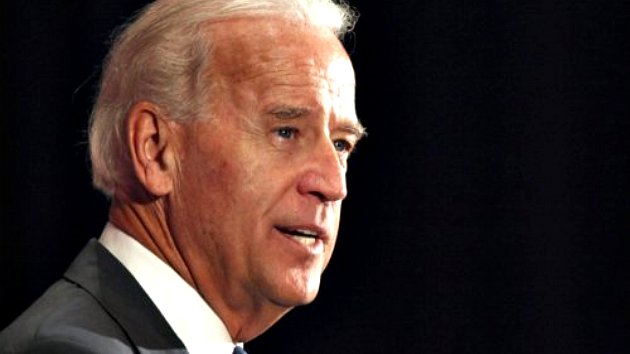
Vice President Joe Biden wants comprehensive reform and the DREAM Act.

As vice president, Joe Biden often has taken the lead in arguing the Obama administration’s positions on immigration issues.

This is particularly true when it comes to the DREAM Act, comprehensive reform and criticism of states that have written their own immigration laws such as Arizona and Alabama.

In January 2012, Biden spoke to a group of college students in Reno, Nev., and told them that the administration is committed to pushing passage of DREAM Act legislation that will allow the children of undocumented immigrants to pay reduced, in-state tuition rates.

“The president and I are absolutely, positively, foursquare, for the DREAM Act,” Biden said. “It makes no sense not to educate everyone in this country who is here with a college degree.”

Biden’s wife, Jill, the United States’ “second lady,” is a longtime educator who has taught at several colleges, most recently at Northern Virginia Community College. The Bidens have been outspoken in their belief that a college education should be within reach of all U.S. residents.

Photo: Frank Polich/Getty Images

Biden often has made the argument that it makes no sense to deny children of undocumented immigrants an education because of the violations of their parents. He also has made the economic argument that, with an education, these youths could become productive members of U.S. society who pay taxes and contribute to the economy.

Echoing the sentiments of President Obama, Biden believes passing the DREAM Act should be part of comprehensive reform that makes broad changes to U.S. immigration policy.

“Our immigration system is broken,” he has said often. “This is a federal responsibility we have not lived up to.”

While acknowledging that Congress and the federal government have failed at reforming the system, Biden does not believe states have the right to go forward and write their own immigration laws. The vice president has been a vocal critic of the hardline immigration laws passed by Arizona, Alabama, Georgia and a half-dozen other states.

In a May 2010 speech in Phoenix, Ariz., Biden criticized Arizona’s State Bill 1070 as divisive, ill-advised and an unconstitutional over-reach by the state legislature.

He said the law will “only increase fear, suspicion and intolerance.” He warned that it is sure to promote profiling and lead to the arrests of people “just because of the way they look.”

The Obama administration has challenged the Arizona law and Alabama’s in the courts. Among the most controversial provisions of the laws are those giving local police broad powers to stop and arrest people merely on the suspicion they are in the country illegally. The U.S. Supreme Court is expected to rule on Arizona’s law by the summer of 2012.

Biden says the federal government has to do a better job securing the border with Mexico. But he says it’s unrealistic to think that a 2,000-mile border can be totally secured with fencing and technology.

He believes border security also has to be part of comprehensive reform that includes a guest worker program to allow migrants to come into the United States legally, work and then return home.

“There doesn’t need to be a 700-mile fence,” Biden said during a 2007 Democratic presidential debate when he was a candidate for the highest office. “Fourteen million illegals? Now you tell me how many buses, car loads, planes that are going to go out, round up all these people, spend hundreds of millions of billions of dollar.”

Instead of unrealistic mass deportations, Biden says reform should include a path to permanent residency for undocumented immigrants living in the country. The administration supports a plan that would allow these immigrants to remain here legally if they clear background checks, pay back taxes and learn English.

Immigration is part of Biden’s ancestry. His maternal grandparents were born in western Ireland and migrated to the United States in the mid-19th century.

SUBSCRIBE to The Hispanic Blog to stay on top of the latest latino news, politics and entertainment!

Don’t be shy SUBSCRIBE – COMMENT – LIKE ME -CIRCLE ME AND FOLLOW ME

If you have any questions, concerns or simply would like to get a quote on my Marketing, Public Relations, Social Media and/or Events services, please feel free to contact me at thehispanicblog@gmail.com.

God Bless and may you have a fabulous day!

powered by Influential Access – “Transforming the Ordinary to EXTRAordinary!” – CEO – Jessica Marie Gutierrez – Creator of The Hispanic Blog #thehispanicblog
LIGHTS, CAMERA, ACTION: CALLING FOR “LIGHT SKINNED HISPANICS”

THE HISPANIC BLOG IS THE LATEST HISPANIC NEWS BY JESSICA MARIE GUTIERREZ

Casting call asking for "Caucasian or light skinned Hispanic" extras in New Mexico's tourism campaignCasting call asking for “Caucasian or light skinned Hispanic” extras in New Mexico’s tourism campaign. (On Location Casting, Facebook Inc. / March 23, 2012)
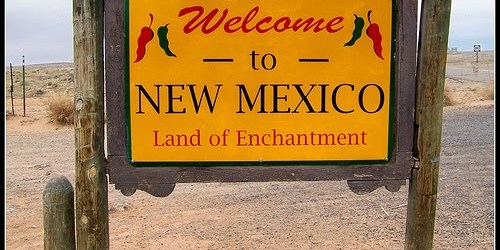
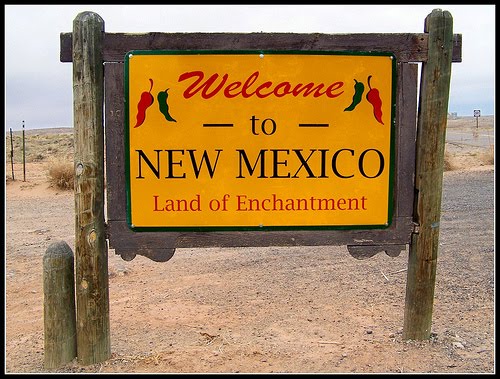
New Mexico was planning to celebrate its statehood centennial by inviting tourists to come experience the state’s rich culture, take in its extraordinary views and have epic outdoor adventures.

But the Land of Enchantment‘s promotion hit a snag, raising questions about who exactly is being represented in the celebration — and reviving  historical insecurities.

It all started when the New Mexico Department of Tourism began planning  a $2-million marketing campaign to attract outsiders to the state, which  had observed its statehood centennial Jan. 6.

The department had learned that the state ranked 38th in a poll ranking tourists’ preferred destinations — and wanted to do something about that.

“We really want to move that needle up,” said Veronica Valencia, director of marketing and communications for the department.

Focus groups in Chicago and Los Angeles assessed the public’s perception of New Mexico, and “the feedback was that it was a dry, barren wasteland with nothing to do,” Valencia said. “So [the state] set on a course to change this misconception.”

Austin, Texas-based marketing agency Vendor Inc. was hired in January to handle the campaign, titled “Adventures Steeped in Rich Culture.” The agency soon contracted with On Location Casting to assign roles in the ad, which was to be filmed in March.

Soon a casting call went out on Facebook seeking “Caucasian or light-skinned Hispanic” people.

The specificity of that call has caused quite a stir, prompting a critical editorial last week in the Santa Fe New Mexican and an even harsher reaction from the state’s Democratic Party chairman.

“Hearing that term brings to mind a vision of casting agents holding up paper bags next to people’s faces to ensure they can pass,” the New Mexican wrote. “We don’t know, of course, who made it into the shoot and how New Mexico will be presented to the world once the campaign is unveiled. But really, light-skinned only? What were they thinking?”

The request seemed ironically appropriate to at least one historian, who noted the territory’s long-ago efforts to attract more light-skinned residents.

“New Mexico’s population in the 1900 census was 70% Nuevomexicanos [today called Hispanic] and 7% American Indian. In the quest for statehood, each group followed many of their traditions in language, dress, religion… all of which alarmed a few hardcore opponents of statehood in the U.S. Congress,” David Holtby, a research scholar of regional studies at the University of New Mexico, wrote in an email to The Times.

Perhaps New Mexico could have been celebrating more than 100 years of statehood by now if it could have proved to Congress that a significant percentage of light-skinned people inhabited the area at the time.

Holtby added: “Now we have the newest ‘tourism message’ being revised to ‘lighten’ the color of people. This can be seen as an example of a throw-back to racial bias of a century ago.”

The hubbub, however, is all an unfortunate misconception, Valencia said.

“We were casting for the role of ‘tourist,’ ” she said. “It was never our intention to make any of this about race. It was more to focus on the experiences and adventures that someone could have in New Mexico rather than the background of the people having them.”

Valencia said the concept for the shoot came from a collaborative effort between the state, Vendor Inc. and On Location Casting, but the specific wording for the casting call was developed by people in the industry, she said.

Tina Kerr, a casting director for On Location Casting, said the request was filed by Vendor Inc. That company didn’t respond to repeated attempts for comment.

“We believe that people from all backgrounds visit New Mexico and it is not a place for any one type of visitor,” Valencia said.

The first ads will be launched April 16 in regional markets near New Mexico, and the state is developing more spots.

This time, Valencia said, industry standards will be shunned when casting the next adventurer.

Read More: LA TIMES

SUBSCRIBE to The Hispanic Blog to stay on top of the latest latino news, politics and entertainment!

Don’t be shy SUBSCRIBE – COMMENT – LIKE ME -CIRCLE ME AND FOLLOW ME

If you have any questions, concerns or simply would like to get a quote on my Marketing, Public Relations, Social Media and/or Events services, please feel free to contact me at thehispanicblog@gmail.com.

God Bless and may you have a fabulous day!

powered by Influential Access – “Transforming the Ordinary to EXTRAordinary!” – CEO – Jessica Marie Gutierrez – Creator of The Hispanic Blog #thehispanicblog

HOW IMMIGRATION GOT OUT OF CONTROL

THE HISPANIC BLOG IS THE LATEST HISPANIC NEWS BY JESSICA MARIE GUTIERREZ

Prior to 1965 a thriving Bracero Program was in place in which roughly 450,000 persons entered the U.S. from Mexico each year on temporary work visas.  These workers returned to Mexico regularly rather than staying in the U.S., thereby creating a circular flow of legal Mexican migrants.  The program had a lot of problems, however, so immigration reformers with a civil rights agenda successfully shut it down.  But while the program ended in 1965, the business need for this type of labor did not. The result was that Mexican workers continued to enter the country, although now without documentation.  Also in 1965, quantitative limits on immigration from the Western Hemisphere were established. Thus illegal immigration rose after 1965 not because there was a surge in Mexican migration, but because these immigration reforms rebranded legal migrants as undocumented workers and capped the number who could try to enter the country legally.

”]No longer legal guest workers but illegal immigrants, the number apprehended at the U.S.-Mexican borderincreased.  This allowed a new narrative to develop: illegal immigration was a crisis and new policies were desperately needed to stem the flow of the “alien invasion.”  The more this narrative was repeated by politicians, the more the populace supported increasingly stringent immigration and enforcement policies, setting off a chain reaction:  increased apprehensions led to increased calls and better tools for enforcement; increased enforcement led to more apprehensions; and increased apprehensions solidified in the public’s mind that illegal immigration was a growing problem that needed drastic reform.  Moreover, increased enforcement did not really deter people from entering the U.S. from Mexico, but it certainly encouraged them to stay; the conversion from legal migrant to illegal immigrant was complete.

President Kennedy and Secretary of Defense McNamara in an EXCOMM meeting, October 1962.

Second, the U.S. was involved in several Central American countries during the Cold War, which lead to further destabilization in the region and large scale migration north.  While Nicaraguan émigrés were welcome as refugees (since the U.S. disagreed with the leftist government they were fleeing), others from Salvador, Guatemala, and Honduras encountered the same restrictions for legal entry as Mexicans. After the 1990s, the threat of terrorism intensified border enforcement and brought about a sharp rise in deportations from the U.S.  Deportations replaced border apprehensions as “proof” that a Latino threat loomed.

November 6, 1986: President Reagan in the Roosevelt Room signing S. 1200 Immigration Reform and Control Act of 1986 with Dan Lungren Strom Thurmond George Bush Romano Mazzoli and Alan Simpson looking on.

Third, Latin American legal immigration – led by Mexico—was also on the rise after 1965, and particularly after 1986.  Again, this was not a result of a conscious policy effort, but rather an unintended consequence of the various immigration reforms. Due to concerns about terrorism and a growing xenophobia, Congress began in the 1980s to strip civil, social, and economic rights away from legal immigrants.  As it became increasingly problematic to be in the U.S. but not a citizen, the numbers seeking to naturalize increased.  This happened just as millions of former undocumented migrants became eligible to naturalize after receiving permanent residence under the Immigration Reform and Control Act (IRCA) of 1986. Adding to the numbers was a separate policy that exempted family members (spouses, minor children and parents) of U.S. citizens from country quotas as part of a family reunification effort.

The authors end the article noting the massive demographic transformation that has resulted from these unintended consequences – a rise in the Hispanic population from 9.6 million to 50.5 million.  They offer a counterfactual scenario, in which the Bracero Program was improved, not abolished, and the U.S. stayed out of Central America; the result might have been a smaller illegal population and a less divided country when the terrorists attacked.  More might have continued to cross the border legally and for temporary stays, resulting in fewer permanent immigrants, less undocumented migration, and slower population growth.  Amazingly – almost despite ourselves—we may actually be headed that way as both illegal and legal entries have fallen while temporary guest worker entry has risen.

The next step is for the U.S. to find a way to deal with the remaining legacy of failed policies – undocumented residents who number 11 million.  Of those, 3 million entered as children.  The authors argue that they should receive amnesty – such as that would have been granted in the Dream Act—while the adults should be able to participate in an earned legalization program.  As the Massey/Pren paper shows, a large number of permanent undocumented people is not a good situation for the country—and the next policy solution should aim to solve not create more problems.

Article by Douglas S. Massey, the Wilson School’s Henry G. Bryant Professor of Sociology and Public Affairs, and Karen A. Pren, Project Manager, Mexican Migration Project at Princeton’s Office of Population Research, argues that the post-1965 surge in Mexican, Central American, and to a lesser extent South American immigration was not a direct result of policy reforms enacted in the mid-1960s but rather the unintended consequences that unfolded afterward.

READ MORE: Hispanically Speaking News

SUBSCRIBE to The Hispanic Blog to stay on top of the latest latino news, politics and entertainment!

Don’t be shy SUBSCRIBE – COMMENT – LIKE ME -CIRCLE ME AND FOLLOW ME

If you have any questions, concerns or simply would like to get a quote on my Marketing, Public Relations, Social Media and/or Events services, please feel free to contact me at thehispanicblog@gmail.com.

God Bless and may you have a fabulous day!

powered by Influential Access – “Transforming the Ordinary to EXTRAordinary!” – CEO – Jessica Marie Gutierrez – Creator of The Hispanic Blog #thehispanicblog