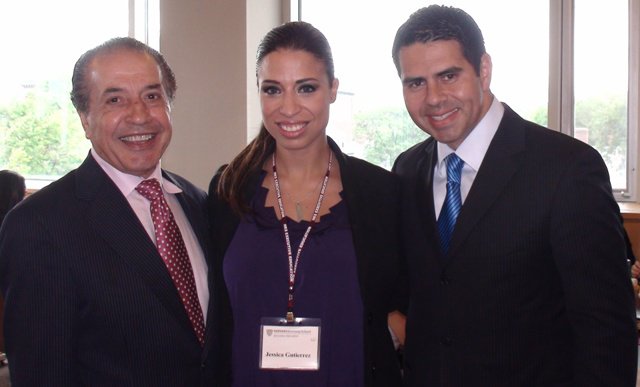
WATCH ARTURO VARGAS ON CSPAN DISCUSS VOTER TURNOUT, IMMIGRATION, VOTER OUTREACH AND VOTER ID

THE HISPANIC BLOG IS THE LATEST HISPANIC NEWS BY JESSICA MARIE GUTIERREZ

WATCH THE CLIP:
http://www.c-spanvideo.org/videoLibrary/assets/swf/CSPANPlayer.swf?pid=304987-5

Arturo Vargas talked about NALEO’s (National Association of Latino Elected and Appointed Officials) voter turnout projections for the Latino electorate in the 2012 election, and he responded to telephone calls and electronic communications. Topics included immigration issues, NALEO’s voter outreach efforts, and voter identification laws.

Arturo Vargas is the Executive Director of the National Association of Latino Elected and Appointed Officials, a national membership organization of Latino policymakers and their supporters governed by a 25-member Board of Directors.  Arturo also serves as Executive Director of the NALEO Educational Fund, an affiliated national nonprofit organization that strengthens American democracy by promoting the full participation of Latinos in civic life.

The NALEO Educational Fund’s programmatic activities include U.S. citizenship outreach and assistance, civic participation and integration, voter engagement, technical assistance to elected and appointed Latino officials, research on Latino demographic and electoral trends, and policy analysis and advocacy on access to the democratic process.

Arturo is a nationally recognized expert in Latino demographic trends, electoral participation, voting rights, the Census, and redistricting.

Arturo holds a masters degree in Education and a bachelor’s degree in History and Spanish from Stanford University

SUBSCRIBE to The Hispanic Blog to stay on top of the latest latino news, politics and entertainment!

Don’t be shy SUBSCRIBE – COMMENT – LIKE ME -CIRCLE ME AND FOLLOW ME

If you have any questions, concerns or simply would like to get a quote on my Marketing, Public Relations, Social Media and/or Events services, please feel free to contact me at thehispanicblog@gmail.com.

God Bless and may you have a fabulous day!

powered by Influential Access – “Transforming the Ordinary to EXTRAordinary!” – CEO – Jessica Marie Gutierrez – Creator of The Hispanic Blog #thehispanicblog

HISPANIC TELEVISION IS ON FIRE: WATCH VOXXI’S CLIP ON LATEST NETWORK SET TO GO NATIONAL

THE HISPANIC BLOG IS THE LATEST HISPANIC NEWS BY JESSICA MARIE GUTIERREZ

MI CASA BROADCASTING: THE EXPLOSIVE LATINO NETWORK FROM HOUSTON, TX WITH MILLIONS OF VIEWERS

VOXXI is the nation’s leading Hispanic Digital News headquartered in Miami with a growing team spanning locations across the United States, Latin America and Europe

Mi Casa Broadcasting Network produces 60 hours of television programming per week featuring breakthrough shows utilizing mixed digital media. It is dedicated and committed to promoting Hispanics and supporting established and upcoming artists.

Jonathan Gwyn is founder and CEO of Mi Casa Broadcasting, which produces English-language shows and operates the mostly English Mi Casa multicast subchannel on Spanish Broadcasting System‘s KTBU Houston.

The channel launched over the AIR in Houston running back to back programming in January 2011.  The broadcast company enriches American Latino viewers on the amazing talent that promises to inspire across the global audience in LATAM. Delivered in English, the programs range from comedy puppet shows and youth education to cage fighting and even arena football.  “MCB Network” is an incredible informational resource of history on American born culture and designed to create a heroic image.

With an uprise of Hispanic and Spanish network booms such as MundoFox CEO Johnathan Gwyn had this to says it is not surprising, Gwyn thinks MundoFox ought to think about airing at least some of its programming in English.

Mi Casa Broadcasting

“I don’t know if there’s room for another Spanish-language network, but I think there’s room for another network,” he said. “The English-language Latino is underserved. They’re consuming their media in English.

“Fox has a very good perception in the Latino community. They have good news. They have the Fox Latino website, which is all in English, and, from what I understand, it’s doing very well.”

Many award winning producers, directors, writers, actors, and musicians have been joining forces with Mi Casa Broadcasting for over a decade to provide content from various regions of The United States. Through the Mi Casa Broadcasting’s Digital TV portal, viewers can call this their home for Latino culture in English, a genre that has long been underutilized in TV/Film.

This TV Network serves as a two way mirror between Latin American culture mixed with the ever-growing Infinite cultures in America.

“MCB Network” strategically captures the Houston, TX audience as it expands its 2.5 million viewer reach in South East Texas. Here viewers can re-discover a sense of pride, an excellent new look at pop-culture featuring high-end modern day pilots, comedies, reality shows, music videos, and feature length films, calling it a gateway for established talent to serve up an experimental style of breakthrough broadcast television from building strong relationships in the industry, a TV network that exemplifies the American dream.

“My children and I are eagerly waiting for this to happen. There isn’t any other place we can see dedicated TV shows, especially if you don’t have cable. You are the first. My friends said they would be awesome not to have to pay for cable and save money watching a network about us. Please keep us updated on all of your events. We want to help!!! Thank you, Mi Casa Broadcasting.”- Janet Rodriguez, fan

“This TV Station combines all Latinos no matter what country they are from. This is the one and only of it’s
kind. We’d hope to see and hear so many people’s stories and lives that otherwise would go untold . Can’t wait for it!!”- Mayra J Leal, Actress

“Mi Casa Broadcasting (MCB Network)” is broadcast on Houston’s KTBU on DTV 55.4 and Phonoscope Cable in the United States, covering over a dozen surrounding counties. Topics covered at the network will also be to interact with audience to develop original series and editorial content to build a brand that gives power to the people, in English language featuring over 17 Latin American cultures.  In addition to “MCB Network” (http://www.micasabroadcasting.com) and Phonoscope Cable (http://phonoscope.com/), will also be distributing across a mobile and broadband platforms in the very near future.

Mi Casa Broadcasting www.micasabroadcasting.com

SUBSCRIBE to The Hispanic Blog to stay on top of the latest latino news, politics and entertainment!

Don’t be shy SUBSCRIBE – COMMENT – LIKE ME -CIRCLE ME AND FOLLOW ME

If you have any questions, concerns or simply would like to get a quote on my Marketing, Public Relations, Social Media and/or Events services, please feel free to contact me at thehispanicblog@gmail.com.

God Bless and may you have a fabulous day!

powered by Influential Access – “Transforming the Ordinary to EXTRAordinary!” – CEO – Jessica Marie Gutierrez – Creator of The Hispanic Blog #thehispanicblog

HOW ACCULTURATION AFFECTS TWO GENERATIONS OF HISPANICS

THE HISPANIC BLOG IS THE LATEST HISPANIC NEWS BY JESSICA MARIE GUTIERREZ

According to the study, developed by Yahoo, Mindshare, and Added Value, marketers must understand the nuances between the two generations of Hispanics, and how acculturation affects their preferences. The findings stress the notion of how the majority of the Latino population is second generationAmerican born, and bilingual/English speaking.

ac·cul·tur·a·tion

noun \ə-ˌkəl-chə-ˈrā-shən, a-\

1: cultural modification of an individual, group, or people by adapting to or borrowing traits from another culture; also : a merging of cultures as a result of prolonged contact
2: the process by which a human being acquires the culture of a particular society from infancy

Latinos do nurture ethnicity more than other segments. This is manifested through a series of behaviors like exposing their children to their Latino background, trying to get in touch with their Hispanic identity, feeling very comfortable as it relates to their ethnicity, and being part of activities/traditions that celebrate their heritage.

The Generational Latino Gap

When it comes to generation breakdown, there are some differences that marketers need to consider. Let’s take identity and values, for example.

First-generation Latino behavior is much more influenced by ethnicity. Their Latino background plays a major role when it comes to feelings about their individuality, religion, and values. It also affects how they socialize (neighborhoods, close circle of friends, etc.) and other behaviors (eating habits, celebrations, vacations, etc.). For second-generation Latinos, ethnicity is more about outward expression and bicultural in nature.

Content plays an important yet different role. First-generation Hispanics seek content that is in Spanish language and speaks to their ethnicity for topics like news, entertainment, and food. Second-generation Hispanics are more sensitive to how their ethnicity is portrayed in the media.

Second-generation Latinos have a stronger civic commitment. They care about the role Latinos are playing in today’s American society. They are very involved in discussions about Latinos’ role in the elections, immigration debates, etc. They want to play a major (influential) role and want to make sure that they are taken into consideration.

latino-news-coverage

The Common Thread: Authenticity

For both first- and second-generations, ethnicity is an important part of the past and the present. Both segments agreed: it influences “who I am” and both feel very proud of “how I grew up” as well as “my ethnic identity.”

Ethnicity plays a significant part of the Latino identity. As David Iudica, a bicultural Latino himself, said to me: “I have my feet firmly planted in both worlds, it’s an important part of my identity.”

Overall, it seems that marketers have a long way to go in order to better impact Latino audiences. For different reasons, both first- and second-generations feel they aren’t being represented or spoken to in the right way.

1st-generation

2ndgeneration

This reminds me of a controversy that happened a couple of weeks ago around a proposal to recreate a mural on the walls of the Mission Drive-In Theater in San Antonio, Texas. The images, one of a Mexican sitting asleep against the wall with his sombrero covering his face and another with a stereotypical Mexican posing with a burro, backfired. Sometimes marketers, in trying to connect with Latinos, get hooked with their own stereotypes and generate negative reactions rather than relevance.

The (Right) Approach When Marketing to Latinos

A successful Latino marketing strategy should be built on a common thread: what are the attitudes and behaviors – related to your product category – that bring Latinos together?

A sense of pride, identity, and authenticity (the world I live in) are important for all Latinos.

Authenticity is key. Choosing an authentic Hispanic spokesperson, rather than a well-known spokesperson, is relevant to all Latinos.

Latinos crave ethnic-specific marketing messages, yet portraying an appropriate level of diversity in advertising is critical.

If done right, Hispanics will talk about advertising positively, but they will also be quick to call out negative portrayals.

Messaging should be customized to speak to the individual needs of each generation:

  • For first-generation Hispanics: speak in their language and make sure to authentically represent their ethnicity.
  • For second-generation Hispanics, you need to portray them as part of a bigger whole: represent diversity in general messaging and show how Latinos are influencing the mainstream. Don’t address them simply as Latinos: talk to their whole bicultural identity.

First-generations want Latino content, second-generations want mainstream content but with a Latino flavor.

Authentic Bobbleheads

Will Ferrell’s “Casa de mi Padre” seemed to connect with the Latino audience and is set to be a box office success. But, when it comes to how brands “talk” to Latinos, not all are successful stories. Think of Jaime Jarrin, a Hall of Fame broadcaster, who has not been included in the Dodger’s 50th-anniversary bobbleheads. Jaime is Latino and broadcasts in Spanish and, according to The Los Angeles Times, that’s why he was left out. As the article says, “Jaime Jarrin’s primary language has always been Dodger. It’s a shame that, in this case, the Dodgers seem to be the only ones who don’t understand.”

Ask second-generation Latinos. See if they find this kind of behavior to be authentic.

READ MORE: CLICK Z

SUBSCRIBE to The Hispanic Blog to stay on top of the latest latino news, politics and entertainment!

Don’t be shy SUBSCRIBE – COMMENT – LIKE ME -CIRCLE ME AND FOLLOW ME

If you have any questions, concerns or simply would like to get a quote on my Marketing, Public Relations, Social Media and/or Events services, please feel free to contact me at thehispanicblog@gmail.com.

God Bless and may you have a fabulous day!

powered by Influential Access – “Transforming the Ordinary to EXTRAordinary!” – CEO – Jessica Marie Gutierrez – Creator of The Hispanic Blog #thehispanicblog

HISPANIC NETWORKS MADE $88 MILLION IN NEW BUSINESS LAST YEAR

THE HISPANIC BLOG IS THE LATEST HISPANIC NEWS BY JESSICA MARIE GUTIERREZ

The race is on to capture the U.S. Hispanic market, with mainstream networks and their Hispanic counterparts battling for primacy. The result is an increasing cross-pollination of programs and a proliferation of networks, with Fox, Lionsgate and NBCU among those joining Hispanic allies to find and produce content aimed at the largest and fastest-growing minority group in the U.S.

New Hispanic channels are emerging, some in Spanish, some in English, in a bid to appeal to a mix of generations and language preferences that can exist under one Latino roof: The latest census reveals that of the 50.5 million Hispanics in the U.S., 30% are Spanish-dominant while the rest are either English-speaking or bilingual.

Broadcast leader Univision is now the clear No. 5 broadcast network (behind the Big Four) while rival Telemundo has been picking up steam.

'Q'Viva'‘Q’Viva’

“The number of networks focused on the Spanish space has increased from around 12 in 2001 to 100 just a month ago,” says Univision networks prexy Cesar Conde, who points out that Univision alone will have a dozen networks by year’s end compared with three last year.

These include Univision’s upcoming news and sports pay TV nets in addition to the telenovela channel now on Dish Network plus the six TuTV pay TV channels, jointly owned with Televisa.

One of the most anticipated new players is MundoFox, a joint venture between Fox Intl. Channels (FIC) and Colombia’s RCN, due to launch in the fall. The new Spanish-lingo network will showcase edgier Colombian telenovelas and look to build on Fox’s success in inserting itself into a market. Meanwhile, Fox and Univision recently bowed Jennifer Lopez and Marc Anthony’s pan-American talent competish “Q’Viva! The Chosen,” while Fox’s “Family Guy” airs on Univision sibling web TeleFutura.

Elsewhere, sister networks NBC and Telemundo share talent and resources in the exec ranks as well as on-air.

In the 2011-12 upfront season, an estimated $88 million of new business came to Spanish-Language TV, with Telemundo taking more than half (55%) of the new business, according to Lauren Zalaznick, chairman of NBCUniversal entertainment, digital networks and integrated media.

GUTIERREZ (CREATOR OF THE HISPANIC BLOG) WITH CESAR CONDE PRESIDENT OF UNIVISION

“The reported 2011/2012 upfront numbers were $1.75 billion for Univision, and $400 million for Telemundo, up 20% from the 2010/2011 upfront,” says Antonio Ruiz, partner-communications planning at leading Hispanic ad agency, the Vidal Partnership. Telemundo and its youth-skewed bicultural cable sibling Mun2 delivered more than 20% growth year-to-year, marking their best upfront season ever.

“Our Hispanic strategy is not limited to Telemundo (or Mun2) alone,” says Zalaznick, who points out that NBCUniversal’s theme parks, studio, cable and broadcast networks, digital assets and Comcast’s leading position among cablers in the U.S. allows the company to collectively reach 93% of all Hispanics. She adds that landing the Spanish-language U.S. rights to World Cup Soccer matches in 2018 and 2022 would not have happened without the joint efforts of NBC Sports and Telemundo Deportes.

NBCU parent Comcast has begun to fulfill its pledge to launch 10 independently owned channels on its cable systems over the next eight years. Of these, four will have Hispanic ownership.

Leading the initial pack is young-male-skewed El Rey from Latino helmer Robert Rodriguez and partners John Fogelman and Cristina Patwa of FactoryMade Ventures.

“When Fogelman approached me with the idea for this channel, I immediately said yes,” says Rodriguez. He’s building soundstages on his 25-acre property in Austin for the English-language channel, which will include animation, music, reality, scripted shows, movies, docus and sports programming.

“The key is to make it universal; I want viewers to watch it because it’s cool, not Latino,” adds Rodriguez.

Another upcoming Latino-owned Comcast network is BabyFirst Americas from Spanish-lingo TV exec Constantino “Said” Schwarz, which is slated to launch by April.

Meanwhile, Lionsgate and Mexican partner Televisa have expanded their joint film venture, Pantelion Films, onto the smallscreen as well. (Over the March 16-18 weekend, Pantelion scored big at the B.O. with “Casa de mi Padre,” which nabbed $2.4 million on 382 screens.) The partnership will include English-lingo format adaptations of TV content from Televisa’s library, and the development of scripted and unscripted English-language original programming.

The companies have set up a hefty development fund to enable them to attract top showrunners and talent for an average output of six to eight projects a year, including the sitcom spinoff of Pantelion’s debut pic, “From Prada to Nada”; “Badlands,” a scripted drama at ABC based on Televisa hit telenovela “Soy tu Duena“; Televisa’s drama skein “Terminales” for ABC Family; and “Teresa,” based on another Televisa telenovela.

Univision, an erstwhile strictly Spanish-language network, recently began providing English close-captioning for its primetime block of telenovelas and other programs, including long-running variety show “Sabado Gigante.” The network is a ratings winner, especially among adults 18-34, where its season average is double struggling English-language broadcaster CW (1.6 vs. 0.8) and is now within shouting distance of ABC, CBS and NBC. (No. 2 Hispanic-language net Telemundo has been offering English closed captions in its primetime block since 2004.)

“Forty-two of the top 50 shows are already watched by bilinguals on Univision,” says Conde.

But U.S.-partnered players aren’t the only ones gearing up to deliver Latino shows to the U.S.: Venezuela’s RCTV, once the oldest and most dominant broadcaster in Venezuela until president Hugo Chavez shuttered it for allegedly inciting rebellion, revived its production capabilities in October, keenly aware of the growing interest in Latino-themed stories.

RCTV Intl. head Jorge Granier is opening a Los Angeles office and has been meeting with showrunners and talent agencies to package English-language versions of RCTV telenovelas selected from its trove of 300 titles.

Latin America’s wealth of talent, formats, stories and programming innovations has not been fully tapped in the U.S., says Joshua Mintz, exec VP of Telemundo Studios, which is churning out six to seven telenovelas a year, mainly in Miami. Mintz points to ABC’s hit adaptation of Colombia’s “Ugly Betty” and, most recently, Fox Television Studios plans for an English-lingo version of “La Reina del Sur,” Telemundo’s biggest hit telenovela.

“If the U.S. TV industry needs new stories to tell, it doesn’t need to look any further than Latin America,” Granier says.”

READ MORE: VARIETY

SUBSCRIBE to The Hispanic Blog to stay on top of the latest latino news, politics and entertainment!

Don’t be shy SUBSCRIBE – COMMENT – LIKE ME -CIRCLE ME AND FOLLOW ME

If you have any questions, concerns or simply would like to get a quote on my Marketing, Public Relations, Social Media and/or Events services, please feel free to contact me at thehispanicblog@gmail.com.

God Bless and may you have a fabulous day!

powered by Influential Access – “Transforming the Ordinary to EXTRAordinary!” – CEO – Jessica Marie Gutierrez – Creator of The Hispanic Blog #thehispanicblog

 

HOW HAS ROMNEY’S POSITION CHANGED TOWARD THE LATINO ISSUES: FROM DREAM ACT TO IMMIGRATION

THE HISPANIC BLOG IS THE LATEST HISPANIC NEWS BY JESSICA MARIE GUTIERREZ

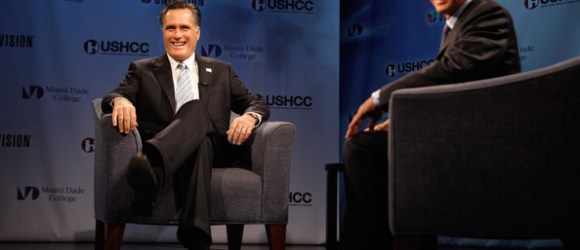
Hispanic Chamber Of Commerce And Univision Hold "Meet The Candidates" Event January 24, 2012 - Photo by Chip Somodevilla/Getty Images North America

Mitt Romney won a landslide victory over Rick Santorum in Puerto Rico last weekend and Santorum is not taking his 75-point defeat lightly.

Santorum, who spent two full days campaigning in the Caribbean island, congratulated Romney on his victory in a press release late Sunday night, but in the same breath accused the former governor of pandering to Puerto Rico’s Latino voters by switching his position on making English the official language of every U.S. state.

“Their decision to put political expedience and political deception ahead of previously held policy positions further erodes their candidate’s credibility and trust,” Santorum spokesman Hogan Gidley said of the Romney campaign in the statement. “We all know Mitt Romney will do and say anything to get votes, and this is just another example of that.”

But just how much of a conservative two-step did Romney dance while courting Puerto Ricans? Here’s a look at some of the positions Romney softened, and those he stood by while attempting to woo Latino voters.

English as the Official Language

After Santorum was skewered for saying Puerto Rico would have to make English their official language in order to become a state, Romney toned down his own position on the issue while campaigning in Puerto Rico last week.

“I don’t have preconditions that I would impose,” Romney said shortly after touching down on the Island Friday. “English has been an official language of Puerto Rico for 100 years and I think selecting the words of your governor, Spanish is the language of Puerto Rico’s heritage, English is the language of opportunity.”

Both languages are currently considered “official” in the island territory and Romney encouraged young people to “learn both.” While he emphasized the importance of learning English, he did not say it should be the sole official language.

But that’s not what he said during debates in January.

“I believe English should be the official language of the United States,” Romney said on the debate stage.

The U.S. currently does not have an “official” language. If English was adopted as the “official” language, no government documents could be printed or written in any language besides English. Many federal documents are currently printed in both Spanish and English.

At another January debate, Romney noted that “English is the language of this nation” and touted his efforts as the governor of Massachusetts to get rid of bilingual education in favor of English emersion programs.

“People need to learn English to be successful to get great jobs,” Romney said at the NBC Debate. “We don’t want to have people to be limited in their ability to achieve the American Dream because they don’t speak English.”

A Romney spokeswoman disputed that Romney’s position had changed, arguing that even though Romney supports making English the official language of the U.S., that would have no bearing on Puerto Rico becoming a state. “These positions are not at odds,” said campaign spokeswoman Andrea Saul in an email. “What the federal government does regarding the official language is separate from what states do.”

The Dream Act

Romney has been firm in his opposition to the Dream Act, which would give undocumented minors a path to legal residency if they attend college or join the military.

While campaigning in Iowa Romney explicitly said he would veto the Dream Act if elected president. As governor of Massachusetts he vetoed the state version of the bill which would have provided in-state tuition to undocumented immigrants.

“The answer is yes,” Romney said of whether he would veto the legislation at the federal level.

Romney later added that giving “special benefits” to “people who come here illegally” was “contrary to the idea of the nation of law.” Romney would, however, support giving legal status to undocumented immigrants who serve in the military.

“I am delighted with the idea that people who come to this country and wish to serve in the military can be given a path to become permanent residents in this country,” he said while campaigning in Iowa. “Those who serve in our military and fulfill those requirements I respect and acknowledge that path.”

Romney has more recently focused on this portion of the Dream Act that he does support.

“I wouldn’t sign the Dream Act as it currently exists, but I would sign the Dream Act if it were focused on military service,” Romney said during a debate in Florida, where 22 percent of the state’s population is Hispanic.

Latino Decisions poll conducted for Univision showed that 84 percent of Latinos nationwide support the Dream Act.

Supreme Court Justice Sonia Sotomayor

While Romney softened his firm opposition to the Dream Act while talking to Latino voters, he stood firm on his condemnation of Supreme Court Justice Sonia Sotomayor, whose parents are from Puerto Rico.

While campaigning in Puerto Rico last week, Romney said he would support a Puerto Rican Supreme Court justice, just not one whose “philosophy is quite different than my own.”

He also dubbed Sotomayor “an activist, a liberal jurist.”

The former governor launched a campaign ad against Santorum, criticizing the former Pennsylvania senator for voting to appoint Sotomayor to the Second Circuit Court of Appeals in 1998, a post that put her on the fast track to the Supreme Court, the ad claims.

Romney has never been a Sotomayor fan. During her bitter confirmation process in 2009 Romney said her nomination to the Supreme Court was “troubling.”

“There are some things she said that are troubling for those of us who believe that the job of a justice is to follow the law and the Constitution, not to create law,” Romney said in 2009, according to CNN.

Self-Deportation of Undocumented Immigrants

Romney has stood firm on his opposition to amnesty for undocumented immigrants, but his views on deporting the millions of illegal immigrants who are already in America took a new twist during this campaign cycle.

At a Florida debate in January, Romney said he supports “self-deportation,” in which conditions would become so unbearable for undocumented immigrants that they would chose to leave the country.

“The answer is self-deportation,” Romney said at an NBC debate. “People decide that they can do better by going home because they can’t find work here because they don’t have legal documentation to allow them to work here.”

Under Romney’s plan, legal immigrants would have a card proving they were eligible to work in the United States. Without a card, Romney said people would not be able to find work.

“If people don’t get work here, they’re going to self-deport to a place they can get work,” he concluded.

But during his 2008 bid for the presidency, Romney said undocumented immigrants should be allowed to stay in the country for a “set period” while applying for legal residency. If that is not granted within the allotted amount of time, he said they should return home.

“Those 12 million who’ve come here illegally should be given the opportunity to sign up to stay here, but they should not be given any advantage in becoming a permanent resident or citizen by virtue of simply coming here illegally,” Romney told with NBC’s Tim Russert during the 2008 campaign.

“For the great majority, they’ll be going home,” Romney added, stopping short of saying those unapproved immigrants would be deported.

READ MORE: ABC NEWS

Matthew Jaffe, who is covering the 2012 campaign for ABC News and Univision, contributed to this report

SUBSCRIBE to The Hispanic Blog to stay on top of the latest latino news, politics and entertainment!

Don’t be shy SUBSCRIBE – COMMENT – LIKE ME -CIRCLE ME AND FOLLOW ME

If you have any questions, concerns or simply would like to get a quote on my Marketing, Public Relations, Social Media and/or Events services, please feel free to contact me at thehispanicblog@gmail.com.

God Bless and may you have a fabulous day!

powered by Influential Access – “Transforming the Ordinary to EXTRAordinary!” – CEO – Jessica Marie Gutierrez – Creator of The Hispanic Blog #thehispanicblog