CAN SOMEONE EXPLAIN ENERGY POLICY?

THE HISPANIC BLOG BY JESSICA MARIE GUTIERREZ

20120301-120146.jpg

The United States desperately needs an energy policy. It is fundamental to our economic growth, environmental sustainability and national security. With five percent of the world’s population and 20 percent of its energy use, the U.S. has an obligation to lead globally. We need to set the right example at home.

20120301-120413.jpg

When President Obama took office three years ago, he put climate change at the top of the agenda. However, to have climate change policy you need an energy policy. People confuse the two — you need both for sustainable development.

20120301-120602.jpg

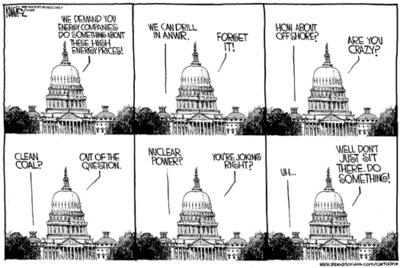
In this year’s State of the Union address, President Obama tempered his message, saying the country needs an “all of the above” energy policy to provide supplies that are cleaner and cheaper. That is nice political rhetoric — but a gross oversimplification of the challenges ahead.

At the same time, the energy industry must do a much better job informing the public and educating political leaders about the pragmatic realities we face and the difficult choices we must make. Sound energy policy can only emerge if the government, energy industry and the public have a shared understanding of the challenge. To achieve this, the energy industry needs to regain the public trust. In a Gallup poll last year of public opinion of 25 business sectors and government, oil and gas ranked next to last. Only the federal government had worse ratings.
20120301-122218.jpg

These are the energy realities that we face:

Eighty-five percent of the world’s energy comes from hydrocarbons: 35 percent oil, 30 percent coal and 20 percent natural gas.

It is estimated that the world population will grow from seven billion today to nine billion by 2050, with much of that growth in developing countries. With a corresponding increase in living standards, hydrocarbon energy is essential for economic development.

20120301-122511.jpg

World demand for oil is expected to grow on an annual basis by at least one million barrels per day, driven by the developing economies of the world and growth in transportation, which is forecast to increase from one billion cars today to two billion in 2050.

We are not running out of oil. We have already produced one trillion barrels and globally there are approximately two trillion barrels remaining of conventional oil. While we currently have world surplus oil production capacity of two to three million barrels per day, as demand grows in the next decade we will not have enough oil production capacity to keep up. Without greater investment in new capacity, tight supply will ration demand and prices will skyrocket — which could bring the world economy to its knees. The per barrel oil price of $140 four years ago was not an aberration, but a warning.

While renewable energy is needed and development should be encouraged to meet future energy demand and reduce our carbon footprint, hydrocarbons will fuel the world’s economy for many decades to come. Renewables do not have the scale, development timeframe or economics to materially change this outcome as much as we would hope.

The energy industry has to stand up to provide strategic vision. Here are some thoughts for a United States energy policy.

20120301-122636.jpg

Oil: U.S. energy policy for oil should aim at moderating demand through efficiency and increasing supply by focusing on drilling. In terms of demand, we need to raise the mileage performance standard to 50 miles per gallon as quickly as possible. This can be achieved first and foremost through hybrid electric cars, as well as a combination of vehicle mix, engine downsizing and advanced combustion technology. Replacing the nation’s fleet of 230 million cars and light duty trucks with more fuel-efficient vehicles over 15 years could save three million barrels of oil equivalent per day. At today’s price of $100 per barrel, this change would save over $100 billion a year in energy costs — a worthy prize.

20120301-123124.jpg

Electric battery powered cars are viewed by some as the ultimate solution for moderating oil demand. Unfortunately, there are significant obstacles to the widespread implementation of electric cars. The challenge is that range is generally limited to 40 miles on an eight-hour charge and batteries cost more than $10,000 per car. The laws of physics explain the range challenge. The energy density of today’s best battery is 200 watt-hours per kilogram versus the energy density of gasoline — 13,000 watt-hours per kilogram.

To increase oil supply, we must maintain tax provisions that incentivize drilling and strengthen energy security. In 2010, the oil and gas industry spent approximately $135 billion in intangible drilling costs (IDCs), which are current cash operating costs of drilling that tax law allows companies to expense in the year incurred. President Obama recently said in his State of the Union Address that we have subsidized oil companies for a century and that is long enough. Taking this position might be good politics — but it’s not good policy. It serves nobody’s purpose for our political leadership to vilify oil producers. These costs are neither tax breaks nor subsidies for oil companies; they are an investment in America’s energy future. Eliminating expensing of IDCs would decrease domestic supply, increase foreign imports, hurt our balance of trade, decrease jobs and reduce energy security.

20120301-123426.jpg

We also must do all we can to increase the world’s oil supply. With non-OPEC production nearing a plateau, the supply burden in the future will increase on OPEC, specifically Saudi Arabia and Iraq. The global oil and gas industry is expected to spend $600 billion this year on exploration and production, or 10 percent more than a year ago. With the long lead times in our business, the world is not investing enough globally to ensure surplus capacity in the next five to ten years.

20120301-123730.jpg

Natural Gas: U.S. energy policy for natural gas should focus on shale gas, which is a real game changer. Five years ago, shale gas accounted for approximately five percent of U.S. natural gas production; today it makes up almost 30 percent. Natural gas provides a significant competitive cost advantage for the United States in terms of cost per unit, which is several times lower than it is in other countries. It also has environmental advantages, with half the carbon footprint of coal, and helps our nation’s energy security as supplies are forecast to last for the next 100 years.

We should grow gas demand as a fuel in heating, electricity, petrochemical manufacturing and transportation. However, the biggest opportunity is electricity generation, where natural gas has lower costs and higher efficiency than in transportation. An electric plant is 50 percent efficient, whereas natural gas used in transportation is 15 percent efficient.

20120301-124231.jpg

We must use hydraulic fracturing to develop our abundant natural gas resources. This has been a common practice since 1949 and over one million wells have been hydraulically fractured in the U.S. Eighty percent of the 44,000 wells drilled in our country each year require hydraulic fracturing, using a closed system with water, sand and a small percentage of additives to fracture rock and release hydrocarbons. Most states do a very good job regulating this activity. Adding duplicative federal regulation would be counterproductive.
20120301-124453.jpg

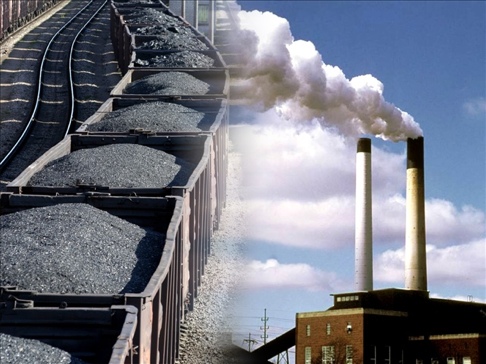
Coal: U.S. energy policy for coal should reduce its use until research breakthroughs make clean coal technically feasible and commercially viable. While almost 50 percent of our electricity comes from coal, Al Gore’s words ring true: “Clean coal,” he said, “is like healthy cigarettes.” At present, it does not exist. We have more than 600 coal plants in the U.S., one third of which are over 50 years old; many need significant investments to meet anticipated environmental regulations. With the superior economics of natural gas, older plant capacity should be replaced with gas-fired plants.

20120301-124750.jpg

Nuclear: Even before the disaster in Japan, nuclear power had problems due to the high cost of new plants, the long lead time needed to build them and the challenges of secure nuclear waste disposal. While we need to maintain our technical capability and portfolio options by building a few new plants a year, the high cost of nuclear plants means they cannot compete economically against natural gas and they will have a limited role going forward.

20120301-125026.jpg

Climate change: U.S. energy policy must also deal with climate change in a way that sets targets that sustain economic growth and protect the environment. Proposals to reduce the world’s carbon emissions by 80 percent by 2050 are not achievable. A study done by Princeton University’s Carbon Mitigation Initiative sets forth strategies needed to mitigate emissions globally such as setting 60 miles per gallon for fuel efficiency, doubling the number of nuclear plants, capturing and storing carbon from 800 coal plants and increasing wind power by 10 times today’s capacity. Executing eight of these herculean initiatives would hold CO2 emissions flat by 2060. We should be realistic about targets we set and make sure we do not put the economy into reverse.

20120301-125439.jpg

The United States and Europe cannot meet the challenge of climate change alone. The role of China, which now accounts for 10 percent of the world GDP, is critical. China recently surpassed the U.S. in CO2 emissions and will probably triple its CO2 emissions in the next 30 years. China’s energy policy is integral to its national security and foreign policy. In the last three years, China spent over $45 billion to acquire oil and gas reserves worldwide.

20120301-125614.jpg

The United States needs to get serious about climate change once our economy recovers and people get back to work. Some say we should then consider energy taxes, such as a $1 per gallon gasoline tax for transportation and a $10 per ton carbon tax for electric generation. While it would take political courage, these taxes should be given full examination. They should be introduced over a five-year period and only when other major industrial powers in the G-20 take similar measures.

20120301-133506.jpg

Carbon price signals would ensure that we use hydrocarbon energy more efficiently and make meaningful reductions in CO2 emissions. When fully implemented, such taxes would generate over $200 billion per year. Ninety percent of the revenue could be directed at reducing our nation’s financial deficit — provided it is coupled with spending cuts. The remaining ten percent could be dedicated to research in alternative energy technologies such as batteries, biofuels and carbon capture and storage, as well as infrastructure projects such as smart grids and the hydrogen economy. We need to develop these technologies so that one day they can reach their promise and competitively position the U.S. economy for the future.

20120301-130333.jpg

Three C’s: Energy and climate change have been called the greatest challenge of the 21st Century. Energy industry leaders should help offer a solution by following three principles I call the “Three C’s”: Communication, Courage and Collaboration.

20120301-130637.jpg

First, we must communicate the pragmatic realities we face and the fact that hydrocarbons are critical to our future.

20120301-130923.jpg

Second, we must have the courage to provide the strategic vision for a secure energy future that underpins economic growth and protects the environment.

20120301-131238.jpg

Third, we must collaborate — Democrats and Republicans, government and industry and the United States with the rest of the world — in the spirit of compromise for the common good. We need to put energy policy at the top of the U.S. political agenda and that of the G-20 as well. Together, we can create an energy policy to make our country more competitive and secure economic prosperity for future generations.

20120301-131802.jpg

Read More: part of the HBR Insight Center on American Competitiveness .

20120301-132751.jpg
Get full story by John B. Hess

SUBSCRIBE to The Hispanic Blog and stay on top of the latest Latino news, politics and entertainment!

Don’t be shy SUBSCRIBE – COMMENT – LIKE ME -CIRCLE ME AND FOLLOW ME

If you have any questions, concerns or simply would like to get a quote on my Marketing, Public Relations, Social Media and/or Events services, please feel free to contact me at thehispanicblog@gmail.com.

God Bless and may you have a fabulous day!

powered by Influential Access – “Transforming the Ordinary to EXTRAordinary!” – CEO – Jessica Marie Gutierrez – Creator of The Hispanic Blog #thehispanicblog


WHICH PR NEWSWIRE SERVICE DO HISPANICS TURN TO?

THE HISPANIC BLOG BY JESSICA MARIE GUTIERREZ

20120229-141508.jpg

With new leadership comes new energy and ambition, making this a year for continued growth for the Hispanic Public Relations Association, Los Angeles chapter (HPRA-LA) as it announces the new incoming board and welcomes new members. With the new board, HPRA-LA will build upon strategic partnerships and strengthen its commitment to provide PR professionals and students the resources to thrive in this evolving Hispanic public relations industry.

“Our commitment to fostering key strategic partnerships and increasing our membership continue to be significant goals for the organization in 2012,” said Delia L. Lopez, HPRA-LA president. “Building on our history and on our principle of serving as a resource to PR professionals, HPRA-LA will continue to be a platform for advancement and enrichment for those in Hispanic PR and those seeking expertise in the Hispanic market.”

HPRA-LA executive board members include:

Delia L. Lopez (President): bilingual Communications Consultant with more than 12 years of experience in the field of strategic public relations, having worked with large national and regional brands, and specializing in the Hispanic market.

Jacqueline Quintanilla Aker (Vice President): senior vice president, Health & Multicultural Marketing at Edelman, has more than 12 years of experience leading award-winning campaigns for LIVESTRONG®, the California Department of Alcohol & Drug Programs and Nestle®.

Leslie Smith (Secretary): senior vice president of Business Development and Marketing, Leslie is responsible for all new business opportunities at New American Dimensions, a Los Angeles based Marketing Research and Consulting Firm that focuses on multicultural research.

Hilda Delgado (Treasurer): Western Region communications director for Coca-Cola Refreshments where she oversees and implements internal and external communications and public affairs campaigns for California, Nevada, Arizona, New Mexico and Hawai’i.

HPRA-LA also welcomes the following board committee chairs:

Programs – Chalena Cadenas, Academy of Motion Picture Arts & Sciences

Marketing – Mariluz Gonzalez, Vesper Public Relations

Social Media Integration – Jose Xicohtencatl, Edelman

Membership – Chuck Sifuentes, PR Consultant

National Chapters – Stephen Chavez, Chavez Marketing & Communications

Scholarship/College Outreach – Denisse Montalvan, Ketchum

In addition, HPRA-LA is strengthening its leadership with the addition of Oralia Michel, President of OMAGEN Marketing & PR, as senior advisor. Michel’s 30-year career in Hispanic marketing will provide expertise and thought leadership to expand programs and resources to Hispanic PR professionals. Michel, a seasoned PR practitioner and former journalist, believes the tenets of journalism are core skills that all communicators would be well served to embrace and practice, while keeping a pulse on the ever changing technology that makes marketing communications an exciting and always evolving profession.

“Public relations and marketing communications continue to evolve making our industry ever energizing,” says Michel. “Augmenting and forging new partnerships will enable HPRA to provide our members with the best learning from the best minds. Our members’ insights are also highly valuable and we will drive thought leadership that better serves the Hispanic market. In this era of integration, strategic messaging capabilities will continue to be king and we must be the leaders in delivering the right messages via the best channels.”

A large initiative this year for the board is the Association’s partnership with Hispanicize. Now in its third year, Hispanicize will be held in Miami on April 10-13, 2012. PR-focused sessions at the conference will spotlight HPRA 2011 PRemio award-winning programs/case studies from some of the nation’s most renowned multicultural PR professionals. The annual event focuses on Latino trends and brings trendsetters together in PR, social media, entertainment, marketing and media. More details and information about Hispanicize is available on the HPRA website.

For more information on HPRA-LA, Hispanicize and to become a member, visit our website at http://www.hpra-usa.org and like us on Facebook/HPRA USA.

About Hispanic Public Relations Association (HPRA):

Founded in 1984, the Hispanic Public Relations Association (HPRA) is the foremost organization of Hispanic public relations practitioners in the U.S. HPRA is a resource for communications professionals and for those seeking Hispanic market expertise. It is dedicated to the recognition and advancement of Hispanics in public relations through year-round programs and hosts one of the industry’s most anticipated events: the PRemio Campaign of the Year Awards and Scholarship Gala in the fall. To date, HPRA has awarded a quarter million dollars to college and university students of Latino descent pursuing careers in communications. With a solid record of achievement and a committed membership, HPRA continually strives to increase the value of public relations as the industry increasingly gains clout and expands. For more information please visit www.hpra-usa.org.

Read more: from PR Newswire.

SUBSCRIBE to The Hispanic Blog and stay on top of the latest Latino news, politics and entertainment!

Don’t be shy SUBSCRIBE – COMMENT – LIKE ME -CIRCLE ME AND FOLLOW ME

If you have any questions, concerns or simply would like to get a quote on my Marketing, Public Relations, Social Media and/or Events services, please feel free to contact me at thehispanicblog@gmail.com.

God Bless and may you have a fabulous day!

powered by Influential Access – “Transforming the Ordinary to EXTRAordinary!” – CEO – Jessica Marie Gutierrez – Creator of The Hispanic Blog #thehispanicblog

IS ALABAMA “LIGHTENING UP” ON HISPANICS?

THE HISPANIC BLOG BY JESSICA MARIE GUTIERREZ

20120228-170254.jpg

On March 1, the ACLU will be in court challenging the constitutionality of both Alabama and Georgia’s discriminatory anti-immigrant laws. Of the five Arizona-inspired laws to pass, only Alabama’s has had significant provisions go into effect. The result: divided communities and devastation to the State’s economy and reputation.

Five months have now passed since those parts of Alabama’s law, H.B. 56, went into effect, and Alabama’s immigrant and Latino communities remain in a state of terror. Although tens of thousands fled Alabama in those first few days and weeks, others have committed to staying in their communities, hoping the legal challenges and basic human decency would prevail. People have held out hoping they would not have to uproot their families and leave their homes, notwithstanding the clear message that they were no longer welcome, at least by those in charge of the State government.Creator of The Hispanic Blog

20120228-171850.jpg

Several realities are missed or ignored by those in favor of coercive policies like H.B. 56, that are meant to force immigrants to “self-deport.” One is the incredible resourcefulness of the community they have targeted. People don’t leave their home countries and travel thousands of miles to escape violence, repression, and grinding poverty without a willingness to endure hardship and to overcome obstacles that would persuade those of less resolute spirit to turn back. Having put down roots in Alabama and made contributions to their local communities, many immigrants are therefore willing to take a wait-and-see approach, and tolerate — at least for a while — outrages that are far out of place in 21st-century America.

Alabama is fertile ground for outrage for anyone with a conscience. Although arrests and detentions of foreign auto executives make headlines, the everyday lived experience of H.B. 56 involves far more commonplace affronts to human dignity. Indignities like being denied water service for six weeks, even while your 9-year-old U.S.-citizen child falls ill for lack of running water in the home; or being told that without a valid Social Security number, you can’t have electricity at your home, receive emergency dental care, take classes at the local community college, or renew your lease — even though you are willing and able to pay just like the next person. Other frequent affronts to human dignity include being told that even though your family qualifies for federal food stamps or emergency medical care, you can’t have those services because the state has decided otherwise; or being warned that if you offer a neighbor a hand by providing a meal or a ride, you could be prosecuted for the new state crime of harboring; or being arrested by local police, not for any crime, but because the officer wants to check your immigration status — and besides, you were standing on the sidewalk for too long anyway.

Not all of these consequences are actually mandated by H.B. 56, but such things happen when you enact a broadly worded law that, in the words of Rep. Micky Hammon, one of its sponsors, “attacks every aspect” of the lives of an entire community, in the hopes that “they will deport themselves.” It signals and gives license to those who think they either can or are now required to discriminate (and it doesn’t help when Rep. Hammon openly uses “Hispanic” and “illegal immigrant” interchangeably).
And so those who look or sound “foreign,” even though they are U.S. citizens, are collateral casualties, looked upon with suspicion and harassed — asked if they have “papers” — when they buy groceries, go to school or a restaurant, or attempt to return a blouse to the local department store.br />
20120228-171127.jpg photo of beyond anti-immigrant Gov Brewer of AZ & Gov Bentley of AL

Some recent reports have noted that amongst the thousands who fled Alabama last fall, some have returned. And it’s true: there has been a slight rebound in some places. Some have decided that even though life is far more difficult in Alabama than other places, it’s still their home. And so they will have faith that the State will come to its collective senses and remedy what has become a colossal self-inflicted injury; we’ve seen some state lawmakers calling for repeal, while others are considering measures that would try and mitigate the law’s widespread harms. Many families are counting on the courts and the compassion of their neighbors (immigrant, Latino, or otherwise) so that they can carry on with the lives they have built in Alabama. In short, despite all evidence to the contrary, some immigrants in Alabama continue to have faith in the American values they have come to respect and love as their own. I just hope their faith is not misplaced.

Read More: ACLU BLOG BY JUSTIN COX

SUBSCRIBE to The Hispanic Blog and stay on top of the latest Latino news, politics and entertainment!

Don’t be shy SUBSCRIBE – COMMENT – LIKE ME -CIRCLE ME AND FOLLOW ME

If you have any questions, concerns or simply would like to get a quote on my Marketing, Public Relations, Social Media and/or Events services, please feel free to contact me at thehispanicblog@gmail.com.

God Bless and may you have a fabulous day!

powered by Influential Access – “Transforming the Ordinary to EXTRAordinary!” – CEO – Jessica Marie Gutierrez – Creator of The Hispanic Blog #thehispanicblog

DO HISPANICS HAVE ANY POLITICAL POWER IN ARIZONA?

THE HISPANIC BLOG BY JESSICA MARIE GUTIERREZ

20120228-164416.jpg
Credit AP photo above by Julie Jacobson

Mr. Manuel Ramírez Chávez was born in Michoacán, Mexico, but arrived in the United States when he was eight years old. Fifty-six years later, at the age of 64, he’s finally becoming a citizen. He didn’t do it earlier, he said, “because I’d never seen as much discrimination as (I see) now, so much racism, so much persecution against Hispanics.”

He wants to vote “to make changes here in the state of Arizona.” “If we don’t vote, nothing will change,” Manuel told me at a citizenship drive organized by Mi Familia Vota this past Saturday in Guadalupe, Arizona.

Meanwhile, in Phoenix, the ONE Arizona coalition, made up of eleven nonpartisan organizations dedicated to voter registration, education and mobilization, was training young Latino citizens who aspire to hold public office. The attendees are motivated in large part by the anti-immigrant and generally anti-Hispanic atmosphere seen in Arizona in the wake of the state law SB 1070, attacks on ethnic studies, and the abuses of Sheriff Joe Arpaio.

Norma Alicia Meléndez Arámbula, born in San Francisco, came to Phoenix when she was eight. Now 22, she hopes to become an immigration lawyer, and eventually climb the ladder of public office — with an eye toward an eventual seat in the U.S. Senate.

One of her strongest motivators has been the anti-immigrant climate in Arizona and other parts of the country.
“I’m motivated because many of my relatives are undocumented, many of my friends. I see how they live with the fear of not being able to leave the house, how some people take advantage of their fear. I want to show them that I can represent them, in one way or another, that even though they don’t have papers, there’s a way to resolve things without them having to skulk around like criminals,” Meléndez said.

The New America Leaders Project was founded to be a workshop in leadership for these young people. The project’s founding director, Sayu Bhojwani, told me that there’s a need not just to have immigrants in public office, but immigrants “who reflect the needs and interests of our communities” and who come from the same communities they hope to represent. Since 2010, she said, immigrants are not viewed just as voters who should be mobilized to vote for others, “but as direct participants with a seat at the decision-making table.”

As the Republican primary campaign continues and the candidates continue their march to the far right on immigration, here in Arizona numerous organizations are focusing their efforts on making sure that eligible Hispanics become citizens; that those who are already citizens sign up to vote; and that, in general, Hispanics get involved in the political process at all levels, including as candidates.

20120228-164819.jpg
Take, for example, the Mi Familia Vota citizenship drive held last Saturday in the town of Guadalupe. (Guadalupe is located between Tempe and Phoenix, and is one of the towns under the jurisdiction of Sheriff Joe Arpaio.)
Abigail Duarte, state coordinator for Mi Familia Vota, explained that since 2010, amidst the clamor over SB 1070, she’s certainly seen interest in naturalization spike. Mi Familia Vota has had to conduct more citizenship drives than they’d originally scheduled.

“There’s always been a lot of interest in these events, but we’ve definitely seen that this year it’s gone up, since January, and people have started to call us more often.”

The anti-immigrant climate has been a factor. “Many people disagree with what they’re seeing, they feel personally attacked, and they want to make it clear that they’re part of this country, and they’re taking the final step of becoming citizens and voting,” Duarte added.

Osvaldo Ulises Sierra was naturalized last January 27th, and said that his decision had “a lot to do with anti-immigrant politics, because as a citizen you can demand more of your representatives in government, and it gives more security to you and your family.”

He said he won’t be able to vote for any Republican in November because the current frontrunner for the presidential nomination, Mitt Romney, “says one thing one day and another the next.” While President Barack Obama hasn’t kept his promise to promote immigration reform, he’s planning to vote for him “because at least there was a promise, and you hope that he can come around to keeping it. On the other (Republican) side, there’s nothing.”

20120228-164618.jpg

Since 2010, in the wake of SB 1070’s passage, ONE Arizona (whose members include Mi Familia Vota, Voto Latino, NALEO, and Promise Arizona) has led efforts to ensure that as many Latinos who are eligible to vote as possible get registered-and that once registered, they turn out to vote, especially “low-propensity” sectors of the Latino voter pool. They succeeded in mobilizing these “low-propensity” Latino voters in the midterm elections in 2010 and in Phoenix’s municipal elections in 2011, which resulted in the election of a Democratic mayor and a second Hispanic, Daniel Valenzuela, on the city council.

“And we’ll keep it up this year. It’s a sustainable process. Phoenix has been a microcosm of what we can achieve and we hope to expand it (to the rest of the state),” said Leticia de la Vara, director of ONE Arizona.

Manuel, for his part, said that all around Arizona people are talking about the need to vote. “They’ve heard the attacks that (Republicans) are making against Hispanics, about putting an electric fence (on the border) and that Romney wants to let the police round everybody up and kick them out.”

He said of Obama that even though he hasn’t kept his promise of reform, “we have to give him another chance because the others (the Republicans) are just attacking us too much.”

Read more: HUFFINGTON POST BY MARIBEL HASTINGS

SUBSCRIBE to The Hispanic Blog and stay on top of the latest Latino news, politics and entertainment!

Don’t be shy SUBSCRIBE – COMMENT – LIKE ME -CIRCLE ME AND FOLLOW ME

If you have any questions, concerns or simply would like to get a quote on my Marketing, Public Relations, Social Media and/or Events services, please feel free to contact me at thehispanicblog@gmail.com.

God Bless and may you have a fabulous day!

powered by Influential Access – “Transforming the Ordinary to EXTRAordinary!” – CEO – Jessica Marie Gutierrez – Creator of The Hispanic Blog #thehispanicblog


HOW VERIZON SCORED A MOVIE CHANNEL TO LURE HISPANICS ASAP

THE HISPANIC BLOG BY JESSICA MARIE GUTIERREZ

20120228-161606.jpg
Verizon (NYSE: VZ) has turned up the pressure on its hunt for a piece of the fast-growing U.S. Hispanic audience, adding Spanish-language movie channel Cine Estelar to its FiOS TV lineup. The deal for the channel expands the FiOS TV Spanish-language offering to more than 175 of the most popular channels available.

The addition of Cine Estelar specifically targets the growing Mexican population in the United States, Verizon said. Cine Estelar, along with Cine Nostalgia, which FiOS added last November, is part of FiOS TV’s La Conexion package–which is now available in all FiOS TV markets.

“New additions to the FiOS TV channel lineup like Cine Estelar help to deliver even more value to our Spanish-language packages, providing consumers with one of the most robust offerings in the market today,” said Michelle Webb, director of content strategy and acquisition for Verizon.

Cine Estelar, a 24-hour-a-day, color movie channel, features box office hits from the Mexican film industry from the ‘60s to date, with 260 premieres a year, 12 different titles every day and 5 new releases each week. Between it and Cine Nostalgia offer more than 3,000 exclusive titles, the largest library of Mexican movies in the world, and a significant feather in Verizon’s cap.
Verizon, of course, isn’t alone in the chase. Pay-TV providers, over-the-top sites Hulu and Netflix, device manufacturers Boxee and Roku, and a swarm of content providers have steadily been increasing their plays to the Hispanic audience.

And, it makes sense. The Hispanic population was the fastest growing segment of the U.S. population during the past decade, accounting for more than half of U.S. population growth between 2000 and 2010, according to the Census Bureau.

It’s grown more than 43 percent to 50.5 million in 2010, and now accounts for nearly one in four people under 18, the Census Bureau reports.

Hulu scored a coup with Univision, for example, in October. It signed the top-five network to a multi-year deal that included hundreds of hours of Spanish-language novelas, variety shows, comedies and reality series from the Univision family of networks to run on Hulu and Hulu Plus.

“We’re really excited about working with Univision to serve the broad Hispanic audience in the U.S., enabling our advertisers to connect with a young, very fast growing part of the population who haven’t yet been able to access a substantial offering of culturally relevant premium Spanish language content online,” said Andy Forssell, SVP of Content Acquisition for Hulu, at the time.

The deal infused Hulu with content and created a new advertising vehicle at the same time.

“The demand for Univision’s content is tremendous and this will be the first time our most popular programming will be available on the Internet,” said Tonia O’Connor, president of distribution sales & marketing at Univision Communications.

Univision Communications’ assets include Univision Network, the most-watched Spanish-language broadcast television network in the country reaching 97 percent of U.S. Hispanic households, as well as an array of other programmers.

Hulu also signed a deal in December with 11 additional Spanish-language content partners for its Hulu Latino programming service. Content from Hulu’s new partners– Azteca America, Butaca, Caracol Televisión, Comarex, Estrella TV, Imagina US, Laguna Productions, Maya Entertainment, RCTV, Todobebe and Venevision–will start appearing on Hulu and Hulu Plus this year.

AT&T (NYSE: T) since August has offered a multiview option for its Paquete Español offering that allows users to chose from 53 channels, and to watch up to four at once. The programming was the second Spanish-language app made available on U-verse TV.

Time Warner Cable (NYSE: TWC) in November added 37 Spanish-language channels to its app for Apple (Nasdaq: AAPL)’s iPad; Cablevision (NYSE: CVC) in October launched a package that contains 45 Spanish-language channels and more content from Puerto Rico, Cuba and Peru; and YouTube rolled out programming targeting Hispanics with the November launch of three of its first 100-plus promised original channels.
But it’s not just the growth of the Hispanic population that has service providers drooling; it’s the fact, as one recent study points out, that the Hispanic middle class has grown by 80 percent over that past 20 years. Discretionary income among Latinos has almost doubled in the past decade alone to some $72 billion dollars, according to a report from the Tomás Rivera Policy Institute.

That’s a heck of a potential audience for advertisers, especially in a time of increasing viewer fragmentation.

“On average a Spanish channel line-up in any pay-TV platform is of 35 to 45 Spanish channels, and Cine Estelar consistently ranked every week of last year as the No. 1 channel right after main TV networks Univision, Telemundo, Telefutura and Galavision; and Cine Nostalgia ranked among the top 10 Spanish channels,” said Carlos Vasallo, president and CEO of Cine Nostalgia and Cine Estelar. “U.S. Hispanics have direct access to his movie library thanks to multichannel operators Verizon and DirecTV and the distribution continues growing.”

Read more: http://www.fierceiptv.com/story/verizon-ups-ante-woo-hispanic-audience-new-movie-channel-deal/2012-02-28#ixzz1niUoFV

SUBSCRIBE to The Hispanic Blog and stay on top of the latest Latino news, politics and entertainment!

Don’t be shy SUBSCRIBE – COMMENT – LIKE ME -CIRCLE ME AND FOLLOW ME

If you have any questions, concerns or simply would like to get a quote on my Marketing, Public Relations, Social Media and/or Events services, please feel free to contact me at thehispanicblog@gmail.com.

God Bless and may you have a fabulous day!

powered by Influential Access – “Transforming the Ordinary to EXTRAordinary!” – CEO – Jessica Marie Gutierrez – Creator of The Hispanic Blog #thehispanicblog