THIS DAY IN LATINO U.S. HISTORY FEB 3RD (INCLUDES WKD 4TH – 5TH)

THE HISPANIC BLOG IS THE LATEST HISPANIC NEWS BY JESSICA MARIE GUTIERREZ

FEBRUARY 3rd –  ON THIS DAY IN LATINO U.S. HISTORY

Gonzales Becomes First Hispanic U.S. Attorney General – On this day in 2005, Alberto Gonzales won Senate confirmation as the nation’s first Hispanic attorney general despite protests over his record on torture.The Senate approved his nomination on a largely party-line vote of 60-36, reflecting a split between Republicans and Democrats over whether the administration’s counterterrorism policies had led to the abuse of prisoners in Iraq and elsewhere. Shortly after the Senate vote, Vice President Dick Cheney swore in Gonzales as attorney general in a small ceremony in the Roosevelt Room at the White House. President Bush, who was traveling, called to congratulate him.

Relief Teams Sent to Help the Immigrants – On this day in 1847, an appeal was answered for relief for the ill-fated Donner Party. The immigrants, who had suffered from poor decisions, timing, and luck, had been stranded for months near the crest of the Sierra Nevada. In Yerba Buena (today’s San Francisco), a collection was made at a meeting called by the alcalde Washington Bartlett. They raised eight hundred dollars to purchase provisions, clothing, horses, and mules, to rescue those souls still stranded.

INTERNATIONAL (INCLUDING USA) TIMELINE OF LATINO EVENTS

1783 – Spain recognizes US independence

1945 – Walt Disney’s “3 Caballeros” released (see picture above)

1962 – Pres Kennedy bans all trade with Cuba except for food & drugs

1964 – Black & Puerto Rican students boycott NYC public schools

1989 – Military coup overthrows Alfredo Stroessner, dictator of Paraguay

ON THIS DAY “THE WEEKEND EDITION”

ON THIS DAY IN LATINO U.S. HISTORY (FEBRUARY 4th)

Bahía to Villa de Goliad – On this day in 1829, the Mexican government issued a decree officially changing the name La Bahía to Villa de Goliad. The term La Bahía (“the bay”) historically referred to several entities, including La Bahía del Espíritu Santo (present Matagorda and Lavaca bays) and Nuestra Señora del Espíritu Santo de Zúñiga Mission and its accompanying presidio. Coahuila and Texas state legislator Rafael Antonio Manchola proposed the change, arguing that the name of the settlement around the presidio was meaningless because neither the mission nor presidio were located on “the bay.” His suggestion of “Goliad” was actually an anagram for the name of Father Hidalgo, the priest who led the fight for Mexican independence. For a time during the 1830s settlers called the town both La Bahía and Goliad. The community played a key role in the Texas Revolution and became the site of the signing of the first declaration of independence for Texas.
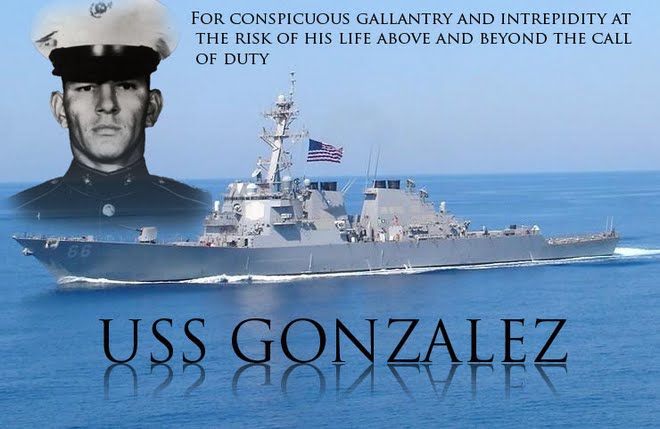
Hero from Rio Grande Valley Dies in Vietnam – On this day in 1968, Marine sergeant Alfredo Gonzalez died near Thua Thein, Vietnam, after action that earned him the Medal of Honor. On January 31 the native of Edinburg was commanding a platoon in a truck convoy formed to relieve pressure on the beleaguered city of Hue. After being wounded, he moved through a fire-swept area and rescued a wounded comrade. On February 3 he was again wounded, but refused medical treatment. The next day, as the enemy inflicted heavy casualties on his company, Gonzalez knocked out a rocket position and suppressed much enemy fire before falling. The missile destroyer USS Alfredo Gonzalez, named for him, is the first United States military ship named for a Hispanic.

INTERNATIONAL (INCLUDING USA) TIMELINE OF LATINO EVENTS

1855 – Soldiers shoot Jewish families in Coro, Venezuela

1914 – US Congress approves Burnett-anti-immigration law

1984 – Frank Aquilera sets world frisbee distance record (168m) Las Vegas

ON THIS DAY IN LATINO U.S. HISTORY (FEBRUARY 5th )

Immigration Passed Over Wilson’s Veto – On this day in 1917, with more than a two-thirds majority, Congress overrides President Woodrow Wilson‘s veto of the previous week and passes the Immigration Act. The law required a literacy test for immigrants and barred Asiatic laborers, except for those from countries with special treaties or agreements with the United States, such as the Philippines. During the late 19th and early 20th centuries, the United States received a majority of the world’s immigrants, with 1.3 million immigrants passing through New York’s Ellis Island in 1907 alone. Various restrictions had been applied against immigrants since the 1890s, but most of those seeking entrance into the United States were accepted. However, in 1894, the Immigration Restriction League was founded in Boston and subsequently petitioned the U.S. government to legislate that immigrants be required to demonstrate literacy in some language before being accepted. The organization hoped to quell the recent surge of lower-class immigrants from Southern and Eastern Europe. Congress passed a literacy bill in 1897, but President Grover Cleveland vetoed it. In early 1917, with America’s entrance into World War I three months away, xenophobia was at a new high, and a bill restricting immigration was passed over President Wilson’s veto. Subsequent immigration to the United States sharply declined, and, in 1924 a law was passed requiring immigrant inspection in countries of origin, leading to the closure of Ellis Island and other major immigrant processing centers. Between 1892 and 1924, some 16 million people successfully immigrated to the United States to seek a better life.

INTERNATIONAL (INCLUDING USA) TIMELINE OF LATINO EVENTS

1428 King Alfonso V, orders Sicily’s Jews to attend conversion sermons (pictured above)

1556 – Kings Henri I & Philip II sign Treaty of Vaucelles

1782 – Spanish take Minorca (western Mediterranean) from English

1900 – The United States and the United Kingdom sign treaty for Panama Canal

1904 – American occupation of Cuba ends

1917 – Mexican Constitution Proclaimed  – On this day in 1917, after seven years of revolution and civil upheaval, Mexican President Venustiano Carranza emerged as the leader of the revolutionary forces. In an attempt to institutionalize the Revolution, he called for a meeting at Querétaro, where the revolutionaries put together a new supreme law for Mexico; hence, the “Constitucion Politica de los Estados Unidos de Mexicanos” was officially formed (Country Studies). To many, this is seen as one of the most liberal codes of the century, due to its clauses on land reform, women rights- that in the end were stroked from the document- and its complex labor code that emphasized the rights of the Mexicans above any other thing (Tuck). However, some of its provisions were not implemented at the time because the former president overlook constitutional reforms to maintain the economy and mend its deterioration; similarly, the following presidents- Obregon and Calles- ignored the provisions- specially those related to land expropriation- to focus on their personal needs and pragmatic views.

1949 – Huaso sets official world equestrian high-jump record, 2.47 m, Chic

1967 – Anastasio Somoza elected president of Nicaragua

1986 – Corazon Aquino & Ferdinand Marcos appear on “Nightline”

SUBSCRIBE to The Hispanic Blog and stay on top of the latest Latino news, politics and entertainment!

Don’t be shy SUBSCRIBE – COMMENT – LIKE ME -CIRCLE ME AND FOLLOW ME

If you have any questions, concerns or simply would like to get a quote on my Marketing, Public Relations, Social Media and/or Events services, please feel free to contact me at thehispanicblog@gmail.com.

God Bless and may you have a fabulous day!

powered by Influential Access – “Transforming the Ordinary to EXTRAordinary!” – CEO – Jessica Marie Gutierrez – Creator of The Hispanic Blog #thehispanicblog

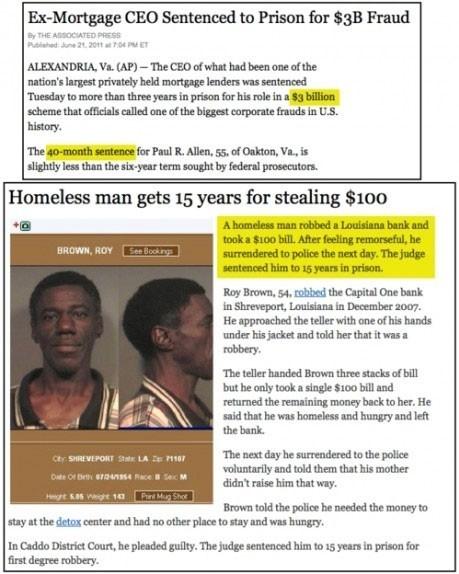
WHEN WILL OUR SYSTEM BE REFORMED??? YOU WILL BE BLOWN AWAY BY THIS ARTICLE!

The Hispanic Blog

Please proceed to review the highlighted text in yellow regarding a case last year. This definitely blew me away!!!! How do you feel about the way society treats certain people????

SUBSCRIBE to The Hispanic Blog and stay on top of the latest Latino news, politics and entertainment!

Don’t be shy SUBSCRIBE – COMMENT – LIKE ME -CIRCLE ME AND FOLLOW ME

If you have any questions, concerns or simply would like to get a quote on my Marketing, Public Relations, Social Media and/or Events services, please feel free to contact me at thehispanicblog@gmail.com.

God Bless and may you have a fabulous day!

powered by Influential Access – “Transforming the Ordinary to EXTRAordinary!” – CEO – Jessica Marie Gutierrez – Creator of The Hispanic Blog #thehispanicblog

THIS DAY IN LATINO U.S. HISTORY FEB 2ND

THE HISPANIC BLOG IS THE LATEST HISPANIC NEWS BY JESSICA MARIE GUTIERREZ

TREATY OF GUADALUPE HIDALGO

On this day in 1848 the Treaty of Guadalupe Hidalgo is signed, ending the Mexican-American War (1846-1848). Mexico cedes about half of its territory to the United States, mainly parts of what are now Arizona, California, New Mexico and Texas.

THE WOMAN IN BLUE

On this day in 1620, María Coronel took religious vows in a Franciscan order of nuns who wore an outer cloak of coarse blue cloth over the traditional brown habit. As a nun, now known as María de Jesús de Agreda, she had numerous mystic experiences (more than 500) in which she thought she visited a distant, unknown land. Franciscan authorities determined that the land was eastern New Mexico and far western Texas. Sister María supposedly contacted several Indian cultures, including the Jumanos, and told the natives to seek instruction from the Spanish. Shortly thereafter, some fifty Jumano Indians appeared at the Franciscan convent of old Isleta, south of present Albuquerque, in July 1629 and said that they had been sent to find religious teachers. They already demonstrated rudimentary knowledge of Christianity, and when asked who had instructed them replied, “the Woman in Blue.” A subsequent expedition to the Jumanos, led by Fray Juan de Salas, encountered a large band of Indians in Southwest Texas. The Indians claimed that they had been advised by the Woman in Blue of approaching Christian missionaries. Subsequently, some 2,000 natives presented themselves for baptism and further religious instruction. Two years later, Fray Alonso de Benavides traveled to Spain, where he interviewed María de Jesús at Agreda. Sister María told of her bilocations and acknowledged that she was indeed the Lady in Blue. After she died in 1665, her story was published in Spain. Although she said her last visitation to the New World was in 1631, the legend of her appearances was current until the 1690s. In the 1840s a mysterious woman in blue reportedly traveled the Sabine River valley aiding malaria victims, and her apparition was reported as recently as World War II.

COTTON COMES TO THE RGV

On this day in 1830, business partners John Stryker and James Wiley Magoffin arrived at Matamoros in the sloop Washington. They made port carrying a newly designed cotton gin and several hundred bags of upland cotton seed and set out distributing free seed to landowners in the Rio Grande Valley. Magoffin eventually moved to Chihuahua, but Stryker purchased property along the Rio Grande. Stryker, an agriculturalist, was appointed consul for the port of Goliad (later the port of Matagorda) by President Andrew Jackson in 1835. He bought a league of land in Victoria, where he was living at the time of his death in 1844. His efforts in cotton seed distribution and the introduction of the cotton gin enabled the profitable cotton culture of the Rio Grande Valley. Years later those same cotton fields provided the pathway for the dreaded boll weevil’s entry into the United States.

1923 US signs friendship treaty with Central American countries

1948 President Truman urges congress to adopt a civil rights program

1972 Lefty Gomez selected for Hall of Fame

2002  The wedding of Crown Prince Willem-Alexander of the Netherlands to the Argentinean born Máxima Zorreguieta takes place

2003 Jennifer Lopez starts a three week run at No.1 on the US singles chart with ‘All I Have’

SUBSCRIBE to The Hispanic Blog and stay on top of the latest Latino news, politics and entertainment!

Don’t be shy SUBSCRIBE – COMMENT – LIKE ME -CIRCLE ME AND FOLLOW ME

If you have any questions, concerns or simply would like to get a quote on my Marketing, Public Relations, Social Media and/or Events services, please feel free to contact me at thehispanicblog@gmail.com.

God Bless and may you have a fabulous day!

powered by Influential Access – “Transforming the Ordinary to EXTRAordinary!” – CEO – Jessica Marie Gutierrez – Creator of The Hispanic Blog #thehispanicblog

HAPPY GROUNDHOG DAY!!!

HAPPY GROUNDHOG DAY!

Groundhog Day arrives every February 2nd and is celebrated in the United States and Canada. The official celebration takes place at Gobbler’s Knob near Punxsutawney, Pennsylvania where residents await Punxsutawney Phil. Other cities in the U.S. and Canada have Groundhog Day celebrations with their own resident rodents. The tradition expects the groundhog to foretell whether spring has arrived or if the residents will experience six more weeks of winter.

Various European cultures observed the actions of animals to determine when to plant crops. The Germans watched the badger and the English watched the hedgehog, which appeared around Candlemas, a Christian holiday, in early February. A popular English poem states, “If Candlemas be fair and bright, Come, Winter, have another flight; If Candlemas brings clouds and rain, Go Winter, and come not again.” Simply put, if the animal saw his shadow, he retreated back to the den in expectation that more winter would arrive. If the day was cloudy and no shadow appeared, the animal assumed spring had arrived and that it was safe to leave the den. When people from Germany settled in the Pennsylvania area, they brought the tradition with them and used the groundhog because there were no badgers in the area. One theory about the origins of Groundhog Day refers to the confusion in seasonal dates caused by the adoption of the Gregorian calendar over the Julian calendar that was inaccurate. The population of the Roman Empire, confused by the change in dates, trusted the animals instead of the calendar. The animals were more accurate in predicting when to plant crops. Farmers halved their winter provisions of hay and food at Candlemas to ensure that animals and family would eat until the arrival of spring crops.

In 1993, Bill Murray appeared in the movie “Groundhog Day” about a weatherman who experienced Groundhog Day over and over again until he learned his lesson and became a better human being. The term Groundhog Day has become synonymous with seeming to experience the same events over and over again.

SUBSCRIBE to The Hispanic Blog and stay on top of the latest Latino news, politics and entertainment!

Don’t be shy SUBSCRIBE – COMMENT – LIKE ME -CIRCLE ME AND FOLLOW ME

If you have any questions, concerns or simply would like to get a quote on my Marketing, Public Relations, Social Media and/or Events services, please feel free to contact me at thehispanicblog@gmail.com.

God Bless and may you have a fabulous day!

powered by Influential Access – “Transforming the Ordinary to EXTRAordinary!” – CEO – Jessica Marie Gutierrez – Creator of The Hispanic Blog #thehispanicblog

THIS DAY IN LATINO U.S. HISTORY FEB 1ST

THE HISPANIC BLOG IS THE LATEST HISPANIC NEWS BY JESSICA MARIE GUTIERREZ

FEBRUARY 1ST

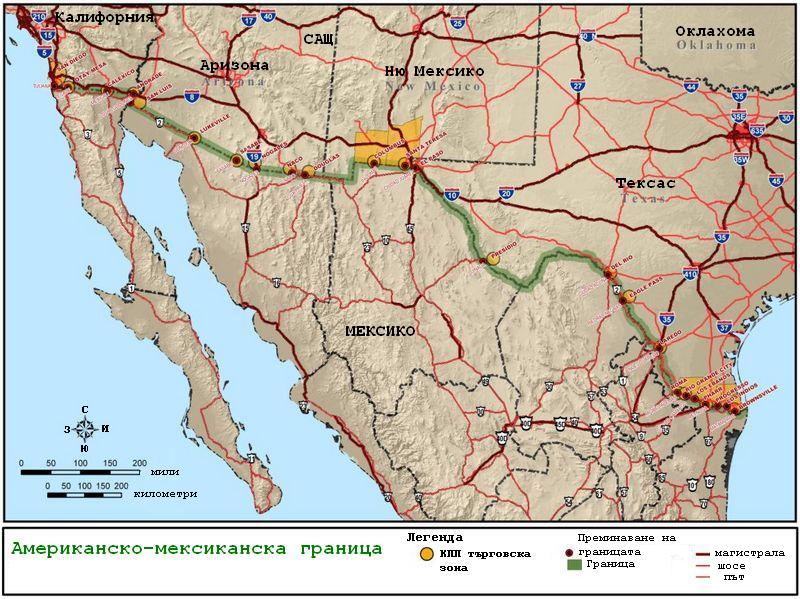
On this day in 1933, the United States and Mexico signed the Rio Grande Rectification Treaty, which called for construction of a 590-foot-wide floodway and 66-foot-wide normal flow channel along a stretch of the river from Cordova Island to below Fort Quitman. The agreement became necessary after the 1916 completion of Elephant Butte Dam near Truth or Consequences, New Mexico. Assuring water for irrigation, Elephant Butte also kept the stream from flooding and cleaning its own channel. The bed filled with silt, and uncontrolled wanderings not only wasted water but destroyed crops and shifted the international boundary. When little water flowed through the river the channel still marked the border, but that line became more and more difficult to find. The agreement made the international boundary the middle of the deepest channel of the Rio Grande within the rectified channel. The project was completed in 1938 at a cost of $5 million, 88 percent of which the United States paid. The International Boundary Commission, later renamed the International Boundary and Water Commission, was given responsibility for its construction and maintenance.

Speaking of the US/Mexico Border….

SUBSCRIBE to The Hispanic Blog and stay on top of the latest Latino news, politics and entertainment!

Don’t be shy SUBSCRIBE – COMMENT – LIKE ME -CIRCLE ME AND FOLLOW ME

If you have any questions, concerns or simply would like to get a quote on my Marketing, Public Relations, Social Media and/or Events services, please feel free to contact me at thehispanicblog@gmail.com.

God Bless and may you have a fabulous day!

powered by Influential Access – “Transforming the Ordinary to EXTRAordinary!” – CEO – Jessica Marie Gutierrez – Creator of The Hispanic Blog #thehispanicblog