WHEN WILL TEXAS HAVE THEIR PRIMARY?

The Hispanic Blog: Judges in Texas redistricting case order more talks over voting maps to save April primary

photo illustration by: Todd Wiseman / Chris Chang for the Texas Tribune

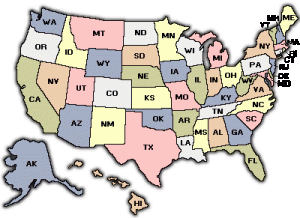
SAN ANTONIO — A federal court sent a message Friday that the Texas primaries shouldn’t be pushed past April because of bitterly disputed voting maps and ordered the state and minority rightsgroups to spend the weekend back at the bargaining table.The fate of the Texas primaries, which have already been postponed once and risk being held too late to matter in the Republican presidential race, could be decided early as Tuesday by the San Antoniocourt. The primaries are currently scheduled for April 3, though that date appears all but dead.Read more…http://www.washingtonpost.com/politics/campaigns/judges-in-texas-redistricting-case-order-more-talks-over-voting-maps-to-save-april-primary/2012/02/10/gIQAi0Jo4Q_story.html

SUBSCRIBE to The Hispanic Blog and stay on top of the latest Latino news, politics and entertainment!

Don’t be shy SUBSCRIBE – COMMENT – LIKE ME -CIRCLE ME AND FOLLOW ME

If you have any questions, concerns or simply would like to get a quote on my Marketing, Public Relations, Social Media and/or Events services, please feel free to contact me at thehispanicblog@gmail.com.

God Bless and may you have a fabulous day!

powered by Influential Access – “Transforming the Ordinary to EXTRAordinary!” – CEO – Jessica Marie Gutierrez – Creator of The Hispanic Blog #thehispanicblog

 

HOW THE MEXICAN DRUG CARTEL TOOK OVER AND MEXICO’S ELECTION!

THE HISPANIC BLOG IS THE LATEST HISPANIC NEWS BY JESSICA MARIE GUTIERREZ

HOW THE MEXICAN DRUG CARTEL TOOK OVER AND MEXICO’S ELECTION

Mexico will hold its presidential election July 1 against the backdrop of a protracted war against criminal cartels in the country. Former President Vicente Fox of the National Action Party (PAN) launched that struggle; his successor, Felipe Calderon, also of the PAN, greatly expanded it. While many Mexicans apparently support action against the cartels, the Calderon government has come under much criticism for its pursuit of the cartels, contributing to Calderon’s low popularity at the moment. The PAN is widely expected to lose in July to the Institutional Revolutionary Party (PRI), which controlled the Mexican presidency for most of the 20th century until Fox’s victory in 2000. According to polls, the PAN has lost credibility among many Mexican voters, many of whom also once again view the PRI as a viable alternative. Many Mexicans seem to believe that the Calderon administration could attempt to pull off some sort of last-minute political coup (in U.S. political parlance, an “October surprise”) to boost the PAN’s popularity so it can retain the presidency.

The potential election ploy most often discussed is the capture of Joaquin “El Chapo” Guzman Loera, the leader of the Sinaloa cartel, who is widely believed to be the richest, most powerful drug trafficker anywhere. The reasoning goes that if the government could catch Guzman, Calderon’s (and hence the PAN’s) popularity would soar. The National Action Party, Mexico’s ruling party, on Sunday, February 5th chose Former congresswoman Josefina Vasquez Mota to run for president, the first time a major party has nominated a woman to compete for the nation’s top office.

Plata o Plomo

Mexico’s cartels have begun to form into two major groupings around the two most powerful cartels, the Sinaloa cartel and Los Zetas. These two cartels approach business quite differently. The common Mexican cartel expression “plata o plomo” (literally translated as “silver or lead,” the Spanish phrase signifying that a cartel will force one’s cooperation with either a bribe or a bullet) illustrates the different modes of operation of the two hegemonic cartels.

Los Zetas, an organization founded by former Mexican special operations soldiers, tends to apply a military solution to any problem first — plomo. They certainly bribe people, but one of their core organizational values is that it is cheaper and easier to threaten than to bribe. Rather than retain people on their payroll for years, Los Zetas also tend toward a short time horizon with bribery.
By contrast, people like Guzman and Ismael “El Mayo” Zambada Garcia, founders of the Sinaloa cartel, have been producing and trafficking narcotics for decades. Guzman and Zambada got their start in the trafficking business working for Miguel “El Padrino” Angel Felix Gallardo, the leader of the powerful Guadalajara cartel in the early 1980s. Because they have been in the illicit logistics business for decades, the Sinaloa leaders are more business-oriented than military-oriented. This means that the Sinaloa cartel tends to employ plata first, preferring to buy off the people required to achieve its objectives. It also frequently provides U.S. and Mexican authorities with intelligence pertaining to its cartel enemies rather than taking direct military action against them, thus using the authorities as a weapon against rival cartels. While Sinaloa does have some powerful enforcement groups, and it certainly can (and does) resort to ruthless violence, violence is merely one of the many tools at its disposal rather than its preferred approach to a given problem.

Thus, Sinaloa and Los Zetas each use the same set of tools, they just tend to use them in a different order.

Guzman’s Web

Within his home territory of rural Sinaloa state, Guzman is respected and even revered. An almost-mythical figure, he has used his fortune to buy good will and loyalty in his home turf and elsewhere. In addition to his public largesse, Guzman has bribed people for decades. Unlike Los Zetas, the Sinaloa cartel leadership tends to take a long view on corruption. It will often recruit a low-level official and then continue to pay that person as he rises through the ranks. This long-term approach is not unlike that taken by some of the more patient intelligence services, along the lines of the Soviet recruitment of the “Cambridge Five” while they were still students. Quite simply, Guzman and the Sinaloa cartel have had police and military officers, politicians, journalists and judges on their payroll for years and even decades.
This intelligence agency-like approach has permitted the Sinaloa leadership to construct a wide web of assets with which to gather intelligence and serve as its agents of influence. At the street level, all Mexican cartels employ lookouts called “halcones,” Spanish for “falcons,” who provide their cartel masters with early warning of law enforcement or rival cartel activity in the halcones’ area of responsibility. Higher-ranking officials on a cartel’s payroll essentially serve as high-level halcones who provide early warnings when government operations against the cartel are being planned. Such advanced warning allows the cartels to protect their shipments and leadership.
Once an official or politician is on a cartel payroll (a situation similar to a network of sources run by an intelligence agency), he is subject to blackmail should he stop cooperating. And the relationship between a politician and the cartels can go beyond just cash. It can also involve the murder of a rival or provide other forms of non-cash assistance in the attainment of political power.
Whatever the relationship entails, once a cartel gets its hooks into a person, it tends not to let go — and the person thus entangled has little choice but to continue cooperating, since he can be subject to arrest and political or financial ruin if he is caught. He also can be assassinated should he decide to quit cooperating. No Mexican politician wants to become the next Raul Salinas de Gortari, the brother of former President Carlos Salinas de Gortari, who the U.S. government alleges made hundreds of millions of dollars in dirty money, much of it from cartel figures. Raul Salinas’ arrest in 1995 for murder, the subsequent money laundering charges brought against him, and questions about what his brother Carlos knew about his activities were important factors in the 2000 presidential election in which the PRI lost.

Featured is the PRI’s Enrique Pena Nieto presidential candidate with soap opera star and wife Angelica Rivera. He is perceived as the insurmountable favorite to become Mexico’s next president this year. Peña Nieto’s long-held advantage in public opinion polls represents the PRI’s best shot at recapturing the office that it lost in the 2000 Presidential elections. The party’s popularity is an astonishing accomplishment for a group once synonymous with the corruption and authoritarianism of Mexico’s 71-year one-party rule. Peña Nieto’s fresh image and celebrity lifestyle (he is married to former soap-star Angelica Rivera) has for the most part succeeded in rebranding his party as one of youth, idealism, and competence. The elitism that Paulina Peña Nieto’s tweet projected is exactly the type of depiction that the party has worked to disassociate itself with.


This fear of being linked to a figure like Guzman serves as a strong deterrent to his arrest. Guzman has been operating as a high-level narcotics trafficker in Mexico for decades now, and a big part of his operations has involved bribery. For example, in November 2008, Mexico’s drug czar, Noe Ramirez Mandujano, was arrested and charged with accepting $450,000 a month from Zambada and the Beltran Leyva brothers, who were aligned with Sinaloa at the time.
If Guzman were to talk to authorities after his arrest, he could implicate a number of very powerful political and business figures. Indeed, it is likely this fear led to the delicate treatment he received after his 1993 arrest in Guatemala and his subsequent conviction in Mexico for narcotics trafficking and bribery. Guzman was able to continue to run his criminal empire from behind bars, and it was only when it appeared that Guzman might face extradition to the United States that he chose to escape from his comfortable prison cell in January 2001. Since his escape, he undoubtedly has continued to add strands to the web of protection surrounding him.
We must also note that without Guzman, the dynamics that drive the Mexican cartels would continue, and other leaders or even organizations would rise to take his place. Killing or arresting an individual will not be the end of Mexico’s criminal cartels.

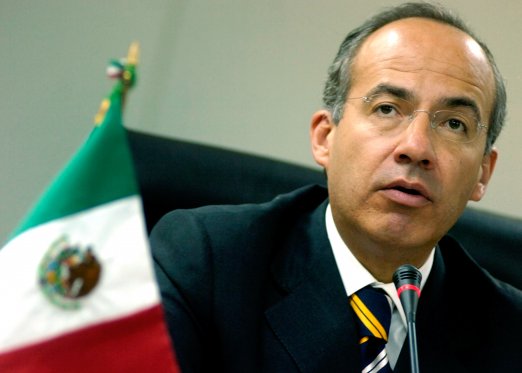
Mexico’s current President Felipe Calderon.

That said, a long line of powerful Mexican cartel leaders have been arrested. Guzman’s mentor, Felix Gallardo, was arrested in 1989 in large part due to U.S. pressure on the Mexican government in the wake of the torture and murder of U.S. Drug Enforcement Administration special agent Enrique Camarena. Gulf cartel founder Juan Garcia Abrego, also a protege of Felix Gallardo, was arrested in 1996. Garcia Abrego allegedly was linked to Raul Salinas and other high-ranking officials in the government of then-President Ernesto Zedillo. Garcia Abrego’s successor as leader of the Gulf cartel, Osiel Cardenas Guillen, was arrested in 2003 and, like Garcia Abrego, was deported to the United States and convicted in a U.S. court; he is currently incarcerated in the “Supermax” penitentiary in Florence, Colo. Indeed, Guzman and Zambada are the last of Felix Gallardo’s proteges still at large.If Guzman is concerned that he could be killed rather than captured, like his former associate Arturo Beltran Leyva, it is possible that he could have prepared some type of insurance document incriminating powerful people on Sinaloa’s payroll. As a deterrent to Guzman’s killing, Sinaloa could threaten to release such a document should Guzman be killed.
Along with Zambada, Guzman has been a high-profile fugitive for three decades now. He has not survived that long by being careless or stupid. It would be very difficult to track down such an individual in a short window of time established by political calculations unless those responsible already know his exact location and have chosen not to arrest him thus far. The Calderon administration and the PAN have struggled with public perceptions for some time now, making it likely that if high-level PAN officials knew where Guzman was and wanted to arrest him for the public relations bump such an operation could provide, they already would have done so.
Still, Guzman is one of the most wanted individuals in the world, and large teams of Mexican and U.S. law enforcement and intelligence agents are trying to locate him. Therefore, it is possible that Guzman could be arrested before the election in July. Any operation to capture him would be tightly compartmentalized for fear it could leak out to high-ranking halcones in the Mexican (or U.S.) government. Indeed, special Mexican units working closely with U.S. counterparts and segregated from any outside contact so that they cannot betray their mission — or the intelligence that led to it — normally carry out such sensitive operations. This means such an operation would likely be beyond the control of Mexican politicians to mandate, although they could conceivably provide actionable intelligence to the forces involved in such an operation.
Interestingly, with all the chatter of an election surprise floating around Mexico, any arrest at this point would be met with a great deal of skepticism. The arrest of such a powerful figure would almost certainly become very politicized with all parties attempting to use it to their advantage — and dodge any connections they might have to Sinaloa. Such an environment would serve to bring more attention to the issue of corruption and collusion between the cartels and the government. And that could end up hurting rather than benefiting the PAN in the upcoming presidential election.

SUBSCRIBE to The Hispanic Blog and stay on top of the latest Latino news, politics and entertainment!

Don’t be shy SUBSCRIBE – COMMENT – LIKE ME -CIRCLE ME AND FOLLOW ME

If you have any questions, concerns or simply would like to get a quote on my Marketing, Public Relations, Social Media and/or Events services, please feel free to contact me.

God Bless and may you have a fabulous day!

powered by Influential Access – “Transforming the Ordinary to EXTRAordinary!” – CEO – Jessica Marie Gutierrez – Creator of The Hispanic Blog #thehispanicblog

ARE UNIVISION AND DISNEY CREATING A NETWORK?

THE HISPANIC BLOG CREATED BY JESSICA MARIE GUTIERREZ

HOW UNIVISION & DISNEY UNITE BEFORE THE 2012 ELECTION

MIAMI (AP)Univision and Disney are in talks to create a 24-hour news channel for Latinos in English, two sources close to the negotiations said Monday.

Both sources declined to go on the record because they were not authorized to speak.

The goal would be to begin broadcasting before the November presidential election. That would give the network plenty of time to provide political coverage geared toward Hispanics, who are considered influential swing voters in states like Florida, New Mexico and Colorado.

Univision is the nation’s largest Spanish-language media company, and it has long prided itself on its Spanish-language content. In recent years, officials have quietly acknowledged that in order to maintain and expand viewership, they need to provide content to second- and third-generation Latinos who speak English as their first language.

Univision officials and ABC News spokesman Jeff Schneider declined to comment on Monday.

The move comes in response to the 2010 census, which showed U.S. born Latinos made up nearly 60 percent of the growth in the nation’s Hispanic population over the last decade.

The proposed deal also reflects the stepped up efforts of mainstream media companies to target Latinos. Fox News added its Fox News Latino website in 2010 and Huffington Post now has an online Huffpost LatinoVoices site. Meanwhile, NBC Universal has increased the cross-pollination between its NBC News division and that of its Spanish language network, Telemundo.

Top Telemundo news anchor Jose Diaz-Balart has anchored NBC News and MSNBC programs. NBC also recently unveiled its NBC Latino tumblr website in English. Univision News also has a tumblr English site, and a small but growing social media presence.

Jorge Plasencia, vice chair of the National Council of La Raza and CEO of the Hispanic marketing firm Republica, which includes Univision among its clients, said he believes that a news channel in English would fulfill a niche.

“There’s nearly 50 million Latinos in the U.S. They do want to know what’s going on in Mexico, Puerto Rico and all over Latin America. The major networks don’t cover that news,” he said. “It’s hard for those networks to go into those issues in depth because they’re trying reach all of America.”

Univision and other Spanish-language networks have provided significant coverage of Latin America for their viewers. Plasencia believes second- and third-generation Latinos are still interested in that coverage, but they want it in English.

For Latinos who live in cities like Los Angeles, New York and Miami that have large Hispanic populations, local broadcasts often have Latino anchors and cover stories that are particularly relevant to the Hispanic community. But the national broadcasts are lagging in that type of coverage, he added.

“That’s why I think this and Huffpost LatinoVoices exist, because there’s an appetite,” Plasencia said.

Last month, SiriusXM’s Cristina Radio channel launched a new all-English political show, hosted by top Democratic and Republican Latina analysts, as well as a bilingual foreign affairs program out of Washington. Other online news sites are continuing to pop up.

Voxxi, a new Hispanic online news magazine, was throwing its launch party Tuesday at the Newseum in Washington, D.C.

Plasencia noted that the controversy over Arizona’s Maricopa County Sheriff Joe Arpaio, over his aggressive efforts to seek out illegal immigrants, has received significant coverage on Spanish-language networks but not so much in English.

“This network will take our issues and make them mainstream because many other people besides Latinos may be watching,” he said.

Roberto Suro, a professor of journalism and public policy at the University of Southern California in Los Angeles, says finding the right audience may be tricky.

“There are several assumptions here. Is there room for another all-news channel? And within the Hispanic market, is there enough demand for an all-news channel?” Suro said.

Already CNN, Fox and MSNB compete in English. CNN en Espanol provides 24 hour coverage in Spanish.

The new channel would reflect the growing trend toward more niche audiences, but he added that the English-speaking Latino market is much more diverse than the Spanish-language market, Suro said.

“There’s a longstanding effort to try and create content for English speaking Latinos,” Suro said. “This is a very broad population segment, and the question is, “what is the identity? Is it heavily Hispanic, all about news about Latinos? Or is it who delivers the news? It’s an elusive brand.”

***Please note this is me simply sharing the story but if you want more info on the story from the Associated Press, then simply click here, thanks http://tampa.cbslocal.com/2012/02/06/univision-disney-look-at-english-news-channel/

____

AP Television Writer Lynn Elber and AP Business Writer Ryan Nakashima in Los Angeles contributed to this report. Copyright 2012 The Associated Press.

SUBSCRIBE to The Hispanic Blog and stay on top of the latest Latino news, politics and entertainment!

Don’t be shy SUBSCRIBE – COMMENT – LIKE ME -CIRCLE ME AND FOLLOW ME

If you have any questions, concerns or simply would like to get a quote on my Marketing, Public Relations, Social Media and/or Events services, please feel free to contact me at thehispanicblog@gmail.com.

God Bless and may you have a fabulous day!

powered by Influential Access – “Transforming the Ordinary to EXTRAordinary!” – CEO – Jessica Marie Gutierrez – Creator of The Hispanic Blog #thehispanicblog

HOW DOES RICK SANTORUM FEEL ABOUT HISPANIC ISSUES?

THE HISBANIC BLOG BY JESSICA MARIE GUTIERREZ

RICK SANTORUM: ABOUT HISPANIC ISSUES

Former Pennsylvania Sen. Rick Santorum surprised many during last night’s Iowa Caucus, garnering 24.5 percent or 30,007 votes and coming in a scant 8 votes behind front-runner Mitt Romney, who took in 24.6 percent or 30,015 votes. A relative outsider only a few days ago, the social conservative politician is now one of the leaders in the GOP presidential race. Santorum is known mainly for

his support of family values, his pro-life stance and his opposition to gay marriage, but his record on immigration and other factors of importance to the Latino vote are less well publicized. Fox News Latino has compiled a list of some of issues key to the Hispanic vote and where Santorum stands.

Immigration

Santorum’s immigration policy falls in line with the general, hard-line stance held by most of the GOP hopefuls on the issue.

The son of Italian immigrants, he strongly opposes amnesty for undocumented immigrants, believes building more fencing along the border is an important part of the immigration issue, and also supports making English the official national language.

Santorum voted against establishing a Guest Worker Program with a path to citizenship for undocumented immigrants in 2006, and is also strongly against in-state tuition for undocumented immigrants. He made this clear in the September Fox News – Google Debate in which he attacked Texas Gov. Rick Perry for allowing undocumented immigrants in Texas the right to in-state tuition costs at state schools.

“What Gov. Perry’s done is he provided in-state tuition for illegal immigrants. Maybe that was an attempt to attract the illegal vote–I mean, the Latino voters. But you attract Latino voters by talking about the importance of immigration,” Santorum said.

Border Security:

Santorum is a strong supporter of a fence along the U.S.-Mexico border in the hopes that it will stem the tide of undocumented immigrants entering the country. “What I would say is that first, we build the fence. Number two, we enforce the law, and that is that we don’t allow people who are in this country to work here illegally,” Santorum said during an interview with Greta Van Susteren on Fox News Channel’s “On The Record. “And when we do find people here illegally, and we go through the process of deportation.”

In recent debates Santorum has gone after Texas Gov. Rick Perry for being “soft on immigration” and opposed Perry’s resistance to a border fence. “What we have is a problem of an unsecure border,” Sanotrum said during the TEA Part debate.“Unlike Governor Perry, I believe we need to build more fence…I believe that we need to secure the border using technology and more personnel. And until we build that border, we should neither have storm troopers come in and throw people out of the country nor should we provide amnesty.”

Family Values

Rick Santorum is above all else a Social Conservative. Perhaps, there is no better way of describing the appeal and constituency of the 53-year-old politician.

In a nutshell: “his vision for America is to restore America’s greatness through the promotion of faith, family and freedom,” according to his website.

Santorum, a Catholic, is strongly pro-life, opposes gay marriage, wants to reinstate “Don’t Ask, Don’t Tell” in the military, and believes a two-parent home is the key to a thriving economy. The promotion of these so-called family values is the cornerstone of his campaign, and he has already made it clear it’s a topic he is willing to go toe-to-toe with against President Barack Obama.

“The Obama administration has a set of values,” Santorum said recently to a crowd of a few hundred students and parents at a conservative Christian school in Iowa. “I love it when the left and when the president say, ‘Don’t try to impose your values on us, you folks who hold your Bibles in your hand and cling to your guns.’ They have values too. Our values are based on religion, based on life. Their values are based on a religion of self.”

The father of seven children, Santorum, believes his stance on family values makes him the so called authentic conservative. He spells out his political vision in his book, “It Takes a Family: Conservatism and the Common Good.”

Education

Education has been a touchy issue for Santorum. The former Pennsylvania Senator is best known for introducing in 2001 the so-called “Santorum Ammendment” to the No Child Left Behind Act, which promotes the teaching of intelligent design along alongside scientific theories of evolution in schools.

Santorum has criticized what he calls government “meddling” in education and home schools his seven children. During a recent Fox News/Google debate, Santorum said that it was the parents responsibility to educate their children. “The government has convinced parents that at some point it’s no longer their responsibility. And in fact, they force them, in many respects, to turn their children over to the public education system and wrest control from them and block them out of participation of that,” Santorum said. “That has to change or education will not improve in this country.”

***PLEASE NOTE I TOOK THIS INFORMATION FROM FOX NEWS LATINO AND ORIGINAL ARTICLE MAY BE SEEN ON THEIR PAGE.
Read more: http://latino.foxnews.com/latino/politics/2012/01/04/iowas-surprise-where-rick-santorum-stands-on-latino-issues/#ixzz1lm234HdZ

SUBSCRIBE to The Hispanic Blog and stay on top of the latest Latino news, politics and entertainment!

Don’t be shy SUBSCRIBE – COMMENT – LIKE ME -CIRCLE ME AND FOLLOW ME

If you have any questions, concerns or simply would like to get a quote on my Marketing, Public Relations, Social Media and/or Events services, please feel free to contact me at thehispanicblog@gmail.com.

God Bless and may you have a fabulous day!

powered by Influential Access – “Transforming the Ordinary to EXTRAordinary!” – CEO – Jessica Marie Gutierrez – Creator of The Hispanic Blog #thehispanicblog


IS THERE A HISPANIC MARKETING BOOM?

Português: Capa do ebook Facebook Marketing

Image via Wikipedia

I have heard marketers frequently say, “A data-driven decision is always a good decision.” I don’t necessarily agree with that all the time – insights, innovation, and a healthy measure of gut certainly play a large role in my own marketing decisions, along with paying attention to regular data-oriented updates on what’s happening in Denny’s demographics and market segments.

But anyone who says numbers don’t go into marketing is sorely mistaken, particularly large, growing numbers that signify dramatic change and opportunity. Here’s one number where it is very easy to see the obvious opportunity –the Hispanic population in the U.S. is growing at three times the rate of the overall population. A number like that is a marketer’s dream.

I would encourage all marketers, and in particular those of consumer brands, to consider the dollars that the Hispanic community spends every year and determine a strategy to make sure you are effectively engaging with this growing population – in their own language. By 2050, the U.S. census estimate projects the Hispanic population will more than double its size today, surpassing the 100 million mark. Now that’s a number I’ll certainly be paying attention to.

***Please note that the Hispanic Blog is always bringing you the latest news and thus this article is from Forbes to continue reading: http://www.forbes.com/sites/francesallen/2012/02/01/hispanic-marketing-boom-the-numbers-tell-the-story/

FRIENDS IF YOU LIKE MY BLOG PLEASE MAKE SURE YOU SIGN UP FOR IT ON THE TOP RIGHT. ADDITIONALLY, PLEASE LIKE ME ON FACEBOOK AND FOLLOW ME ON TWITTER! THIS WOULD MEAN THE WORLD TO ME SINCERELY! MOREOVER, IF YOU ARE A BUSINESS OR A CORPORATION THAT NEEDS MARKETING, PUBLIC RELATIONS, EVENT MARKETING OR SOCIAL MEDIA, PLEASE EMAIL ME AT jessica@influentialaccess.com FOR A QUOTE OR FREE CONSULTATION. I WILL GET BACK TO YOU WITHIN THE NEXT 48 HOURS.

THANK YOU SO MUCH FOR YOUR SUPPORT! YOU ARE AMAZING! MAY YOU HAVE A FABULOUS WEEK :-) GOD BLESS!

powered by Influential Access the creator of “The Hispanic Blog”


(function() {
var po = document.createElement(‘script’); po.type = ‘text/javascript’; po.async = true;
po.src = ‘https://apis.google.com/js/plusone.js’;
var s = document.getElementsByTagName(‘script’)[0]; s.parentNode.insertBefore(po, s);
})();